5. Adjective and Adverbs
Adjectives
normally placed before noun
2 ways of forming comparative/superlative
analytic comparison (more/most → adjectives of more than two syllables)
synthetic comparison (-er/-est → adjectived of one syllable)
two syllable adjectives: either type (ending in unstressed syllable -y, -ow, -le synthetic more common)
use of prefix -un does not change type even if more syllables
participles as adjectives take analytic comparison
Rare adjectives: analytic
normally no nominalisation possible → use of “one” necessary
But adjectives which denote a class od people can be nominalised → to make generalisations
Adjectives referring to nationality
normally nominalisation
with Britain, England, Wales, Ireland, Holland, France, Soain inly adjective followed by “person”/”people” possible
Sometimes adjectives also postmodifiers
sometimes: attributive position: permanent feature; postpositive implies temporariness
Semantic differences with some words
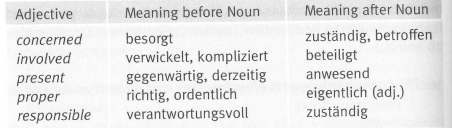
some adjectives referring to abstract concepts (superantural) can be used as nouns
Nominalisations od colours when referring to groups of people
Order of adjectives
size→age→shape→colour→origin→material→noun
Adverbs
Position
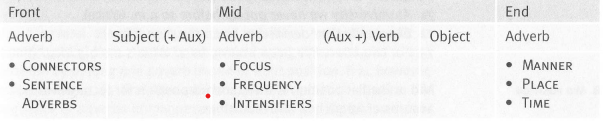
Exceptions
adjectives ending in -ic → adverb: -ally (ecxept public)
adjectives ending in -ly: paraphrases, e.g. in a cowardly manner/way (if adjective of frequency stays the same)