science semester2
Semester 2 notes 1/5/2023
Weathering — the process by which rock materials are changed by being broken down.
- Two types of weathering :
- Physical
- Chemical
Sediment — smaller fragments of larger rocks which are created through the process of weathering.
- Once sediment is created through weathering it can build up to form new rock.
Physical weathering — weathering caused by the mechanical breakdown of rocks into smaller pieces.
Chemical weathering — weathering caused by the breakdown of rocks as a result of chemical reactions.
- Can be thought of as dissolving the rock over time.
Semester 2 notes 1/12/2023
Erosion — the process by which wind, water, ice, or gravity transport weathered materials (sediment) from one location to another.
Deposition — the process by which weathered material stops being carried away via erosion and is dropped or laid down.
- Deposition that occurs over a long period of time can result in new rock being formed from the old sediments.
Agents of erosion and deposition
- Water and wind
- Rivers carry sediment downstream.
- Wind blows sediment across the landscape.
- Gravity — landslide pull rocks from slopes to be deposited lower down.
- Ice — glaciers are large masses of ice that carve out the landscape.
- Glaciers are agents of WED — they weather, erode, and deposit sediments all the same time.
- Large rocks deposited by glaciers are called erratics.
Semester 2 notes 1/18/2023
Comparing Rocks and Minerals
Mineral — naturally occurring, and usually inorganic, solid
- Rocks are made of different minerals
- Inorganic — something that has never been alive
magma — molten rock inside the Earth
lava — molten rock on earth’s surfaces
crystal — building blocks of minerals
- Atoms or molecules are arranged in a repeating pattern
Three main rock types
- Rocks undergo WED and new rock is formed = sedimentary rock
- Rocks put under intense pressure inside the Earth and a new rock is formed = metamorphic rock
- Rocks are melted beneath Earth’s surface and when they cool new rock is formed = igneous rock
Semester 2 notes 1/20/2023
Igneous rock — Rock that forms from melted rock below ground (magma) or above ground (lava).
- The size of crystals in igneous rocks depends on how quickly the rock cools
- Slower cooling = bigger crystals
- Fast cooling = small crystals
- Super fast cooling = no crystals
Semester 2 notes 1/23/2023
Sedimentary rock — Rock that forms layers of sediment that have been compacted and cemented together.
- Various dissolved minerals act like the glue to hold the sediment together
- Relative dating — figuring out the age of rocks from their position relative to other rocks.
Semester 2 notes 1/26/2023
Metamorphic rock — Rock that has been changed due to intense heat and pressure deep inside the earth’s crust
- These changes result in changes to the original rock’s texture and mineral content.
- Regional metamorphism happens when the Earth’s shifting crust causes rock to be put under intense pressure and heat
- Contact metamorphism occurs when rock comes into contact with hot fluids ( but doesn’t melt )
- All three rock types ( igneous, sedimentary, and metamorphic ) can be “changed” into new metamorphic rock when intense heat and pressure is applied
- The beginning rock is called the “Parent Rock” Its “kid” is the new metamorphic rock
- During the metamorphosis both physical and chemical changes can occur to the parent rock
- In some metamorphic rock the intense pressure causes dark and light bands of the rock to form
- Folding may also occur when the rock look s bent on itself
Semester 2 notes 2/2/2023
Continental drift — the theory that Earth’s crust is moving around over the course of geological time.
- This theory originated by Alfred Wegner, a German meteorologist and geophysicist, in 1912
- Wegner could not explain WHY plates were moving
Pangaea — The supercontinent that existed 250 million years ago.
- Greek term that means “all Earth”
From Continental Drift to Plate Tectonics
- Innovations from WWII allowed for new discoveries
- Sonar — used to detect submarines could now be used to map the ocean floor
- Seismographs — used in nuclear testing now used to detect plate movement
Examples:
Mid-ocean ridge — Giant continuous mountain range found at the bottom of Earth’s oceans.
- Forms as plates are moving away from each other
- Largest mountain range in the world
Deep-ocean trenches — Deepest valleys on Earth’s surface
- Forms as plates are moving towards each other.
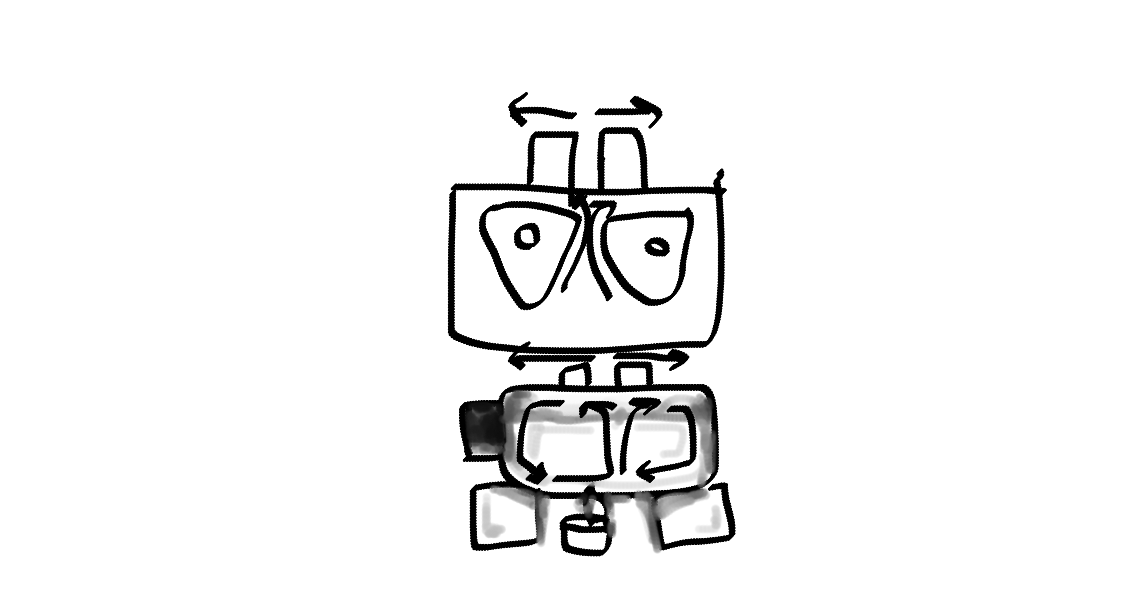
Earth’s interior: What is driving tectonic plate movement?
Tectonic plates — Sections of Earth’s crust that are broken into different pieces.
- Fit together like a jigsaw puzzle
- Constantly moving slooooooowwwwwly. (only a few cm a year)
Semester 2 notes 2/6/2023
Sea-Floor spreading - process by which Earth’s oceans formed after the breakup of Pangaea
- Step 1 - The Earth begins to stretch apart and the crust cracks
- Step 2 - Continued stretching forms a rift valley and results in earthquakes and volcanic eruptions
- Rift Valley —- Forms as two of Earth’s plates move away from each other. These are areas with lots of volcanic activity (e.g. East African Rift Valley)
- Step 3 - Eruptions add new rock and the valley widens
- Step 4 - the valley can fill with water to become a narrow linear sea
- Linear Sea — narrow body of water that forms as two plates pull apart from one another and saltwater fills in the space between
- Step 5 - The narrow sea widens enough to become an ocean basin
- Ocean basin — the large body of water that we recognize as an ocean. Think of it like a bowl or a bathtub with a rough bottom
- Youngest crust is found along the midocean ridge
Semester 2 notes 2/8/2023
Two types of plates
- Continental — thicker but full of more spaces (kinda like a sponge)
- Oceanic — thinner but much heavier since its missing all those spaces.
Convergent boundary — Plate boundary where the two plates involved are moving towards another.
- The place where the two plates are converginge and either
- One plate is sliding under the other one and being melted back down
- Both plates are pushing each other upwards
Subduction — The process of one tectonic plate sliding UNDER another tectonic plate.
Convergent boundaries
Ocean-continent convergent plate boundary
- Ocean plate is sliding towards and under a continent plate
- Forms deep ocean trenches where they meet and volcanoes on the continent plate
(example: All the volcanoes found in the Andes mountains)
Ocean-ocean convergent plate boundary
- Ocean plate is sliding towards and under another ocean plate
- Forms a chain of volcanic islands
(Example: Japan)
Continent-continent convergent plate boundary
- Continent plate sliding into another continent plate
- Forms mountains as the plates push each other upwards
(example: himalayas)
Divergent boundaries
Ocean-Ocean divergent plate boundary
- Ocean plate moving away from another ocean plate
- Forms mid-ocean ridges
Divergent boudary — Plate boundary where the two plates involved are moving away from one another.
- At the place where the two plates are diverging new rock is forming on the sides of each plate from cooling magma
Semester 2 notes 2/9/2023
Transform boundary — Plate boundary where two plates involved are sliding alongside one another
- associated with earthquakes in places like California.
Semester 2 notes 2/13/2023
Sytems Thinking — Grouping things together to better understand each individual part AND how that part connects to the big picture.
Earths System — All the matter, the energy, and processes within the boundary of our planet.
Earth’s 4 subsystems
- Atmosphere — The layer of gases that surround our planet (nitrogen, oxygen, argon, CO2, etc).
- Hrydrosphere — All of the water on Earth’s surface, underground, or in the atmosphere. Includes water in the three states (solid, liquid, gas)
- Geosphere — All of the rocks, minerals, and landforms on Earth’s surface and all the matter in Earth’s interior.
- Biosphere — All the living parts of our planet from microscopic stuff to the largest living organisms
Semester 2 notes 3/17/2023
- Takes 24 hours to complete one cycle of day and night
- The path is ALWAYS ; East to west
- IMPORTANT — sun is highest at SOLAR NOON
- Solar noon — The time of day when the sun reaches its highest point in the sky.
- Not necessarily the same thing at 12:00 noon.
Horizon — point where the Earth’s surface appears to meet the sky.
Earth’s rotation Explains the Path of the Sun
The apparent motion of the sun ; The sun isn’t in motion, WE are in motion.
Rotation — Spinning on an axis
- Earth’s full rotation takes 24 hours
- Reason for why we experience day and night
- As viewed from above the North Pole, the Earth appears to rotate in a counterclockwise direction.
Earth’s Rotation Explains the Path of the Stars
- Can’t see the stars in the daytime because the sun is too bright
- Constellation — groups of stars in specific patterns
Earth’s Rotation Explains the Path of the Moon
- The moon appears to move East to West just like the sun BUT it is also revolving around the Earth at the same time.
Revolution — The movement of one celestial body around another.
Revolution(ary) facts about the Earth’s orbit
- It takes 365.25 days (1 year) for the Earth to make 1 revolution
- .25 days is 6 hours
- After 4 years you have added up those hours to 1 day
- That’s how we get a leap year
Polaris — The star in the sky which the North Pole seems to be pointing towards
Semester 2 notes 3/20/2023
Phase — The change in the sunlit area of one celestial body, such as the moon, as seen from another celestial body, such as the Earth
- Occurs because we are observing different ratios of light to dark on the moon’s surface.
- The moon rotates at the same speed that it revolves so we only ever see one side of the moon from Earth.
- When thinking about these phases it helps to have a beginning point and an ending point.
- Starting point : New moons occur when the Moon is between the earth and Sun.
- Half way point : Full moons occur when the Earth is between the Moon and the Sun.
- Takes ~ 29 days for the full cycle of the phases to occur.
Waxing — The part of the moon we see is getting larger
Waning — The part of the moon we see is getting smaller.
Semester 2 notes 3/23/2023
Eclipse — happens when the shadow of one celestial body falls on another.
Lunar Eclipse — When the shadow of the earth falls on the moon
- The moon must be in a Full moon phase
- At least 2 per year occur
Solar Eclipse — When the shadow of the moon falls on the Earth
- Typically 2 per year occur
- The moon must be in a New Moon phase
Cosmic synchronicity
The sun is 400x wider than the moon but at the same time it is also 400x further away so they appear to be the same size in our sky.
Umbra — Darker, inner part of the shadow created by an object during an eclipse
Penumbra — Lighter, larger shadow created by an object during an eclipse
- Eclipses do not occur everytime the moon orbits Earth because the moon’s orbital plane is at 5” tilt
- The moon’s orbit is usually above or below the Earth’s orbital plane during the moon’s orbit
Semester 2 notes 3/29/2023
Three things that affect the way sun’s energy hits the earth
- Earth’s orbit around the sun
- Earth’s shape
- Earth’s tilt
Seasons — a division of the year that is associated with particular weather patterns and daylight hours
- The further you move away from the equator, the more distinct the seasons become
- At the equator it’s hard to tell the difference from one season to the next.
- Seasons are mild year-round
- The sun’s path across the sky throughout the year stays pretty much the same
Angle of Separation — Angle between the horizon and an object
Semester 2 notes 3/31/2023
2 reasons why we receive different amounts of sun’s energy in summer vs. winter
- Changes in the height of the sun at solar noon
- Length of the sun’s path across the sky
Summer-
- Sun is close to overhead
- Days are long
- Sun’s energy is hitting direct on the N. Hemisphere
Winter-
- Sun stays closer to the horizon
- Days are short
- Sun’s energy is hitting at an angle (inderect) on the N. Hemisphere
Spring and fall-
- Sun is in between the horizon and overhead
- Days are closer to even
Latitude — Horizontal lines that measure north and south of the equator
Solstice — The two days of the year when the Earth’s northern axis is tilted directly towards or away from the sun.
- June solstice — occurs when Earth’s north axis is tilted towards the sun
- December solstice — occurs when Earth’s north axis is tilted away from the sun
- The sun shines directly on one of the tropic lines
- Tropic of Cancer in June
- Tropic of Capricorn in December
- In December above the artic circle the Sun never rises
- In June above the arctic circle the sun never sets
equinox — The two days of the year when there is almost equal hours day and night at all locations on Earth
- Earth’s axis is not tilted towards OR away from the sun
- Marks the beginning of spring and fall
Semester 2 notes 4/17/2023
“Wandering stars” (astères planètai) — Stars who, to early observers, appeared to change location when compared to other stars.
- Early observers were actually seeing planets (Mercury, Venus, Mars, Jupiter, Saturn)
- Transit — The planets appeared to pass in front or behind other objects.
- Retrograde motion — Some planets appeared to loop or move backwards in the sky.
- geocentric — non-moving Earth as the center of the univers
- All objects in the sky (stars, moon, sun, planets, etc) moved around the earth.