Static electricity
Scenario
Sometimes you walk on the carpet… and maybe rub your leg against the carpet.
And you touch the doorknob… OUCH!
That little static felt is called static electricity.
Definition
Static electricity comes from 2 parts → Static: The build up of the electrons
Electricity → The little shock
Friction causes the transfer of electrons
Only electrons can travel, never protons.
→ Negative charge = Object with more electrons than needed
→ Positive charge = Object with less electrons than needed
→ Neutral charge = Object with neutral charge
Examples
Well static electricity happens because the object wants to balance itself…
By removing it electrons
Let’s use our example from earlier
Leg rubs against the carpet → Electrons accumulate in the body, making it a negative charge
Electrons are waiting to get balanced
Doorknob touched → Electrons transfer to doorknob due to metal being conductor
Remember: Air is an insulator
But in this situation, charge is too strong for air
So air temporarily becomes conductor because electrons rip through air molecules
And electricity happens due to travel of electrons
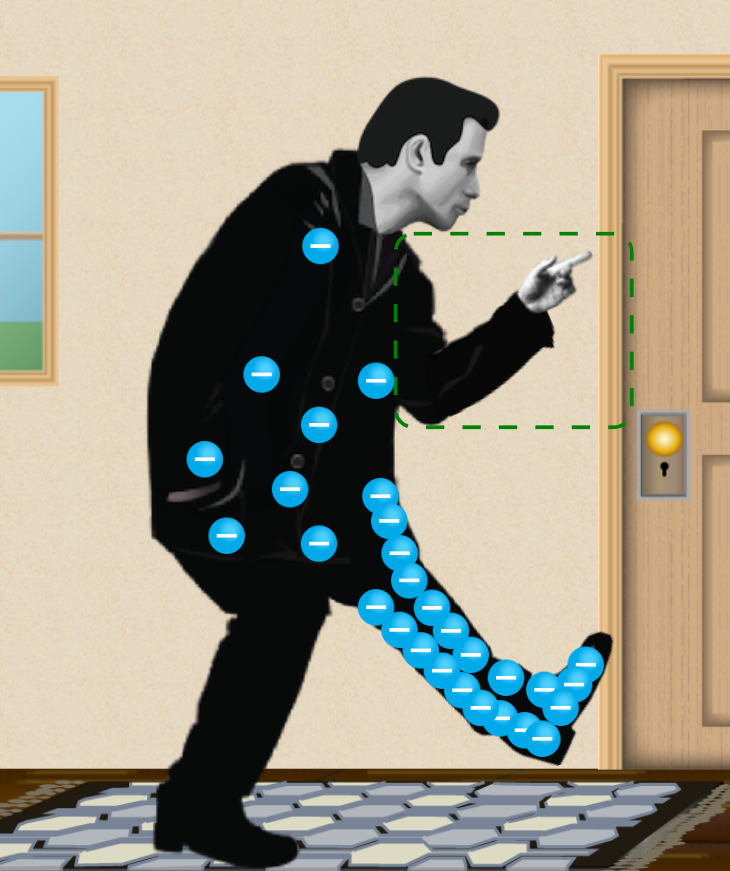
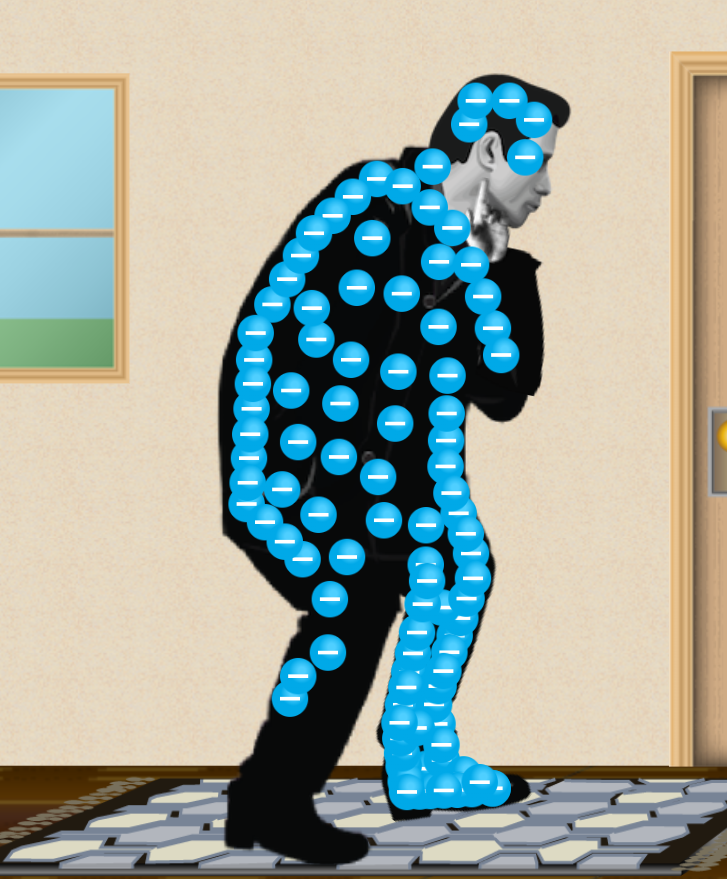
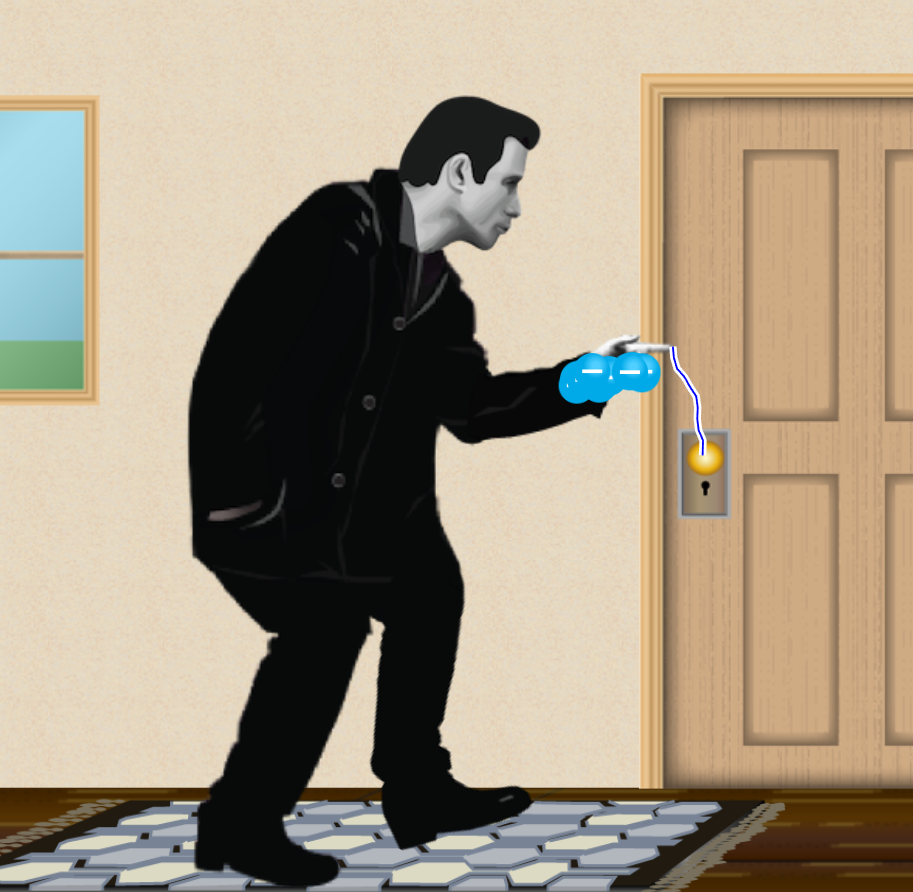
Remember that air is an insulator, but it can become a conductor if electrons rip through it.

The reason why you get more static in the winter in generally because some electrons are lost to humidity in summer
But in winter, it’s barely humid, so the electrons don’t escape as easily
Well, we know 2 negatively charged objects repel, and 2 objects with the opposite charge attract.
What happens when you put a negatively/positively charged objects, something weird happens. The neutral object.. attracts?
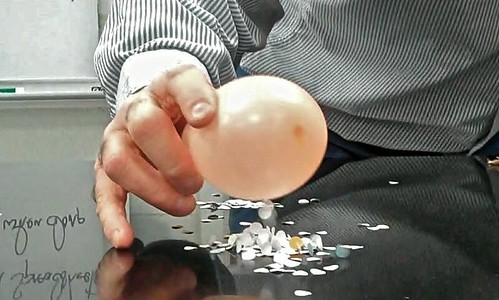
When a negative object gets near a neutral object, the electrons move because of them repelling
Same charged objects repel, so when an electron gets near another electron, the electrons move away
This creates a space of protons
Electrons and protons are attracted to each other
So the electrons stick to that space of protons
This is called “polarization”
An example of this is the balloon and paper. The balloon is rubbed against the sweater (assumption). The paper cannot lose electrons.
Now, the balloon is near the paper. The paper’s electrons moved away from the balloon’s electrons. This creates a space of protons on the paper
And the balloon attracts to the paper
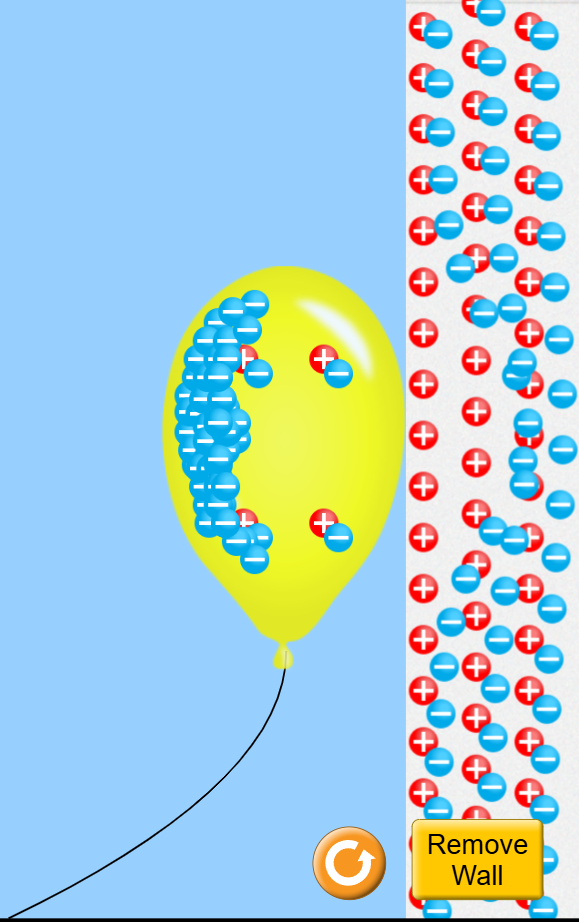
Look, the balloon has a lots of electrons
So does the wall. The wall has a neutral charge
The electrons moved in the wall
There’s a space of protons
The balloon sticks to the wall