PSY 4521: Social Support
How is Social Support Defined and Measured?
Social Support (Most cited definition): “Social support is defined as information leading people to believe they are cared for and loved, esteemed, and a member of a network of mutual obligations.”
Three Main Functions
Emotional Support: Listening and showing interest, encouragement
Tangible/Instrumental Support: For example, giving someone a ride somewhere.
Informational: Giving advice or information
Measures of Social Network
Social Network Size: How many friends/family members you have.
Frequency of Contact with Social Network: How often you see/communicate with friends/family members
Perceived Social Support
Your perception of what is available to you if you needed it.
Not necessarily that you are getting it
Received and Enacted Support
Received Support: Support you received from a support provider.
Enacted Support: Providing support to someone.
Support Seeking
The extent to which you seek support when under stress. The act of seeking it out.
I talked to someone about how I was feeling
I accepted sympathy and understanding from someone.
Helpful vs. Unhelpful Support
Helpful Support: Providing emotional support and/or showing concern.
Unhelpful Support:
Distancing (did not want to hear about it),
Minimizing (more common) (“look on the bright side”),
Bumbling (Did not seem to know what to say),
Blaming (“I told you so”)
General vs. Event-Specific Support
Support can be assessed in terms of:
General Support: General perceptions of what is available or typically received.
Event-Specific Support: What was actually received following a specific event.
Perceived and Received Support: Only moderately correlated
Meta-analysis of 33 studies
Correlation is .35 (medium)
Implications for intervention.
Need to pay close attention to measures in studies
Social Support and Mental Health
Social support and well-being measures among kids and adolescents has a small to moderate relation.
Perceived support is most related to well-being, combined across outcomes.
Across the adult life span (19-95), perceived support was most related to lower distress.
Why are Some Forms of Support Unrelated to Well-Being?
Network size/frequency of contact
Most people do not always mean more supportive people.
Could lead to more distress if you have tons of people in your life, or people in your life who cause distress.
Receiving support
Might reduce self-esteem or cause guilt
Support may or may not be what one really needs/wants (matching)
Support may be seen as intrusive
Sometimes people are overly supportive.
Distress may “cause” one to receive support
Why is Perceived Support more Helpful than Other Kinds of Support?
Perceived support may increase coping competence by providing comfort that supporters are available to help if needed.
Not confounded with distress in the same way that seeking and receiving support may be.
Seen and receive support only when you are really upset.
Measure of Unhelpful Support:
Distancing (least common)
Bumbling
Minimizing (most common)
Blaming
Items form the inventory of socially supportive behaviors (Barrera, 1981) (helpful support)
Direct guidance
Nondirective support
Positive social exchange
Tangible assistance
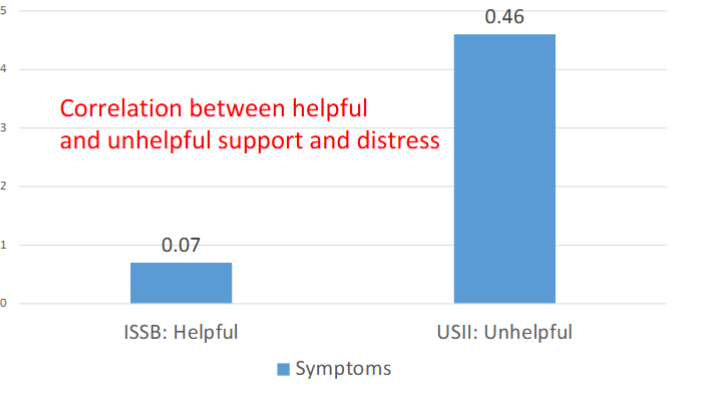
Helpful support is more common than unhelpful support
Receiving unsupportive interactions is more “harmful” than receiving supportive interactions is “helpful”
Study: Receiving social support is more positive for recipients than support providers expect.
Sample: Undergraduate students recruited to send an email to someone on campus that they thought needed some support that they had not reached out to you yet.
Method: Supporter providers wrote the email.
Rated how awkward the recipient would feel, the warmth, and competence of their message, how positive/negative the message would be for recipient.
How awkward they felt and how positive/negative they felt.
Recipients received the email and rated the same.
Results: Recipients rated messages as less awkward, more warm and competent, and more positive than did providers.
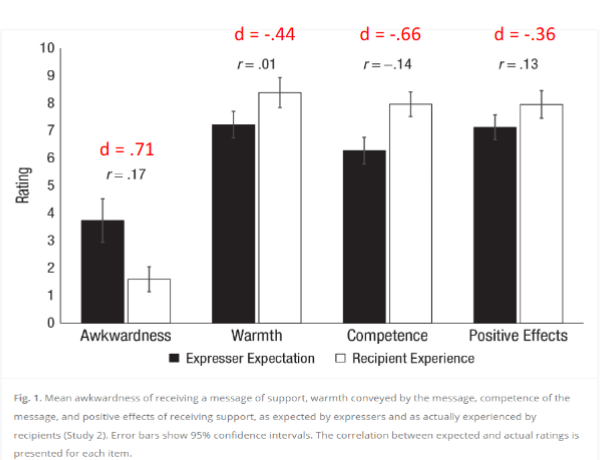
Low r scores means the ratings were not highly correlated
Conclusions
Although people may want to support those in need, they may be somewhat hesitant to express it.
Guided by expectations of recipients response, but these expectations are overly pessimistic.
People who sent the message underestimated how positively their support was received.
Expressors focus more on their competency in providing support rather than fully appreciating the warmth and compassion that expressing support conveys to recipients.
Underestimating the positive impact of expressing support could lead people to miss opportunities to help others more often in daily life.
Social Support and Physical Health
Is social support related to actual physical health and longevity?
Short answer, very strong yes.
Survival depends on effective social functioning not just in infancy but throughout life.
Study: Meta-analyses of Social Support and Health Studies (Vila, 2021)
Method: 23 meta-analyses, 1,187 primary studies, almost 1.5 million participants
Results: Meta-analyses obtained highly consistent results with significant effect sizes confirming.
Association between social support and individual health/longevity.
Study: Meta-analysis of 148 studies examining social support and subsequent mortality (Holt-Lunstad, 2010)
Individuals with high levels of support were 50% more likely to be alive an average of 7.5 years later.
Social support increases odds of survival more than many other factors (e.g., exercise, weight)
Social Support Related to Heart Disease and Cancer? (Tay, 2013)
Result: Lack of social support increases risk of getting cardiovascular disease (CVD)
Studies assess social support in healthy populations and then see who develops CVD.
Those with low support are 1.5 to 2 times more likely to develop CVD.
Lack of social support more associated with poor prognosis if have CVD than with getting CVD in the first place.
Emotional support more important than social integration.
Less Research on Social Support and Cancer Risk and Prognosis
Existing research shows a weak relationship
May depend on severity of cancer
More related to prognosis for types of cancer with higher survival rates.
Social integration was more important than perceived support.
How Does Social Support Improve Health and Reduce Risk of Mortality?
Pathways from Social Support to Physical Health
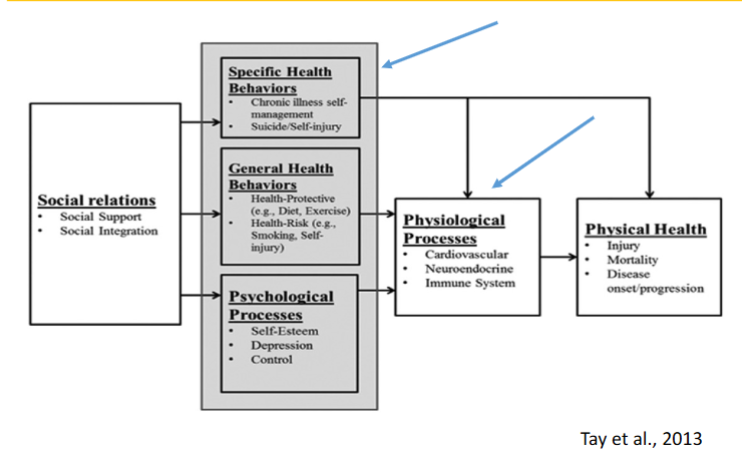
Important Takeaways
Social support increases odds of treatment adherence
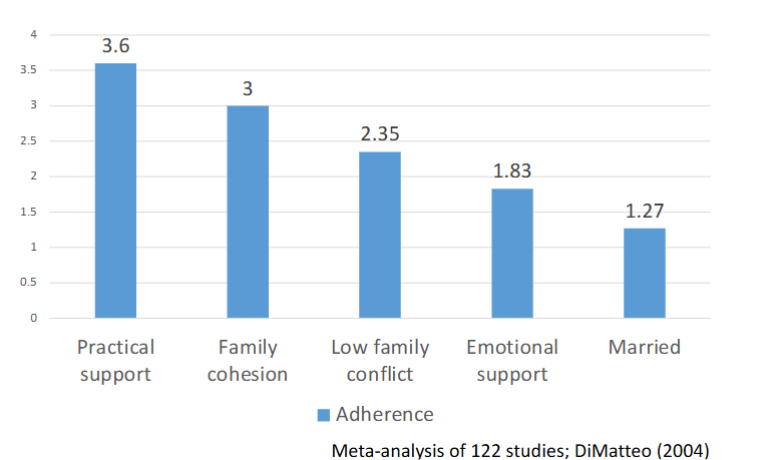
Social support is not as related to general (vs. specific) health behaviors
Some network members promote unhealthy behaviors
Physiological mechanisms linking social support to health
Social support may also affect health through affecting physiological responses to stress.
Positive social support associated with dampened autonomic nervous system (ANS) and hypothalamic-pituitary-adrenal (HPA) responses to stress.
Conflict associated with heightened ANS and HPA responses to stress.
Study: Social Relationships and Allostatic Load
Sample: 949 U.S. adults (MIDUS study)
Social Relationships: Support from family, friends, spouse separately.
Emotional support
Negativity
Amount of contact with person
Allostatic Load: Assessed through HPA axis activity (cortisol), cardiovascular functioning (blood pressure), inflammation (biomarkers), and lipid/fat metabolism (BMI, cholesterol)
Results: Social support reduced allostatic load.
Ties with spouse and family were more related to allostatic load (than friends).
Having a more supportive spouse was associated with lower allostatic load.
Effect of increased support similar to effect of additional 9 hours of exercise per week.
Having more negative interactions with family members/spouse associated with higher allostatic load (interpersonal stress).
Study: Attachment Figures and Pain Experience
Method: Women in long-term romantic relationships were brain scanned (using fmri) as they received painful stimuli (heat) while viewing pictures of their partner or control images (stranger, object).
Results:
Viewing partner (vs. other) pictures while receiving painful stimulation led to.
Lower self-reported pain ratings
Lower pain-related neural activity (dorsal anterior cingulate cortex, anterior insula).
Increased activity in the ventromedial prefrontal cortex (VMPFC) - more active in response to cues that signal safety.
Greater VMPFC activity in response to partner pictures was associated with
Longer relationships and greater perceived partner support.
Reduced pain ratings and pain-related neural activity.
Less pain if viewing picture of your partner, especially in higher pain conditions.
Attachment figures inhibit stress-related responses which may be one way support is associated with better health.
Stress, Trauma, and Relationships
How does childhood adversity affect relationships and social support?
ACEs increase risk for mental and physical health problems
Depression and anxiety
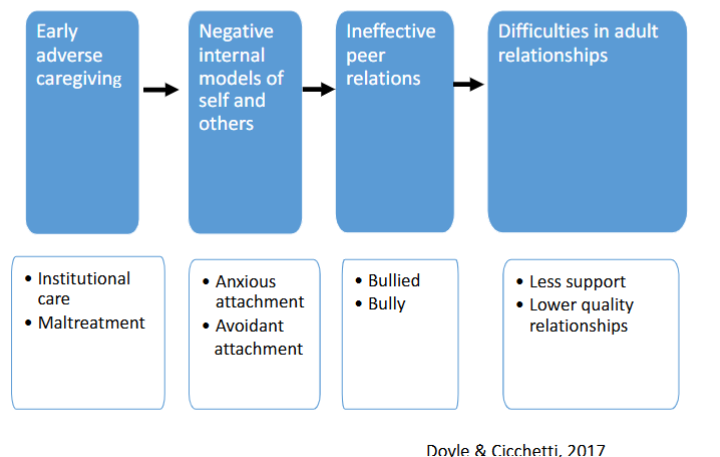
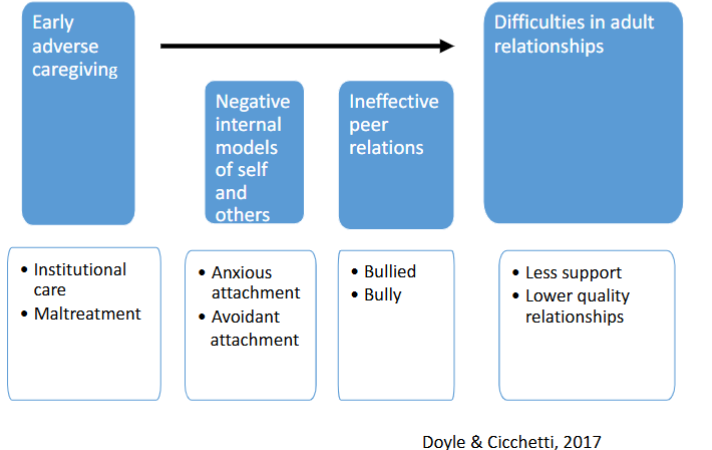
Effect of Adverse Caregiving on Attachment and Relationships throughout the Lifespan
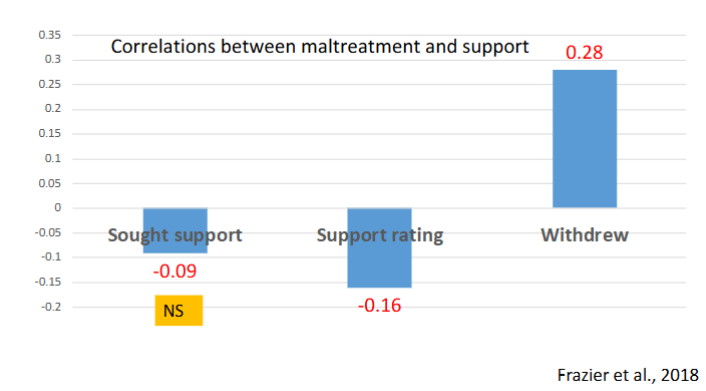
Child maltreatment associated with rating others as less supportive and withdrawing from others on a daily bias.
Effect of adverse caregiving on attachment and relationships throughout the lifespan
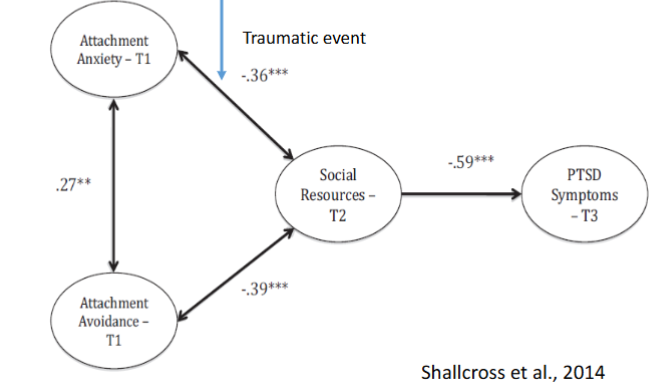
Adult attachment insecurity is associated with having fewer support resources following trauma exposure, which is associated with more PTSD symptoms.
Effect of adverse caregiving on attachment and relationships throughout the lifespan
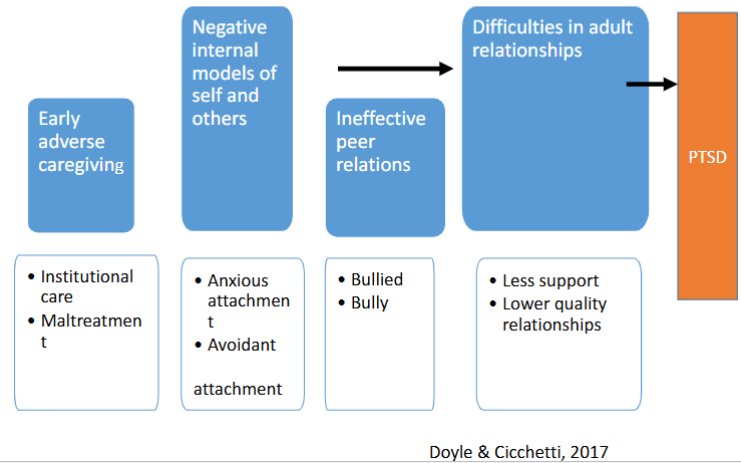
How can stress/trauma affect relationships and social support processes?
Individualistic Focus in Psychology
Stress research focuses on own stress and own mental and physical health.
Less attention to effects of stress on relationships.
Trauma research focuses on the person who has experienced the trauma.
Less attention to how close others are affected.
Social support research focuses on perceived support.
Less attention to the support provider.
People report that stress affects their relationships as much as their mental and physical health
How Does Stress Affect Relationships?’
Two Common Ways that Students Say Stress Affects their Relationships
I am more irritable
I isolated myself
Both
Experiencing more stressors associated with lower relationship satisfaction
Individuals who reported more stressors in the past year reported less relationship satisfaction.
Least satisfied group was those with high financial strain and high levels of stressors.
PTSD symptoms associated with relationship problems (my PTSD symptoms, my report of relationship problems)
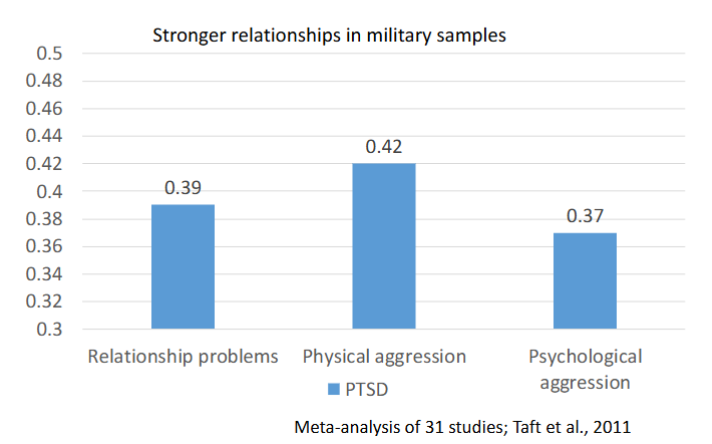
(My) PTSD also related to (my) partners’ reports of relationship problems and partners’ distress.
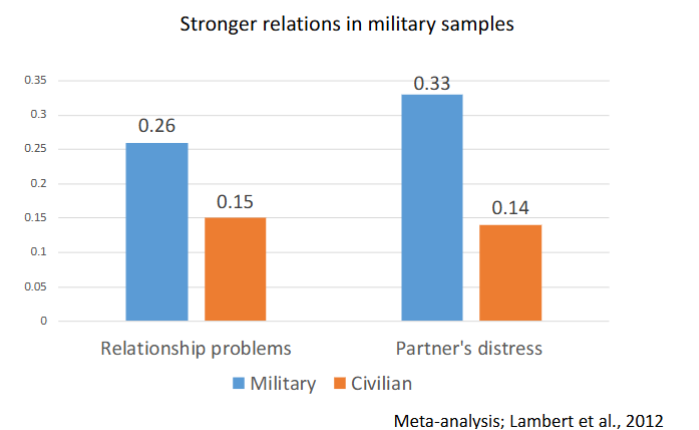
Numbing Symptoms of PTSD are most related to relationship and intimacy problems.
Loss of interest in activities
Feeling detached from others
Inability to feel positive emotions
Sense of foreshortened future
Summary of Stress and Relationships
People who are more stressed are less satisfied with their relationships.
People who have more PTSD symptoms are less satisfied with their relationships and so are their partners.
If one person has more PTSD symptoms, his/her partner tends to be more distressed.
Study: Support Processes in Kidney Transplant
Sample: 121 couples in which one partner had received a kidney transplant.
Method: Examined stress, depression, and marital satisfaction in both partners.
Helpful and unhelpful support offered (spouse report)
Helpful and unhelpful support received (patient report)
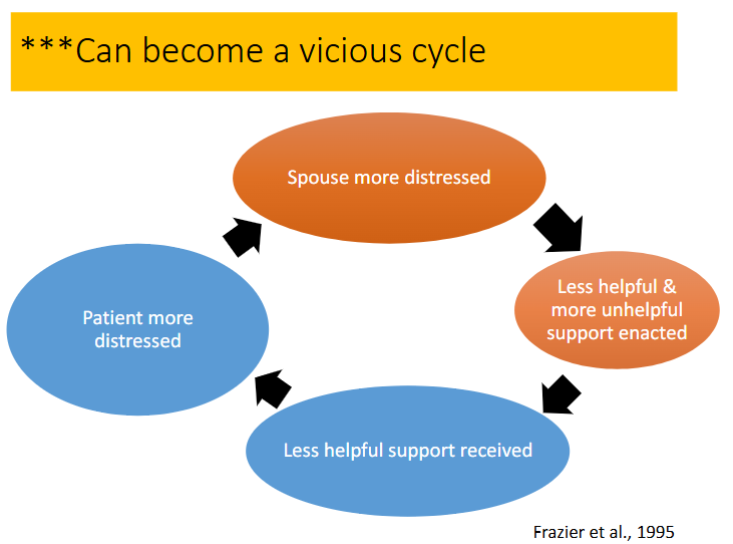
Results: Stress associated with lower marital satisfaction and less helpful social support.
In both partners, more stress was associated with lower marital satisfaction.
If patients were more depressed, their spouses were more depressed.
If spouses were more stressed, they reported offering
More unhelpful support behaviors
Fewer helpful support behaviors
If spouses were more stressed, patients reported receiving
Fewer helpful support behaviors
Social Support Capitalization
Capitalization Attempts and Responses
Capitalization Attempt: Telling someone about a positive event you experienced.
Capitalization Response: The other person’s response to your positive event.
Capitalization Refers to Positive Events: Social support refers to responses to negative events.
Four Types of Responses
Active and Constructive: Nonverbal communication: Maintaining eye contact, displays of position emotions, such as genuine smiling, touching, laughing.
“That is great. I know how important that promotion was to you!”
Passive and Constructive: Nonverbal communication: Little to no active emotional expression.
“That is good news.”
Active and Destructive: Nonverbal communication: Displays of negative emotions, such as furrowed brow, frowning.
“That sounds like a lot of responsibility to take on. There will probably be more stress involved in the new position and longer hours at the office.”
Passive and Destructive: Nonverbal communication: Little to no eye contact, turning away, leaving room.
“What are we doing on Friday night?”
Only active-constructive responding is related to better relationships (e.g., satisfaction, trust, intimacy)
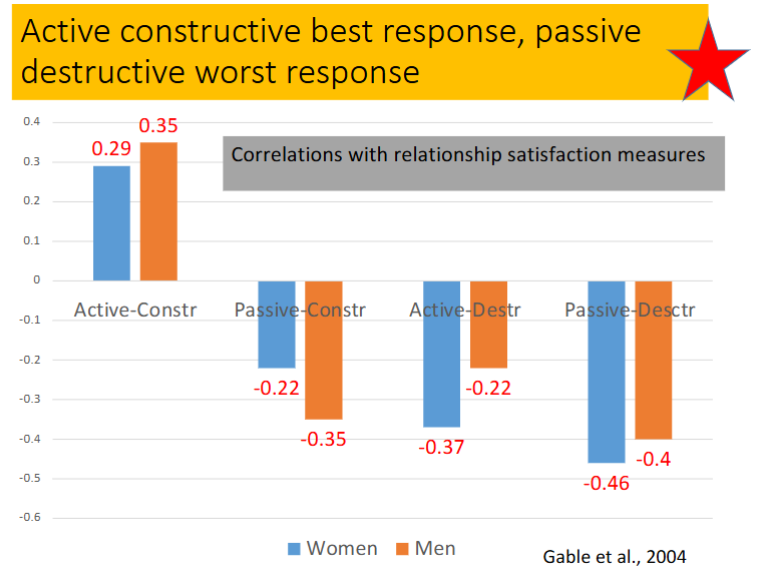
Active Constructive Responses are also Associated with Greater Individual Well-Being
More positive mood
Lower negative mood
Greater life satisfaction
Less loneliness
Higher self-esteem
Model of Response to Capitalization Attempts
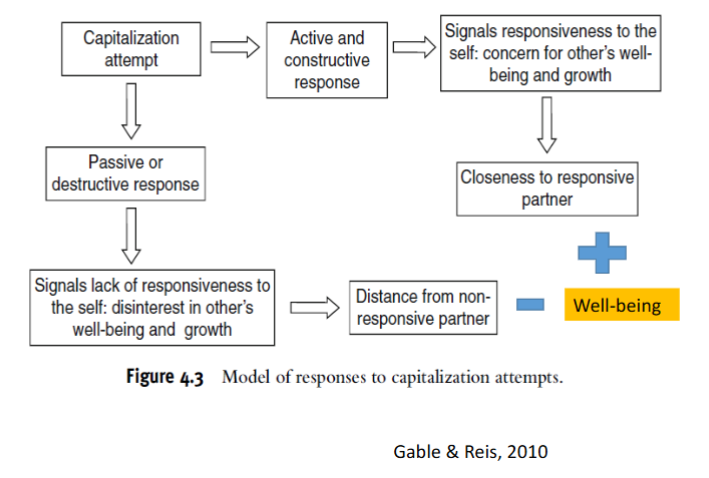
Responses to positive events more important than responses to negative events.
Had each member of a couple discuss a positive and a negative event.
After each event, each person rated their partner’s responsiveness.
Perceived responsiveness when sharing good events was more related to relationship outcomes than responsiveness when sharing bad events 2 months later, especially for women.
Why is Responsiveness to Positive Events more related to relationship satisfaction than responsiveness to negative events?
Compared with sharing a problem, there are fewer risks in sharing a good event. The benefits come without the costs of self-worth inherent in seeking out help for a problem or stressor.
When someone discloses a positive event, and their partner responds with active-construction, both partners experience positive emotions and their relationship becomes stronger.
Positive events also happen more often than negative event.
Social Support Interventions
How do we Intervene to Increase Social Support?
Social network
Support seeking
Perceived support
Functions: Emotional, tangible, informational
Helpful or unhelpful
Received and provided support
General vs. Event specific
Studies that Attempt to Increase Social Network/Received Support
Study: Befriending
Person in need is introduced to 1 or more people who provide them with emotional support.
Monitored via an agency
Only included individual (vs. group) interventions
Contact could be in person, phone, or email.
Usually lay volunteers (vs. professionals)
Results: Befriending interventions result in small reductions in depression but no increases in social support.
No difference in social support between those who did and not get “befriended”
Small effects of interventions to improve quality of life in cancer patients and spouses - only Kuijer (2004) focused on social support.
Four Types of Interventions to Reduce Loneliness
Improving social skills
Communication skills
Enhancing social support
Cancer couples intervention
Increasing opportunities for social interaction
Befriending
Changing maladaptive social cognitions (CBT)
Changing beliefs about relationships
Interventions targeting cognitions are most effective in decreasing loneliness
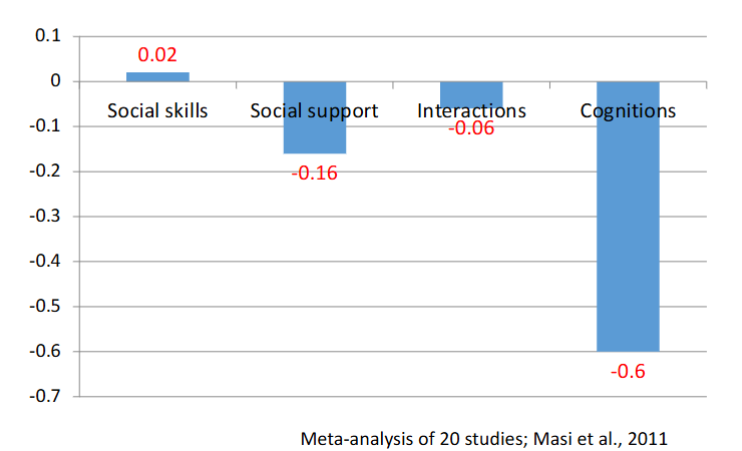
Cognition of Lonely People
Lonely individuals are
More sensitive to social threats
Attend more to negative social information
Have more negative social expectations
Remember more of the negative aspects of social events
Behave in ways that confirm their negative expectations
Efficacy of social-cognitive interventions consistent with importance of perceived vs. received support.
Effects of Adverse Caregiving on Attachment and Relationships throughout the Lifespan
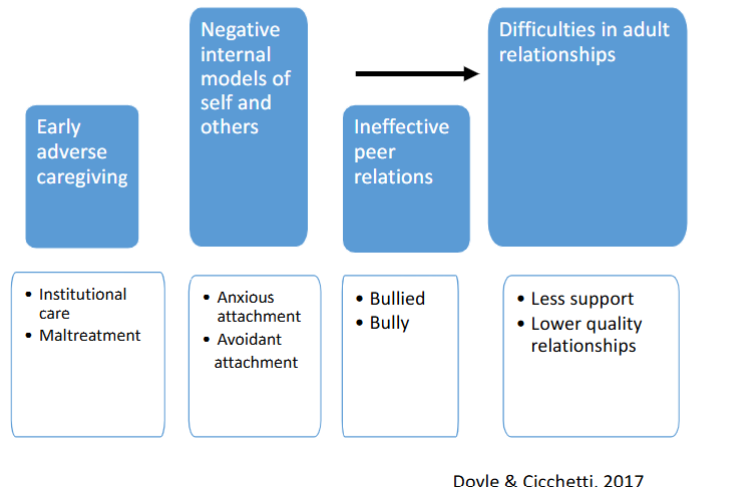
Individuals who scored higher on attachment avoidance underestimated their partners’ responsiveness
Thought their partner was less responsive (supportive) than did trained judges.
Just providing more support wouldn’t necessarily help.
Need to change their interpretation of support they are getting.