Big bang theory
Big bang theory - a cosmological model explaining how the universe began. It suggests that the universe started its expansion about 13.8 billion years ago.
the idea of the big bang theory is somewhat similar to the bread-raisin model
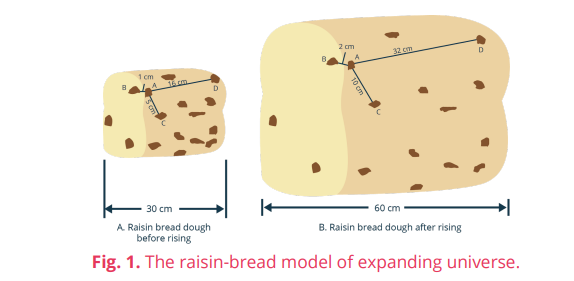
Singularity - an area predicted to be in the core of a black hole with very high temperature and density.
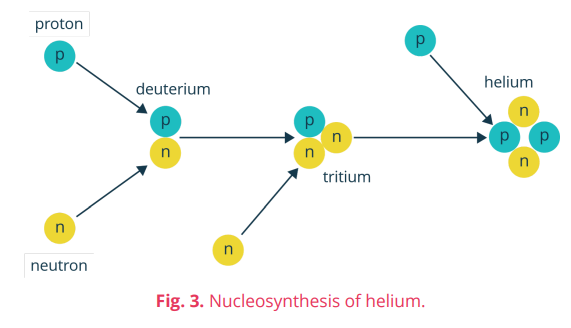
Nucleosynthesis - the formation of elements
The Proponents of the Big Bang Theory
Georges Lemaître, Edwin Powell Hubble, Arno Penzias, and Robert Wilson.
Georges Lemaitre - a Belgian priest, suggested the idea of the expanding universe. He is considered as the first proponent of the big bang theory
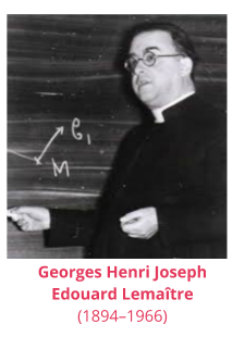
the universe originated in an explosive act of primeval atom or the ‘Cosmic egg’ which was like a huge atomic nucleus
He explained that the cosmic rays were “ashes and smoke of bright but very rapid fireworks,” and they originated when the primeval atom disintegrated
Edwin Powell Hubble - an American astronomer who established the Hubble’s law which provided an evidence that the universe was not static but expanding
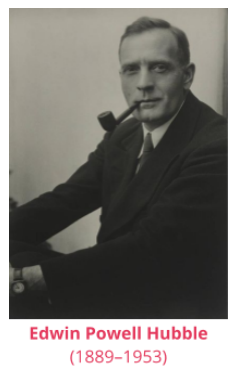
In 1923, Hubble spotted what he thought as a flaring nova star in the M31 nebula or the Andromeda constellation using a Hooker telescope. The Andromeda constellation is now known as Andromeda galaxy, the nearest galaxy in the Milky Way.
Hubble carefully studied the photographic plates captured by other astronomers and realized that what he saw was a Cepheid star ― a star that pulsates radially, brightening and dimming periodically
he was able to postulate the existence of other galaxies. he noted that there was more to the universe beyond the milky way
in 1929, he noticed that all the galaxies seemed to be moving away from Earth with velocities that increased in proportion to their distance. This means that the amount of redshift is proportional to the distance of the galaxy, i.e. nearby galaxies have smaller redshifts than distant galaxies
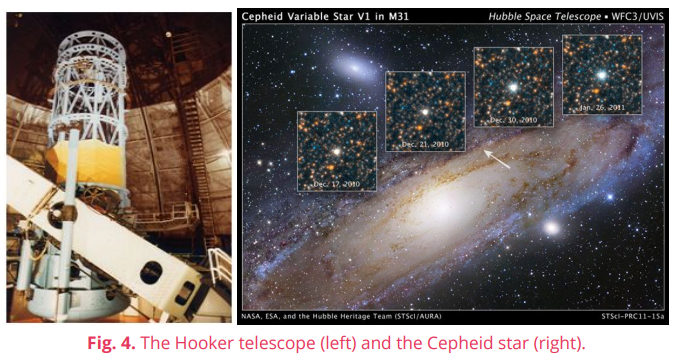
Hubble’s Law - relationship of the velocities of distant objects in the universe in proportion to their distance from Earth
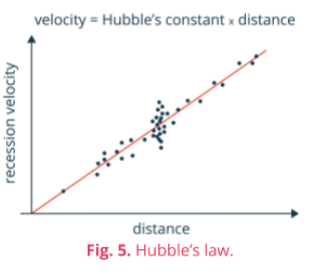
he noticed that all the galaxies seemed to be moving away from Earth with velocities that increased in proportion to their distance
Arno Penzias and Robert Wilson - studied the cosmic radiation in 1964
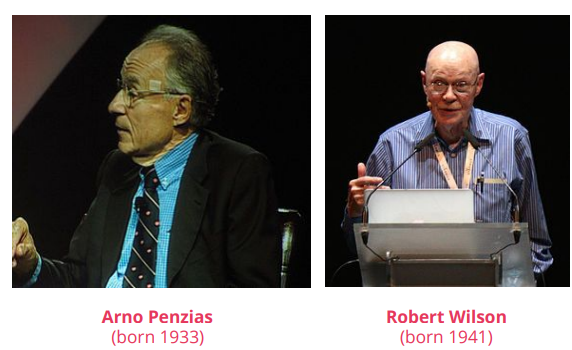
discovered that microwaves with wavelengths of about 7 centimeters were present in space. These waves were referred to as the cosmic microwave background (CMB) radiation
CMB radiation is believed to be the thermal energy released when the ionized gases became neutral particles as the early universe cooled down. This radiation served like a ‘leftover’ when the universe was formed
Drawbacks of the Big bang theory - it just explains how it evolve and not where it originated. In addition, this theory also failed to explain how the galaxies formed