ANALYSIS OF FINANCIAL STATEMENT
WHAT IS FINANCIAL ANALYSIS?
Assessment of Firm’s Past, Present and Future financial performance
OBJECTIVES OF FINANCIAL PERFORMANCE
Capitalize on the strengths
Explanation: Financial analysis helps a company recognize areas where it's performing well so it can build on them.
Example: If a company sees that its online sales are growing rapidly, it can invest more in e-commerce to boost profits even further.Take remedial action to improve upon weaknesses
Explanation: It identifies weak areas, allowing management to fix them before they affect the business.
Example: If a firm has rising inventory costs, it may find ways to reduce waste or negotiate better deals with suppliers.To standardize financial information for comparison purposes
Explanation: Standard formats (like income statements and balance sheets) make it easier to compare performance.
Example: Two companies in the same industry can compare their profit margins because their financials are reported in the same structure.To evaluate current operations of the company
Explanation: It helps management understand how the business is performing right now.
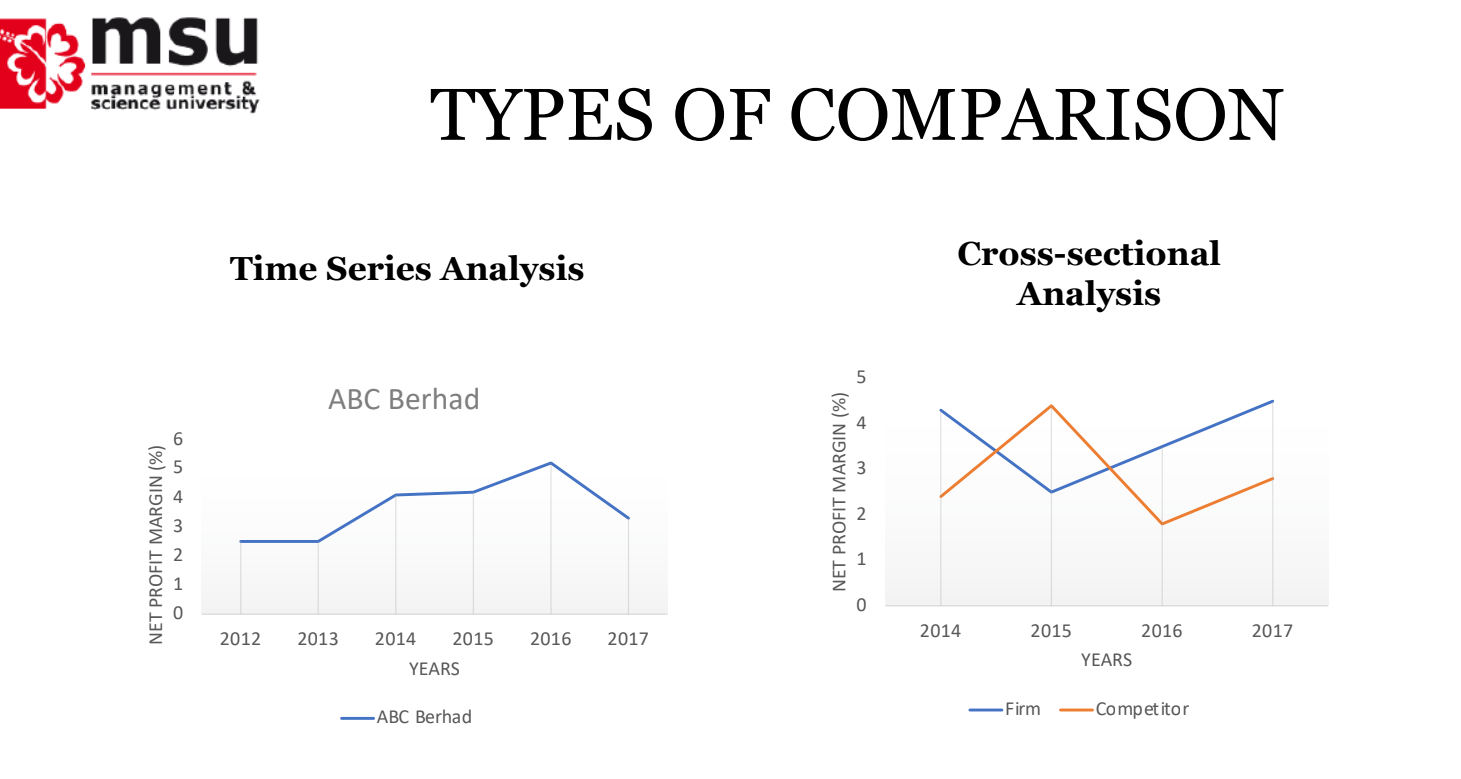
Example: A company may use this to see if its new product line is profitable by checking current revenue and expenses.To compare the present performance with the past performance
Explanation: It tracks progress or decline by comparing financial results over time.
Example: A retailer may compare this year's sales with last year's to see if its marketing strategy worked.To compare the performance of the company with other firms or industry standards
Explanation: Helps determine if the company is keeping up with or outperforming its competitors.
Example: If a business's profit margin is 8% but the industry average is 12%, it may need to investigate why it's underperforming.To assess the efficiency of operations
Explanation: Analyzes how well resources are used to generate profits.
Example: A company with high output but low labor costs shows strong operational efficiency.To assess the risk of operation
Explanation: Identifies potential financial or operational threats that could impact the company.
Example: A firm heavily dependent on a single supplier might face higher risk if that supplier fails.
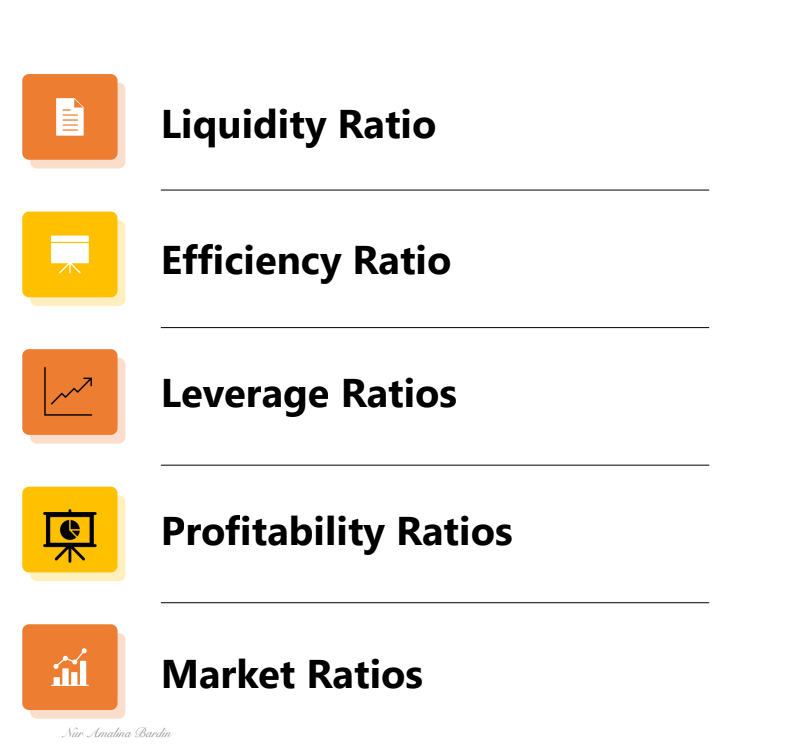
TYPES OF FINANCIAL RATIO
LIQUIDITY RATIO
This is talking about liquidity ratios, which help us understand how well a company can pay off its short-term debts (like bills or loan payments due soon).
These ratios compare what the company owns short-term (like cash, inventory, or money others owe the company) to what it owes short-term (like bills and loans due soon).
If the ratio is high, it means the company has enough resources to pay its debts on time — this is called being “liquid.”
If the ratio is low, the company might struggle to pay its creditors, which can lead to problems.
So, higher ratios = better ability to pay short-term obligations.