MD-1
LOs:
1) Describe the fundamental medicinal chemistry principles behind the design of selective b2-agonists and muscarinic antagonists.
2) Explain the essential structure-activity relationships (SAR) for these molecules.
3) Be prepared to apply these principles to the design of long-acting analogues in both drug classes.
Salbutamol:
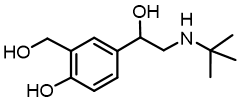
mimic for the natural ligand for the adrenergic receptor adrenaline and noradrenaline.
this is SABA
Ipratropium:
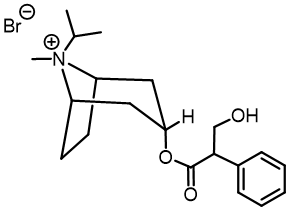
anti-muscarinic. Binds to prevent activation by the natural ligan Ach
This is SAMA
Starting compound is something that binds to the receptor then synthesise compounds to understand which chemical structures are important for it to interact with target. We can then optimise these structures to have selectivity.
SAR Acetylcholine:
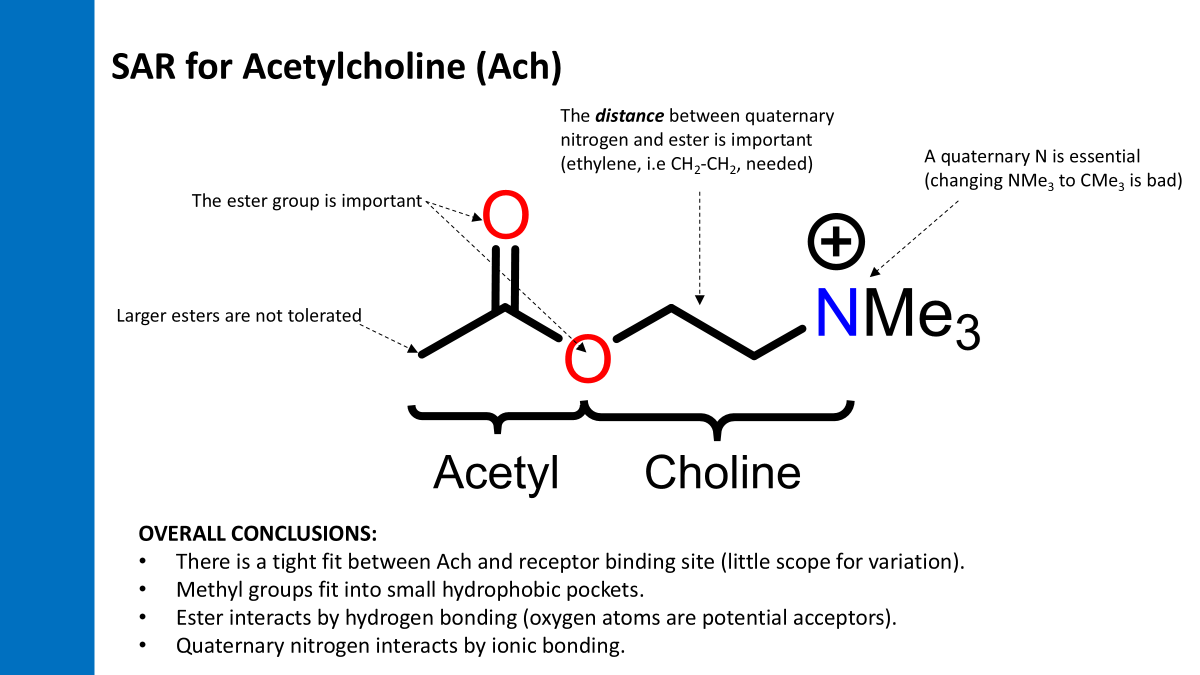
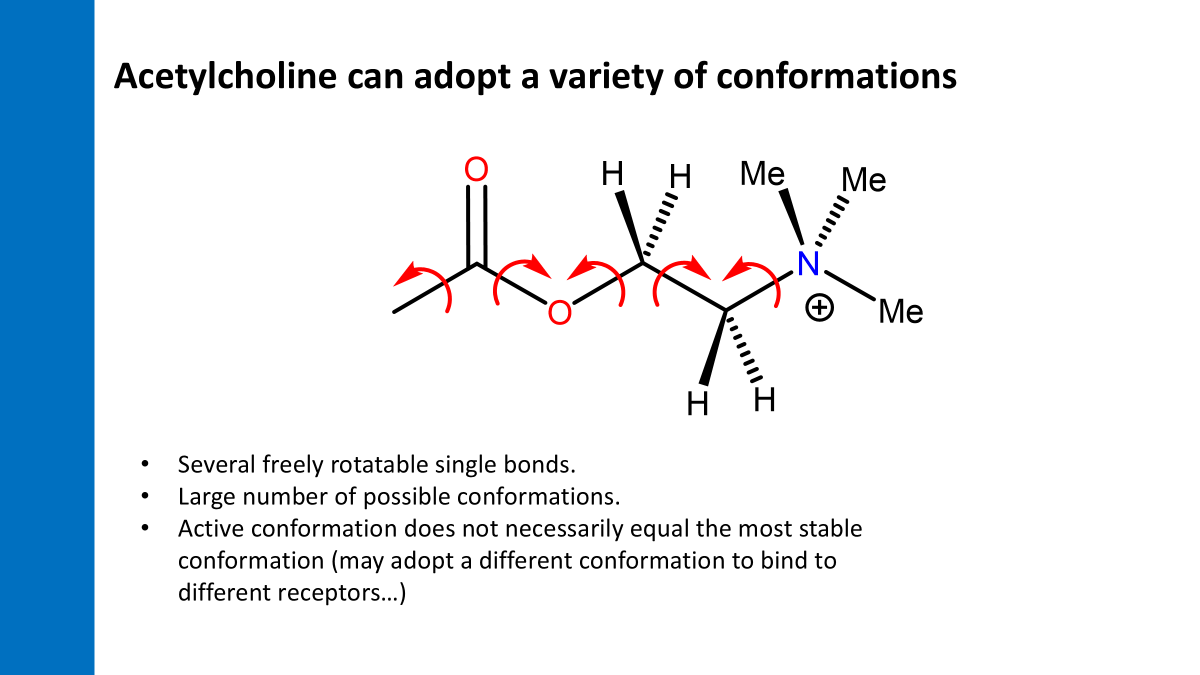
Two types of cholinergic receptors:
Nicotinic and muscarinic. These are named after NPs showing receptor selectivity and agonist activity.
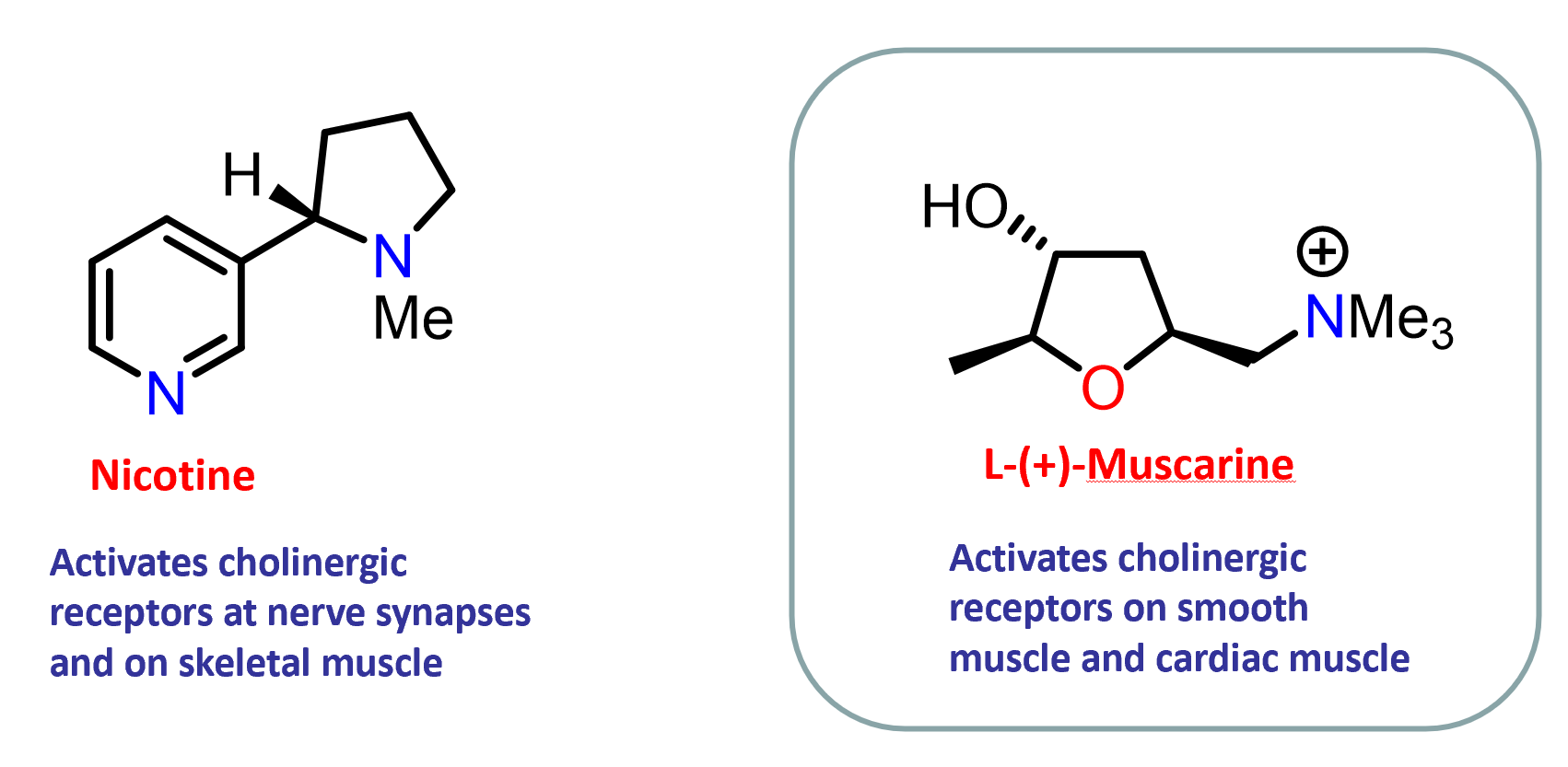
Comparing the structure of Ach and Muscarine:
positively charged Ach is the same in muscarine
oxygen in Ach ester which we know is important for interaction, is also present in muscarine in the five membered ring.
So in muscarine there is a conformationally restricted analogue of ACh. This restriction reduces the number of possible conformations
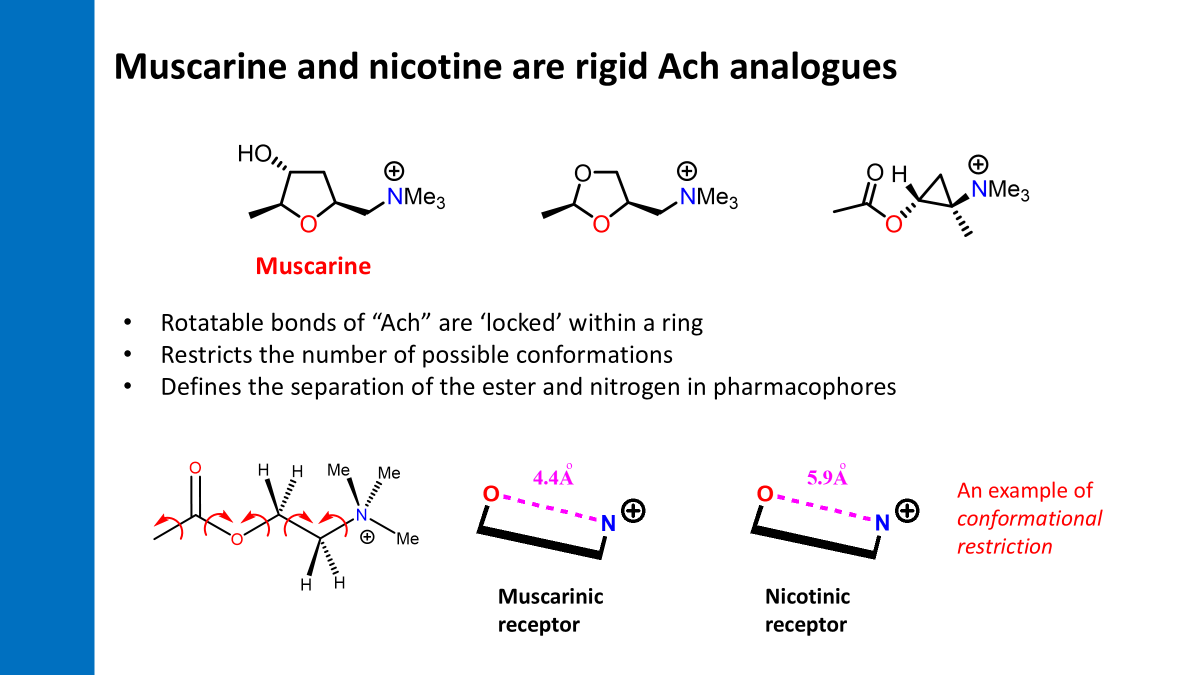
for binding to nicotinic receptor, ACh needs to adopt a different shape with a bigger separation between the ester unit and the nitrogen.
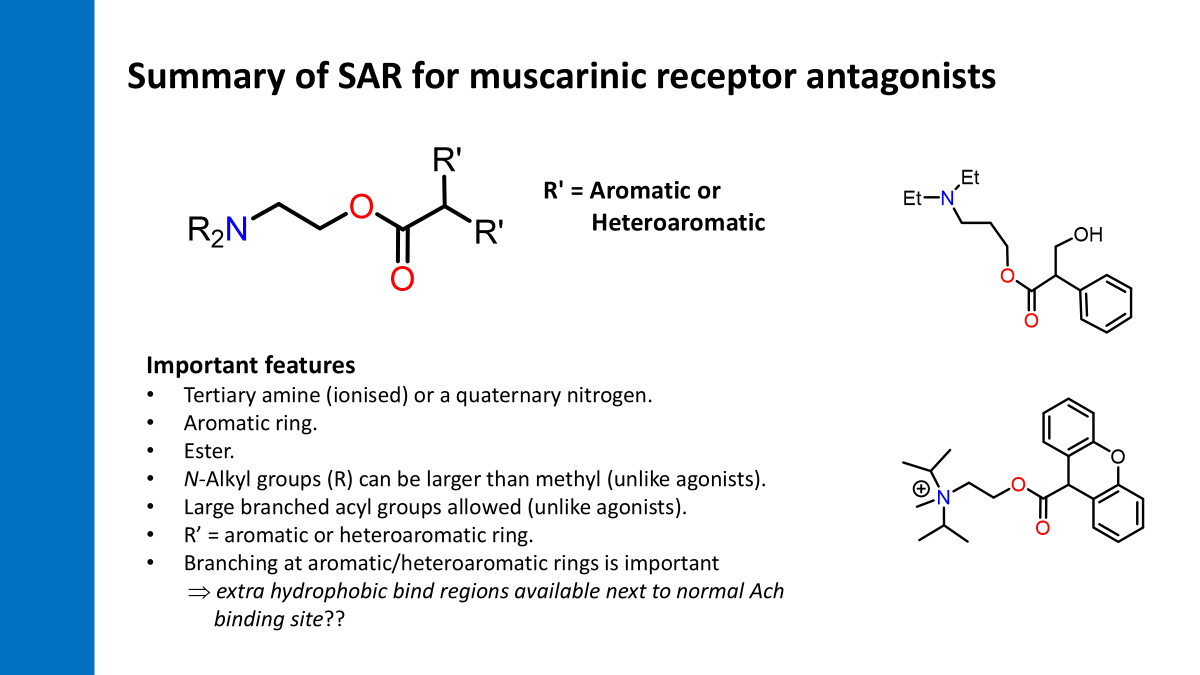
Development of cholinergic antagonists:
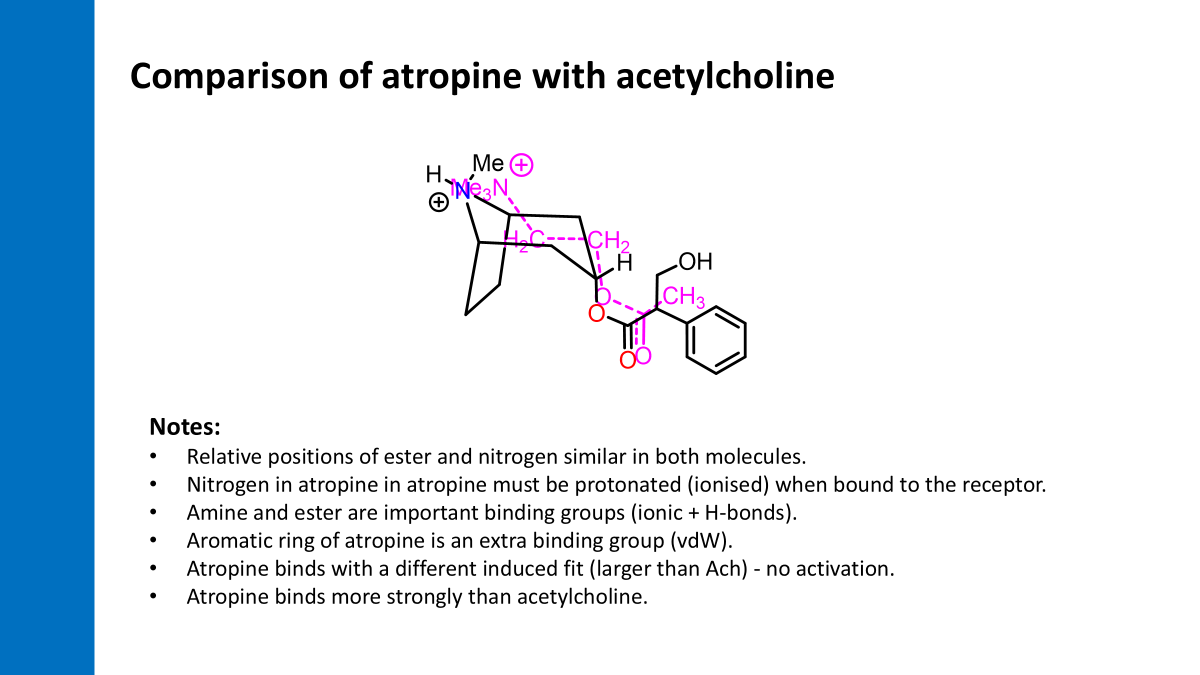
The reason they work, compare the structure with Ach.
Atropine contains the two important functional groups of Ach: ester (which we know is involved in H-bonding with the drug target) and nitrogen, which could be positively charged at physiological pH if it’s protonated.
Atropine has the additional aromatic ring which makes structure more hydrophobic allowing for additional vdw type rxns/ non-covalent interactions with the target receptor this means that atropine binds more strongly to Ach. Binds in preference to Ach
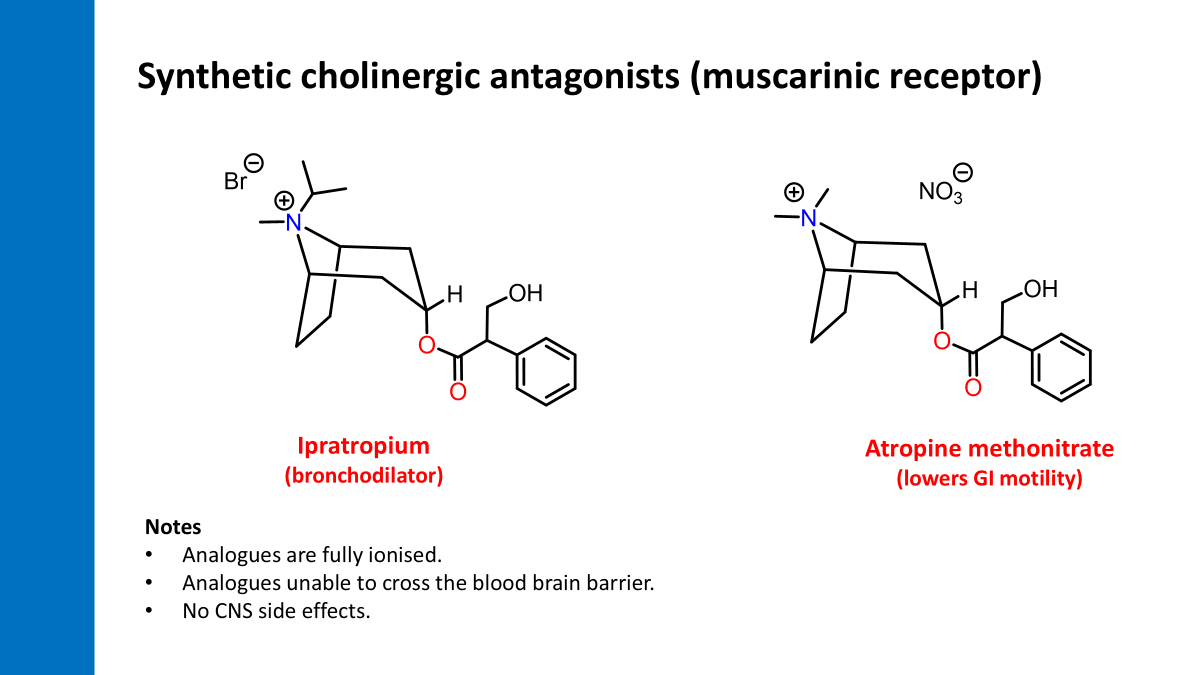
structural modification to ipratropium: Permanently positive charge which enables ipratropium to be confined to lungs upon inhalation avoiding systemic side effects.
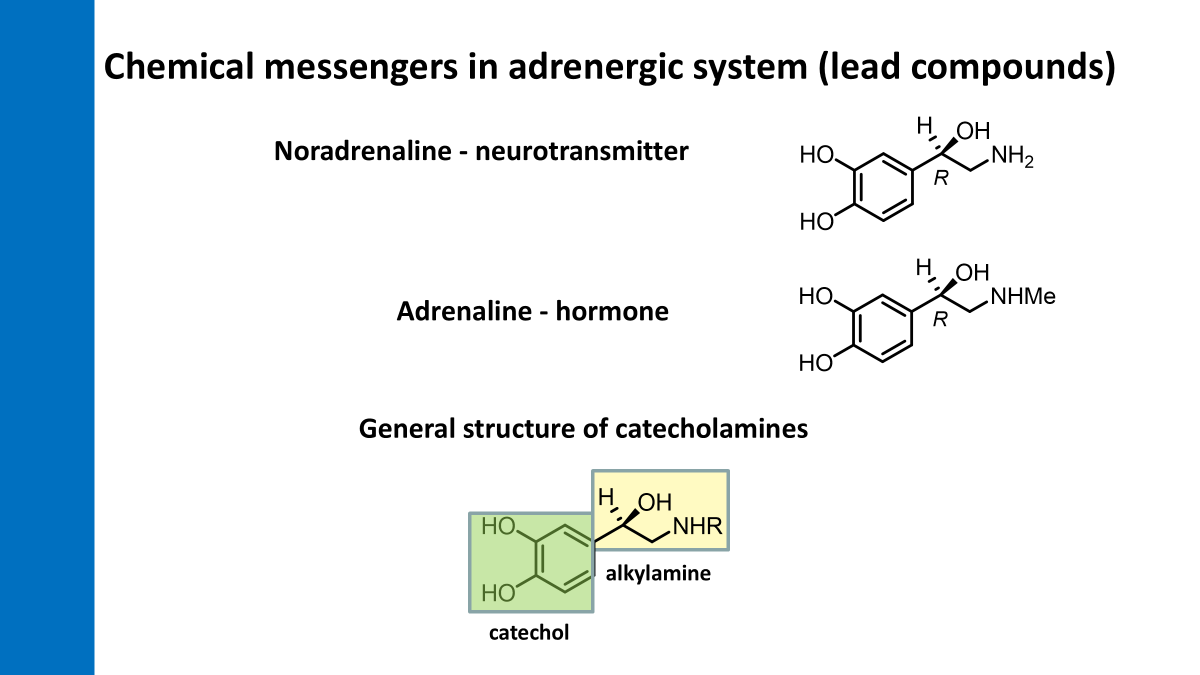
B2 agonists SAR:
General structure of catecholamines:
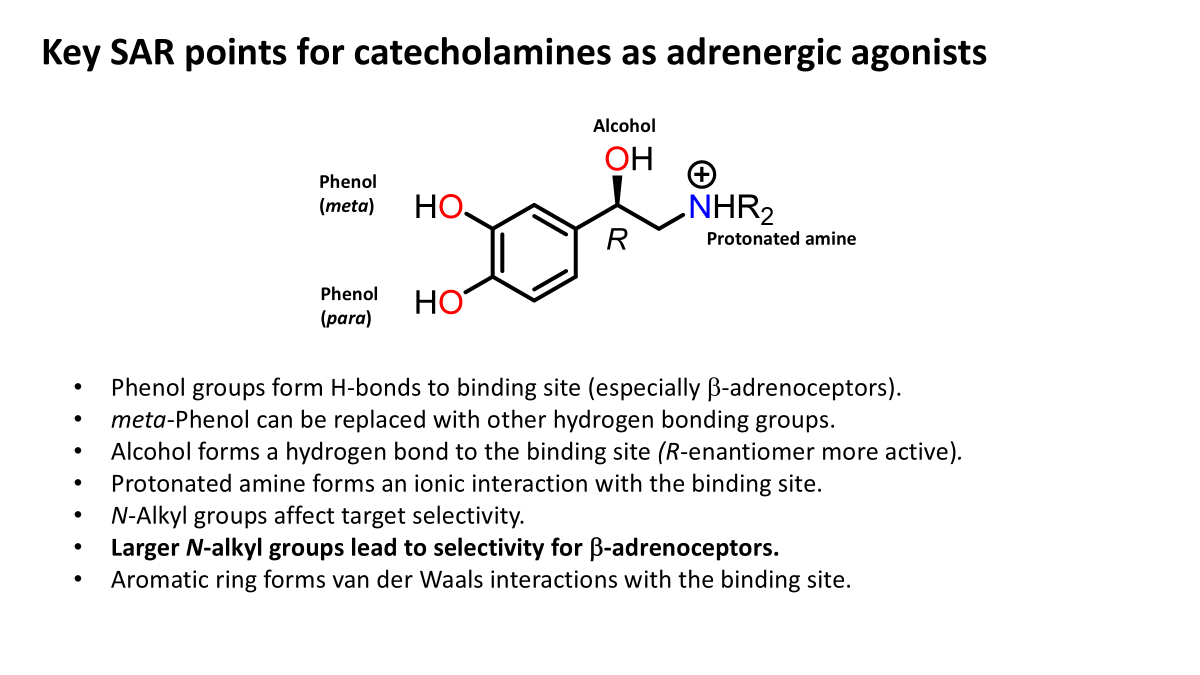
it is thought that the phenolic hydroxyls are involved in H-bonding interactions- important to binding to B adrenoreceptors
chiral centre- will bond enantiomers have similar activities.
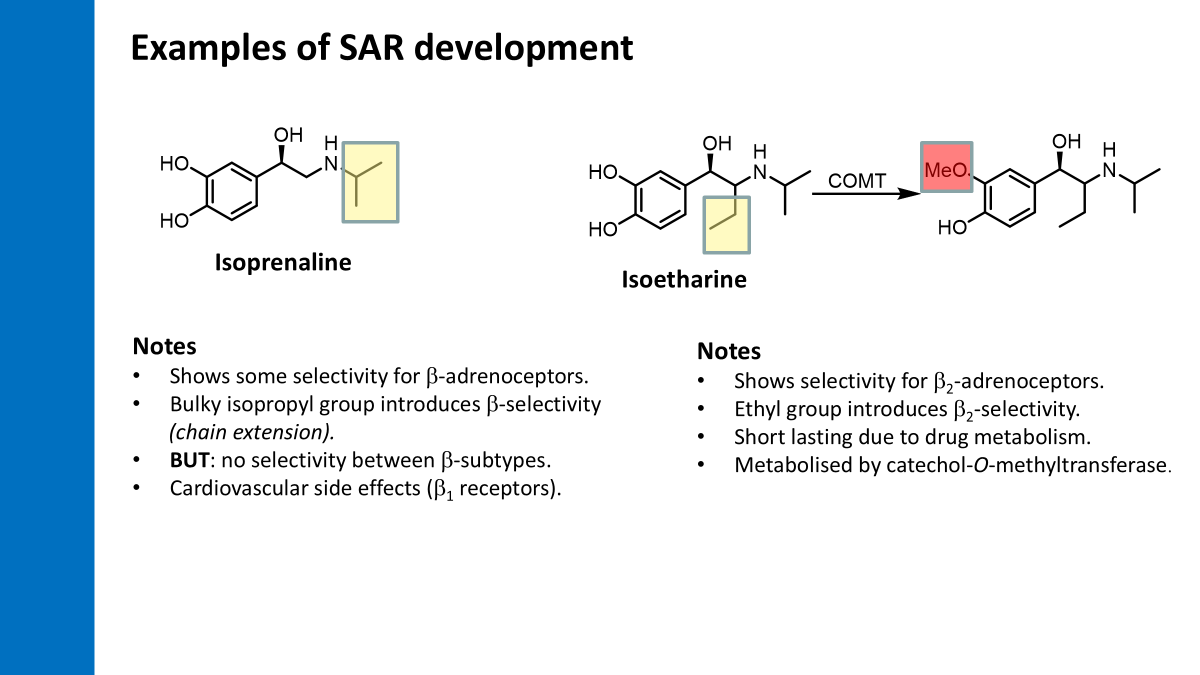
the MeO eliminates the capacity of -OH being a hydrogen bond donor.
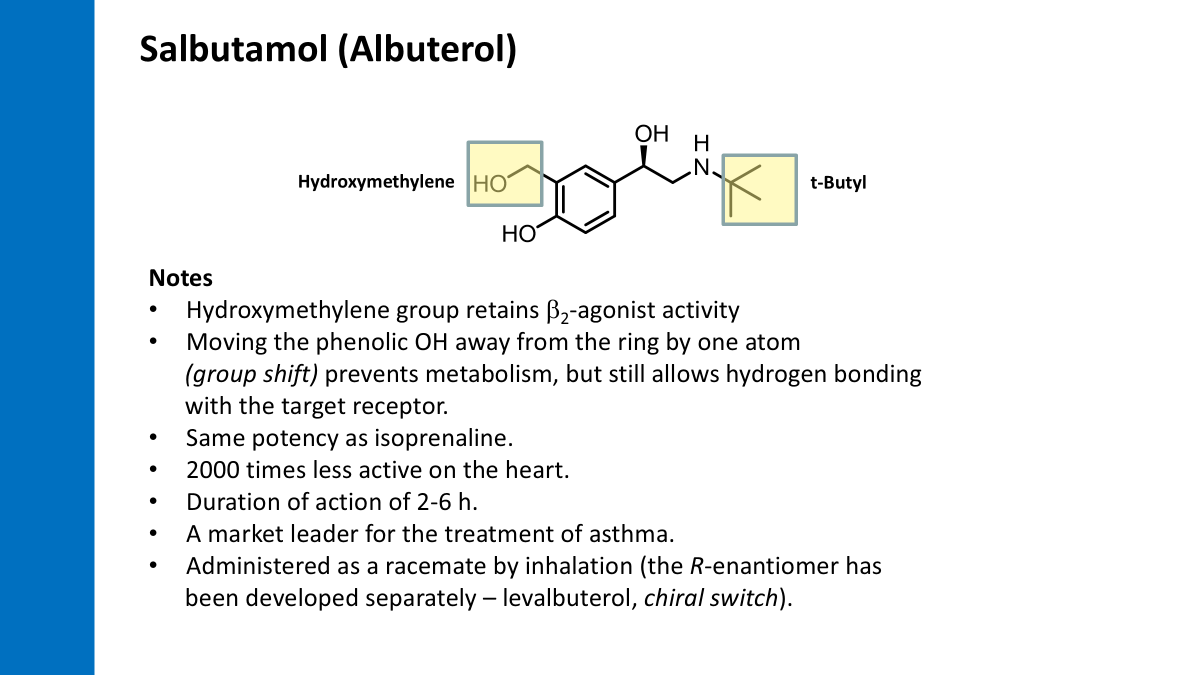
salbutamol administered as an enantiomer. R enantiomer is a more active form- has been developed separately.