Family
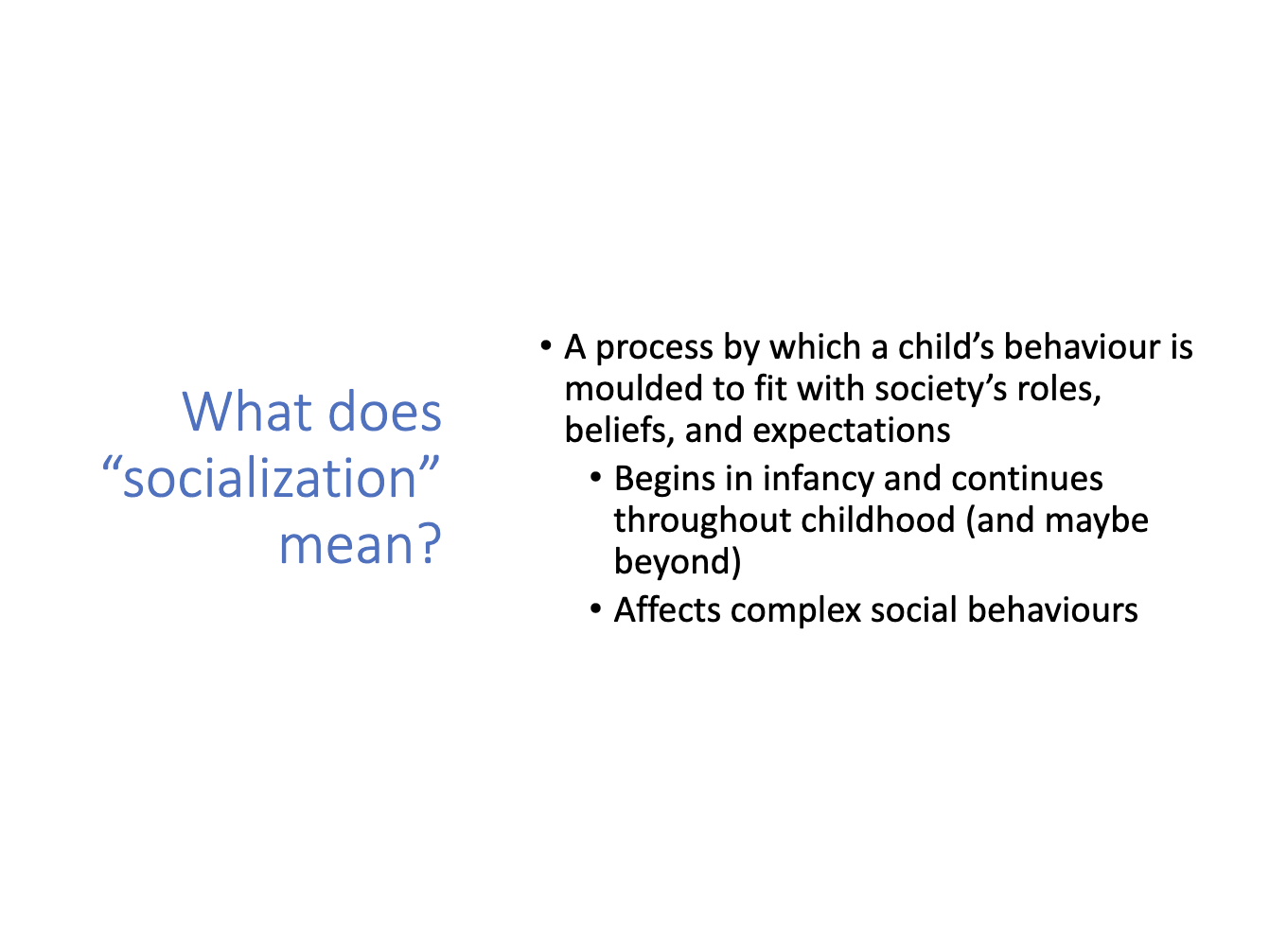
Social structures that impacted us
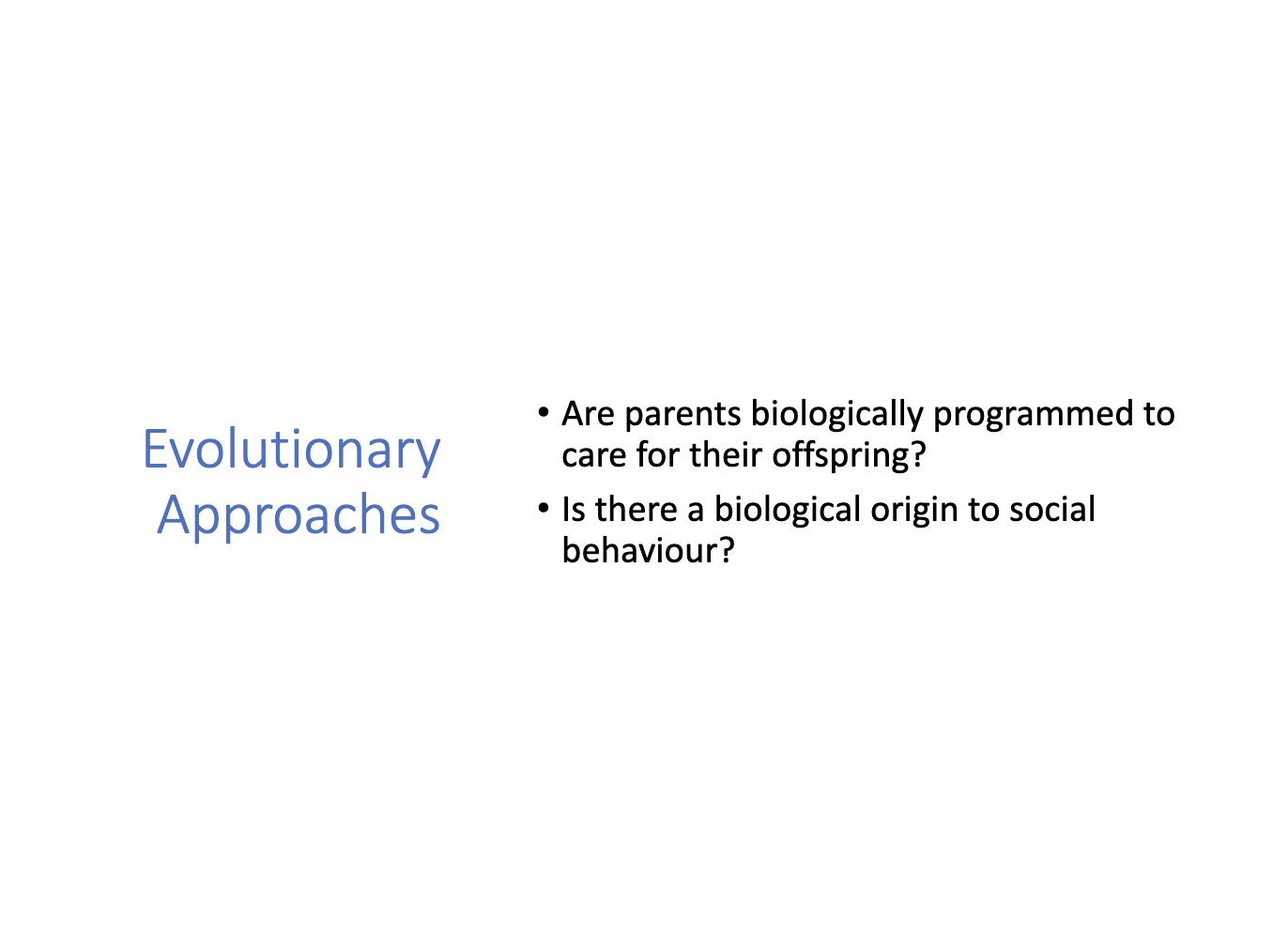
Think about socialization in the ways in which we might have some biological preparation signals from our offspring
Example: Crying = caregiving behaviours
Biological origins to behaviours
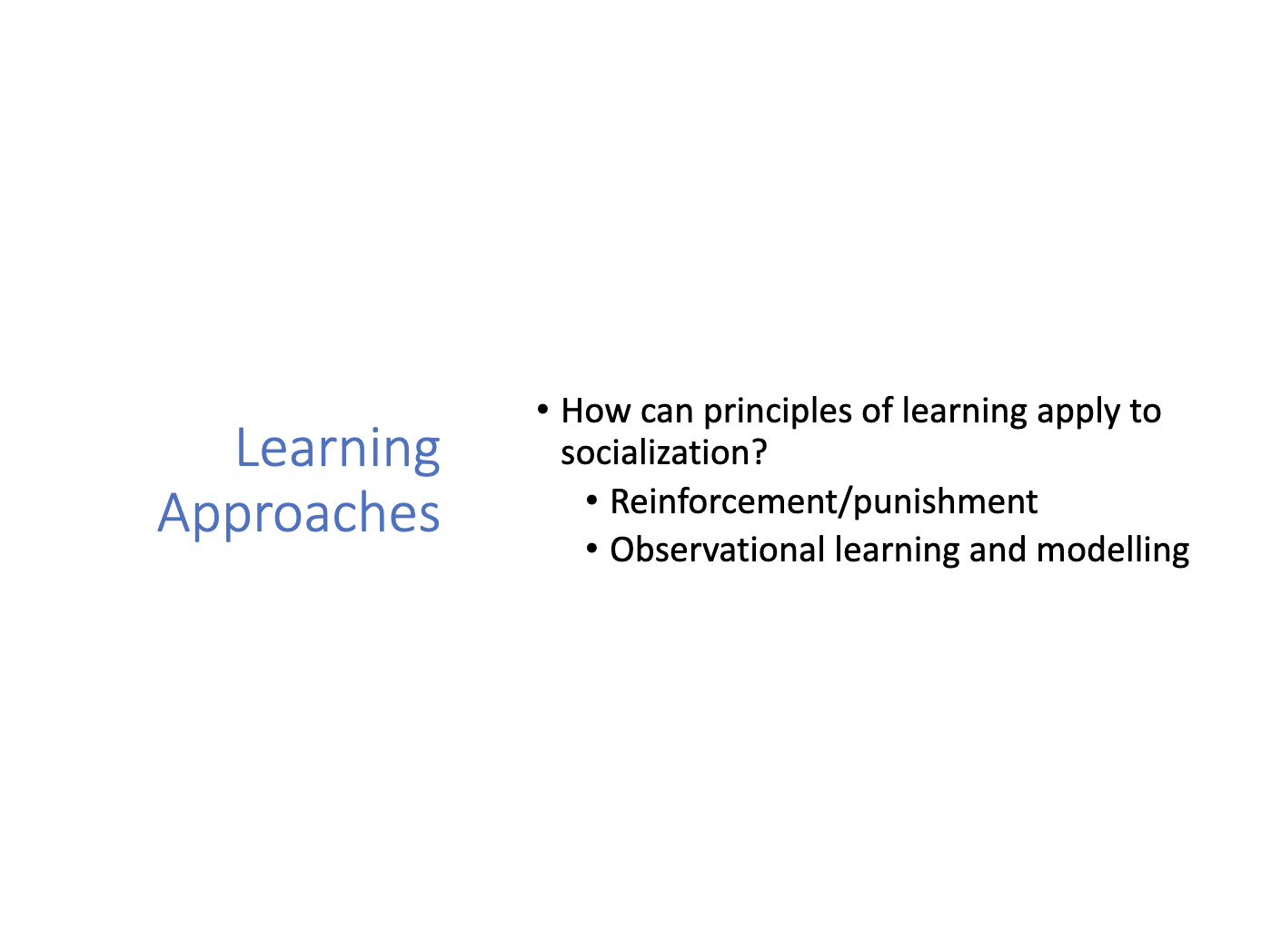
Vygotsky emphasized the social nature of learning, highlighting how children develop behaviors and self-regulation through interactions with others. Principles of learning, such as observational learning, reinforcement, and punishment, play a central role in the socialization process. For instance, when children enter school or preschool settings, they begin to observe and model the behaviors of their peers. A child who has never thrown a tantrum might start doing so after witnessing classmates use tantrums as a way to get attention or express frustration.
Observational learning helps children pick up on socially accepted behaviors—or, in some cases, less desirable ones—simply by watching others. Reinforcement also shapes behavior: if a child is rewarded for helping set the table, they learn that cooperation and helpfulness lead to positive outcomes. On the other hand, punishment can discourage unwanted behavior by teaching children the consequences of their actions. Together, these learning mechanisms help children internalize norms and adapt to the expectations of their social environments, from family settings to larger peer groups at school.
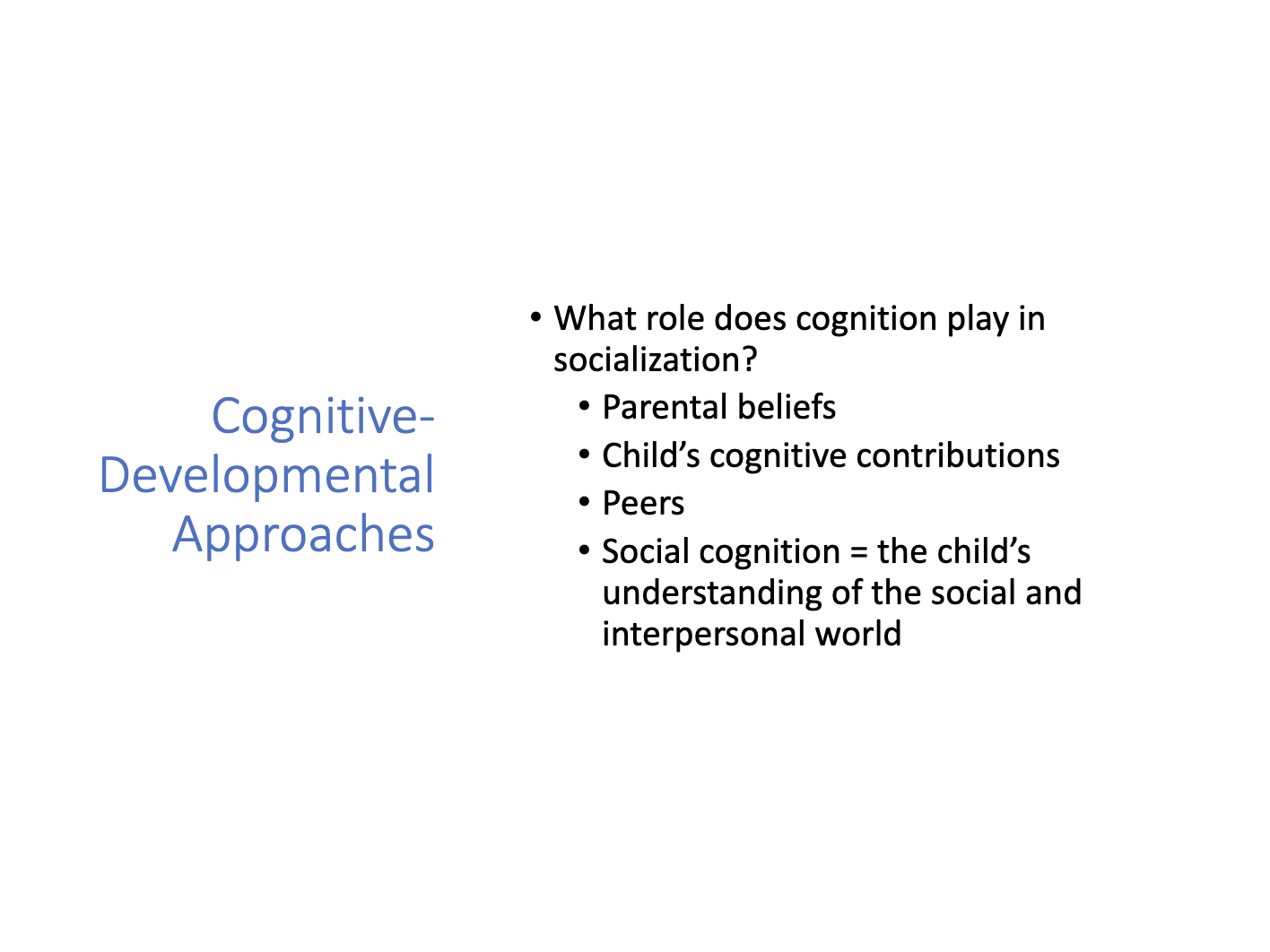
The development of the self is closely tied to a child's individual understanding of social systems, including their relationships with family, peers, and the broader community. Cognition plays a vital role in this process, as it allows children to interpret, evaluate, and make choices about the social information they encounter.
Parents influence their child's socialization not only through direct teaching but also by shaping the child’s environment—deciding what values, people, and experiences the child is exposed to. This selective exposure can guide and sometimes limit the child’s developing worldview. However, children are not passive recipients in this process. Their own cognitive abilities allow them to interpret and reflect on these experiences. Over time, children begin to make their own decisions about which beliefs, values, and social groups they identify with or reject.
Peers also contribute significantly to self-development. Children tend to gravitate toward others who share similar behaviors, values, or thinking styles. These peer interactions reinforce aspects of their identity and contribute to shaping their sense of self in ways that are both similar to and independent of parental influence. This dynamic interplay between cognitive understanding and social experience forms the foundation of a child’s evolving sense of self.
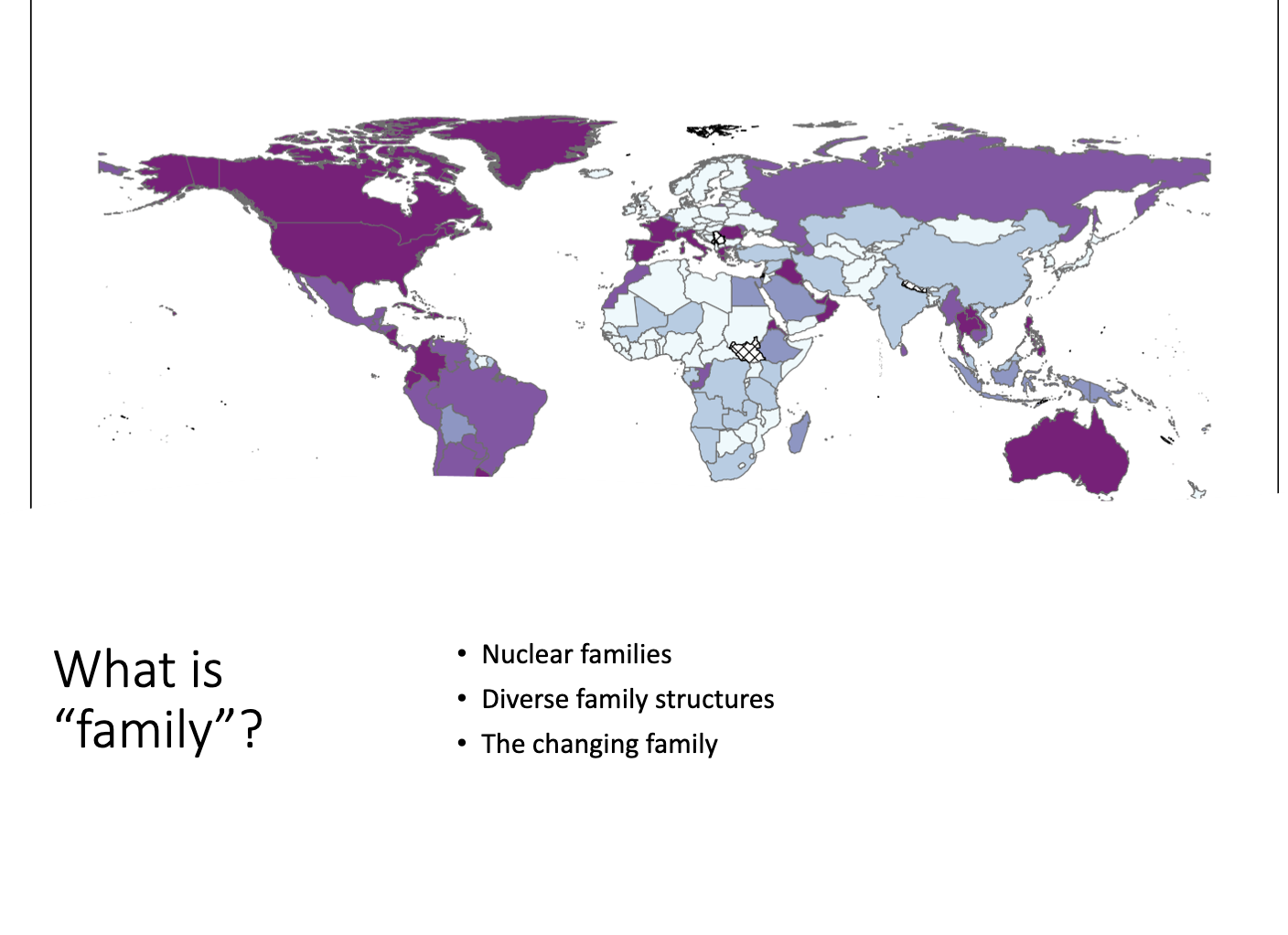
What is “family”?
"Family" is one of the oldest and most fundamental human institutions, serving as both a social and biological structure that supports individuals throughout their lives. Historically, families have been the primary means of social organization, predating governments and formal institutions. They serve essential roles such as reproduction, caregiving, economic support, socialization of children, and care for the elderly.
Traditionally, families have taken different forms across cultures, with the nuclear family—consisting of two parents and their children—often represented as a dominant model, especially in Western societies. This is often shown in demographic figures where nuclear families appear in darker shades, indicating their prevalence.
One cultural practice tied to family structure is the dowry system, particularly prominent in societies where inheritance favors sons. In these cases, when a daughter marries, her family may provide a dowry (money, land, property, or valuable goods) to help support the couple’s new household. This practice functions as a way for the daughter’s family to transfer wealth and ensure her stability, especially when daughters are not entitled to family land or inheritance.
Families also play a crucial intergenerational support role, particularly in societies lacking strong social services. Co-residence—where parents, children, and sometimes grandparents live together—can help bridge societal gaps in eldercare. This setup allows aging parents to be supported by their children, providing emotional, physical, and sometimes financial care.
Ultimately, while the definition and structure of family evolve across time and cultures, its core function remains centered on providing connection, care, and continuity across generations.
Why do family structures develop the way they do?
Family structures often develop in response to a combination of environmental, social, economic, and cultural factors. In many cases, these structures evolve to meet the specific needs or challenges of a given time or place. For instance, in areas where environmental conditions are harsh or resources are scarce, extended family systems may emerge to pool labor and support. Alternatively, in more urbanized and industrialized societies, nuclear families may become more common due to mobility and job-related demands.
Practices like the dowry system have also shaped family structure, particularly in patrilineal societies where property and wealth are passed down through male heirs. In such contexts, a dowry—resources provided to the groom's family in exchange for marrying a daughter—acts as a way for the bride's family to secure her future and preserve social status, especially when daughters do not inherit family wealth directly.
Similarly, co-residence—where multiple generations live under one roof—can develop as a practical solution to economic pressures. In many cultures, this arrangement allows adult children to save money, particularly in areas with high housing costs, while also ensuring elderly parents receive care and companionship. These structures are not just about tradition, but about adapting to and filling gaps in the broader social system, like eldercare, housing affordability, and economic stability.
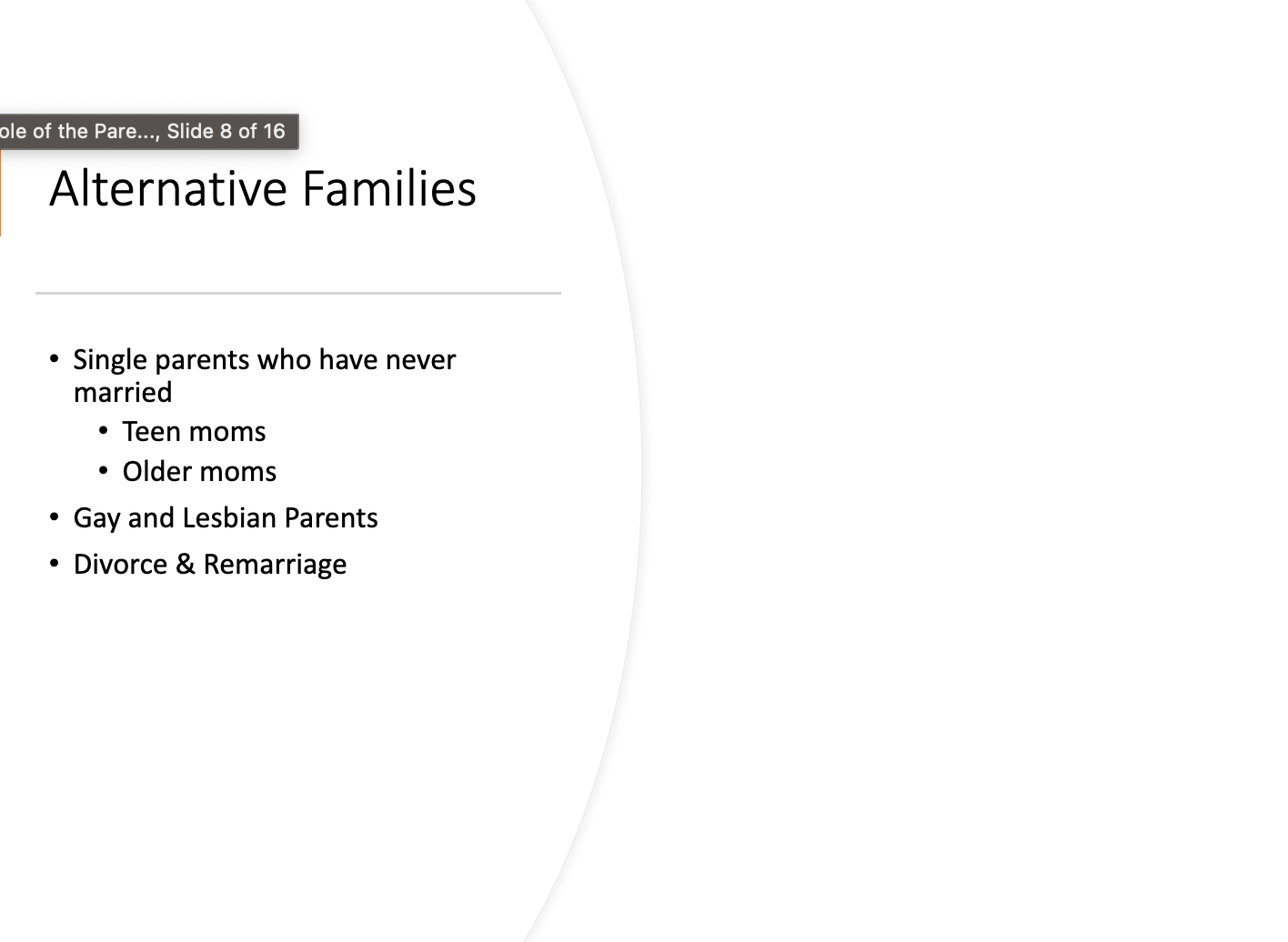
Divorce and Remarriage
On the rise
Blended families
The larger culture we live in is moving away from the typical nuclear families
Caregivers—especially parents—play a central role in shaping a child’s social, emotional, and cognitive development. They are key agents of socialization, helping children learn the norms, values, and behaviours expected within their culture and community. One primary method is through direct training, where parents explicitly teach children about acceptable and unacceptable behaviours. For instance, a child may be taught that the expectations at home differ from those in public settings, such as using an "indoor voice" at the dinner table versus being more formal at a guest’s home. Dr. Tsang’s anecdote about interacting with a bus driver highlights how children observe and learn what is considered polite or respectful in public.
Beyond instruction, modelling is another powerful tool parents use. Children closely watch their caregivers and often imitate their actions, whether it's showing empathy, expressing frustration, or using manners. The way parents regulate their own emotions and interact with others sets an example that children internalize.
Additionally, parents manage and structure their children’s social environments. This includes organizing playdates, enrolling them in group activities, or choosing schools and caregivers—all of which shape a child's social learning experiences. By intentionally guiding these early experiences, parents help children learn how to navigate social situations, build relationships, and develop a sense of appropriate conduct
Authoritarian
Strict, high-control parenting style characterized by rigid rules, high expectations, and little responsiveness to a child’s emotional needs
Parents who use this style prioritize obedience, discipline, and order over warmth and communication
Children show less self agency
Permissive
Submissive to their children
Make very few demands
Very little punishment
Children show less self agency
Authoritative
A mix of both authoritarian and permissive
Demanding and sensitive
High self esteem within children
Work well with peers and comparative with other adults
Motivation to achieve
They tend to have a sense of control over their environment
These parents allow children to contribute their behaviours to themselves so they can feel agency
Uninvolved
Detached from the child
Parents are concerned with their own needs rather than the child’s needs
Correlated with low self esteem, increase aggression, increase lack of self control
Example: If you have a parent that has clinical depression = lack of attention to child
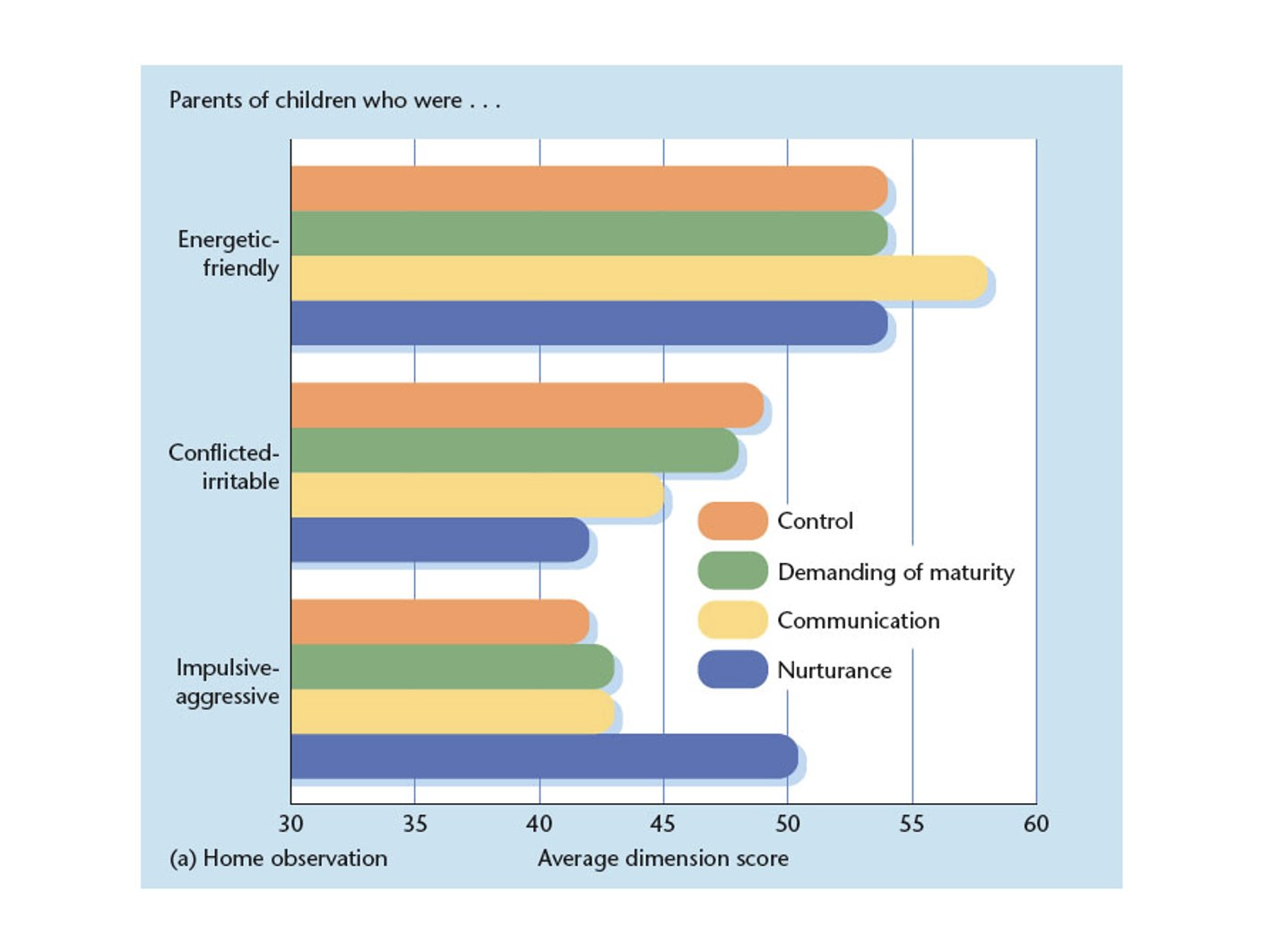
The correlation of parents
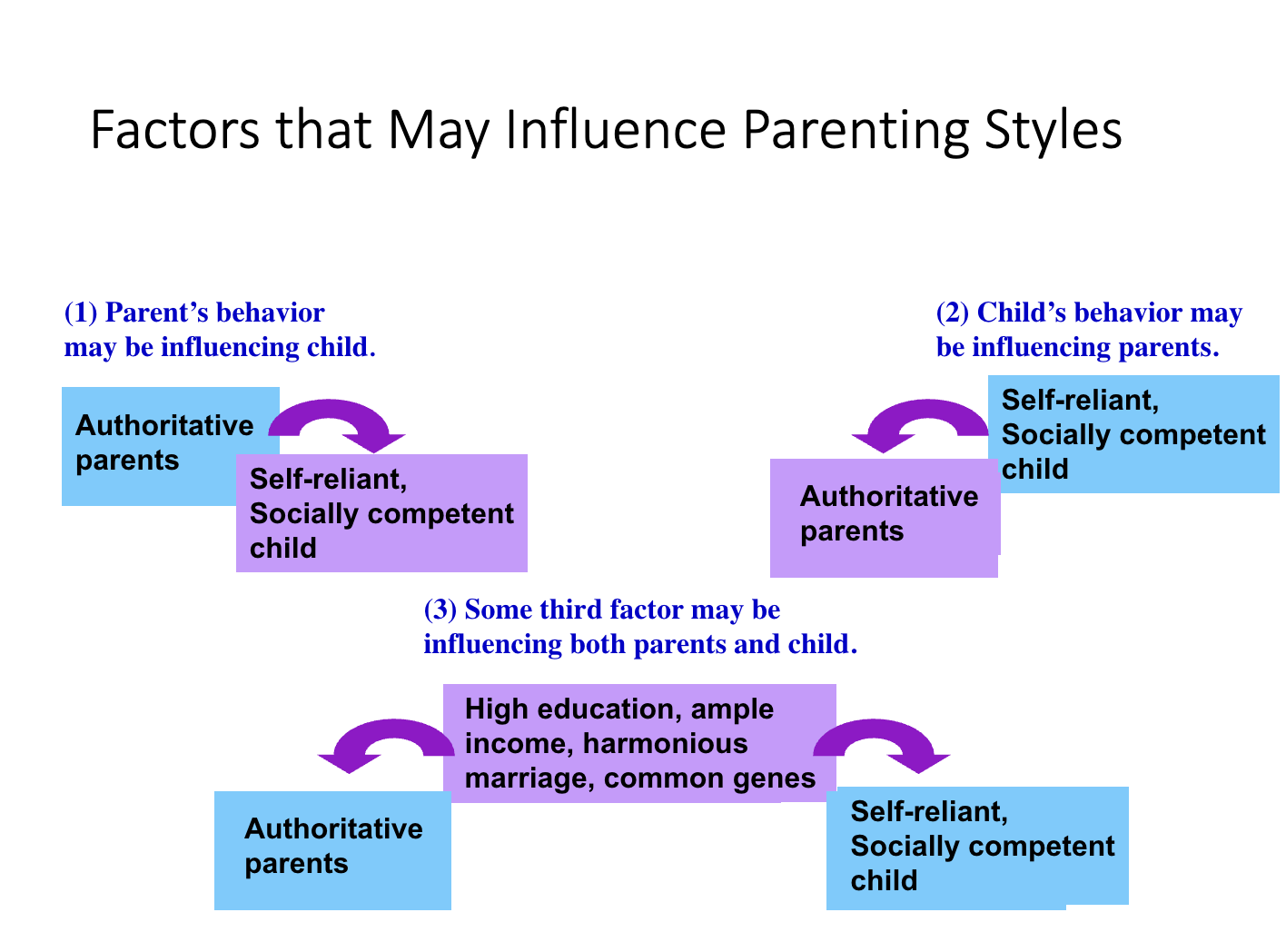
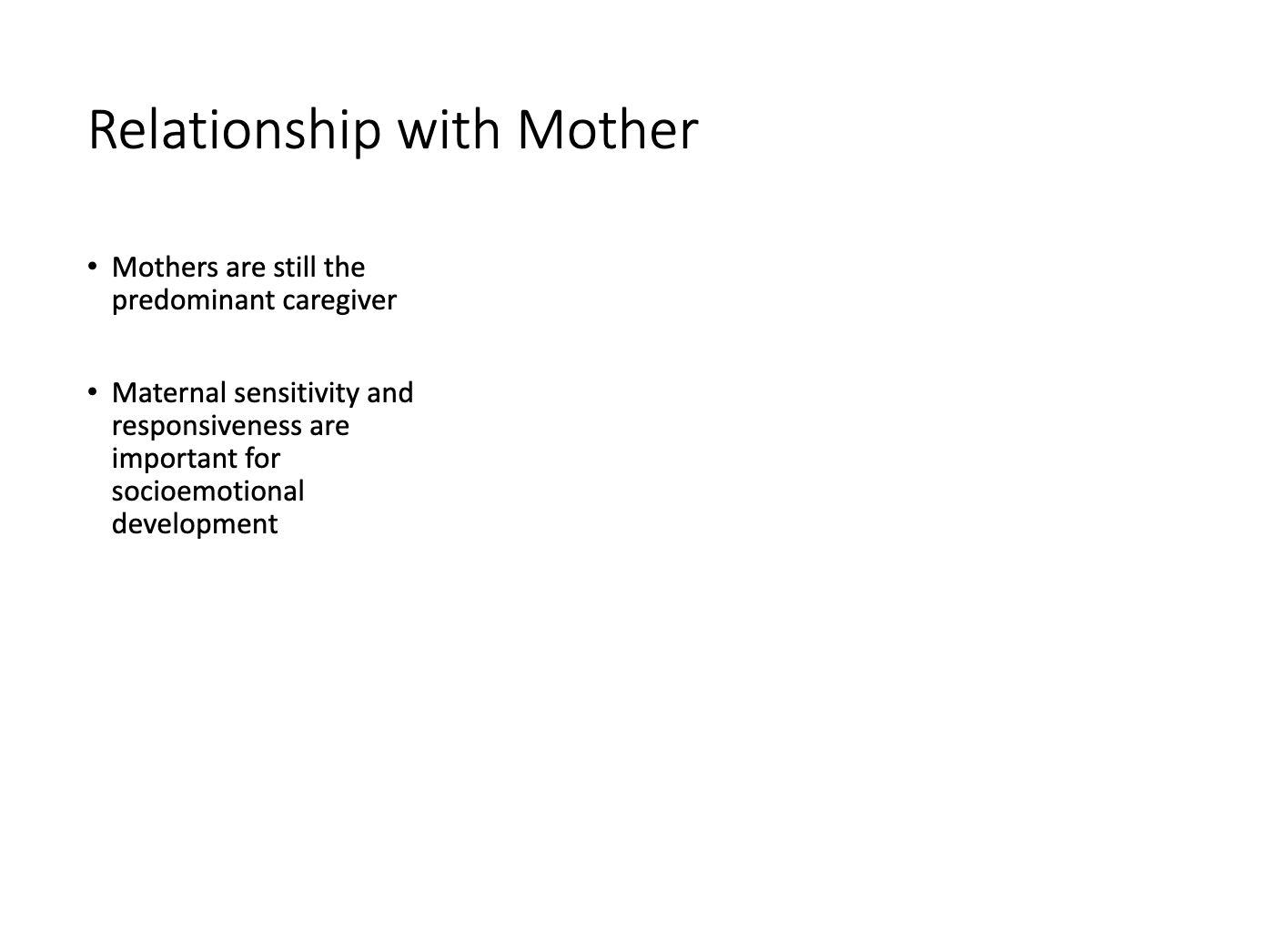
Sibling relationships vary
Older children often take on a sense of responsibility for their younger siblings, especially in families where caregiving roles are shared or expected. This dynamic can emerge naturally or be encouraged by parents who place demands and expectations on the older child to act as a role model or helper. While this responsibility can foster a strong bond between siblings—rooted in trust, care, and mutual support—it can also lead to feelings of pressure and stress. Older children might internalize the idea that they must always be mature, reliable, or emotionally available, which can become burdensome if their own needs are overlooked. If the expectations placed on them are too high or go unacknowledged, it may create tension within the sibling relationship or even contribute to emotional strain for the older child
Gender roles impacts with happens in family
Female work force might require women to only work until they eventually leave to assume caregiving roles at home, often leading to the perception that their professional contributions are secondary to their domestic responsibilities