Read: George, Kelley, and Piferi: Chapter 1, pg 15-18
Philosophy
Psychology is often said to have a long history due to the contribution philosophy has made to the field. Plato, Aristotle, Rene Descartes, and other philosophers discussed many topics relevant to human nature and behavior. Plato believed that each individual had within him all knowledge and information about the world. He believed that the key to knowledge and understanding was looking inward and searching one’s soul. Plato reasoned that ideas were eternal and innate within each person and could be discerned through careful introspection within one’s mind. Plato also presented ideas on the general structure of the human psyche consisting of impulses, reasoning, and behaviors.
Plato’s student, Aristotle, took a different approach, and instead of focusing on using the rational powers of the mind to reach knowledge, he explored human behaviors that were externally influenced. Unlike his teacher, who believed that all knowledge was innately found within each person, Aristotle believed that the mind was a blank slate to be written upon by experience and external factors. His writings on the mind have had clear influences on the nature-nurture debate within psychology and have formed ideas about the structure of the mind.
In the early 17th century, a French philosopher, Rene Descartes, became well known for his new theory of mind-body dualism. Descartes reasoned that the mind and body were distinct from one another but still connected. Instead of the relationship between the mind and body being unidirectional, where the mind controls the body, Descartes argued that the relationship is more complex and that each can actually influence the other. He posited that not only can the mind influence the body, but the body can also influence the mind. Additionally, Descartes explained how involuntary actions, like reflexes, show us that the body can operate separately from the mind. Going further, the experience of involuntary actions can actually have an effect on the mind once the action is processed. This was a new way to think about the mind-body connection at the time and still has clear influences on theories of perception, emotion, and behaviors.
Physiology
While the field of psychology has deep historical roots in philosophy, a much more recent influence was the field of physiology. In the late 1800s and early 1900s, medical doctors who were trained in physiological research began to apply the research principles of physiology to psychological topics. Focusing on sensation, memory, and other mental processes through the systematic methods of physiology created a new approach in psychology based on using the scientific method to study psychological concepts. Up until that point, the field of psychology had largely been based on logical, philosophical thinking and general observations rather than systematic study. However, the influence of physiology led to a new focus in psychology on systematically testing hypotheses and evaluating many of the claims that had been previously made. Researchers in psychology began studying brain damage and environmental changes and how these all affected human behavior. Thus, modern psychology was born: a field with deep roots in philosophy and a new-found reliance on scientific methods and empirical observation to draw conclusions about human behavior.
Early Key Contributors
Wilhelm Wundt
Wilhelm Wundt (1832-1920) is considered the first psychologist and was one of the early researchers who applied the study of physiology to psychological principles. Wundt graduated from the University of Heidelberg Medical School in 1855 and then worked as an assistant in many early psychophysics and physiology research laboratories in Western Europe. These experiences helped him develop his ideas for a new research-based approach to psychology. Known as the father of experimental psychology, Wundt can be credited with establishing the field of psychology as a distinct discipline from philosophy. Instead of relying on rational analysis, as the field of philosophy did, Wundt proposed using experimental methods from the natural sciences to explore psychological phenomena. In 1862, Wundt offered the first course ever in scientific psychology. In 1874, he published the first psychology book, Principles of Physiological Psychology, and in 1879, he established the first psychological laboratory at the University of Leipzig, which remained active until 1910.
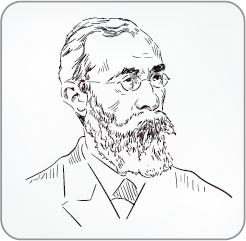
In addition to establishing the field of psychology, Wundt initiated the scientific exploration of conscious experience and internal processes through the use of empirical methods. To do this, Wundt developed an empirical method he called introspection, which led individuals to systematically examine and report on their thoughts or feelings about conscious experiences. Wundt rigorously trained individuals on how to examine and report their conscious experiences and then drew inferences about internal processes through this study.
Wundt’s influence on modern psychology is evident through his establishment of the field and the application of systematic methods to study psychological processes. While Wundt has been criticized for the validity and reliability of his introspection methods, his influence on the founding of the field and the establishment of psychology as a research field is clear.
G. Stanley Hall
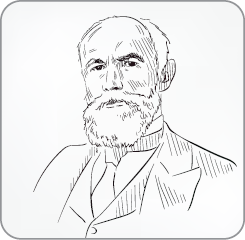
Inspired by reading Wundt’s (1874) Principles of Physiological Psychology, G. Stanley Hall (1844-1924) left a lectureship in philosophy in the United States to study psychology in Germany under Wilhelm Wundt. After studying with Wundt, he returned to the U.S. to earn the first Ph.D. in psychology granted in the United States in 1878. Hall started the first psychology lab in the United States at Johns Hopkins University and the first journal of psychology in the United States. He was a primary founder and the first president of the American Psychological Association (APA) and is known for his research in developmental psychology. Along with each of the aforementioned contributors, Hall is responsible for furthering the field of contemporary psychology through a systematic study of psychological constructs. His major contribution is helping to establish the field of psychology in the United States.
 Edward Titchener
Edward Titchener (1867-1927) studied under Wilhelm Wundt and earned his Ph.D. in 1892. He brought Wundt’s ideas to the United States, where he became a researcher and professor at Cornell University in New York. Titchener translated Wundt’s (1874) Principles of Physiological Psychology into English and established a large experimental psychology laboratory at Cornell. Titchener is known for establishing the first school of thought in psychology, known as structuralism. Furthering Wundt’s focus on examining conscious experience, Titchener believed psychology was to be used to study the structure of the mind. Structuralism focuses on breaking down conscious experience into its fundamental elements: sensations, feelings, and images. Like Wundt, Titchener used introspection to understand the individual parts of the experience that made up the whole conscious experience (Goodwin, 2008).
 William James
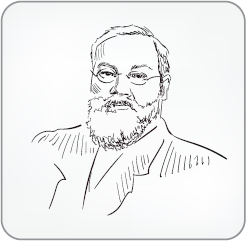
Around the same time that Titchener was developing structuralism, William James (1842-1910) and colleagues at the University of Chicago were developing the second school of thought in psychology: functionalism. Functionalists believed that the work of Wundt and Titchener was too narrow in scope and that looking at the structure of conscious experience was not sufficient for understanding mental processes. Based in the work of Darwin and his principles of evolution, functionalism examined how the mind adapted to the environment and how it functioned (Goodwin, 2008). This focus on the environment and how the mind adapts to environmental influence was a major shift from Wundt and Titchener, who focused only on studying the report of internal states. Both structuralism and functionalism lost ground around the 1920s with the advent of new approaches. However, some similarities can be seen between functionalism and evolutionary psychology today.
 Sigmund Freud
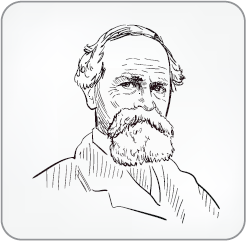
Sigmund Freud (1856-1939) is probably the most recognized name in the field of psychology. His ideas have sparked controversy over the years, and while many of his ideas have been discredited, he still remains an important contributor to the founding of modern psychology. His approaches differed from the previously named researchers, but his impact is just as noteworthy. At roughly the same time, while Wundt, Titchener, and James were developing their theories of psychology based on empirical methods, Freud proposed a completely different approach to psychology through clinical observations. While the other individuals were focused on studying conscious experiences, Freud highlighted the importance of the unconscious and how the unconscious affects the individual.
Freud graduated with a medical degree from the University of Vienna in 1881 and began work in neurology. Freud started his own practice in Vienna and, through work with his patients, developed a theory that stated that people face psychological distress because of unresolved unconscious conflicts. Freud developed an elaborate theory of the psyche and stages of development that contributed to the unconscious conflicts in people. Freud believed that the key to helping people was resolving these unconscious conflicts, and he believed that the best therapeutic approach was talking about it with a trained psychoanalyst. Known as the “talking cure,” Freud believed that unconscious psychological distress could be relieved by talking about it in a safe environment and becoming aware of unconscious conflicts. The process was known as psychoanalysis; Freud’s psychoanalytic theory will be discussed further in a later chapter of this textbook.
When first developed, Freud’s theories and beliefs were groundbreaking and popular. Many were trained in psychoanalytic methods, and many clinical psychology programs were grounded in psychoanalytic theory. Today, however, few psychologists fully support Freud’s psychoanalytic theory. Some of Freud’s theories, such as the impact of childhood on adult behavior or unconscious processes like repression or suppression, still remain, while much of Freud’s original work does not due to a lack of empirical support. Despite his original theory no longer being supported by most, Freud is still considered an important founder of the field of modern psychology due to his redirecting focus to the unconscious, as well as how his work spurred many others to develop their own theories in response to his ideas.
John Watson
In the early 1920s, John Watson (1878-1958) introduced a major shift in focus and methods in psychology through behaviorism. Watson and colleagues, such as B. F. Skinner (1904-1990), believed the methods used up to that point in psychology were too subjective and, thus, prone to error. They also believed that the field of psychology should move away from using these subjective procedures in research (like introspection) and begin to engage in objective procedures. Known as behaviorism, Watson and others were interested in the prediction and control of observable behaviors. They believed that anything that could not be observed, such as mental processes like thoughts and feelings, could not be studied accurately and thus should not be studied.
Behaviorists were focused on how humans and animals acquired and modified behavior as a result of their environment. Behaviorists believed that development resulted from rewards and punishments from the environment, which shaped behavior. While similar to functionalism, behaviorism focused entirely on the behavior that could be observed and ignored the mind or mental interaction with the environment. Their goal was to objectively measure observable behaviors to reduce errors in inferences to mental states. Behaviorism was the dominant theory in American psychology until the early 1960s, when other contemporary theories presented human behavior as more complicated than just the function of rewards and punishments in one’s environment.
Dorothea Dix
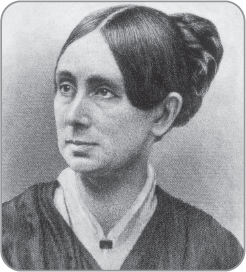
While many early contributors focused their work on the development of theory and research in psychology, Dorothea Dix (1802-1887) is best known for her work in establishing or growing over 30 care facilities for the mentally ill. Born in 1802 in Hampden, Maine, Dorothea Dix lived in an era before women’s equality, and her steadfast determination to advocate for the mentally ill and change attitudes toward the mentally ill is noteworthy. She was a leader in establishing care for individuals with mental disturbances, challenging the notion that they could not be cured or helped. She also worked to establish fair and humane treatment of the mentally ill and spoke out against many of the inhumane treatments of the day.
Key Christian Contributors
In addition to the field of psychology tracing back to philosophers like Plato and Aristotle or more recent theorists and researchers such as Wundt, Freud, and Watson, several key individuals have contributed to the investigation of psychology from a Christian worldview. These Christian contributors include classic philosophers and more recent researchers and theologians. As secular philosophers and researchers were presenting their ideas explaining human behavior and existence, these Christian philosophers and researchers were also presenting ideas of how the Bible helps inform our understanding of human life and how we can discern and know truth.
Augustine
Augustine (354-430), also known as Saint Augustine, was born in the town of Thagaste to a pagan father and devout Christian mother. At a young age, Augustine demonstrated an intense zeal for knowledge and studied many philosophers of his time. He is considered the greatest Christian philosopher of the first millennium, and his writings influenced both Western philosophy and Western Christianity. He asserted that truth was eternal and immutable, which was in contrast to those of his day who were skeptical that we could be certain that truth existed. The concept of divine revelation was central to Augustine’s theory of knowledge, and he wrote that divine revelation came through the Bible and natural revelations in creation. According to Augustine, all truth came from God and was dependent on His revealing it to humans. This included scientific truth. The phrase, “All truth is God’s truth” originated with Augustine, and it reflects his position that truth came from God and was revealed to humans by God. Today, we can see his beliefs in modern Christian researchers who also assert that absolute truth exists and can be found, as God reveals it, in the Bible and the study of creation, through science.
Thomas Aquinas
Thomas Aquinas (1225-1274) had an immense influence on both secular and sacred worlds by combining the rational with the supernatural. In his work that combined Greek philosophy with Christian doctrine, Aquinas suggested that we could use our rational minds and the study of nature as valid ways to understand truths pertaining to God. According to Aquinas, God revealed Himself through nature, so studying nature was studying God. Instead of separating philosophy and theology or science and theology, Aquinas believed philosophy and science were complementary to theology in the quest to understand truth. As you can see by this stance, this view allowed a merging of disciplines that had, in some circles, been pitted against each other as adversaries. Like Augustine, Aquinas believed that all knowledge was dependent on divine revelation from God.
Richard Baxter
Richard Baxter (1615-1691) was an English Puritan pastor and theologian who worked among other significant Puritans to understand psychological ailments from biological, psychological, and spiritual foundations. In his writings and teachings on depression, Baxter presented many reasons why individuals may experience depression and suggested that each person must be individually evaluated for the causes of their depression so that treatment could be successful. Depression, according to Baxter, could be a result of biological disturbances or a result of sin, or living in a way that was not in obedience to God. Baxter was clear to note that not all depression was due to sin and showed remarkable balance between physical and spiritual causes of depression. He was one of several Puritans who contributed greatly to the development of Christian psychology and biblical counseling through his systematic evaluation and biblically based treatments of “diseases of the heart.” The work of the Puritans provided a firm foundation for future Christian scholars and counselors due to their reliance on the authority of Scripture, their sophisticated and systematic methods of diagnosing root causes (i.e., spiritual, temperamental, physical) of psychological problems, and their commitment to using the Gospel in treatment.
Fritz Kunkel
Fritz Kunkel (1889-1956) was a German-born psychiatrist who worked with Alfred Adler in Vienna in the early 20th century and is known for being among the first in modern psychology to establish a theory and practice integrating psychology and Christianity. He was the first to use the term “integration” in 1953 to describe his work combining psychology and theology. He is considered a founder of the modern integration movement through his research and practice that claimed that connection to God was essential for mental well-being. He established the Foundation for the Advancement of Religious Psychology in California in 1951 and also founded a Christian counseling center in Los Angeles at that time. From his first use of the word “integration,” the term has come to mean many things, including an integration of psychology and theology in the pursuit of truth about human behavior, as well as integrating theological truth into counseling practice to enhance well-being.
Eric Johnson
Eric Johnson is a contemporary theologian and Christian psychologist best known for his book, Psychology and Christianity: Five Views (2009). In his book, Johnson demonstrates how the field of Christian integration in psychology has grown since the first use of the term in 1953. In this growth, several views have emerged to explain how the fields of psychology and Christianity should intersect. The views range from a belief that the secular field of psychology (due to the secular bias inherent in secular psychological science) should not be used with the Bible to understand human behavior to the belief that integrating secular science with the Bible can be done well when done under the guidance of the Holy Spirit and allowing divine revelation to guide the interpretation of both Scripture and science. Johnson’s work in communicating the various views on how the fields of psychology and Christianity can be used to understand human behavior continues today.