MOI
moment of intertia is defined by the mass and distribution of that mass
angular momentom:
H = moment of inertia x angular velocity
H=Iw
H = Iw
clockwise = negative
anticlockwise = positive
I = mass x radius 2 (km.m²)
w = angular displacement / time (radians.s)
H = iw
degrees per second, you need to get radians per second before calculating the answer
radians don’t have dimensions
what is the angular momentum:
6.5 and 6 radians
values shouldn’t be too high
angular velocity will be around 1- to 15
anfular momentum will be around 20 to 40
determine angular momentum of a body about a given axis
similar to method used determine moment of inertia about a given axis
parallel axis theorem: Ia = Icg + md²
angular momentum total:
H total = sum of all angular momentum
each segment has 2 parts
segments about its own center of gravity
IsWs/Gs +
segment about the central axis
Ms+R²WGs/G
Is = moment of inertia of segment about the axis through the segment CoG, Gs
ωs/Gs = angular velocity of the segment about the axis through Gs
ms = mass of the segment
r = distance between body CoG and segment CoG
ωGs/G = angular velocity of segment CoG about transverse axis through body CoG
moment of inertia = angular momentum / angular velocity
angular velocity = angular momentum/ moment of inertia
angular momentum: 39.68
angular velocity = 4 radians
mass on radius = 0.4
what is the mass of the performer=
moment of inertia / radius ²
39.68 x 4 = moment of inertia
158.72 × 0.4
= 63.488
H = I x W
39.68 = I x 4
39.68 = (m x r ²) x W
39.68 = m x (0.4²) x 4
39.68/(0.4²)/4
= 62 kg
a rotating body will continue to rotate with constant angular momentum unless acted on by an external moment
conservation of angular motion
determined at take off
cannot be changed once in the air
diver changed their moment of inertia to manipulate their angle of velocity
angular momentum remains constant
angular velocity will increase to maintain angular momentum constant
bringin mass close to the pivot increases velocity
moment of inertia is manipulated by athletes
once in flihgt no external force acting
an external moment produces an angular acceleration
sum of moment = moment of intertia x angular acceleration
directly proportional to the overall moment, inversely proportional to the moment of inertia of the object.
the rate of change of angular momentum is proportional to the moment (torque) causing it
moment = force x distance from the pivot
every action has an equal and opposite reaction
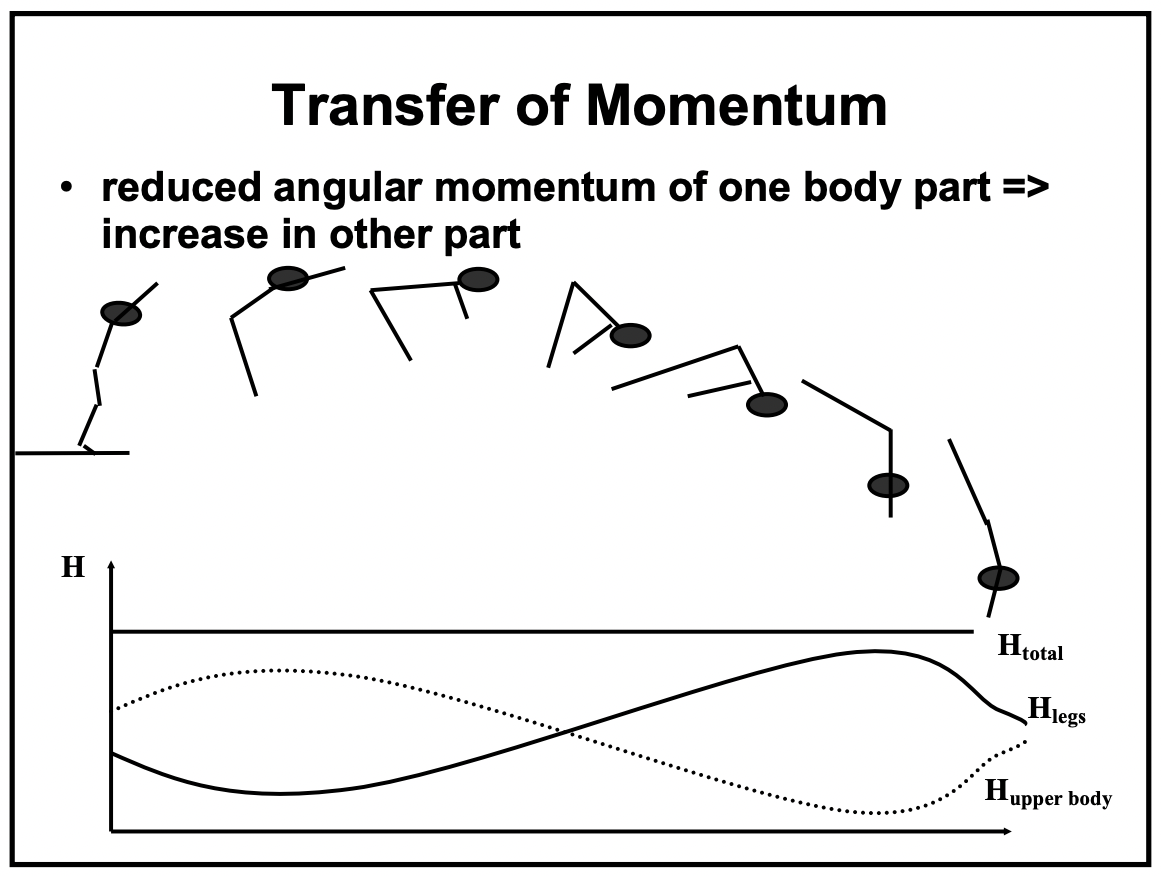
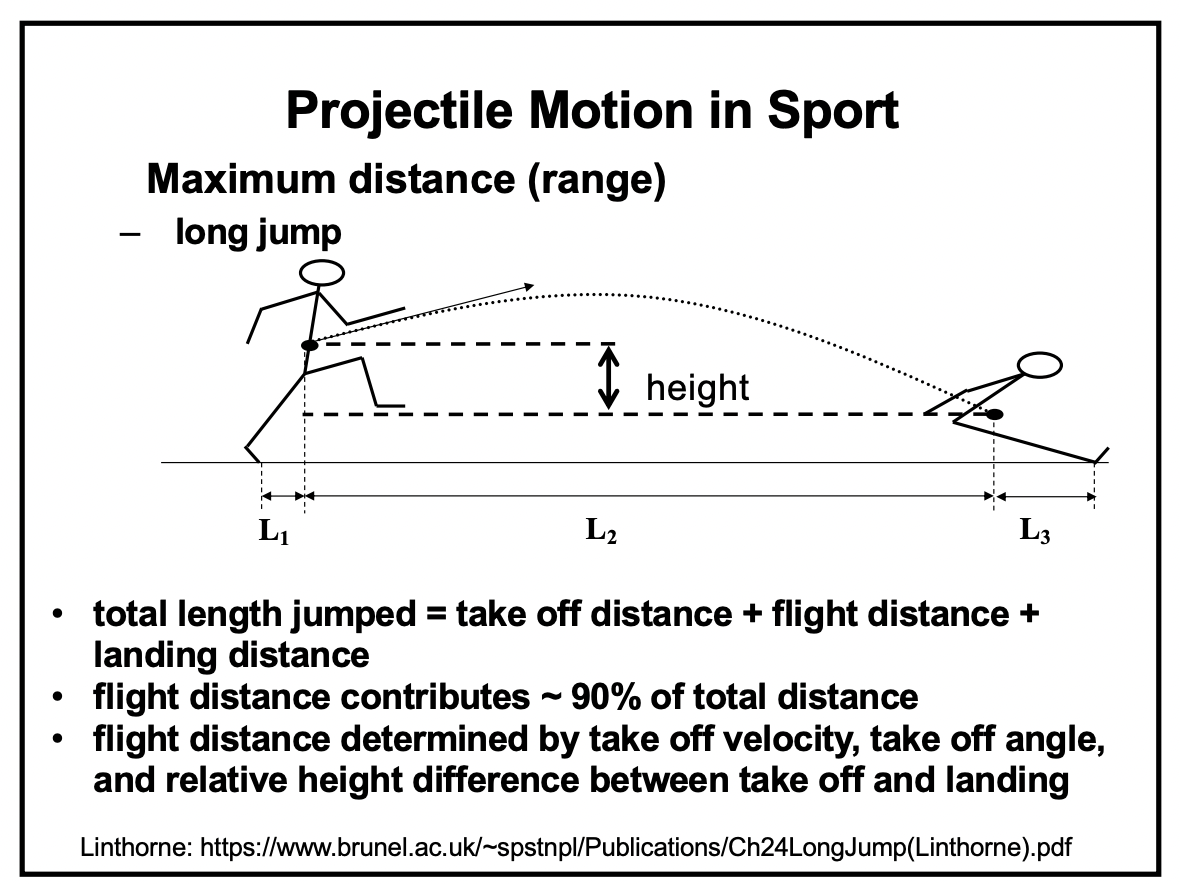
Example: During long jump, the long jumper raises their legs for clearance of the ground • This produces a lower body torque (moment)To counteract this, the arms and trunk are lowered producing an upper body torque (moment) • This is in the opposite direction
you cant generate rotational movement when you dont have access to other forces
Angular acceleration of lower and upper body are different - because moments of inertia are different - and angular momentum is conserved
angular momentum conserved because the inertia is so different, equal and opposite angular momentum
• When a body is in the air, total angular momentum is conserved (it always is!) • If the angular momentum of one part of the body is decreased, another part must increase to conserve total angular momentum
newtons seconds law
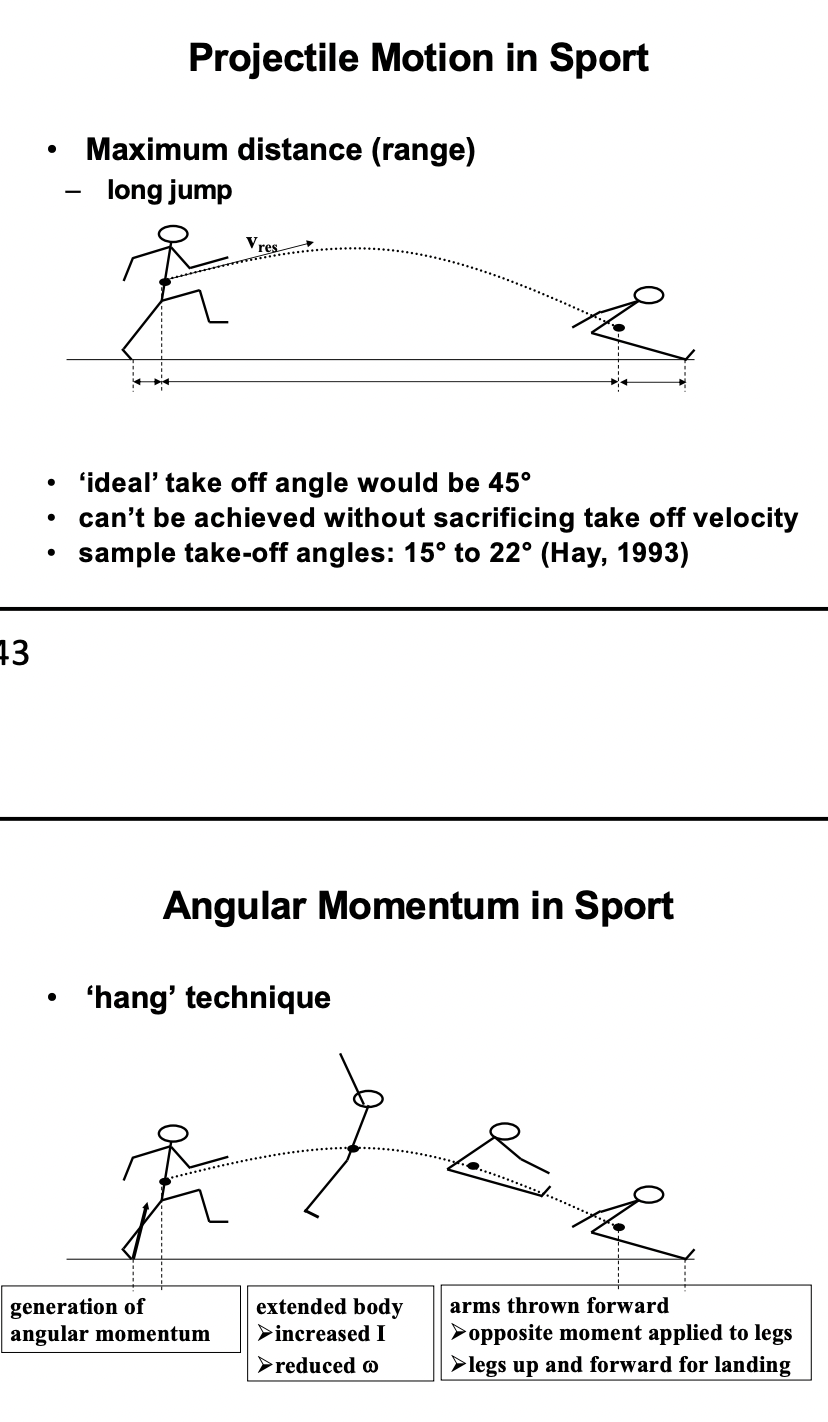
Angular momentum of a rotating body equals product of its moment of inertia and its angular velocity • H = Iω • Total angular momentum (H) of the body about the transverse axis through the CoG is the sum of angular momenta for all segments • HTOTAL = ΣHs • A rotating body will continue to rotate with constant angular momentum unless acted on by an external moment: - Conservation of Angular Momentum