Wayne/Shuster (radio/tv)+
Johnny Wayne and Frank Shuster - Canadian Comedy Duo
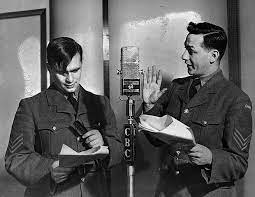
RADIO JOURNEY
Background:
Johnny Wayne and Frank Shuster, both from Toronto
High school friends and University of Toronto alumni (Ran the student newspaper, wayne news editor, shuster copy editor)
involved in series of college productions, many preformed at the Hart House theatre (an important stage after WW1, had been the centre of a Canadian theatrical movement)
Wayne focused on British literature and comics
Shuster, a fan of Hollywood movies, was related to Superman co-creator Joe Shuster (cousins)
their first professional gig was a Boy Scout show (they wrote it)
Early Collaborations:
First radio gig: "The Wife Preservers" on CFRB
Comedy built around household tips for women
an early wacky version of Martha Stewart
Becuase of success asked to create a free form show featuring young girls “Co-eds and Cut-ups”
they disliked the name
Quickly moved to CBC, where they also performed live at fundraisers
money for charities such as Star Fresh Fund, helping underprivileged kids
CBC Radio - "Blended Rhythm":
Sponsored by Buckingham Cigarettes
Blended Rhythm a pun on the alleged quality of Buckingham Cigarettes
Transitioned to CBC Radio, showcasing their comedic talents on a broader platform
Showcased versatility by combining various elements in "Blended Rhythm"
featured
Herb May (announcer)
Burt Austin (musical coordinator)
Campbell Sisters (singers)
WW2 Service - The Army Show:
Enlisted in army for World War II
Became part of "The Army Show," allowing them to perform for a cross-section of Canadians
the army show had two branches a radio show broad cast from Toronto and a live touring show overseas
Immediate feedback during performances helped them hone their comedic skills
were part of the overseas touring group
Had the opportunity to work with legendary comedian Jack Benny
Continued to build their reputation as a comedic duo after the war (go to TV section to see the rest of their success)
What is the correct chronological oldest to newest of these Wayne and Schuster shows
the wife preservers
coeds and cut-ups
Blended rhythm
the Army show
Johnny home
Johnny Wayne (Died in 1990):
Renowned Canadian comedian, part of the Wayne and Schuster comedy duo.
Key figure in the emergence of the Wayne and Schuster Comedy Wall of Fame.
The celebration for its emergence featured The Royal Canadian Air Farce cast.
6. Wayne and Schuster - WW2 Service (The Army Show):
Enlisted in the army for World War II.
Became part of "The Army Show," allowing them to perform for a cross-section of Canadians.
Show brought them into direct contact with American Show Business.
7. Wayne and Schuster TV Shows (1950-1989):
Initially hesitant about TV's longevity but accepted an offer in 1954.
Unique features: historical settings, large casts, wordplay, classical references.
University-educated, combining burlesque style with literary backgrounds.
Success in the 1950s and 1960s; declined in the 1970s due to evolving comedy trends.
Commuted between New York and Toronto, influenced by burlesque and literate slapstick.
TV JOURNEY
First TV Gig
Toni Twin Time Show (1950) - Their first TV gig
Hosted by young unknown (Jack Lemon)
Producers wanted Wayne and Shuster to take over (Lemon became a famous actor after but producers didnt like him and wanted Wayne and Shuster)
CBC offered a TV series - turned it down (didnt think the TV hype would stay)
Radio was king
CBC Specials
Series of CBC specials
Aired from 1954 - 1967 (in black and white)
1967 - 1989 (in color)
TV set elements
Large casts and elaborate sets
Often set in historical times or far-off places
Material ran along "pun and parody"
Ed Sullivan
Met Ed Sullivan in England
Sullivan created alot of musical acts, had a variety act show
He booked them for 26 appearances
Commuted from Toronto to New York
Wayne and Shuster appeared 58 times from 1958 to 1970 on Ed Sullivan ( the most appearences in this show)
Had "carte blanche". = whatever they wanted they got, cus Ed was such a big force in the industry
Loved doing the show - didn't need to tour
Educated Comedy
American audiences loved Wayne and Shuster
"Literate Slapstick"
Different from American comics
University educated
Had a taste for burlesque, American movies, and comic books
like burlesque, the 4th act was a strip tease added in 1920 to comedy show
Did their own writing - no hired guns
Clash with Angry Comedy
Worked great through the 60s
70s critics accused them of getting stale
"Angry" comedy popular in the late 60s
Clashed with Wayne and Shuster
General Observations
The evolution of Canadian comedy and its influences from American and British entertainment.
The challenges and successes of Canadian comedians in the American entertainment industry.
The shift in comedy styles over the decades and the impact on individual comedians' careers.
An important shift in Canadian comedy
the strongest cultural influences in Canada were no longer British but American. Canadian kids were growing up listening to you and watching American entertainment when they became adults they reached back to their childhood influences and turn them into satire