Common Module - The Crucible Quotes
Text : The Crucible by Arthur Miller (1953)
Reflects universal human flaws and experiences —> syllabus : Text and Human Experiences
It’s a MODERN TRAGEDY
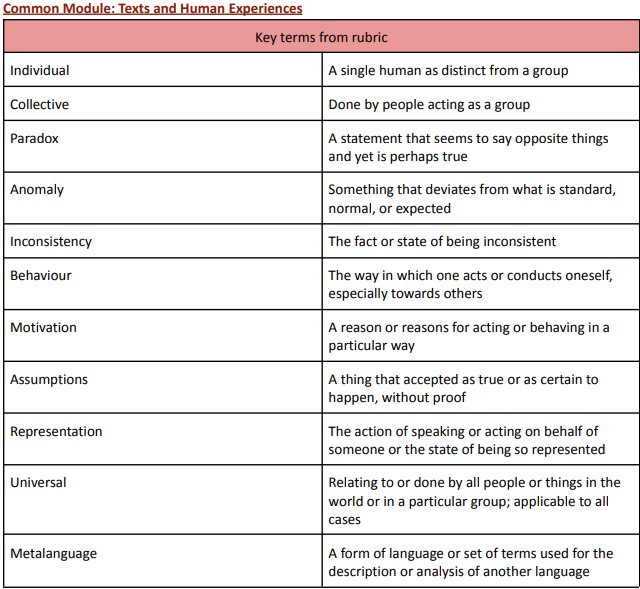
Key Terms from Rubric
Context
Historical
1962 - 1963, Salem Witch Trials in Massachusetts, United States of America
2 major superpowers emerged after WWI ended 1945 - ideologically opposite
United States - Capitalist democracy, fear Communist takeover (Red Scare), CATHOLIC
Soviet Union (USSR / Russia) - Communist power, ATHEIST
Red Scare (Communism threat paranoia to US during Cold War by USSR)
Intensified late 1940's - early 50s
McCarthyism — Wisconsin Senator, Joseph P. McCarthy
Produced series of investigations and hearings aiming to expose suspect communist infiltration in the U.S. Government
Ruined many reputations
Government was overrun by fear and paranoia
1950, Congress passed McCarran Internal Security Act
Required registration of communist organisations to protect America from ‘Un-American activities’
Fear of communism overrode basic democratic rights that had originally defined American society
Allegorically, Danforth allowed innocents hung due to fear of witchcraft
HUAC (House Un-American Activities Committee) forced individuals to give false evidence against others who were suspected of communism
Crucible —> suspects could lie/tell the truth about their witchcraft or be hung and dead.
Those who refused to give names or evidence, risked being imprisoned for contempt of congress (not taking law seriously)
Crucible —> seen as assets / accomplices
Puritanism - Crucible religion
Strict form of Christianity, enforced strong morals, rejected self-indulgence and freedom
Created isolated theocratic (based on religion) society — Priest’s ruled the town in God’s name
Puritanism follows by the Bible
Bible encourages love for all, honesty and justice —> Crucible expresses opposite
Miller
Parallels Arthur Miller’s own context in the 1950s
Miller wrote this play to express political turmoil experienced with the fear of Communism in his own society, to the paranoia of Witchcraft in Salem —> as an allegory (symbol) for McCarthyism
Inspired by book The Devil in Massachusetts by Marion Starkey
Described imagination of Salem village was ‘captured by a vision of something that wasn’t there’
Miller was fascinated about effects of paranoia on a society
Fragility of social harmony and justice in times of social, religious and political tensions represented in Crucible in ways audience and emotionally and intellectually understand
Religion Contrasts
U.S. Christianity fuelled fear of communism from USSR —> Puritanism fuelled fear of witchcraft
Communism was a threat of Christianity in American —> threat of witchcraft threatens Puritan beliefs of Salem
Attitudes towards Gender
Accused of witchcraft in Crucible
1st —>Tituba - black, female, slave from South America (target due to ethnic differences
2nd —> Sarah Good - white, female, homeless beggar
3rd —> Sarah Osborne - white, female, rarely attended Church meetings
More than ¾ of accused were women. Men only blamed because of relatives of females accused
Women viewed as physically weaker —> easier to blame (scapegoat)
Used to maintain unequal power balance between men and women
Elizabeth shows submissiveness in relationship to John Proctor as she lies about his affair
Abigail Williams shows the gender stereotype of women being flirtatious, manipulative and untrustworthy
Men still held majority of power in 1950’s America
‘Nuclear Family’ —> traditional family model, husband who earns money, wife looking after household, kids being obedient and following parents will
Created during Cold War to encourage staple family unit as foundation of strong society
Reinforced women’s domestic gender roles and duties
Miller advocates /reflects the benefits of ‘Nuclear Family’
John Proctor’s downfall with Elizabeth due to his affair with Abigail Williams
Elizabeth takes blame for affair “I was a cold wife”
Wrote play to:
Warn 1950s America of man’s potential for evil
Criticise cruelty of mankind
Praise positive independent virtues
Relate to any era (timelessness)
Depict how people behave in a public terror environment
Depict the effect of private guilt on the public sphere
Key Themes / Concepts
Fear and Hysteria
"I saw Sarah Good with the Devil! I saw Sarah Osborne with the Devil! 1 saw Bridget Bishop with the Devil!" - (Abigail Williams, Act 1)
Symploce (Anaphora and Epistrophe combined) of “I saw… with the Devil!” frantic and hysterical tone, aiming to take the focus off her and direct it onto others.
Protect her reputation
“the Devil is out of hand, it’s out in the community” - Reverend Hale Act 3
Anaphora of “is out” emphasises emotion of fear has become certain reality which causes hysteria motivated by fear of false accusations and certain punishments
Anomaly of Salem’s conservative context, elucidates how community places higher importance on accusations than innocence and justice.
Biblical imagery of “Devil”
"A person is either with this court or he must be counted against it," Danforth, Act 3
Symbolism → fear driven mentality motivating the witch hunts
High modality language
Reputation and Integrity
“My name is good in the village! I will not have it said my name is soiled!” (Abigail, Act 1)
Concerned with her “name” that is used as a motivation for her actions
She doesn’t want it “soiled”, as she could face harsh consequences in Salem theocracy
Metaphor of “my name is soiled”
Used as a motivation for her actions
She doesn’t want to get the bad consequences of her actions
“...we are only what we always were, but naked now…God’s icy wind, will blow!” (Proctor, Act 2)
Metaphor of “naked now”
Exposure and vulnerability → communities true nature is being revealed through mass hysteria
Biblical allusion “naked” and “God’s icy wind”
Echoes story of Adam and Eve, symbolising shame, judgment and loss of innocence
“You will confess or you will hang” (Danforth Act 4)
Antithesis → confession or hanging
False confession is seen as a way out of death, but involves compromising self integrity and truth
Irony → goes against the Bible’s beliefs of honesty over all
Being truthful will get you hung
Power and Authority
“...and I will bring a pointy reckoning that will shudder you.” (Abigail Williams Act 1)
Hyperbole → “shudder you”
Exaggerate the severity of consequences
Threat will be so powerful and terrifying that it will physically shake others
Illustrates level of fear Abigail is trying to instill in them
Violent imagery → threatening Mary Warren
Demonstrates extent of power and control
“You are God’s instrument put in our hands to discover the Devil’s agents among us. You are selected, Tituba,” (Hale, Act 1)
Metaphor
Dehumanising Tituba as a tool of divine will rather than a person
She has power over life and death of others
Tituba (a slave/housemaid – lowest of the low status) has her status temporarily elevated due to the witch trials
Religious diction
Demonstrates the puritanism society; everything is either divine or demonic
“We burn a hot fire here; it melts down all concealment.” (Danforth, Act 3)
Metaphor
Symbolising intense scrutiny and punishment of the court → purifying force that reveals all truths
High modality
High certainty + confidence → asserting court’s power as unquestionable and divinely justified