Lecture 29: Livestock Production Systems III: Pastoral Livestock Production
Learning Outcomes
Understand how New Zealand's grass growth patterns influence seasonal pasture-based production activities.
Learn how measurements of pre- and post-grazing pasture mass, along with pasture mass targets, are used to inform grazing decisions on farms.
Pasture-Based Production Systems
New Zealand has a Pasture-Based Production Systems.
New Zealand's temperate climate is suitable for pasture-based systems.
Pasture serves as a cost-effective and renewable feed source for grazing livestock.
These systems can be intensive or extensive.
Herbage quality and quantity are key constraints to animal production in such systems.
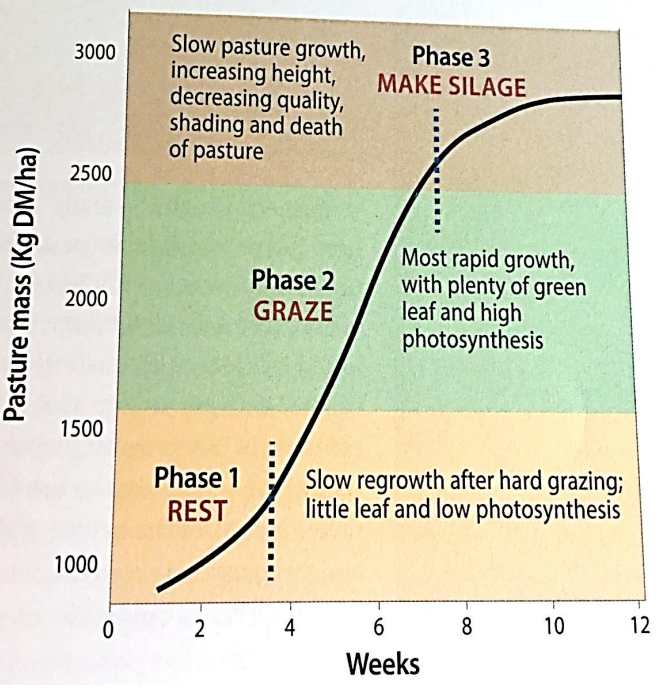
Grass Growth Rate
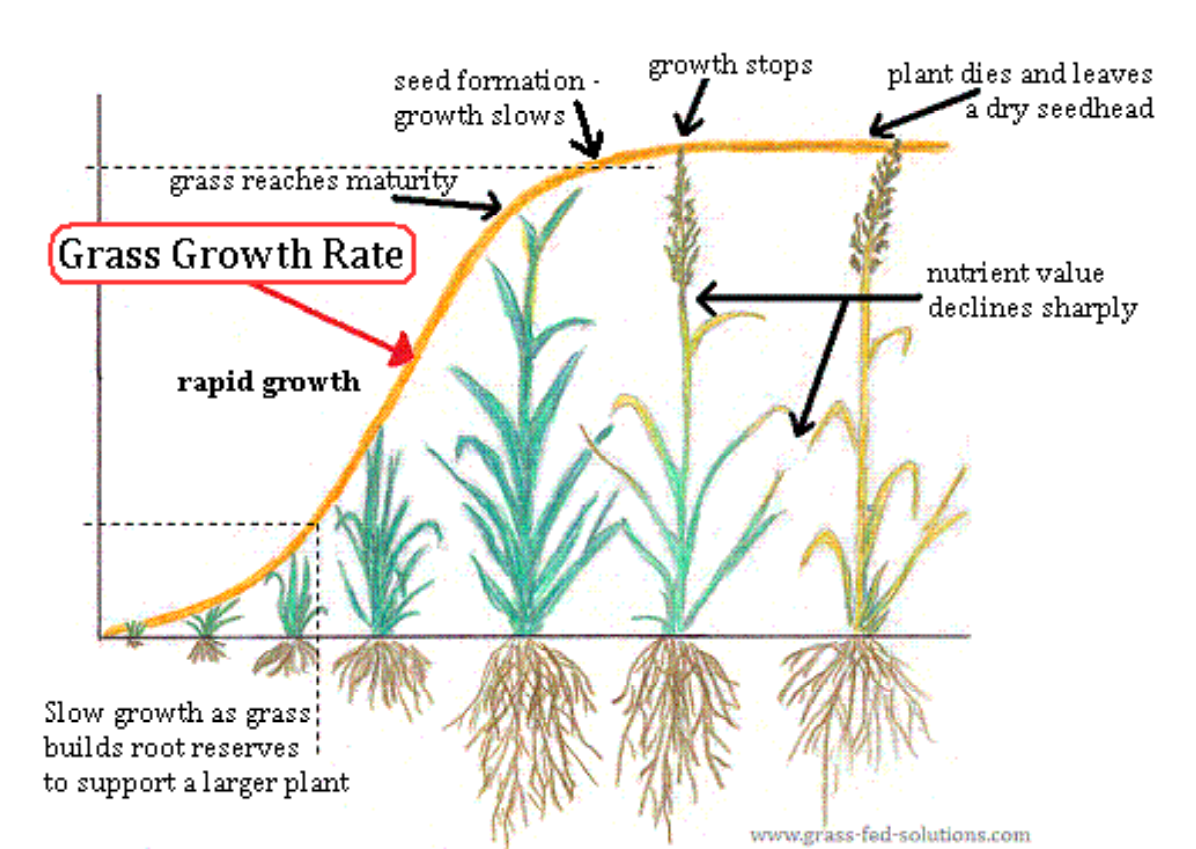
Rapid Growth: Active growth phase.
Slow Growth: Grass builds root reserves to support a larger plant.
Growth Slows/Stops: As grass reaches maturity and forms seeds.
Energy put into forming seeds not growing
Plant Dies: Leaving a dry seedhead.
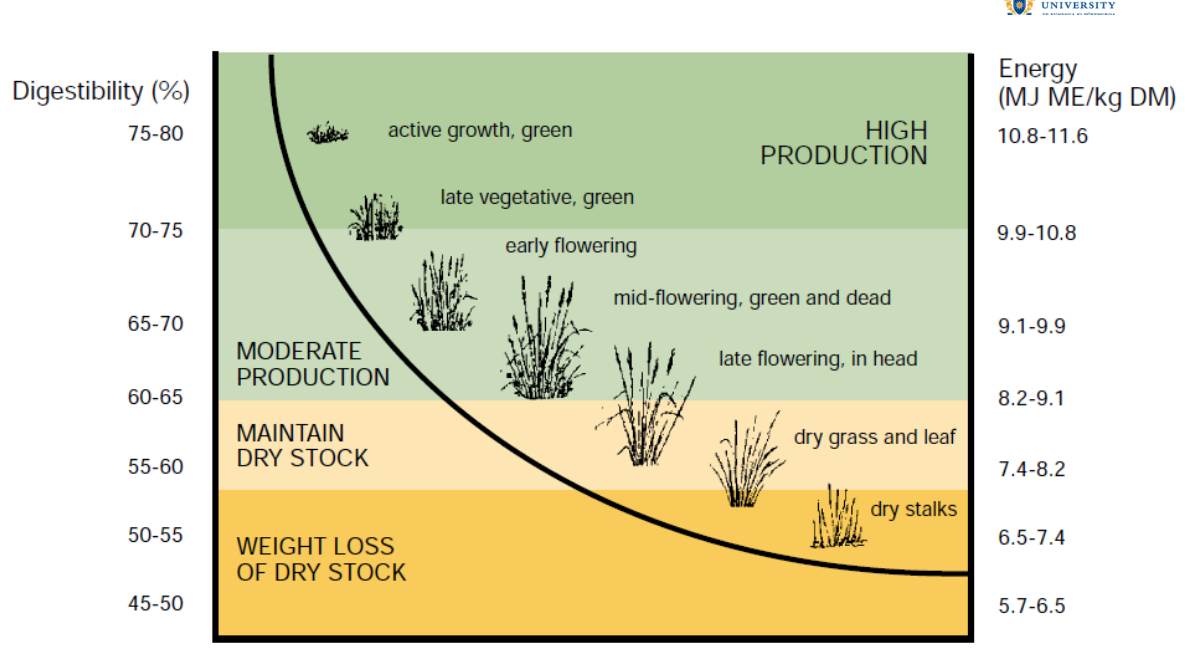
Overall Trend: Growth, Digestibility, and Nutrient value declines sharply as the grass matures.
Thus farmers try to keep the grass in the actively growing non-reproductive area for as long as possible
Through mowing ect.
Supply and Demand in Pasture-Based Production
Supply (IN):
Two factors influences pasture supply:
Temperature and Rainfall
Demand (OUT):
Influences on pasture/animal demand:
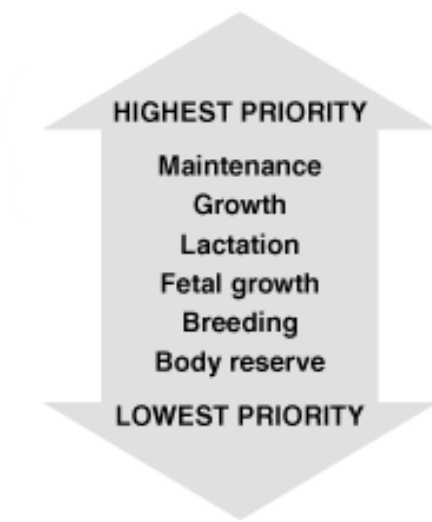
Nutrient/Energy requirements
The maintenance energy needed not doing anything.
Animal activity/production
Any additional energy above the maintenance level: could be required for growth, reproduction/pregnancy, and lactation.
Environmental temperature.
Require energy to thermoregulate(Maintain Body Temperature)
Matching Supply and Demand
Supply:
Supply is driven by season, with spring being the peak pasture supply.
Demand:
Lactation represents peak nutrient (energy) demand.
Farmers thus try match animal birth and lactation to coincide with spring pasture supply.
Matching peak demand with peak supply.
This means matching up breeding cycles.
Aligning Breeding Cycles
Animals can be seasonal or non-seasonal breeders
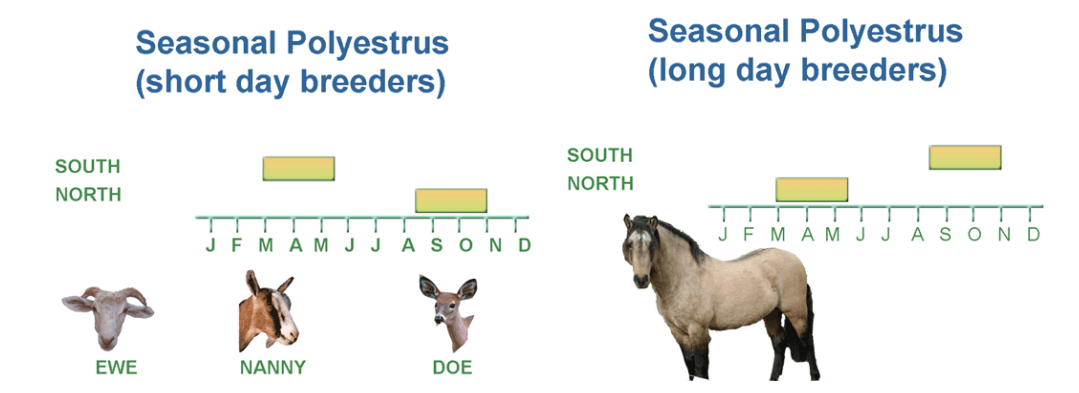
Seasonal Breeders
Sheep
Short-day breeder
They come into their breeding season as the day begins to shorten
Become reproductively active in about autumn.
5 month pregnancy: Allowing the to give birth in spring.
Higher chance of offspring survival as spring as increased food supply.
Goats
Deer
Horses
Long-day breeder.
Become reproductively active as the day lengths begin to increase.
Become reproductively active in about spring.
12 month pregnancy: Allowing them to give birth in spring.
Higher chance of offspring survival as spring as increased food supply.
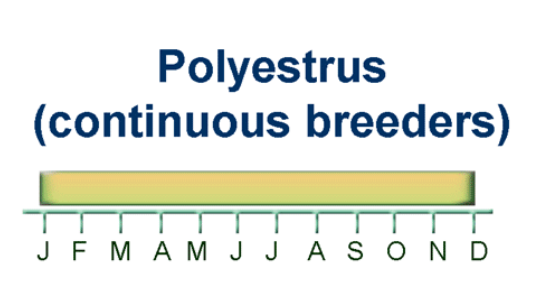
Non-Seasonal Breeders
Reproductively active all year round (Polyestrous/Continuous Breeders).
Cattle
That being said we treat cows in a seasonal fashion to align births with the pasture surplus in spring.
Pigs
Poultry
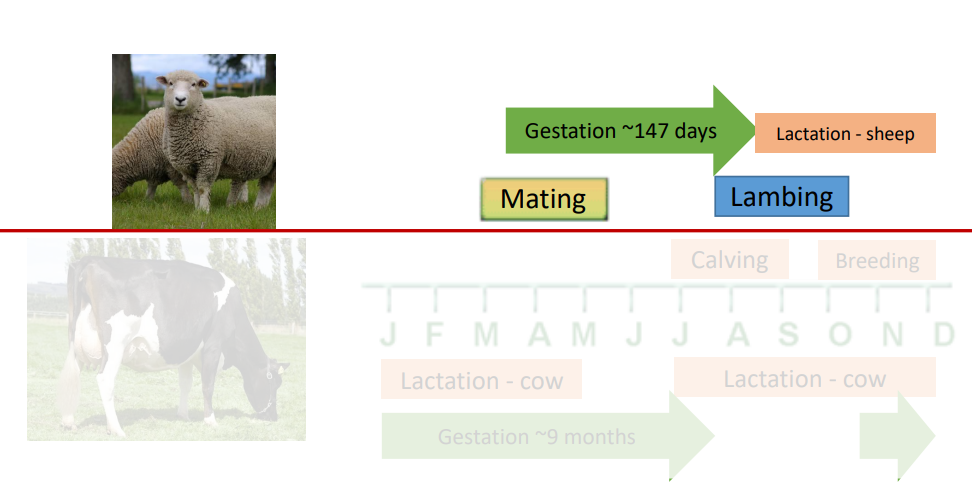
Pasture-Based Production Cycle
Sheep: Lambing in spring, Mating in autumn, Gestation ~147 days, Lactation follows lambing.
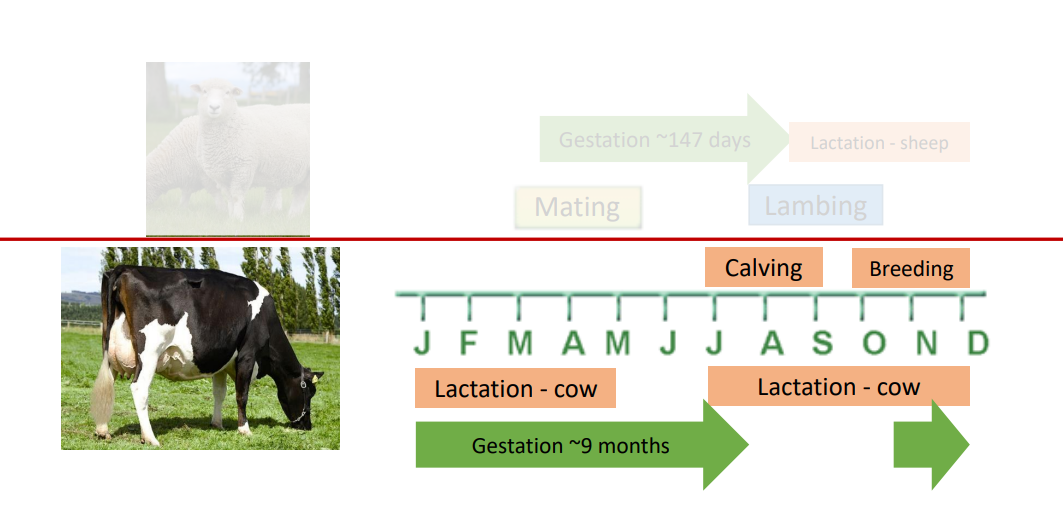
Cattle: Calving, Breeding during lactation, Gestation ~9 months, Lactation follows calving.
Seasonal Sheep Production (Generalized)
Spring: Lambing/lactation
Peak pasture supply/surplus.
Summer: Weaning
Summer dry leads to pasture deficit
But you need to feed growing lambs and look after the ewe condition for breeding,
Solutions Include: Supplementary feeds/specialist crops.
Autumn: Mating.
Winter: Pregnancy.
Slow pasture growth (deficit to animal requirements)
Solutions include winter forage crops (planted spring/early summer, grown summer/autumn, grazed winter).
Seasonal Dairy Production (Generalized)
Cows are not seasonal breeders but are typically farmed as such in NZ.
Spring: Calving (late winter)/early lactation/breeding.
Summer: Mid lactation.
Autumn: Late lactation.
Winter: Dry off cows in preparation for calving.
Supplementation and/or specialised crops used to met any additional energy demands.
Key Factors for Producers
All this relies on producers “knowing”:
Animal nutrient demands.
How much pasture they have.
How much pasture will likely grow.
How much supplementary feed they need.
And being able to:
Estimate pasture growth
Measure pasture mass
Measuring Pasture Mass
Two time points when the Pasture Mass needs to be Measured:
Pre-grazing pasture mass/cover (kg DM/ha).
Post-grazing pasture mass/cover (kg DM/ha).
Don’t want them grazing down to low.
With pasture mass information, potential intakes, grazing days, and appropriate stocking rates can be calculated.
Intake = Pre-grazing cover – Post-grazing cover
Example: 2000 kg DM/ha – 1500 kg DM/ha = 500 kg DM/ha.
If you had 1 ha paddock with 30 cows, means they would get ~16-17 kg DM each .
Pasture utilization is the amount of pasture eaten relative to the amount of pasture grown.
Controlling Intake allows us to maximize efficiency and reduce feed wastage.
You don’t want your animals overfeeding ect.
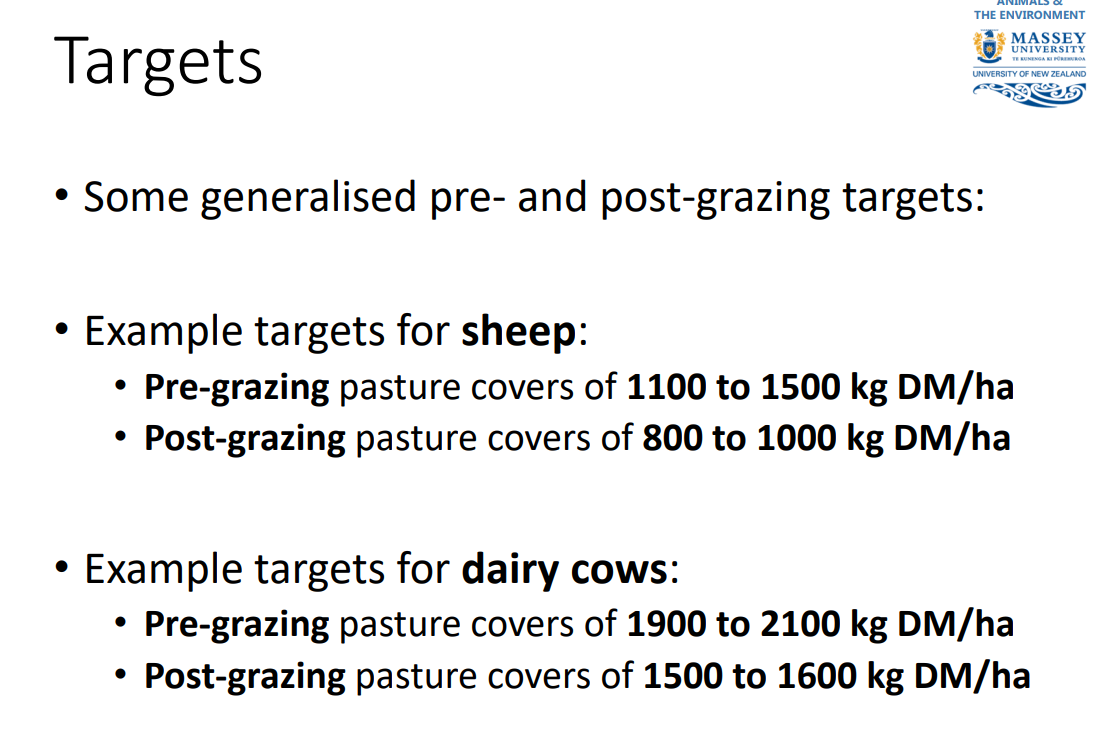
Pre- and post-grazing Targets
Why Have Targets?
Optimize intake: avoid restriction or excess.
Pasture management: Avoiding the grass grow too long or too short.
If you graze to low you get slow regrowth(little photosynthesis due to little leaf)
If you let it grow to high you get low nutrient quality due to seed heads forming ect.