NZQA Biology AS 91603: Population Genetics
Population: a localised group of individuals of the same species
Species: a group of populations whose individuals have the ability to breed and produce fertile offspring
Members of a species can interbreed and produce fertile offspring. These species will have a shared gene pool.
- Gene pool: all of the combined alleles present in a reproducing population or species
- If all members of a population are homozygous for a particular allele, then the allele is fixed in the gene pool
- When an organism joins a new population and reproduces, its alleles become part of the gene pool and removes its alleles from the old gene pool of its former population. This is known as gene flow
Each allele in a gene pool exists at a certain rate or frequency. Allele frequency is the measure of how common an allele is in a population.
- it is calculated by dividing the number of members of the population with one phenotype devided by the total population
- e.g there are 16 pigs in a ranch, 4 have pink fur, 12 have black fur. Therefore, the allele frequency for pink fur is (4/16)*100 = 25%; the allele frequency for black fur is (12/16)***100 = 75%
- Changes in allele frequencies that are due to chance are called genetic drift. Genetic drift can occur in two ways:
- Bottleneck effect: occurs after an event greatly reduces the size of the population
- the overhunting of animals, e.g seals, does not represent the genetic diversity of the population prior to their culling. Certain alleles will have become fixed while others will have been completely lost
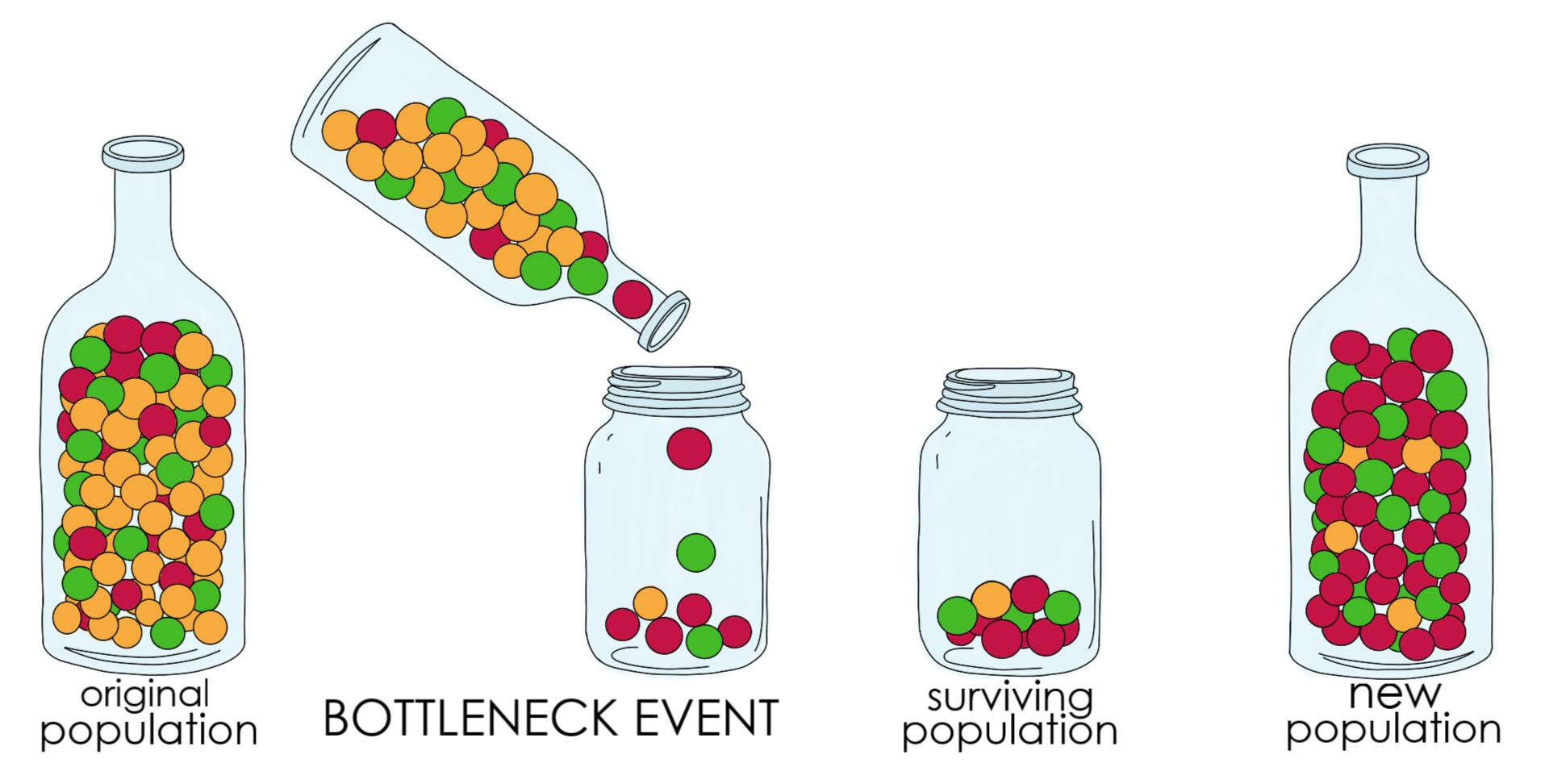
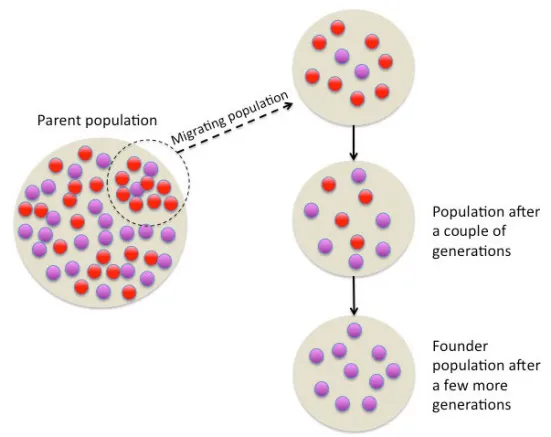
- Founder effect: occurs after a small number of individuals colonise a new area
- founder effects can arise from cultural isolation and inevitably, endogamy. This can commonly be seen as inbreeding/incest
There are two main sources for genetic variation:
Mutation: the random change in the DNA of a gene, changing the form of an allele into a new one
Recombination: new allele combinations from offspring during meiosis due to the varying arrangement of each parent’s alleles
Genetic variation is important to allow species to adapt to the changing environment, thus increasing survival chances. No two individuals will be exactly alike, but those who are fitter will survive and pass on their traits.
Natural selection: theory that states that an organism with better inheritable adaptations to the environment has a higher chance to survive to adulthood and passing their genes to the next generation
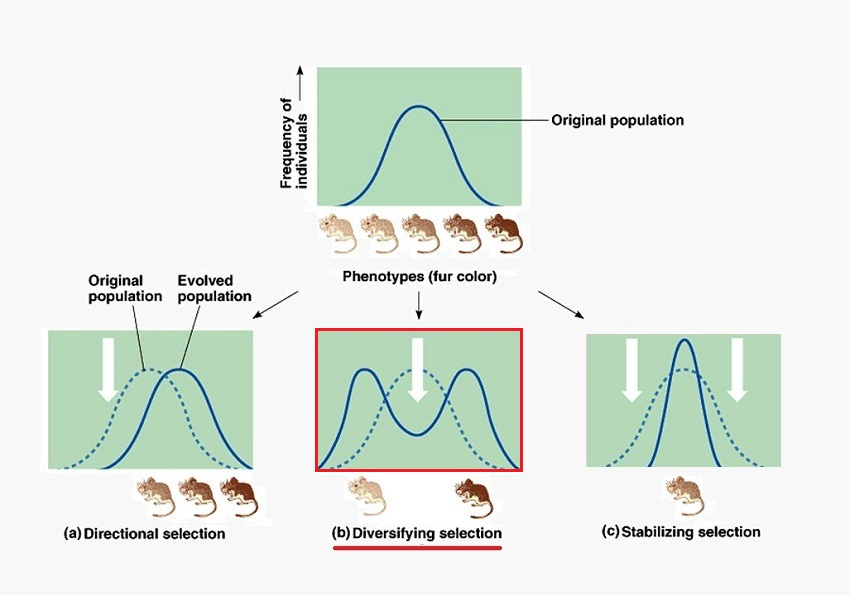
There are three ways that natural selection can change the distribution of a trait:
- directional selection - selection that favours a phenotype at one end or extreme e.g antibiotic-resistant bacteria
- stabilizing selection - selection that favours the middle or intermediate phenotype e.g Gall flies develop more in the middle size gall because woodpeckers eat large galls and wasps attack small galls
- disruptive selection - selection that favours both extreme phenotypes instead of the most common
Sexual selection: occurs when certain traits increase mating success. This occur in a variety of ways, both male, female, intrasexual, and intersexual.
- Males produce sperm continuously, making the value of each sperm relatively small; their investment is at little cost
- Females produce a limited number of offspring (as in humans, women have a set amount of eggs from birth), so they make more investment in the selection of mates
- Intrasexual selection: competition between members of the same sex (particularly males) for access to mates
- Intersexual selection: members of one sex choose members of the opposite sex involving elaborate behavioural displays or physical traits