Osmosis
Osmosis
definition
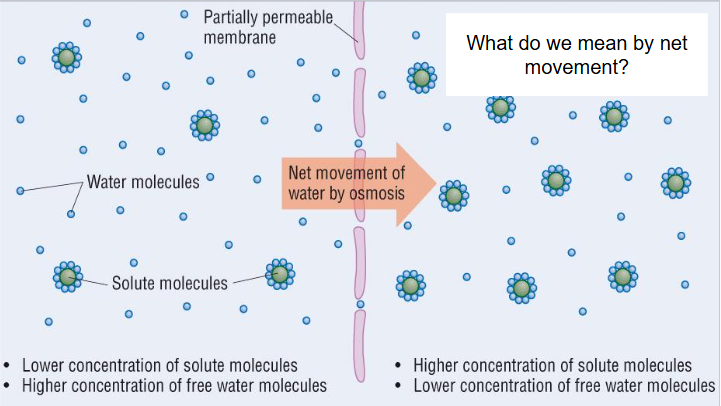
net movement of water molecule from an area of high water potential to an area of low water potential through a partially permeable membrane
passive
Water potential $$\psi$$
the tendency of water molecules to move from one region to another
water molecules used to dissolve solute are not free to move
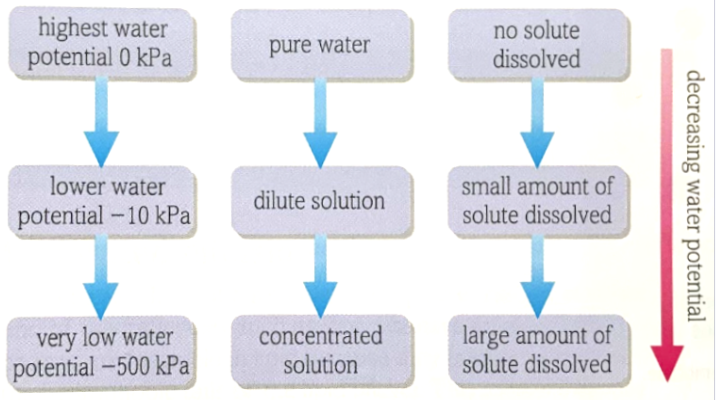
pure water has highest water potential
water potential becomes more negative as amount of solute increases
measured in units of pressure (Pa/kPa)
Plant cell in pure water
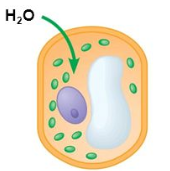
higher water potential outside of cell
hypotonic solution
water moves into cell
cell swells and becomes turgid
cellulose cell wall prevents it bursting
Animal cell in pure water
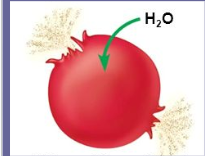
higher water potential outside of cell
hypotonic solution
water moves into cell
cell swells and bursts
cytolysis
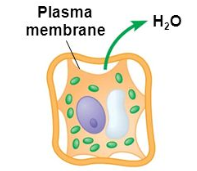
Plant cell in conc. sugar solution
lower water potential outside of cell
hypertonic solution
water moves out of cell
cell loses turgor pressure and eventually plasma membrane pulls away from cell wall
plasmolysis
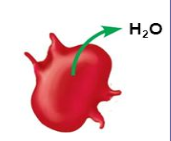
Animal cell in conc. sugar solution
lower water potential outside of cell
hypertonic solution
water moves out of cell
cell loses volume and shrivels
crenation
Flaccid plant cells
plant cells should be turgid to give plant support
if cells start to lose water they will become flaccid
if they gain more water they can become turgid again
if they continue to lose water they will become plasmolysed
cell usually dies (same with lysed/crenated animal cells)