Topic3: Electromagnetic Radiation(EMR)
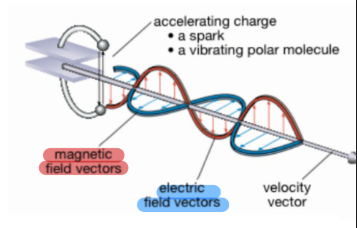
EMR - A wave that consists of a changing electric and magnetic field that travels at right angles to one another
More vocab
Cycle - One completed vibration of a wave(one crest and one trough)
Wavelength - Length of one cycle(ex. one maximum and one minimum)
in Meters and a tent looking symbol
Frequency - # of cycles per second
in Hz(hertz) and f symbol
*Wavelength and frequency are opposite
High frequency = high energy = short wavelength

The waves of alternating electric and magnetic fields that all move through space at the “speed of lights”(called “C”)
How are radio waves different from x-rays?
Different types of radiations will have differences sources, wavelengths, and frequencies
Because EMR have different frequencies and wavelengths, this means they carry different amounts of energy photons
When looking at the diagram in the data booklet:
EMR to the left of visible light are non-ionizing(not cancerous)
Right of visible light are ionizing(cause cancer)
Types of EMRs
Radio waves
Lowest energy
Source: vibration of e- within electric circuits
Penetrating ability: CANNOT penetrate metal so an antenna is sometimes needed
On cars before in old old times lol
Not ionizing
Applications: Mostly used for communication
ex) Cell phone radio
Can also be used for magnetic resonance imaging(MRI’s)
Used to locate tumors
Microwaves
Source: High frequency vibrations of e- within specialized circuits
Penetrating ability: Hazardous to humans due to the high water content of living tissues
Exposure leads to cataracts
Can travel through air, smoke, rain, etc
Not ionizing
Applications: Heating food
Used in radar, GPs, and satellites
Infrared “heat”
Source: Emitted from hot objects
Penetrating ability: Can burn human tissue
Not ionizing
Applications: Used in motion detectors, heat seekers, remote controls, and other wireless devices
Visible light
Source: Emitted by objects that are hot
Ex)Sun, light bulb, and a fire
Penetrating ability: Can penetrate through air as well as the lenses of our eyes
Not ionizing
Applications: Allows us to see objects
Photosynthesis to occur in plants
Ultraviolet
Source: Very hot objects
Penetrating ability: UVA and UVB can penetrate the ozone layer. UVC is absorbed by the ozone
May cause abnormally fast cell division(mitosis) - cancer(melanoma)
UV is ionizing and can kill bacteria by breaking down DNA
Can also cause aging of the skin
Some types of UV are ionizing
Anything to the right of visible light on the spectrum is ionizing
Applications: Tanning beds and sterilize equipment
X-rays
Source: Fast moving e- striking a metal target
Penetrating ability: Can penetrate body tissue
ionizing
Applications: X-ray teeth and bones, and radiation therapy
Gamma Rays
Highest energy
Source: Emitted from radioactive material
Penetrating ability: Can penetrate metals
Can cause mutations and cell death
ionizing
Applications: Sterilization of food(irradiation) and medical imaging
More EMR vocab! Light
Reflected light - What bounces off an object
Angle of incidence = angle of reflection
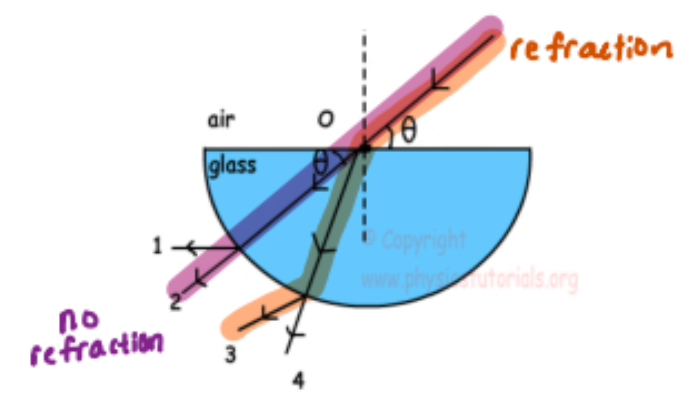
Refracted light - when EMR waves bend when they go from one medium to another
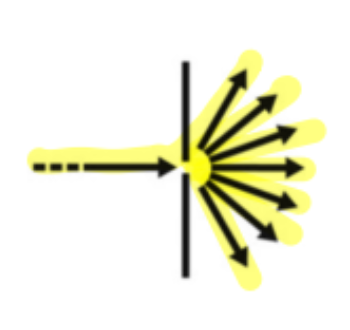
Diffraction - the scattering of a wave as it passes an obstacle
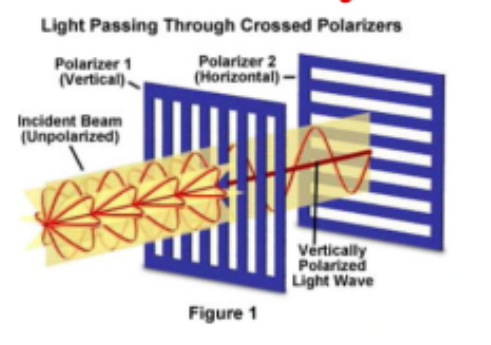
Polarization - means to confine a wave to vibrate only in one direction
This is used in polarized sunglasses to reduce glare