U6 Cram
M74-75
Free Market Characteristics
Little government involvement in the economy. (Laissez Faire = Let it be)
Individuals OWN resources and determine what to produce, how to produce, and who gets it.
The opportunity to make PROFIT gives people INCENTIVE to produce quality items efficiently.
Wide variety of goods available to consumers.
Competition and Self-Interest work together to regulate the economy.
Market Failure
Market Failure
a situation in which the free-market system fails to satisfy society’s wants
private markets do not efficiently bring about the allocation of resources → government must step in to satisfy society’s wants
Terms to Know
MPC is Marginal Private Cost: the marginal cost of producing the good, not including any external costs
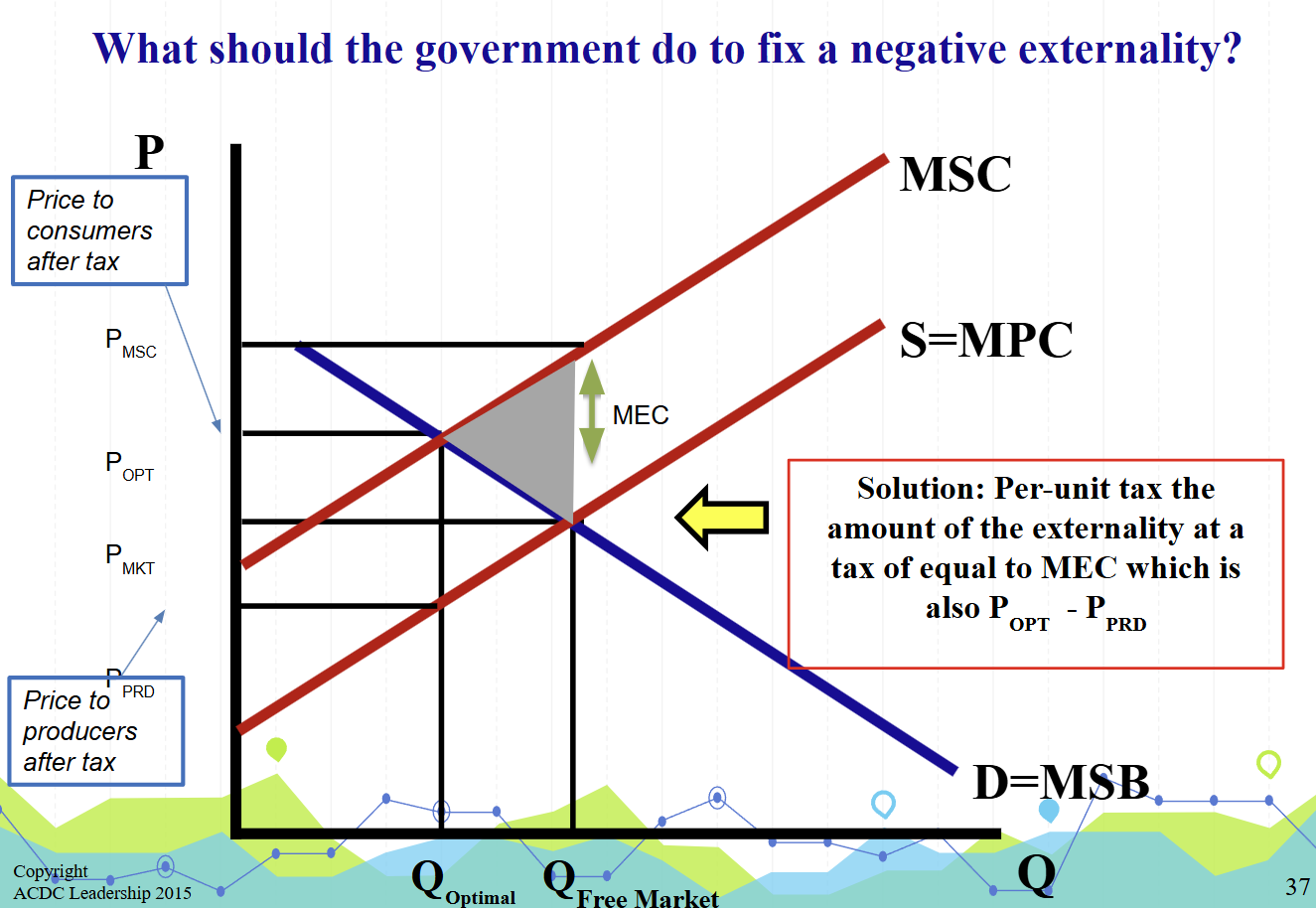
MEC is Marginal External COST : the increase in external costs to society by one additional unit. These costs are not yet included in MPC.
MSC is Marginal SOCIAL COST : the additional cost imposed on society as a whole by one additional unit. (MPC + MEC)
MPB is Marginal Private Benefit: the marginal benefit that accrues to consumers of the good, not including external benefits. MPB is equal to the price a consumer pays for a good or service.
MEB is Marginal External Benefit: the additional external gain to society as a whole from an additional unit. This is NOT yet included in MPB.
MSB is Marginal SOCIAL Benefit: the additional gain to society as a whole from an additional unit.
Formulas
MSB = MPB + MEB
MSC = MPC + MEC
Four Market Failures
Public Goods
Externalities
Monopolies
Unfair distribution of income
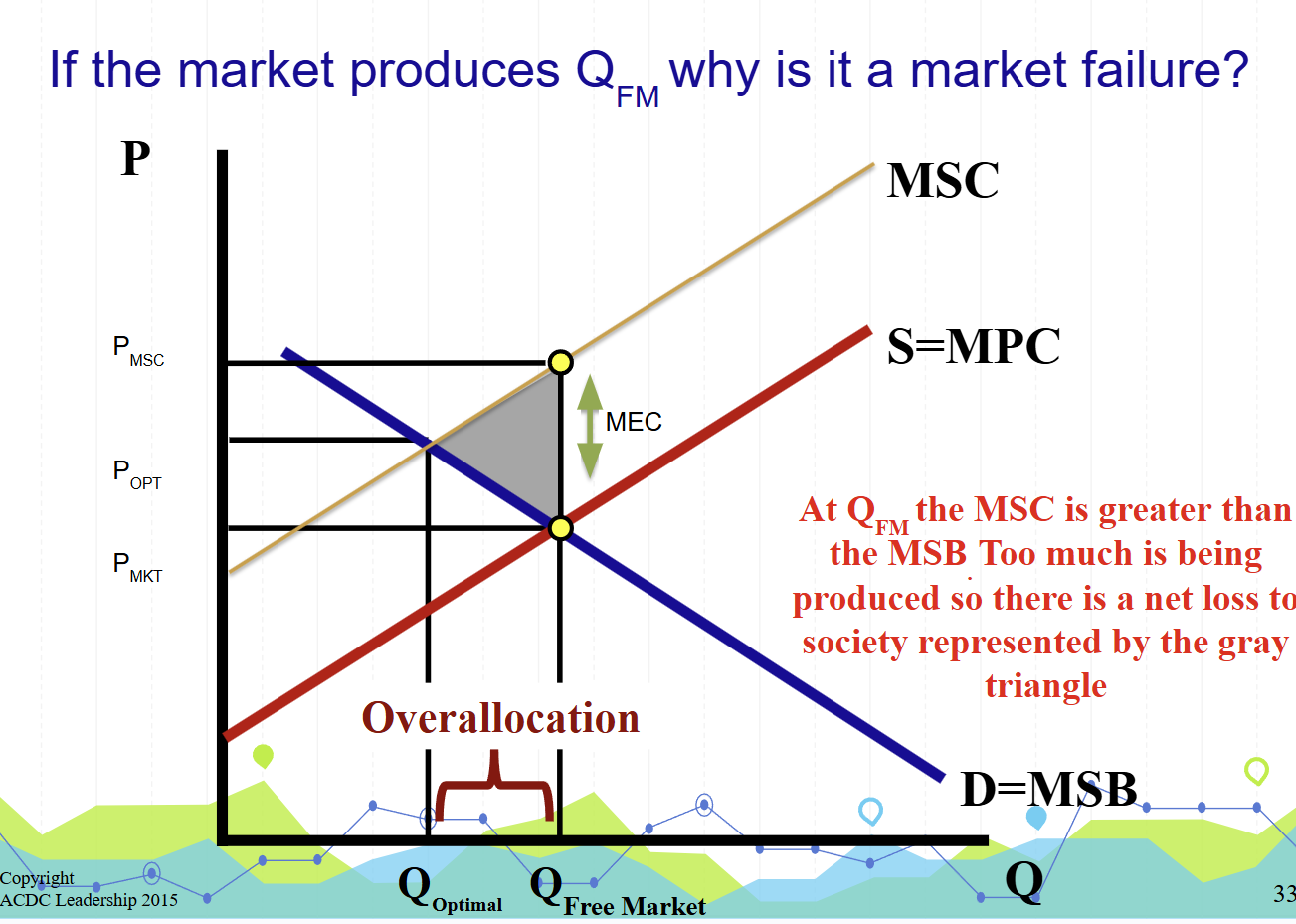
FMF (Externalities)
Goal is to produce @ MSC = MSB
when they are not equal there is an externality
MSC = supply
MSB = demand
externalities are third-person side effects (benefits or external costs to someone other than the original decision maker)
Negative externalities
situation that results in a COST for a different person than the original manufacturer
ex. pollution while producing a good
government will recognize the cost and limit production as a result
What should the government do to fix a negative externality, PER UNIT TAX
Coase Theorem
Positive Externalities
situations that result in a BENEFIT for someone other than the original manufacturer
ex. flu vaccines, education, home renovation
same logic except opposite to negative externality
to fix positive externality government should do a per unit subsidy
incentivizes firms to produce more or consumers to purchase more, shifting demand curve up/right
Perverse Incentives
unintended consequence of an action that leads individuals or organizations to act against the desired outcome
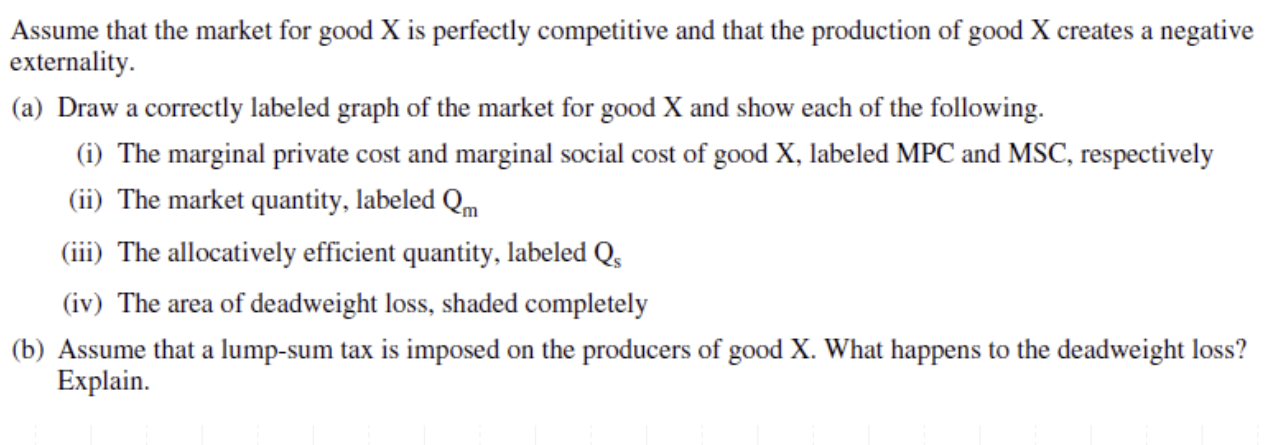
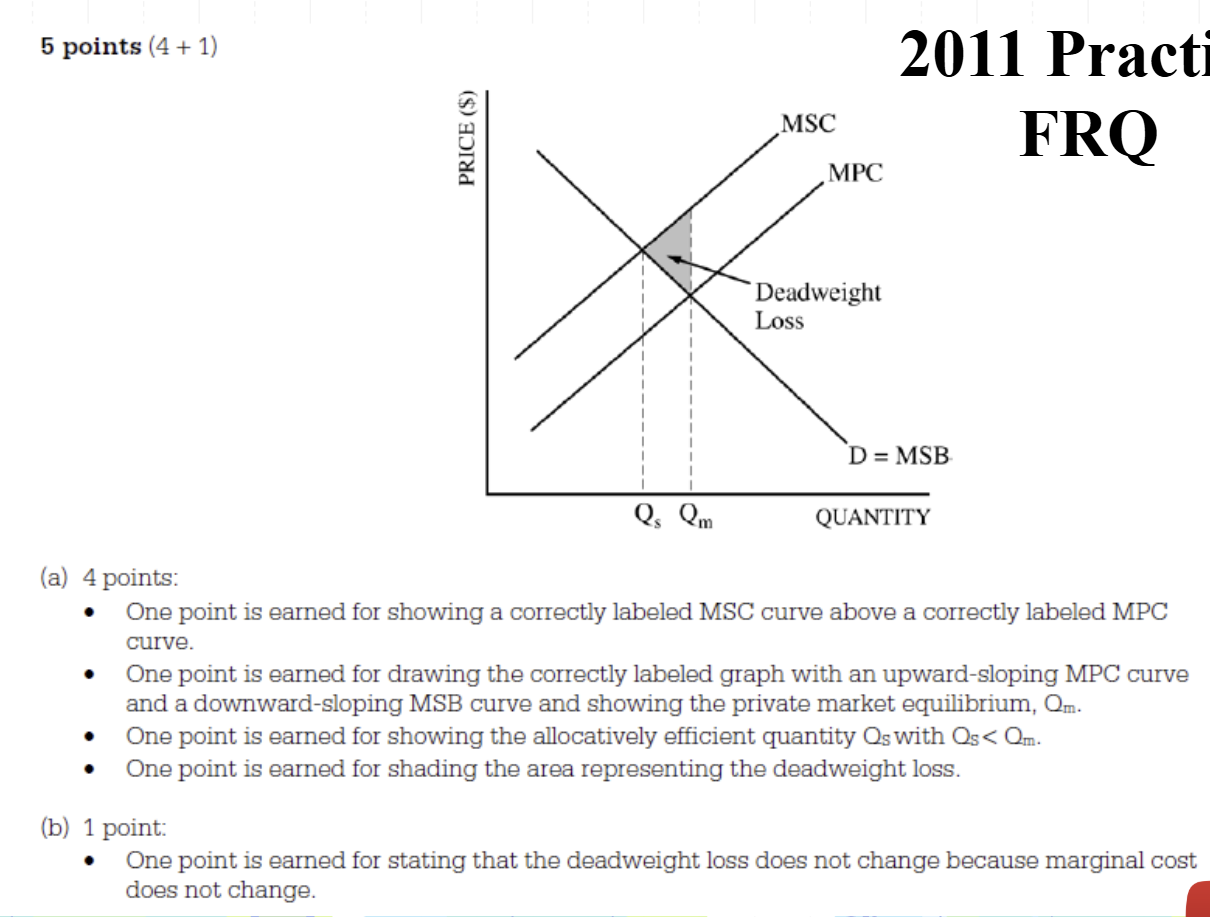
m75 FRQ PRACTICE
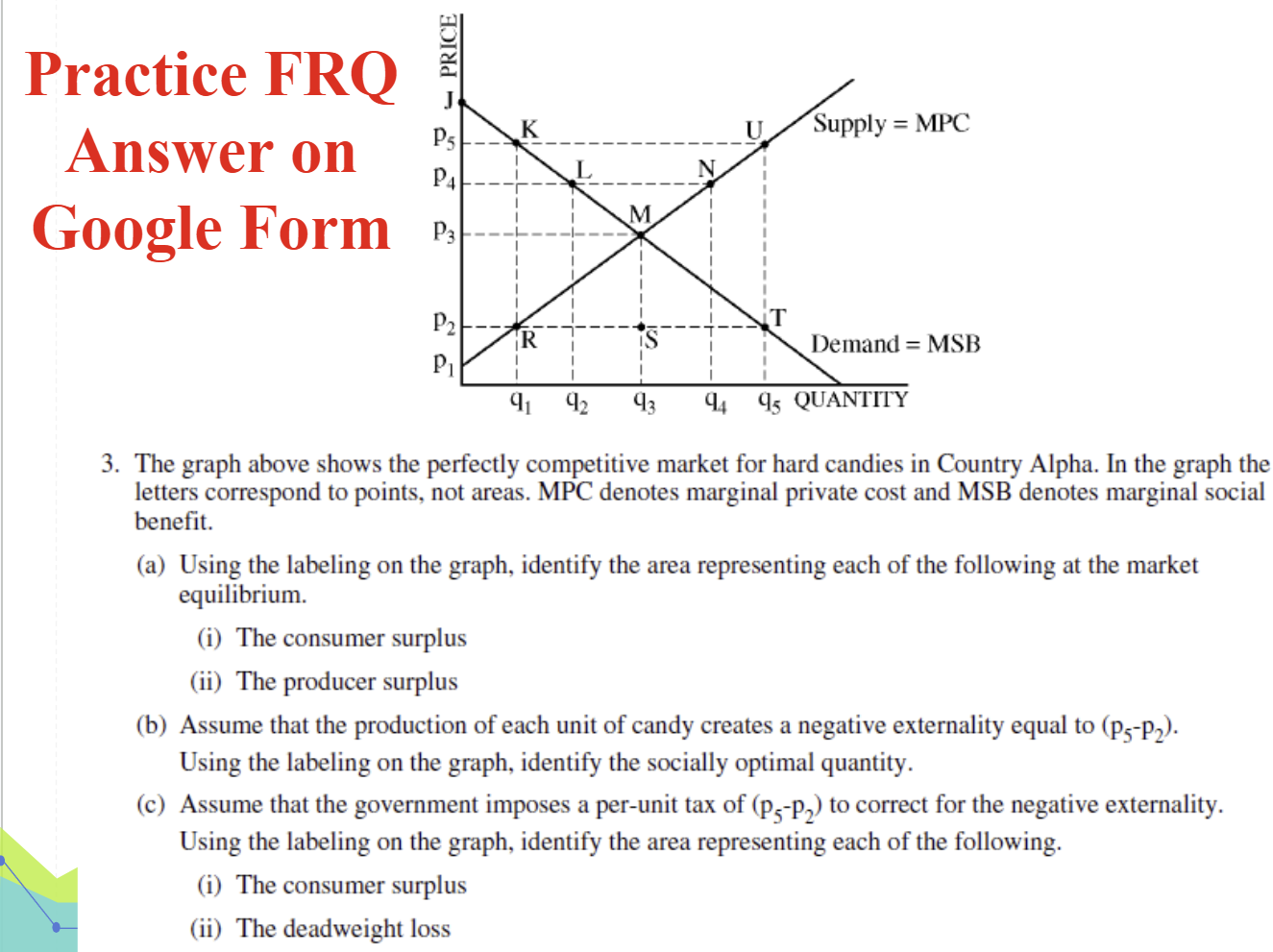
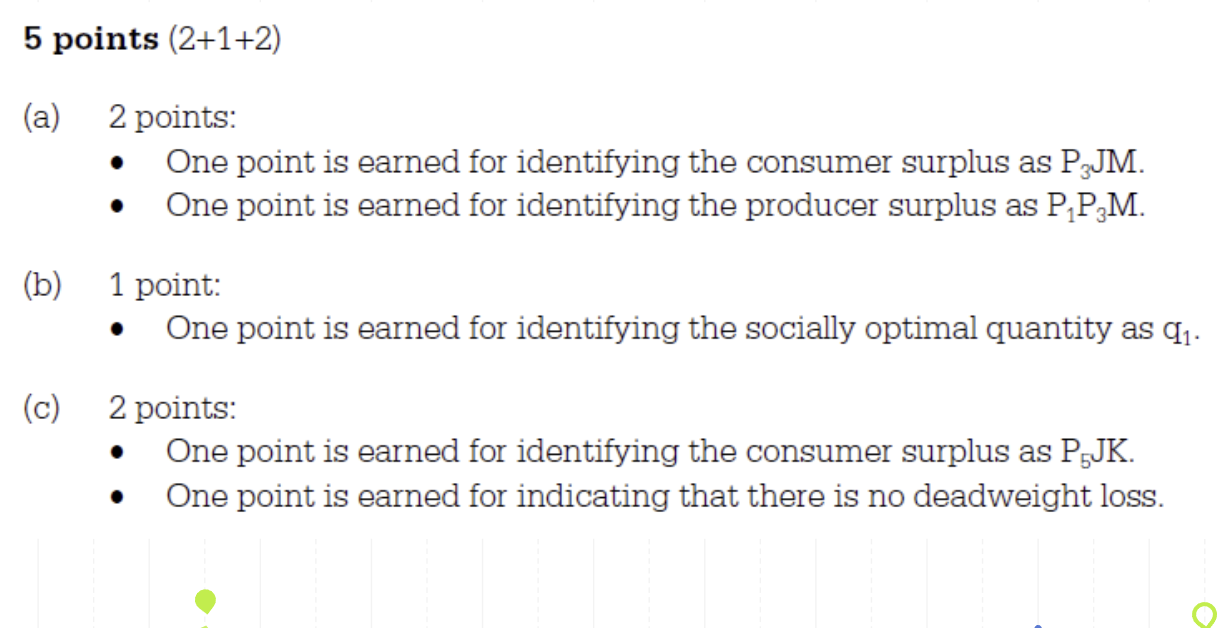
M76
Public vs Private
Public sector
the part of the economy that is primarily controlled by the government
private sector
the part of the economy that is run by private individuals and companies that seek profit
Goods
Goods have 2 characteristics that are required for it to be provided in efficient quantities by a market economy
They are excludable (suppliers of the good can prevent people who don’t pay from consuming it)
They are rival in consumption (same unit of the good cannot be consumed by more than one person at the same time)
4 Types of Goods
Private: Rival in consumption, excludable
Artifically Scarce: Nonrival in consumption, excludable
Common resources: Rival in consumption, non-excludable
Public goods: Nonrival in consumption, non-excludable
Free Riders
Free Riders
individuals that benefit without paying
keep firms from making profits
if left to free market, essential services would be under produced
government can find new ways to punish free-riders or use taxes to provide service to everyone