digestion
section 1: fundamentals of nutrition
key terms (continued)
digestion: breakdown of food in the body in preparation for absorption.
lymphatic system: part of the circulatory system involved in maintaining fluid balance and transporting fats.
maltase: enzyme that catalyzes the conversion of maltose into glucose.
mechanical digestion: the physical breakdown of food into smaller pieces to aid chemical digestion.
metabolism: the use of food by the body after digestion, resulting in energy.
pancreas: gland that produces digestive enzymes and hormones, including insulin.
pancreatic amylase: enzyme secreted by the pancreas that breaks down starches into sugars.
pancreatic lipase: enzyme secreted by the pancreas that digests fats.
pancreatic proteases: enzymes that break down proteins into amino acids (includes trypsin, chymotrypsin).
pepsin: enzyme secreted in the stomach that breaks down proteins.
peptidases: enzymes that continue the process of protein digestion in the small intestine.
peristalsis: rhythmic contractions of the gastrointestinal tract that move food along.
pylorus: the opening from the stomach to the small intestine.
resting energy expenditure (ree): the amount of energy expended while at rest in a neutrally temperate environment.
saliva: fluid produced in the mouth that contains enzymes to begin digestion.
salivary amylase: enzyme in saliva that starts carbohydrate digestion.
secretin: hormone that stimulates the pancreas to release bicarbonate to neutralize stomach acid.
sucrase: enzyme that breaks down sucrose into glucose and fructose.
villi: small, finger-like projections in the small intestine that increase surface area for absorption.
digestion
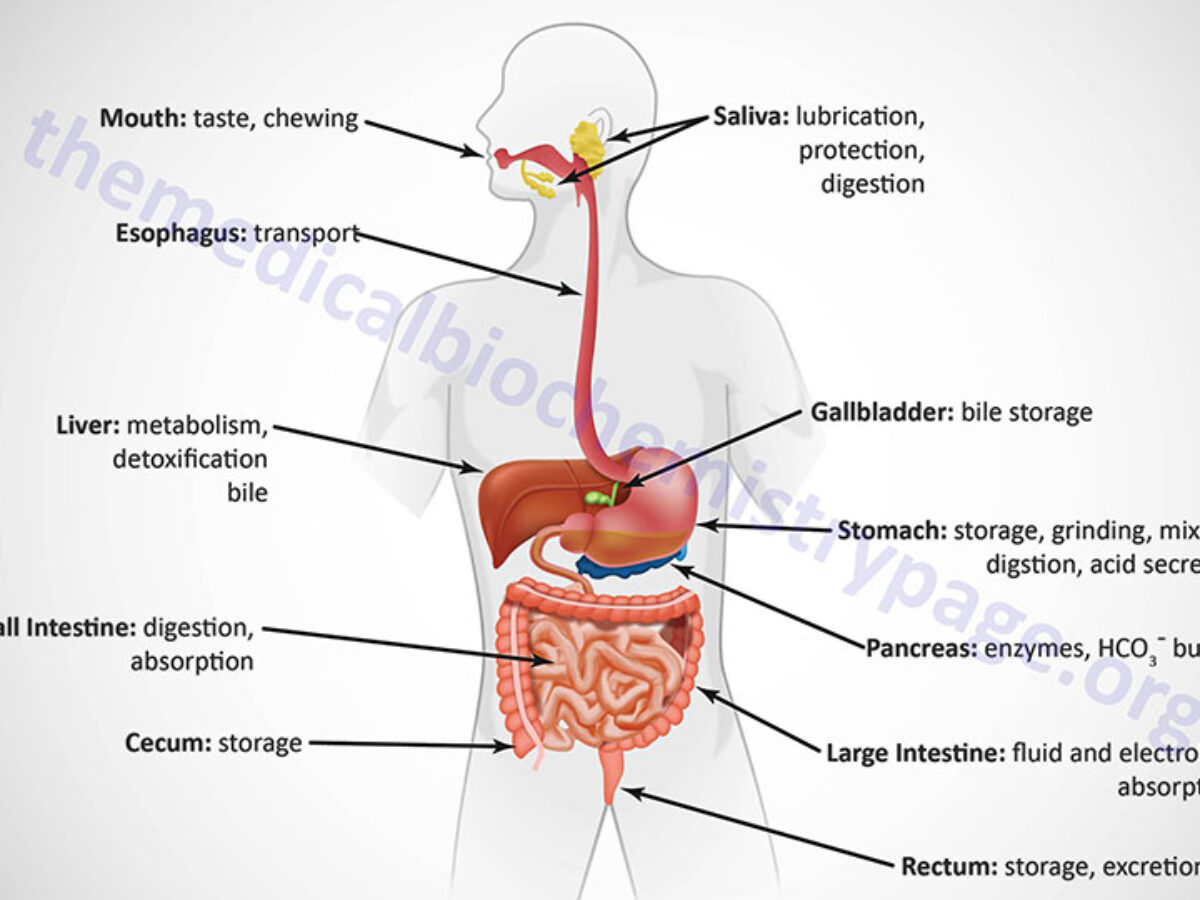
gastrointestinal (gi) tract structures:
- mouth: teeth and tongue begin mechanical digestion by breaking food into smaller pieces.
- esophagus: food moves down via peristalsis and gravity.
- liver: produces bile for digestion, filters blood, metabolizes nutrients, and detoxifies substances.
- gallbladder: stores bile and releases it into the small intestine to emulsify fats.
- small intestine: consists of the duodenum, jejunum, and ileum; completes digestion via nutrient absorption into the blood and lymph.
- large intestine (colon): absorbs water and nutrients, collects waste for excretion. includes cecum, ascending, transverse, descending, sigmoid colon, and rectum.
- anus: opening for the elimination of waste.
mechanical digestion
involves breaking food into smaller pieces and moving it along the gi tract via peristalsis.
larger pieces have less surface area for enzymes to work on, so mechanical digestion increases efficiency.
chemical digestion
involves changing the composition of carbohydrates, proteins, and fats through hydrolysis.
hydrolysis: the addition of water that breaks down food molecules, making nutrients available for absorption.
digestive enzymes: secretion from the mouth, stomach, pancreas, and small intestine necessary for breaking down food (examples include:
- salivary amylase: acts on starch.
- sucrase: acts on sucrose.
- maltase: acts on maltose.
- lactase: acts on lactose.
digestion in specific organs
salivary glands: secrete saliva that moistens food and initiates carbohydrate digestion.
- cardiac sphincter: prevents reflux of stomach contents into the esophagus.
- stomach: churns food with gastric juices containing hydrochloric acid and pepsin. mucus protects the stomach wall.
- pancreas: produces enzymes necessary for digesting starch, proteins, and fats.
enzymes involved in digestion
SOURCE | ENZYME | FOOD ACTED UPON |
|---|---|---|
Mouth | Salivary amylase | Starch |
Stomach | Rennin | Proteins in milk |
Gastric lipase | Emulsified fat | |
Small Intestine | Pancreatic amylase | Starch |
Pancreatic proteases | Proteins | |
Pancreatic lipase | Fats | |
Lactase | Lactose | |
Maltase | Maltose | |
Sucrase | Sucrose | |
Peptidases | Proteins |
digestion in the mouth
food is broken down into smaller pieces by teeth and mixed with saliva, forming a bolus.
salivary amylase begins breaking down carbohydrates, but significant changes occur mainly in the small intestine.
the esophagus
muscular tube (10 inches in length) through which the bolus moves to the stomach via peristalsis.
cardiac sphincter opens to allow the bolus into the stomach and prevents acid reflux.
digestion in the stomach
food travels through the stomach's fundus to be mixed with gastric juices and kneaded.
chyme: semi-liquid mass formed from food and gastric juices; triggers secretion of gastrin, further increasing gastric juice output.
- gastric juices contain:
- hydrochloric acid: activates pepsin, prepares proteins for digestion, destroys bacteria, and enhances the solubility of iron and calcium.
- pepsin: key enzyme for protein digestion in the stomach.
digestion in the small intestine
upon entry into the small intestine, the hormone secretin causes the pancreas to release sodium bicarbonate to neutralize chyme acidity.
cholecystokinin (cck): triggers bile release from the gallbladder for fat emulsification.
enzymes released by the pancreas include:
- trypsin, chymotrypsin, carboxypeptidases
- split proteins.
- pancreatic amylase
- converts starches into sugars.
- pancreatic lipase
- reduces fats into fatty acids and glycerol.
the small intestine additionally produces enzymes like lactase, maltase, and sucrase, and peptidases for amino acid absorption.
the large intestine
the cecum: pouch-like structure where fermentation begins; absorbs water and salts.
food residue that remains unabsorbed is primarily dietary fiber, crucial for bowel health.
absorption
absorption is the passage of nutrients (in their simplest forms) into the blood or lymphatic system, predominantly occurring in the small intestine.
nutrients absorbed include:
- carbohydrates to glucose, fructose, galactose.
- proteins to amino acids.
- fats to fatty acids and glycerol.
villi and microvilli in the small intestine increase surface area for nutrient absorption.
absorption in the large intestine
majority of absorption occurs before chyme reaches the large intestine, primarily focused on water and some vitamin synthesis (b vitamins and k).
dietary fiber assists in maintaining health of the large intestine and promotes regular bowel movements.
metabolism
post-absorption, nutrients are utilized in metabolism, either through:
- aerobic metabolism: nutrients combine with oxygen (oxidation), producing energy and waste (co₂ and water).
- anaerobic metabolism: energy generation without oxygen.
krebs cycle: major bioenergetic pathway involved in nutrient oxidation, eventually leading to the energy release needed for cellular processes.
anabolism: building new tissues.
catabolism: breaking down substances for energy.
metabolism and the thyroid gland
metabolism regulation is largely influenced by thyroid hormones, chiefly triiodothyronine (t₃) and thyroxine (t₄).
hyperthyroidism leads to rapid metabolism (weight loss), while hypothyroidism leads to slower metabolism (weight gain).
energy
energy is essential for bodily functions, activities, maintenance, and growth.
nutrients providing energy include:
- carbohydrates: primary energy source.
- proteins: secondary energy source.
- fats: highly concentrated energy source.
energy measurement
caloric values:
- 1 g of carbohydrate = 4 calories
- 1 g of protein = 4 calories
- 1 g of fat = 9 calories
- 1 g of alcohol = 7 calories
energy values determined using a bomb calorimeter, which measures temperature changes in water upon food combustion.
basal metabolic rate (bmr)
bmr: energy required for involuntary functions at rest, also referred to as resting energy expenditure (ree).
factors affecting bmr include:
- lean body mass, body size, sex, age, heredity, physical condition, climate.
commonly calculated using the harris-benedict equation:
Females: Ree = 655 + (9.6 × weight in kg) + (1.8 × height in cm) - (4.7 × age)
Males: Ree = 66 + (13.7 × weight in kg) + (5 × height in cm) - (6.8 × age)
thermic effect of food
processing food requires energy, which accounts for roughly 10% of daily energy intake.
energy balance
energy balance: achieved when caloric intake matches caloric expenditure.
weight changes occur when there is a difference in caloric intake and expenditure over time.
example: supplying an additional 150 calories daily can result in a 10-lb weight gain over a year.
health and nutrition considerations
clients may seek guidance on metabolism, digestion, or food intolerances. healthcare professionals should be well-informed to provide evidence-based advice.
summary
the body, comparable to an automobile engine, requires fuel (food) which must undergo digestion, absorption, and metabolism.
enzymes are crucial for chemical digestion, and energy values of foods depend on nutrient composition.
nutritional requirements are influenced by age, body size, sex, lean body mass, physical condition, and climate.
The pylorus is the opening from the stomach to the small intestine. The pyloric sphincter regulates the flow of chyme from the stomach into the small intestine, ensuring that the food is released in a controlled manner. This helps facilitate proper digestion and absorption of nutrients.