After Class
🧠 What is Lithium?
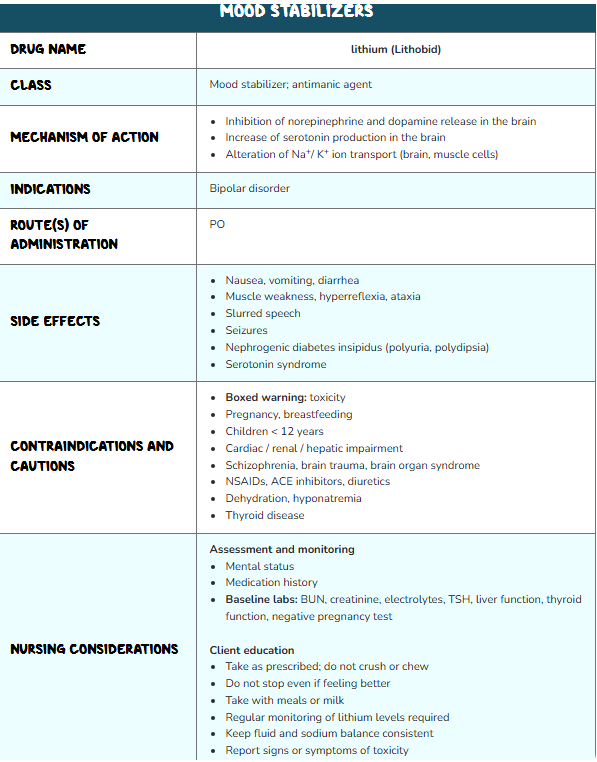
First-line medication for bipolar disorder.
Helps stabilize mood swings by affecting neurotransmitters (↓ dopamine & norepinephrine, ↑ serotonin).
Taken orally and has a narrow therapeutic range (0.6–1.2 mmol/L).
⚠ Lithium Toxicity – Watch For:
Caused by high dose, kidney issues, dehydration, or interactions (e.g. NSAIDs, diuretics, ACE inhibitors).
Early signs: Thirst, nausea, vomiting, diarrhea, slurred speech, muscle weakness, lethargy.
Severe signs: Seizures, confusion, ataxia, hyperreflexia, coma.
🚫 Contraindications
Pregnancy & breastfeeding
Age under 12
Kidney or liver impairment
Cardiac disease
Schizophrenia or organic brain syndrome
Dehydration or low sodium levels
Interaction with NSAIDs, ACE inhibitors, diuretics
🧪 Pre-Administration Checks
Medication/supplement history
Renal function (BUN, creatinine), electrolytes
Liver function tests, thyroid (TSH)
Mental status
Negative pregnancy test (if applicable)
✅ Client Education
Take exactly as prescribed – don’t skip or crush tablets
Take with food or milk to reduce nausea
Stay hydrated and keep salt intake consistent
Monitor for signs of toxicity and report immediately
Avoid dehydration, vomiting, diarrhea, or extreme heat
Expect regular blood tests (especially early in therapy)
🧍♀ Nurse Responsibilities
Educate about safe use and side effects
Monitor mood and lithium serum levels
Watch for signs of toxicity or hypothyroidism
Reinforce the need for fluid/sodium consistency
Coordinate follow-up and lab testing
🧠 What Are SSRIs and SNRIs?
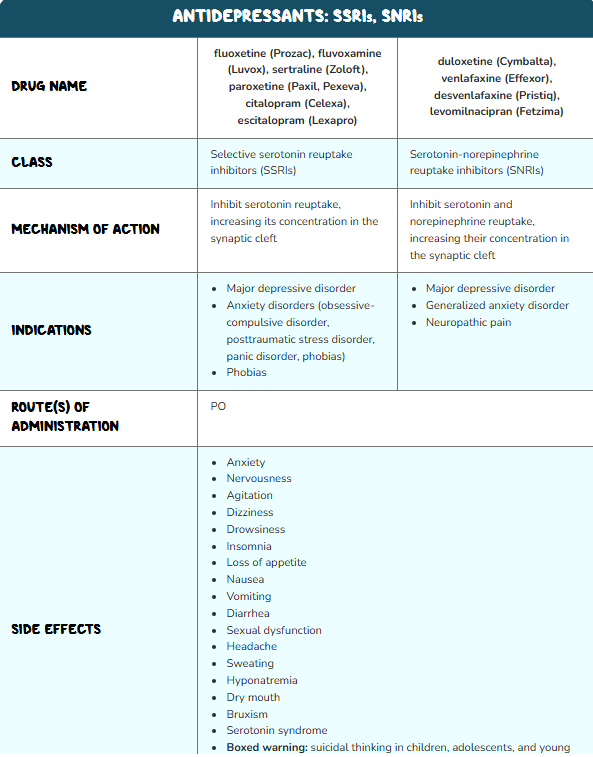
SSRIs (e.g. fluoxetine, sertraline): Block serotonin reuptake.
SNRIs (e.g. venlafaxine, duloxetine): Block serotonin & norepinephrine reuptake.
Used to treat:
Major depressive disorder (MDD)
Anxiety disorders (OCD, PTSD, panic disorder)
Bulimia (SSRIs)
Neuropathic pain (SNRIs)
⚠ Common Side Effects
SSRIs & SNRIs | Additional SNRI-specific |
|---|---|
Nausea, vomiting, diarrhea | Hypertension, tachycardia |
Headache, dizziness, insomnia | Urinary retention |
Sexual dysfunction | Risk of closed-angle glaucoma |
Dry mouth, sweating, bruxism | |
Weight loss, appetite changes | |
Hyponatremia | |
Serotonin Syndrome (emergency) | More likely when combined with MAOIs |
🧨 Serotonin Syndrome Symptoms
Flushing, high fever, agitation, tremors, muscle rigidity
Seizures, altered mental status, possible coma
🚫 Contraindications & Cautions
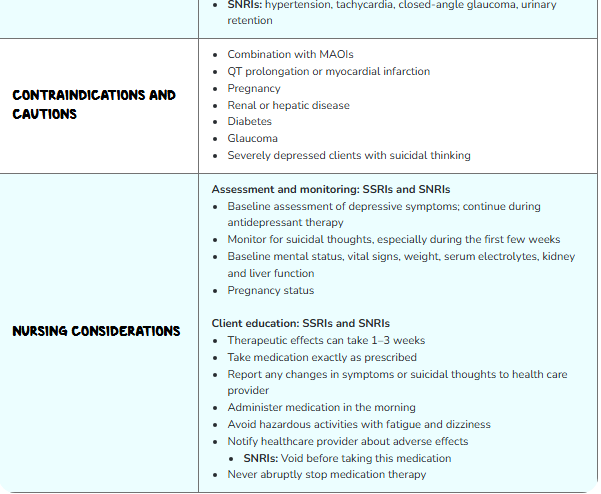
Do NOT use with MAOIs
Use caution with:
Pregnancy or breastfeeding
Renal/hepatic impairment
QT prolongation risk
Glaucoma
Diabetes
History of MI or suicidal thoughts
✅ Nursing Considerations
Before Administration:
Assess depression severity and suicide risk
Review vital signs, electrolytes, liver/kidney function
Confirm negative pregnancy test if applicable
Patient Education:
Take in the morning to reduce insomnia
Takes 2–4 weeks to feel effect
Do not stop abruptly
Maintain birth control during use
Report signs of serotonin syndrome or suicidal thoughts
Sexual side effects are common—encourage communication with provider
Avoid driving if dizzy or drowsy
Special SNRI Tips:
Empty bladder before dose (urinary retention)
Report palpitations or fast heart rate
Ongoing Monitoring:
Mood and behavior changes
Side effects and adherence
Regular follow-up appointments
🔁 Quick Recap
SSRIs/SNRIs boost mood by increasing serotonin ± norepinephrine.
Monitor for side effects, especially suicidal ideation early in therapy.
Nurses play a key role in education, monitoring, and safety.
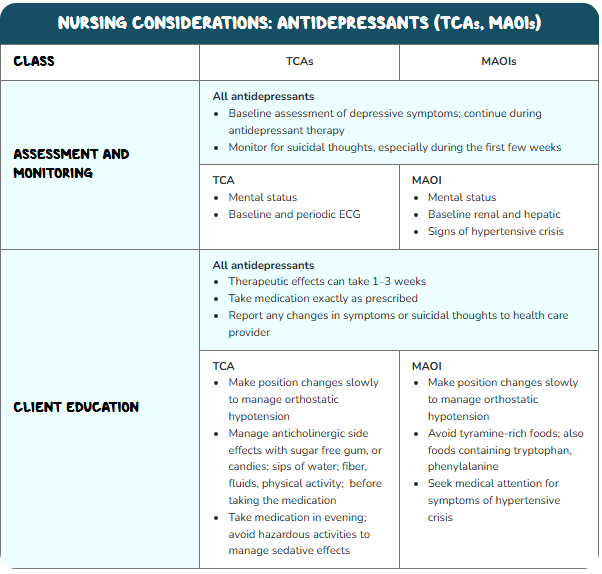
🧠 What Are TCAs and MAOIs?
Class | How They Work | Common Examples |
|---|---|---|
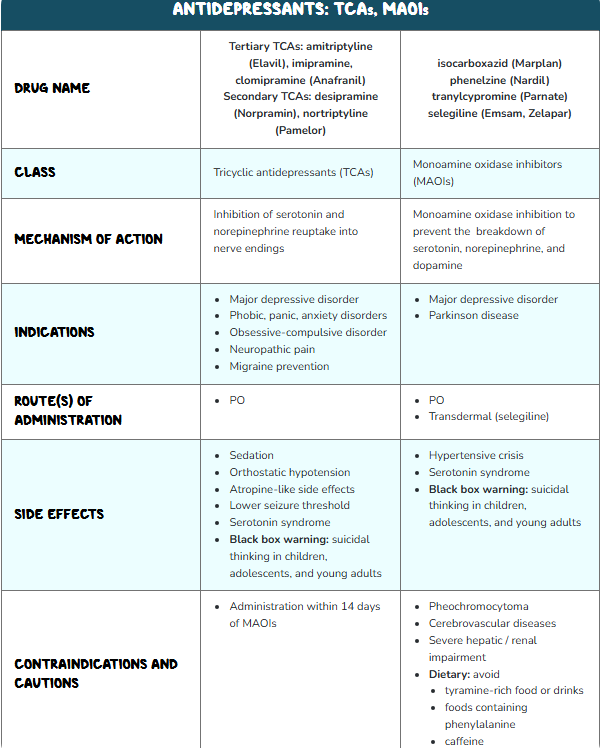
TCAs (Tricyclic Antidepressants) | Inhibit reuptake of serotonin and norepinephrine | Amitriptyline, Imipramine, Nortriptyline |
MAOIs (Monoamine Oxidase Inhibitors) | Inhibit breakdown of serotonin, norepinephrine, and dopamine | Phenelzine, Tranylcypromine, Selegiline |
💊 Other Uses
TCAs: Anxiety, OCD, panic disorder, neuropathic pain, migraines
MAOIs: Parkinson’s disease (selegiline), treatment-resistant depression
⚠ Common Side Effects
TCAs | MAOIs |
|---|---|
Dry mouth, constipation, urinary retention (anticholinergic) | Hypertensive crisis (with tyramine-rich food) |
Sedation, dizziness | Agitation, insomnia |
Orthostatic hypotension | Orthostatic hypotension |
QT prolongation, cardiac arrhythmias | Interaction with other meds (↑ serotonin) |
Lowered seizure threshold | Serotonin syndrome (if combined with SSRIs/TCAs) |
🚨 Serious Risks
TCAs: Cardiotoxicity (QT prolongation, arrhythmias), seizures, overdose risk
MAOIs: Hypertensive crisis (especially with aged cheese, red wine, caffeine, chocolate), serotonin syndrome
🚫 Contraindications
TCAs | MAOIs |
|---|---|
Recent MI or heart disease | Pheochromocytoma, liver/renal failure |
Use of MAOIs within 14 days | Cerebrovascular disease |
Caution in elderly, seizure risk | Tyramine, phenylalanine, or tryptophan intake |
👩⚕ Nursing Considerations
Before Administering:
Assess mood, suicidal thoughts, sleep, appetite
For TCAs: ECG to assess heart function
For MAOIs: Check renal/hepatic function
Client Education:
Do NOT stop abruptly
May take 2–4 weeks for effect
TCAs:
Take at night (sedation)
Drink water, chew gum (dry mouth)
High fiber diet, stay active (constipation)
Empty bladder before dose (urinary retention)
MAOIs:
Avoid tyramine-rich foods (cheese, wine, beer)
Avoid caffeine, chocolate, and tryptophan
Learn symptoms of hypertensive crisis (severe headache, chest pain, sweating, fast heartbeat)
Monitor:
Suicidal thoughts (especially first few weeks)
BP, heart rate, ECG (for TCAs)
Side effects, medication interactions
Provide only 1-week supply initially
🔁 Quick Recap
TCAs block serotonin & norepinephrine reuptake but have many side effects.
MAOIs stop monoamine breakdown but require strict dietary restrictions.
Monitor for suicidal ideation, serotonin syndrome, and hypertensive crisis.
Nurses play a critical role in assessment, education, safety, and support.
🧠 What Are Antipsychotics?
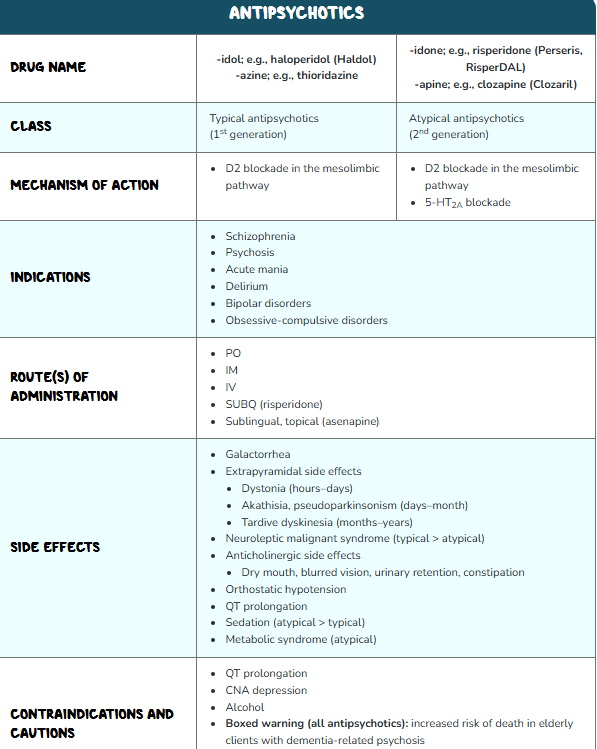
Used to treat schizophrenia, psychosis, bipolar disorder, acute mania, delirium, and OCD.
Work by blocking dopamine D2 receptors (mostly in the mesolimbic pathway).
Atypical (2nd gen) also block serotonin 5-HT2A receptors.
💊 Types of Antipsychotics
Class | Examples | Notes |
|---|---|---|
Typical (1st gen) | Haloperidol, Chlorpromazine | Higher EPS risk; D2 blocking only |
Atypical (2nd gen) | Clozapine, Olanzapine, Risperidone | Lower EPS risk; also block serotonin |
High-potency | Haloperidol, Fluphenazine | More EPS, less sedation |
Low-potency | Chlorpromazine, Thioridazine | Less EPS, more sedation and anticholinergic effects |
⚠ Common Side Effects
System | Effects |
|---|---|
Dopamine Blockade | EPS: dystonia, akathisia, pseudoparkinsonism, tardive dyskinesia |
↑ Prolactin: galactorrhea (milky discharge) | |
Muscarinic Blockade | Dry mouth, blurred vision, constipation, urinary retention |
Alpha-1 Blockade | Orthostatic hypotension |
Histamine Blockade | Sedation |
Other | Metabolic syndrome (weight gain, ↑ glucose/lipids), QT prolongation |
🚨 Serious/Life-Threatening Side Effects
Neuroleptic Malignant Syndrome (NMS): Fever, rigidity, confusion, seizures, coma
Tardive Dyskinesia: Irreversible facial/tongue movements
Clozapine-specific risks: Agranulocytosis, myocarditis, seizures, bradycardia
🚫 Contraindications
QT prolongation
CNS depression
Avoid alcohol and sedatives
Caution in elderly with dementia (↑ death risk)
👩⚕ Nursing Considerations
Before Giving Antipsychotics:
Explain med purpose (reduce delusions, paranoia, etc.)
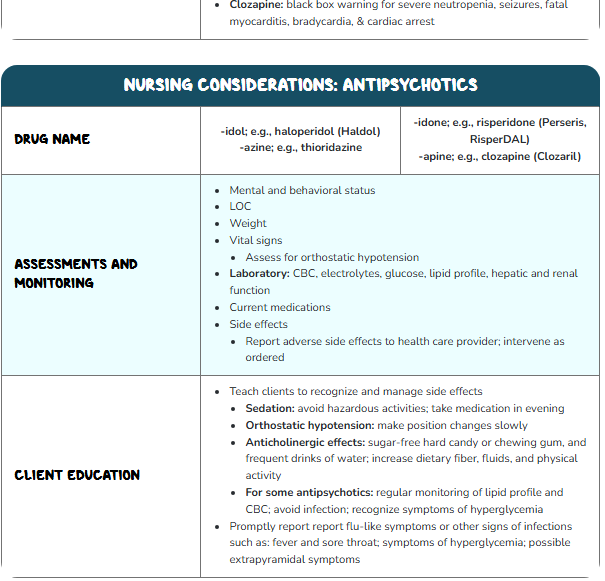
Assess baseline: mental status, ECG, weight, CBC, lipids, glucose, renal/liver function
Review med list (avoid serotonin/QT prolongation interactions)
Education for Clients:
Takes several weeks to work
Take at night to reduce daytime drowsiness
Avoid driving until adjusted
Avoid alcohol & antihistamines
Report abnormal movements, fever, sore throat, flu-like symptoms
Eat well, stay hydrated, and maintain oral hygiene
Monitor Closely For:
EPS: Dystonia, akathisia, tremors, rigidity
NMS: Hold drug, cool body, hydrate, give dantrolene, lorazepam, or bromocriptine
Orthostatic BP drop: Teach slow position changes
Constipation, dry mouth: Encourage fluids, fiber, oral care
Ongoing Monitoring:
Mood, behavior, and mental status
Blood glucose, lipids, CBC
Periodic ECG (QT risk)
Infection signs (especially on clozapine)
🔁 Quick Recap
Antipsychotics block dopamine (and serotonin in atypicals) to treat psychotic symptoms.
Monitor for serious side effects (EPS, NMS, metabolic issues).
Educate clients on slow onset, side effect management, and adherence.
Nursing care includes assessment, education, labs, and safety monitoring.
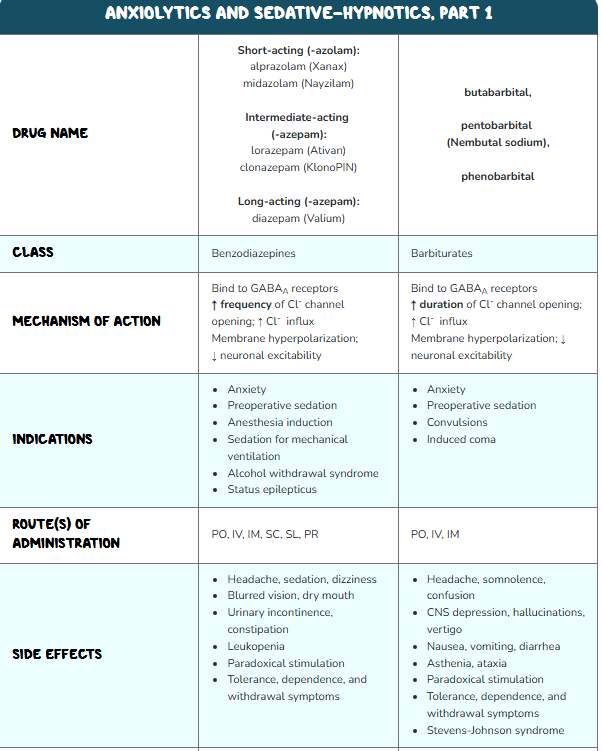
🧠 What Are Anxiolytics & Sedative-Hypnotics?
Medications that depress the central nervous system (CNS) to:
Relieve anxiety
Treat insomnia
Manage seizures
Provide sedation or anesthesia
💊 Medication Classes & Examples
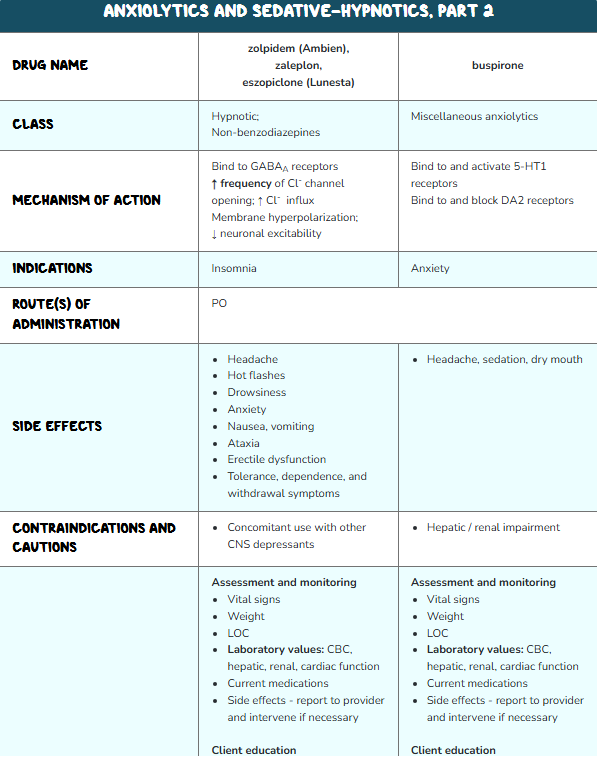
Class | Examples | Key Uses |
|---|---|---|
Benzodiazepines | Alprazolam, Lorazepam, Diazepam, Midazolam | Anxiety, seizures, alcohol withdrawal, sedation |
Barbiturates | Phenobarbital, Pentobarbital | Seizures, sedation, coma induction |
Non-benzodiazepines (ZZZ) | Zolpidem, Zaleplon, Eszopiclone | Insomnia |
Miscellaneous | Buspirone | Generalized anxiety (non-sedating, non-addictive) |
⚠ Common Side Effects
Group | Side Effects |
|---|---|
Benzodiazepines | Sedation, dizziness, paradoxical excitation, dependency, withdrawal seizures |
Barbiturates | CNS & respiratory depression, coma, Stevens-Johnson syndrome, ataxia |
ZZZ Drugs | Headache, sleep-walking/behaviors, nausea, ataxia |
Buspirone | Headache, dry mouth, EPS (dystonia, akathisia), restlessness |
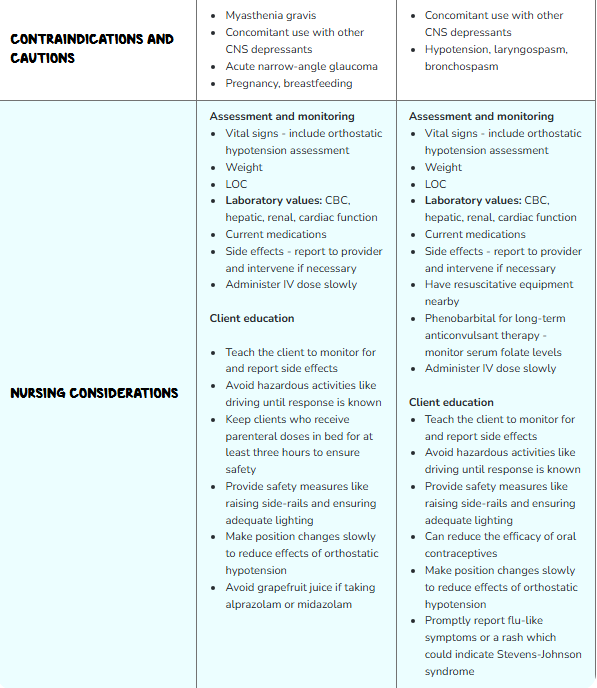
🚫 Contraindications
All Classes: Avoid with alcohol or other CNS depressants
Benzodiazepines: Avoid in pregnancy, sleep apnea, liver disease, myasthenia gravis
Barbiturates: Avoid in hypotension, respiratory depression, rash
ZZZ meds: Caution with abnormal sleep behaviors
Buspirone: Caution in renal/hepatic impairment, avoid grapefruit
👩⚕ Nursing Considerations
Before Administering
Assess: vitals, LOC, weight, mental health, pregnancy status, history of substance use
Labs: CBC, liver/renal function, ECG (if indicated)
Educate: purpose, timing (e.g., bedtime for ZZZ meds), and risk of withdrawal
During Therapy
Monitor:
Sedation level, falls risk
Abuse potential (dose-seeking behavior)
Respiratory rate (especially IV)
IV site for infiltration (benzodiazepines/barbiturates are vesicants)
Teach:
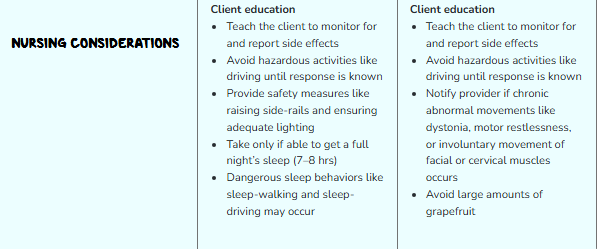
Avoid alcohol, grapefruit, and hazardous activity (e.g., driving)
Do not abruptly stop
Take with food if GI upset occurs
ZZZ meds: Take right before bed due to rapid onset
Special Care for Specific Meds
Midazolam: Avoid grapefruit; high sedation risk
Buspirone: Takes 2–4 weeks for effect; monitor for movement disorders
🛑 Watch For Emergency Symptoms
Benzodiazepine/Barbiturate overdose: Respiratory depression, coma
Withdrawal (especially benzos): Seizures, agitation, tachycardia
Stevens-Johnson syndrome: Rash, fever → stop barbiturate immediately
Abnormal sleep behaviors (ZZZ drugs): Stop & notify provider
EPS with Buspirone: Muscle spasms, tremors, rigidity → report
🔁 Quick Recap
CNS depressants used for anxiety, sleep, seizures, sedation
Benzos = fast acting but risk for dependence
Barbiturates = powerful, more dangerous
ZZZ = non-benzos for sleep
Buspirone = non-sedating, low-risk anxiolytic
Monitor closely, educate clients, and ensure safety precautions