Disabled
The title of “Disabled” contrasts to a typical image of a soldier, someone who is expected to be in excellent physical health. This indicates the harrowing effects of war. The simplicity of this title highlights the new identity of the veteran, and he feels like he has just been reduced to someone who id disabled and that’s how other see him.
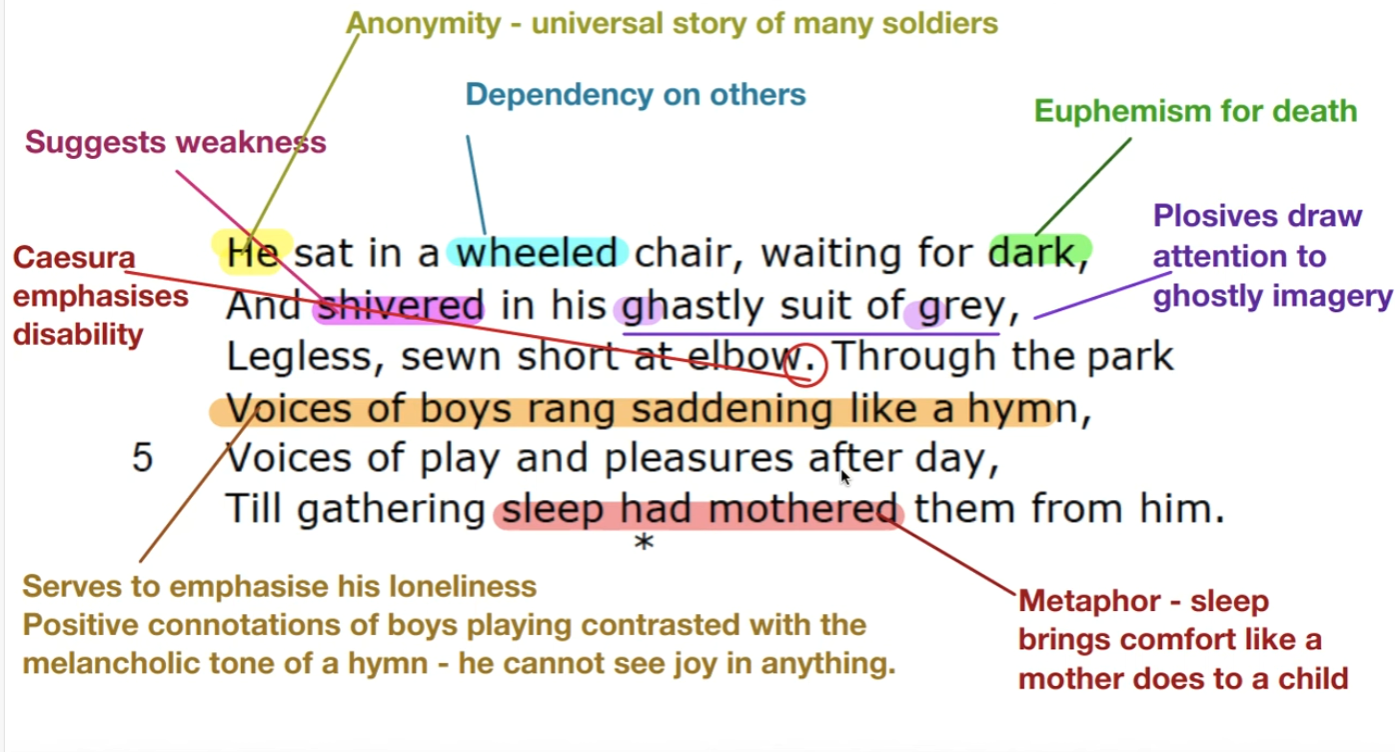
The soldier is not named, keeping the soldier anonymous tells us that this can happen to lots of different soldiers, this poem highlights the negative effects of war and how its a waste of time and misleads soldiers. This happened to many soldiers across the commonwealth. The word “wheeled”, its not a wheelchair, he is legless and sewn short at elbow, he doesn’t have the ability to even wheel himself, it emphasis the great dependency he has on others an the kind of sense of hopelessness and depression he is experiencing. He was once a hero on the football pitch. When he was waiting for dark it could be a euphemism for death, is he just waiting for the day to be over which indicates t hat he’s depressed or is he waiting for his life to end. He is waiting for a state of oblivion to shut everything out. The use of ghostly imagery in the word “shivered” and is in his “ghastly suit of grey”, the fact that he shivers suggests the weakness and the alliteration brings our attention to this really grim image of someone who really lacks the vitality that he had previously. This creates a tragic image of a young man who joined the war underage, seem so ghostly is very tragic and shows how war robbed him of his life. The caesura emphasis his disability he feels like he is sewn short an that draws your attention to the physical consequences of him going to war. The phrase “voices of boys rang saddening like rhythm” serves to emphasize his loneliness and doesn’t bring joy to him and creates a melancholic tone, he cannot see joy in anything, positivity reminds him of what he doesn’t have. Moreover this same point is shown in the metaphor “sleep had mothered”, sleep is a form of protection as he doesn’t haft to hear the joys of others. He relies on sleep to have a form of comfort that a mother brings him, which further shows his loneliness, it could also suggest that he doesn’t have any family members like a mother. Its a very sad metaphor.
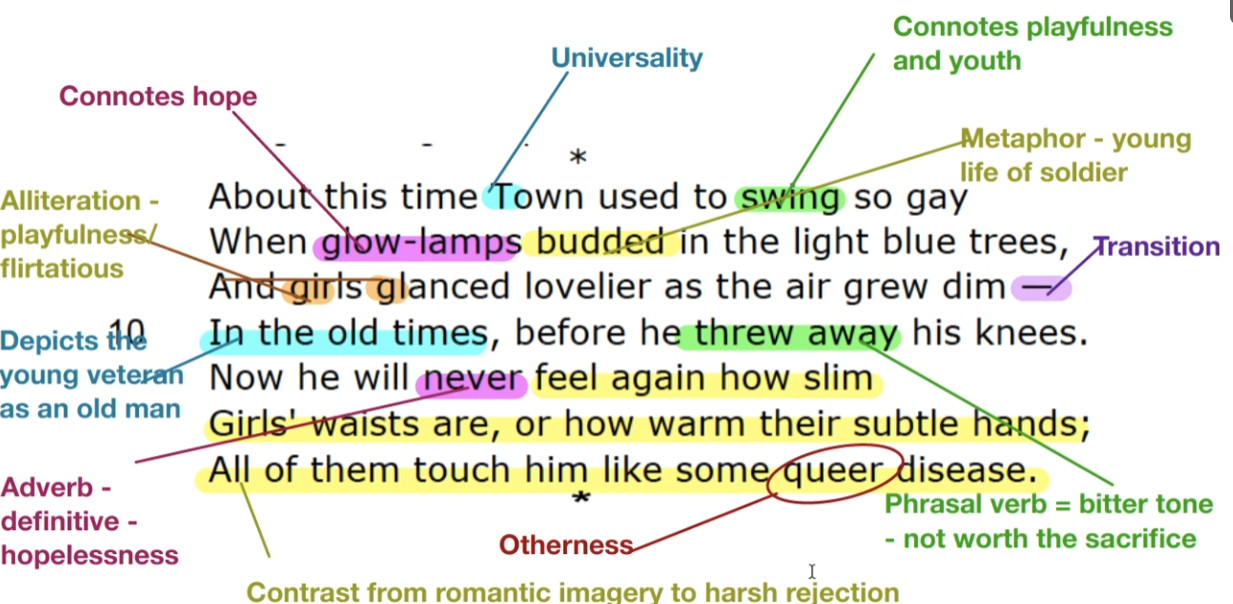
The universality of not naming a town, this shows how it could be any soldier of any town. You could say that the diction in the phrase “the town used to swing so gay” connotates playfulness and reminds us of the youth he used to have. The use of romantic imagery in the line “when glow lamps budded in the light blue trees” seems very serene, the “glow lamps” connotes hope and “budded” is a metaphor for his old life and how it was full of potential which reiterates of what a waste of how he went to war and how he had his life taken away from him. The alliteration of “girls glanced” introduces this playfulness and flirtatious idea that he clearly enjoyed and he enjoys having that attention from girls. He talks about how wonderful it was “in the old times” before he “threw away his knee”, the dash indicates a transition in his tone from his happy memories to his present bitterness and more regretful. The phrase “old times” is ironic for a young man depicts the old veteran as an old man which emphasizes how the war sucked the life out of him, it also indicates how life is very different after the war. The phrasal verb “threw away” sets a bitter tone which echoes Wilfred Owen's belief that going to war and giving up your life is not worth the sacrifice. The definitive adverb “never” highlights the great sense of hopelessness and how he is never going to have the life he once had. The use of romantic imagery in the line “feel again how slim Girls' waists are, or how warm their subtle hands; All of them touch him like some queer disease.” contrasts to the harsh rejection he now has, he enjoyed his relationship with women, the “warmth of his hands” contrasts to the “shivering”, but now they touch him like a “queer disease”, the word “queer” suggests that he is seen as something strange and gives a sense of alienation which is ironic to the fact that he went to war for his country.
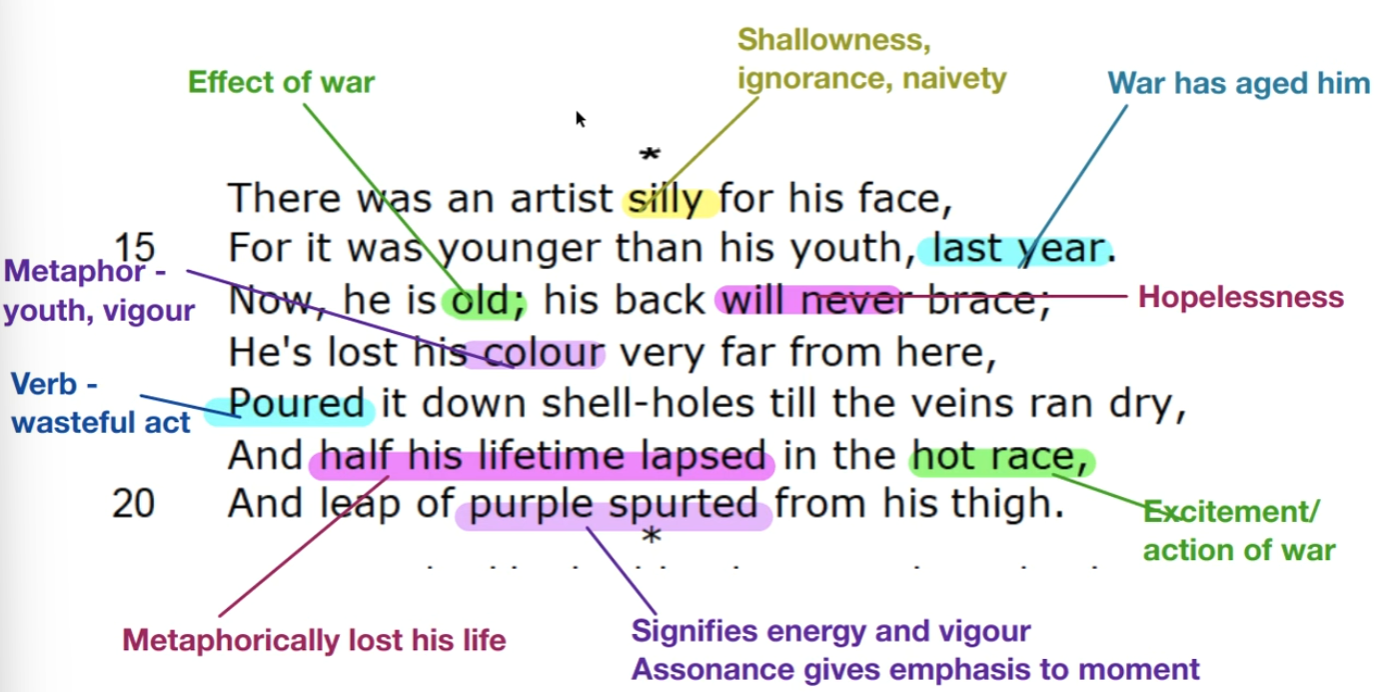
The phrase" “younger than his youth”, emphasizes how war has aged him and he has lost his youth and the, the adverb “never” further stresses the hopelessness. The metaphor “lost his colour” symbolizes how he has lost his youth and happiness. The “purple” is his blood spurted out of his thigh, the purple signifies energy and vigour meaning he has lost his energy and vigour during his accident. The word “it” represents his blood and further emphasises his harsh experiences in the war. You could also say that the blood being poured down the shells could symbolise his happiness, life and youth being poured out through acts of war and sin.
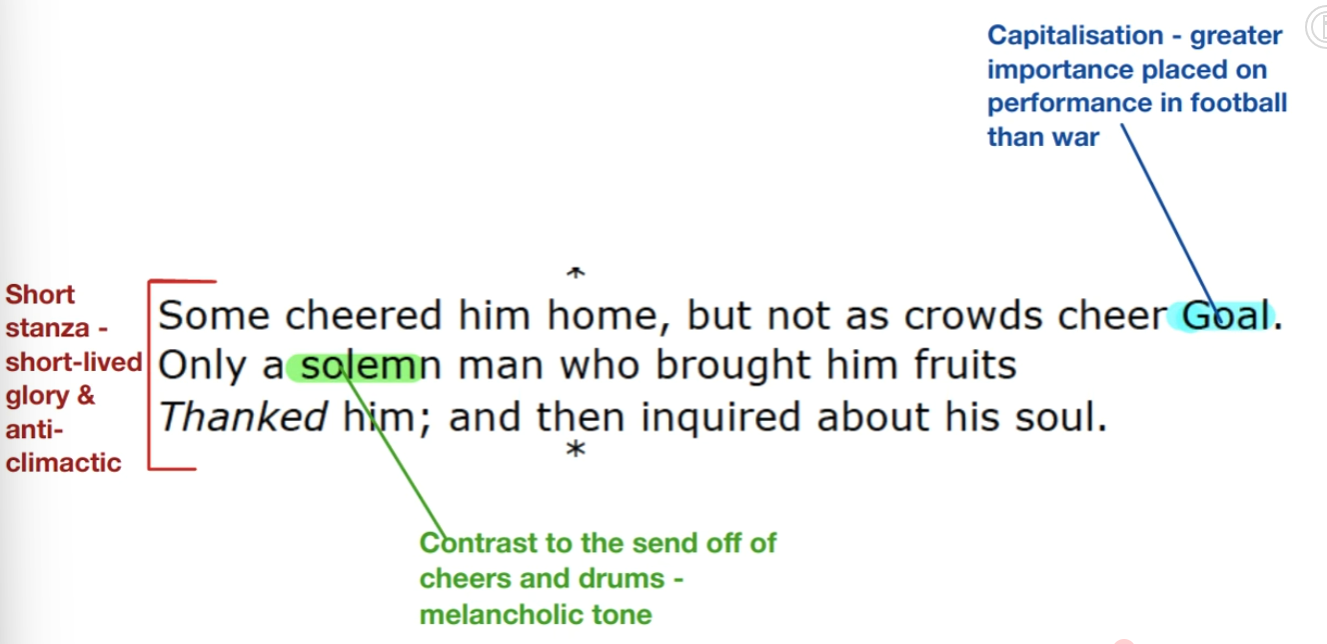
The short stanza symbolises the short lived glory that he experiences and it all ends when he gets sent off. It shows the anti climatic feeling of war and how it feels good but its an illusion.
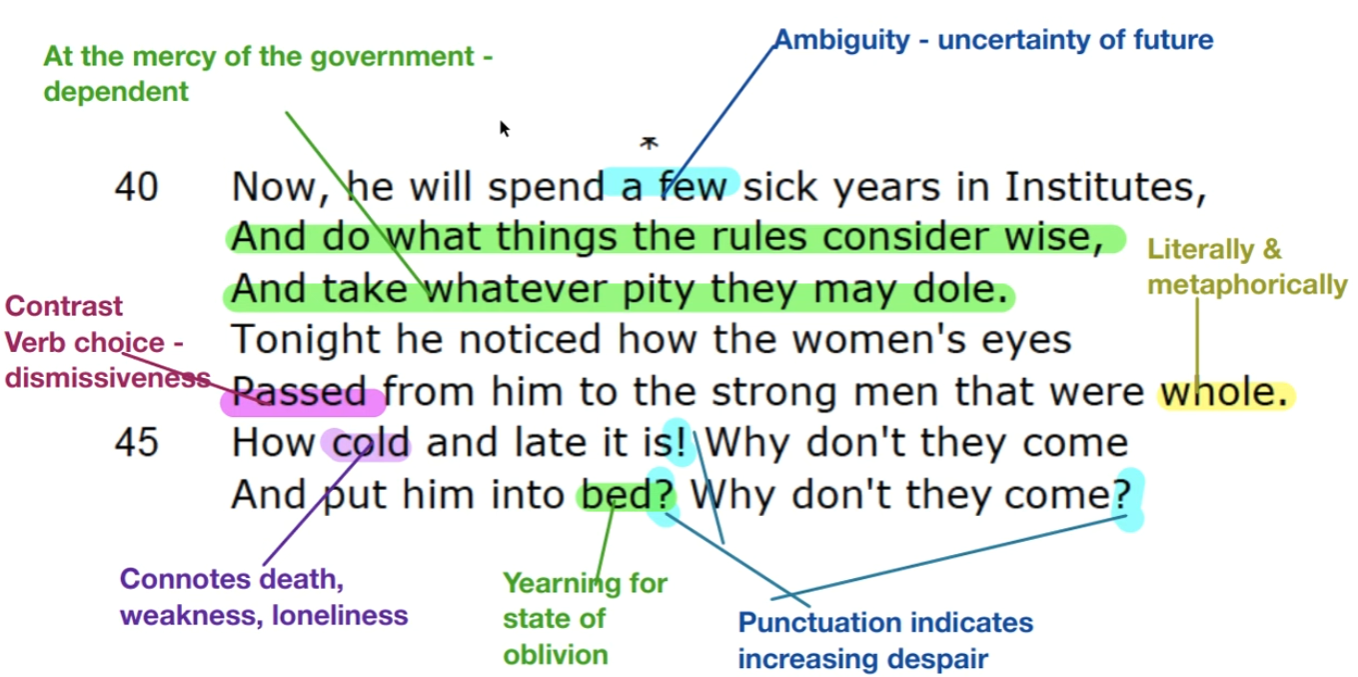
The whole stanza is about his great dependence on others, the ambiguity of “a few sick years” shows how he doesn’t know how long its going to take and there is a great uncertainty of future. He is at the mercy of the government, he wanted glory but now he is left with pity. The verb “passed” creates a contrast between how women used to look at him an dhow they look at him now. The metaphor “whole” shows how he is a lesser person now because of his experiences in war. The pathetic fallacy of “cold” connotates death, weakness and loneliness which contrasts to the warmth of the women. The punctuation indicates increasing despair towards the end of the poem.