Smoking and Brain Development
Effects of Smoking during Pregnancy: Apply to second hand smoke
reduced fetal growth
spontaneous abortion
preterm birth
SIDS
increased chance of death at birth
increased risk of behavior and emotional disorders
lower cognitive abilities
Motality rate is 71% higher for infants of smokers
Growth Effects:
increased risk of low birth weight
increased risk of microcephaly
abnormal artery flow
increased vascular resistance in fetal vessels
impaired oxygen exchange
chronic hypoxia
mititoc arrest→ cell death
Smoking, Mechanisms and Outcomes
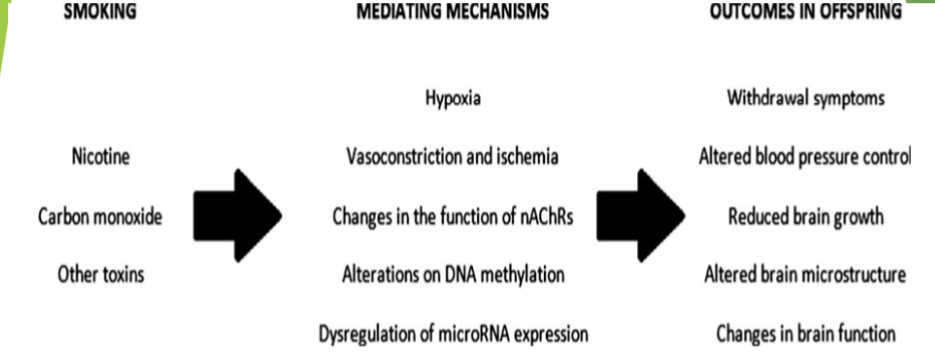
Smoking and SIDS
exposure to second hand smoke leads to respiratory illnesses and SIDS
Ammonia , formaldehyde, cadmium, chromium, lead, isoprene, benze
associated with hypoplasia of the arcuate nucleus which has autonomic functions
kainate, muscarinic, cholinergic and serotonin receptor associations
Genetic risk factors of SIDS:
cardiac ion channelopathies
polymorphins
genetic alterations
Nicotine
along with CO causes vasoconstriction in the placenta and fetal tissues
high lipid solubility
main metabolite is cotine, and makes its way into embryonic and fetal bloodstresm
First metabolized in the lungs, mostly metabolized in the liver
cotine has a longer half life
A fetus might be exposed to higher concentrations of nicotine than a smokeing mother
Excreted: urine and breast milk
Nicotine and Acetylcholine
nicotine binds to acetylcholine receptors (nAChRs)
nAChRs are widely expressind in fetal CNS
Neuronal nicotinic ssystems are in cholinergic neurons
Non-neuronal nicotinic systems inclde cell proliferation, differentiation and migration
Heteromeric Acetylcholine Rs
gate Na+
have alpha and beta subunits
Homomeric Acetylcholine Rs
gate Ca2+ and Na+
only have alpha subunits
nicotinic receptors are necessary for cognitive development and have gene expression as early as 4-5 weeks (neural tube stage)
nAChRs activation interefered in DA, NE and Serotonin
play a role in neurite growth, synaptogenesis, gene expression, cell prolif. and diff. and apoptosis
Behavioral/ Psychiatric disorders associated with smoking during pregnancy
Conduct disorder
ADHD/ADD
Alcohol/substance abuse
depression
low IQ/ cognitive deficit
Effects on brain structures and brain development
thinning cortex
microcephaly/microencephaly
myelin death
promotes gliogenesis in the dentate gyrus and diminishes neurogenesis
associated with BDNF
impairs proliferation and maturation of neuronal progenitons,
fewer GLUT neurons in th medial prefrontal cortex
Mitochondria as a target for Nicotine
In vitro (isolated)
impact expression level of respiratory chain subunits
lower activity of individual complexes
lower O2 consumption
lower ROS
Activation of ROS and Ca2+ dependent signaling pathways
stimulation of biogenesis
increased mitochondria-ER contacts
transient mitochondrial fragmentation and dissosciation from microtubules
Both lead to a stress response which leads to either adaptation or cell death
In situ (intact cells)
impact the expression level of respiratory chain subunits
increased oxygen uptake/consumption
change levels of antioxidant enzymes
increased Ca2+
increased ROS
increased nAChRs expression
increased resistance to apoptosis
Effect of maternal smoking on inflammatory markers IL-1β, IL-1R and IL6:
IL1-β mRNA was not changed
IL-IR mRNA increased
IL6 mRNA was stimulated in later development
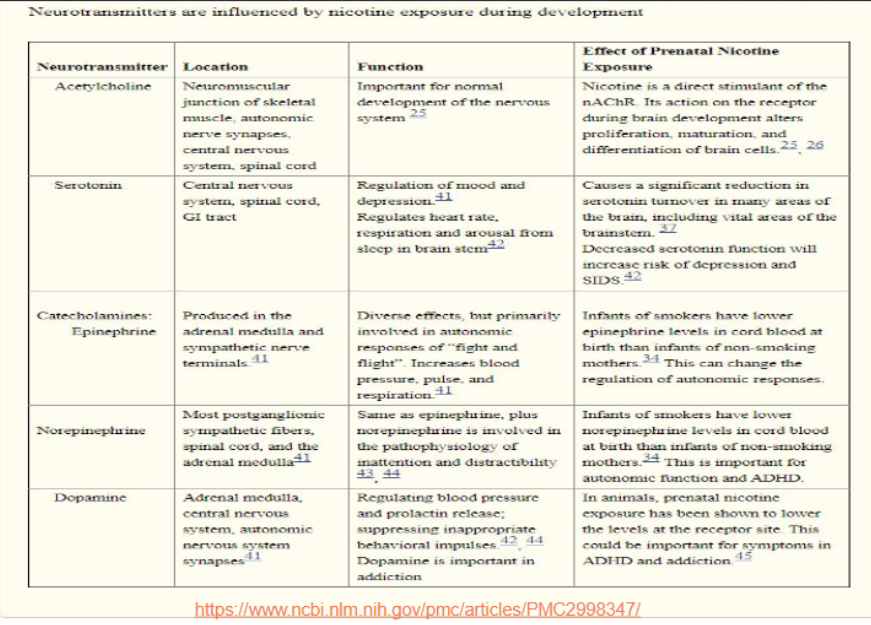
Neurotransmitters affected by smoking
Acetylcholine: is associated with wakefulness, anger, and thirst and stimulated hormone secretion
Norepinephrine: excitatoru important for focus of the CNS
Serotonin: inhibitory used for mood stabilizer, depleted by stimulants
Synaptoc Proteins in the Synapses
reduced after exposure to Tobacco smoke
Synapsins: regulation of the vescicle pool at presynaptic terminals , elongation of axons and synaptic vesicle docking
Synaptophysin: calcium binding protein associated with presynaptic vesicles
PSD-95: scaffolding protein in excitatory postsynaptic density; regulated synaptic strength