Social Influence
Conformity
Defined as ‘a change in a person’s behaviour or opinions as a result of real or imagined pressure from a person or a group of people.’
Specification
Types of Conformity - Internalisation and Compliance
Explanations for Conformity - Informational Social Influence (ISI) & Normative Social Influence
Variables affecting Conformity - Group size, Unanimity & task difficulty, investigated by Asch
Types of Conformity
Internalisation
Privately and publicly agreeing
Permanent change - attitudes are internalised
When the person believes the opinion is correct
This opinion persists even in the absence of other group members
Compliance
Privately disagreeing, publicly agreeing
Superficial change - attitudes are used to prevent social rejection
Includes ‘simply going along with others
Opinion or behaviour stops as soon as group pressure stops
Explanations for Conformity
The two-process theory (Morton Deutsch and Harold Gerard, 1955) posits two main reasons people conform, based on two central human needs: the desire to be right (ISI) and the desire to be liked (NSI).
Informative Social Influence (ISI)
The desire to be right
Conforming to a group when you are uncertain.
Happens in situations that are high in unanimity, high in task difficulty and low in social pressure.
Internalisation
Supporting Study - Jenness’ Jelly Bean (1931)
AIM: To investigate the effects of group discussion on the accuracy of a person's judgment
Method
Asked participants to estimate the number of beans contained in a jar (estimate 1)
Then, participants were made to discuss their estimates in groups (estimate 2)
Participants were asked again, alone, after the group discussion (estimate 3)
Findings:
Estimates 3 and 2 (group estimate), indicating that their final estimate was affected by the group
Conclusion:
The ISI theory has validity.
ISI is more likely in situations that are high in uncertainty and task difficulty and have low social pressure
Evaluation:
Lacks ecological validity: artificial situation, doesn’t account for non-ambiguous situations
Lab study: control over all extraneous variables, easier to identify the cause and effect relationship
Social desirability bias: participants may have felt pressured to stay consistent with the group estimate due to fear of social rejection, overall reflecting NSI over ISI
Private setting - meant to reduce social pressure/influence.
Normative Social Influence (NSI)
The desire to be liked
Conforming to a group to avoid social rejection
Happens in situations that are high in social pressure, low in unanimity, and low in task difficulty.
Supporting Study - Asch’s Line Study (1951)
AIM: To investigate whether people would conform to something obviously wrong
Group Size - 7-9 people, 6-8 were confederates, only 1 real participant
Unanimity - confederates all gave the same, wrong answer
Task difficulty - control group = 720 trials, 3 mistakes in total, error rate=0.4% - this means that the there was extremely low task difficulty
Dispositional Variables - not tested
Method
Groups were asked to judge the length of lines 18 times on 18 trials
The majority of the groups were composed of confederates (actors), who had to give the wrong answer 12/18 times
Findings:
75% of participants conformed on at least one trial
Overall conformity rate = 36.8%
Always conformed = 5%
Conclusion:
The NSI theory has validity
NSI is more likely in situations that are high in social pressure and low in uncertainty and task difficulty.
Evaluation:
Lacks ecological validity: artificial situation, cannot apply irl
Lab study: control over all extraneous variables, easier to identify the cause and effect relationship
Demand Characteristics: participants may have realised what was happening, and pretended to conform
Post-study interview: the majority admitted they conformed to avoid social rejection, whilst others said they couldn’t see properly or that they wanted to be correct.
Lacks population validity: 123 white, american, men.
Limitations
Doesn’t account for dispositional variables, and how some people resist NSI and ISI - meaning the explanations cannot be generalised to everyone.
IRL, it is more likely that NSI and ISI work in conjunction rather than separately, and both contribute equally to conformity.
Variables affecting Conformity
Situational variables
Group Size
Increased Group Size = Increased Rate of Conformity (to an extent)
Unanimity
Increased Unanimity = Increased Rate of Conformity
Task Difficulty
Increased Task Difficulty = Increased Rate of Conformity
These are situational variables
Dispositional variables
Personal Characteristics (mh, gender, age)
Increased/Decreased Rate of Conformity
These are dispositional variables
Supporting Study - Asch’s Additional Experiments
Dissenter introduced - a confederate who disagrees with the majority
Conformity rate dropped from 36.8% to 5.5%
Decreased unanimity = Decreased conformity
Different group sizes
1 confederate = 3% rate of conformity
2 confederates = 13% rate of conformity
3+ confederates = 32% rate of conformity
Increased group size = increased rate of conformity (to an extent)
Lines were made more similar in size
Increased task difficulty = increased rate of conformity
Obedience
To follow the direct orders of someone with authority
Authority - to have the right/power to give orders
Social Hierarchy - a social group with an uneven power balance
Specification
Explanations of Obedience - agentic state & legitimacy of authority (situational) & authoritarian personality (dispositional)
Variables affecting Obedience - proximity to victim/authority figure, location & uniform, investigated by Milgram (situational variables)
Explanations for Obedience
Legitimacy of Authority
From a young age, we have learnt to view those with more authority as more legitimate. This is because we have grown up in a social hierarchy.
Because of this, we learn not to disobey or question the decisions of an authority figure.
Agency Theory
When someone is told to do something that they believe is wrong, they experience moral strain: the need to obey the authority vs. the consequences.
When obeying a persons orders, in order to reduce moral strain, a person experiences an agentic shift. The person no longer feels responsible for their actions, as they have shifted the responsibility onto the authority figure.
Autonomous state = person feels responsible for all actions and decisions made
Agentic state = person shifts responsibility onto the authority figure, no longer feeling responsible for their actions or decisions
Autonomous state + moral strain → Agentic shift → Agentic state
The Authoritarian Personality
A personality type that causes people to be more likely to obey
Respect for authoritative figures
No respect for people lower than them in the social hierarchy
Love for rules and conformity
Aggressive, strict and rigid
Caused by:
Overstrict parenting = lack of freedom → scapegoating (expressing frustration toward an innocent party, with less power.
The F-scale
A test that identifies if you have an authoritatian personality type, F = facism.
This test was devised for and given to Nazi officers, leading to the discovery that most high-ranking officials had scored highly on the test, therefore meaning that they displayed the traits of an authoritarian personality.
Variables affecting Obedience
Situational Variables
Proximity of Authority Figure
Increased proximity = increased rate of obedience
Proximity of Victim
Increased proximity = decreased rate of obedience
Location
More prestige/influence = increased rate of obedience
Uniform
More official = increased rate of obedience
Supporting Study - The Milgram Experiment
AIM: To investigate if there was something different about Germans that made them very obedient
Proximity of authority figure - experimenter (authority) was in the room with the teacher
Proximity of victim - the teacher could not see the victim, only hear them through a speaker
Location - Yale University
Uniform - Experimenter wore a lab coat
Participants were invited to participate in a study about ‘learning and memory’ - deception
Participants were told that their roles were random - deception. The participant was paired with a confederate and the participant would always be the teacher, and the confederate the learner.
Teacher was made to ‘shock’ the learner every time a question was wrong. Voltage increased per shock, from 15V to 450V (deadly)
The learner would ask to go home, and their reaction to the ‘shock’ was audible.
300V = refusal to answer questions, 315V = screamed loudly, 350V = no noise.
Findings:
100% went to 300V
65% went to 450V
Participants displayed signs of distress; swearing, sweating and even a seizure
Conclusion:
There was nothing specific about Germans that made them more obedient.
This study supports both explanations of
Evaluation:
Lacked ecological validity - artificial situation, cannot account for behaviour IRL
Lab study - control over all extraneous variables, easier to identify the cause and effect relationship
Demand characteristics - participants could have realised that the shocks were fake, and as a result, faked their results
There were signs of moral strain, swearing, sweating and even a seizure.
Lacked population validity - not generalisable, 123 young, white, American men.
Unethical
Psychological Harm - distress, sweating & a seizure
Only 2% of all participants regretted participating
Deception - participants did not know what the experiment was about and could not give informed consent
Participants were debriefed after the study, because if they had been told before, the study wouldn’t work
Right to withdraw was unclear - the experimenter had been given prompts that made it seem like withdrawal was not possible
35% of participants withdrew
Supporting Study - Milgram’s Additional Experiments
Decreased Proximity to the authority figure - experimenter talked to the teacher over the phone
Obedience dropped from 65% to 23%
Decreased Proximity to the authority figure = decreased rate of obedience
Increased Proximity to the victim - the teacher could see the learner
Obedience dropped from 65% to 40%
Increased proximity to the victim = decreased rate of obedience
Location - Yale → rundown office
Obedience dropped from 65% to 47.5%
Less official/prestigious location = decreased rate of obedience
Uniform - experimenter wearing a lab coat → normal clothes
Obedience dropped from 65% to 20%
Less official/prestigious uniform = decreased rate of obedience
Social Influence
Specification
Explanations of resistance to social influence - social support & locus of control
Minority Influence - consistency, commitment and flexibility
Explanations of resistance to social influence
Resistance to social influence occurs when an individual decides:
not to conform to the majority
not to obey the orders of an authority figure
Social Support
Situational explanation
If someone else in the same situation resists conformity/obedience, this constitutes social support, which allows an individual to follow their conscience and go against the group/authority.
Support
Both Asch and Milgram’s additional experiments showed that when at least 1 person resists conformity/obedience, resistance to social influence grew greater.
Hofling’s 1966 Study
A doctor (who had been given a recognisable name) telephoned 18 different nurses, and asked each nurse to administer a non-lethal dose of Valium to a patient
Nurses were able to discuss the doctor’s orders with other nurses
Only 2/18 nurses immediately followed the doctor’s order
Conclusion: Social support is a key factor in resisting social influence, as the nurses were able to discuss the order first.
Locus of control
Dispositional explanation
Can be measured using a questionnaire made by Rotter
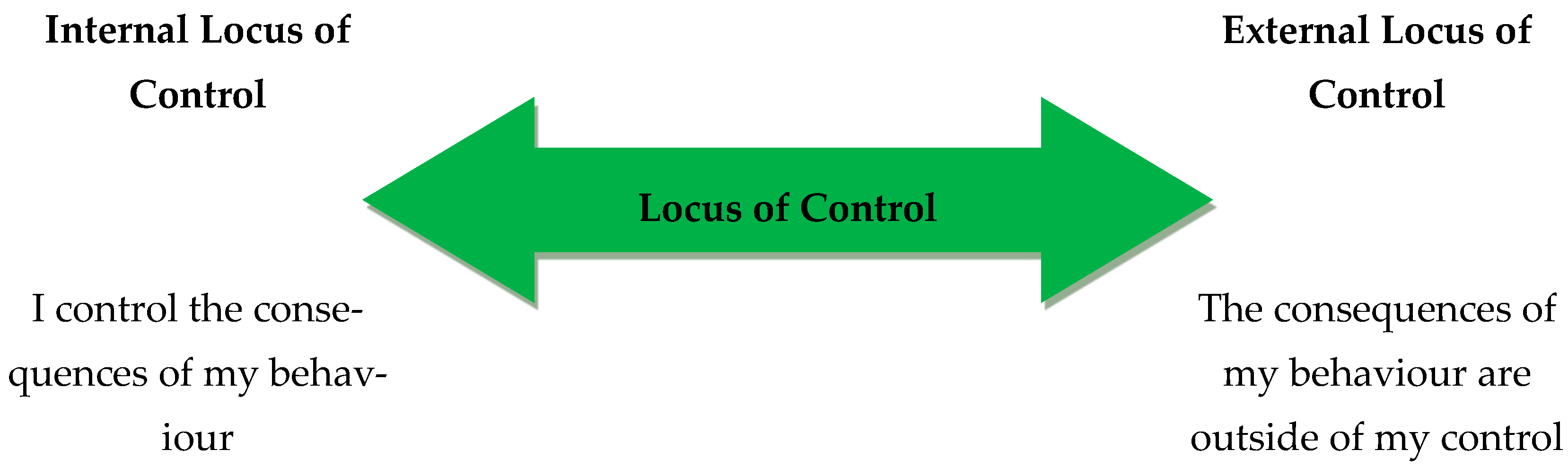
Internal Locus of Control
More control over your life
Decisions decide fate
More likely to disobey
External Locus of Control
Less control over your life
Fate has already been decided; you cannot change it
More likely to obey
Support
Holland (1967)
A repeated version of Milgram’s experiment found that 37% of participants who refused to continue to 450V had a high internal LOC
Conclusion: There is validity in the LOC theory
Minority Influence
When a small group of people or an individual (the minority) changes the attitudes/behaviours/beliefs of the majority
It’s more likely to lead to internalisation rather than compliance, as it is more meaningful.
Conversion
Conversion = a form of internalisation
Conflict - created to draw attention to their cause
Understanding - people try to understand their actions and reasoning
Validity - internalisaed a minorities attitudes and converted
Processes that Strengthen Minority Influence
Consistency - messages are always the same and are constantly repeated.
Commitment - sacrifices are made = draws attention.
Flexibility - welcoming discussion and compromise.
Supporting Study - The Moscovici Experiment (consistency)
AIM: To investigate whether a minority could influence a majority in a task where the answer was clear
192 female participants
Groups of 6, 2 confederates
Method
Participants were shown 36 blue slides & were asked to judge the colour of the slides
There were 2 conditions of the experiment
Consistent Condition: The confederates said that all the slides were green
Inconsistent Condition: the confederates said the slides were green 24 times, and said they were blue 12 times.
Findings:
Consistent condition = 8.2% agreed with the minority
Inconsistent condition = 1.25% agreed with the minority
Conclusion:
People are more likely to agree with a consistent minority
Evaluation:
Lacks ecological validity - an artificial situation that cannot represent behaviours in real-life situations
Lab Study - control over extraneous variables, the cause and effect relationship can be easily determined
Unethical - participants were deceived, and couldn’t give informed consent
Small deception - unlikely to cause distress
Lacks population validity - not generalisable, as it was only women.
Supporting Study - Nemeth’s Experiment on Flexibility
AIM: To investigate the effects of flexibility
Method
3 conditions were tested
Consistent Condition: Confederates said all the slides were green
Inconsistent Condition: said some slides were green and others were blue
Flexible Condition: said dark slides = green, lighter slides = blue-green
Findings:
Conformity was highest in the flexible condition
Conclusion:
People are more likely to agree with a flexible minority