nature of the genetic code and protein synthesis
nature of the genetic code:
universal
all living organisms use the same DNA
non - overlapping
each single base is only used in one codon
degenerate
a single amino acid may be coded for by more than one codon
the degenerate code:
if one base = one amino acid, possible amino acids = 4
if 2 bases = one amino acid, possible amino acids = 16
if 3 bases = one amino acid, possible amino acid = 64
but only 20 amino acids exist. therefore, the triplet code is degenerate, which means that each amino acid is coded for by more than one triplet e.g. GCA and GGC might but code for the same amino acid
What is a mutation?
a change that occurs in our DNA sequence
occur by:
mistakes when the DNA is copied
the result of environmental factors e.g. UV light, cigarette smoke
CTGGATGCGTAATGC
CTGAATGCGTAGTGC
inversions
this is when part of the DNA code is reversed
Again, the DNA sequence can become meaningless
CTGATGCGTAATGC
CTGGATGCGTAATGC
frame shift mutation
when one or more bases are inserted or deleted
this type of mutation can make the DNA meaningless and often results in a shortened protein
CTGGATGCGTAATGC
CTGGACGCGTAATGC
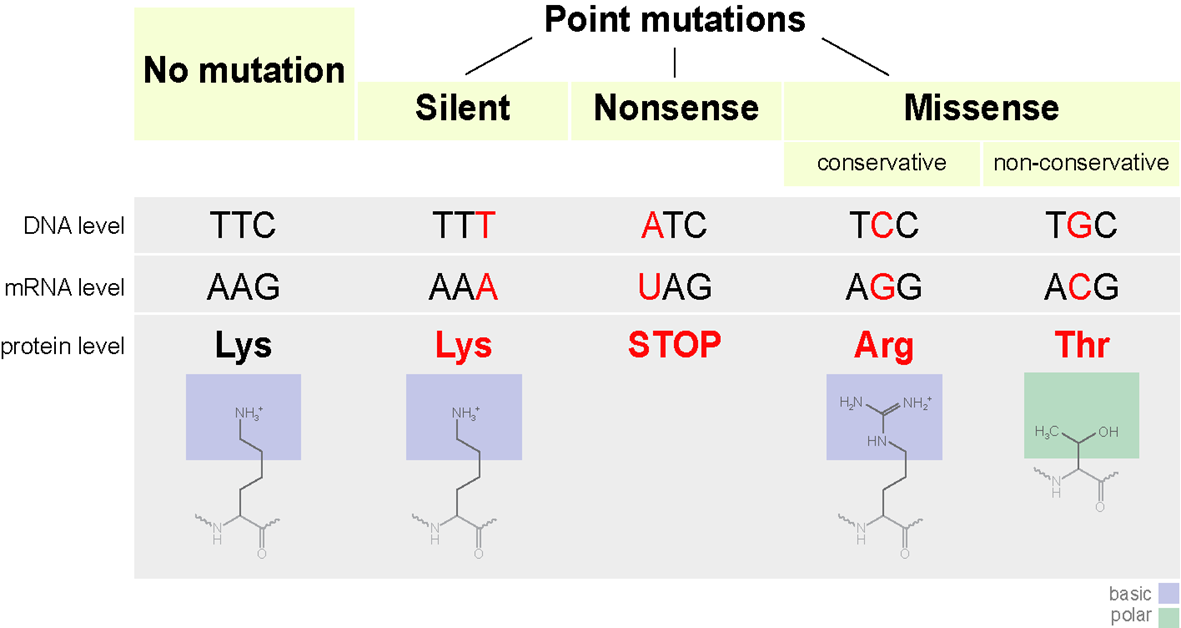
point mutation
where one base is replaced by another
these can be:
silent = same aa
nonsense = stop codon
mis-sense = different aa
transcription and translation:
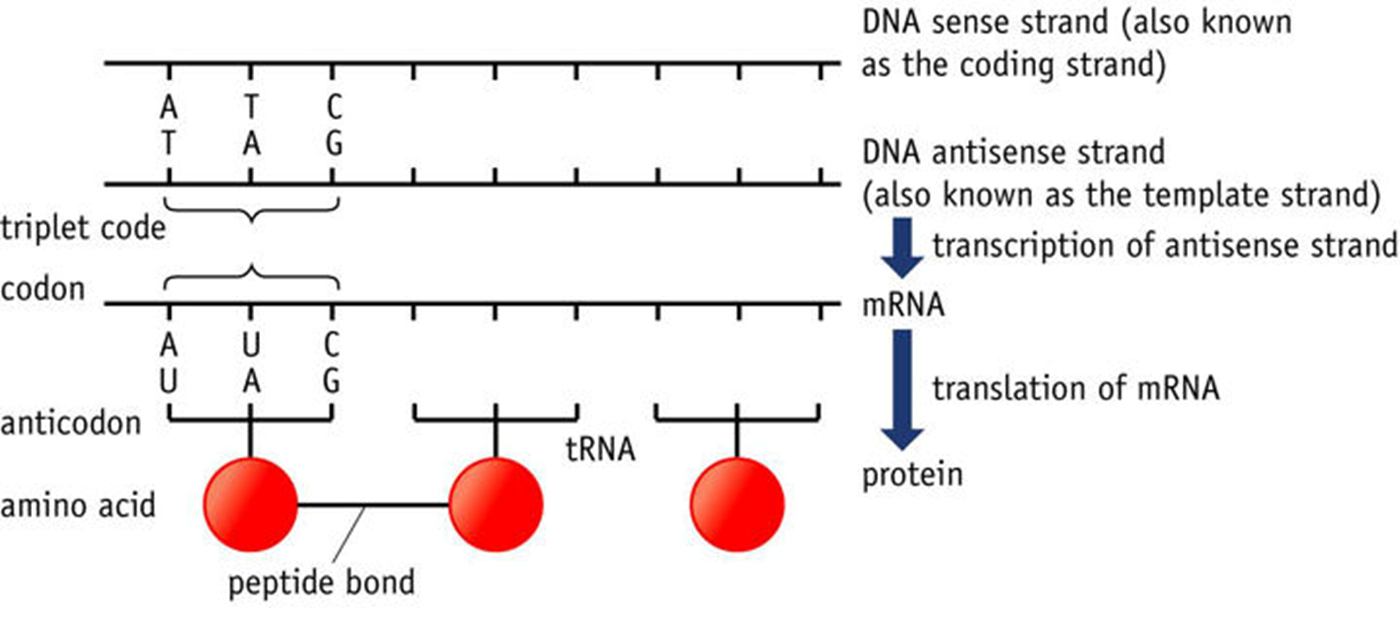
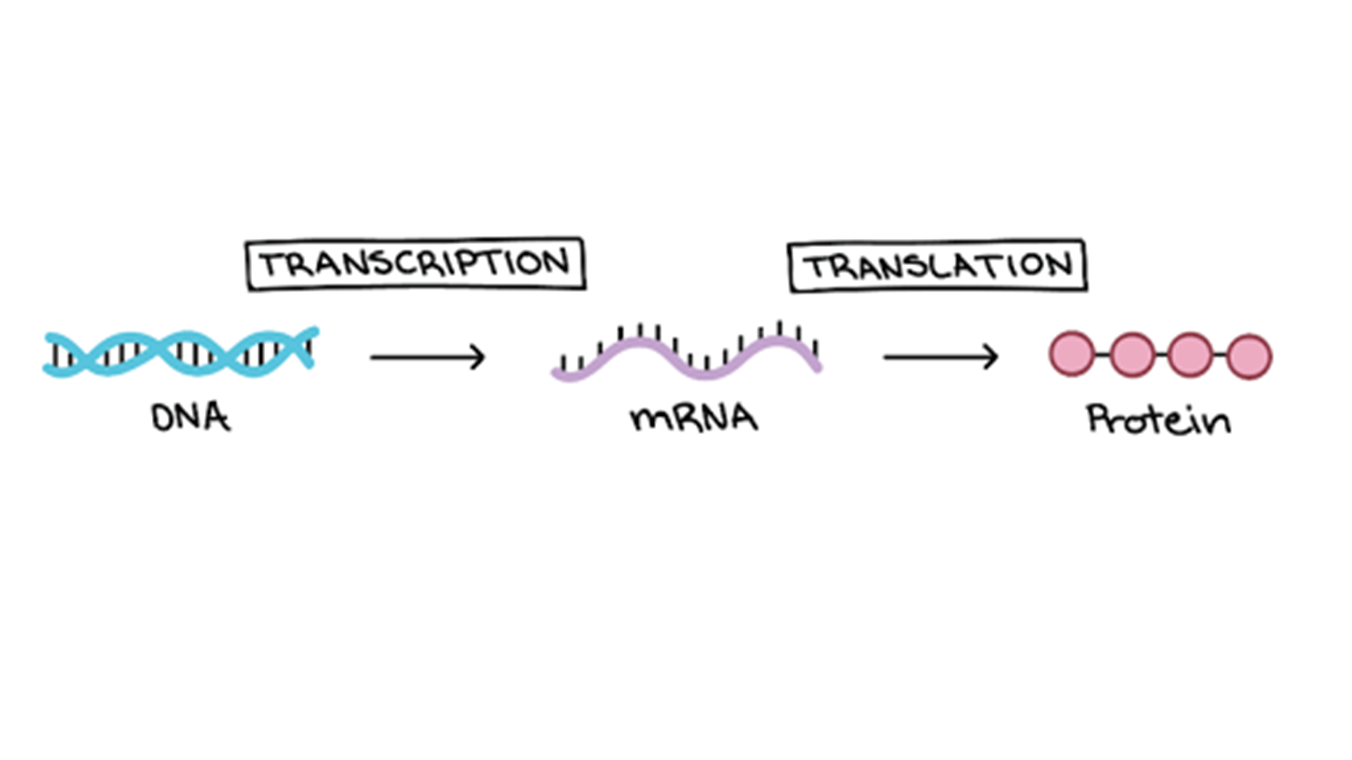
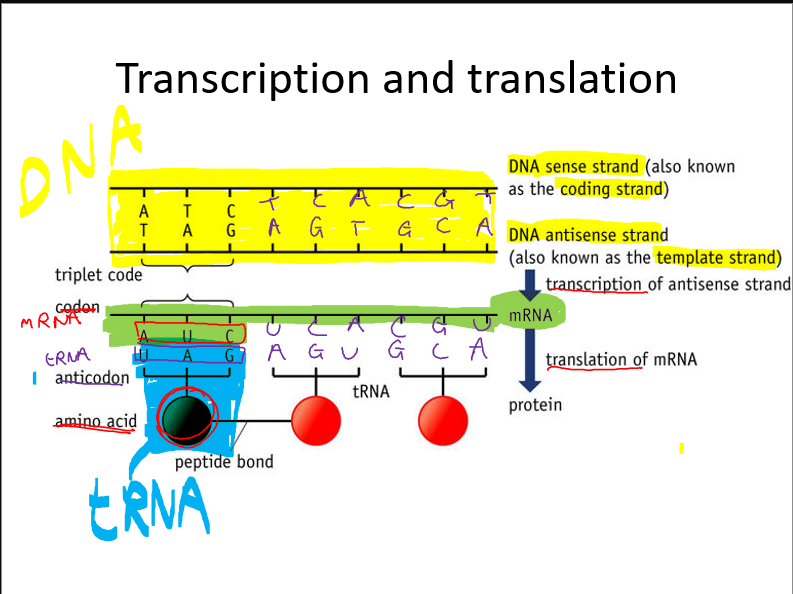
transcription is where the DNA code is copied onto mRNA in the nucleus
DNA unwinds
DNA helicase separates the H- bonds between strands
Complementary mRNA nucleotides H - bond to the DNA
RNA polymerase forms phosphodiester bonds between mRNA nucleotides
messenger RNA (mRNA) complementary to the DNA template ( antisense) strand is made
the mRNA separates from the DNA
the mRNA leaves the nucleus through nuclear pores
the DNA strands come together and base pair ( unless its used again)
translation is where mRNA is used to join the correct sequence of amino acids to build a new protein
mRNA attaches to ribosomes ( attached to the rER)
tRNAs in the cytoplasm carries specific amino acids
tRNA triplet of bases ( anticodon) complementary base pairs with a mRNA triplet ( codon) - triplet code
the first codon is always a start codon that codes for methionine
peptide bonds between the amino acids are made in the ribosome using a condensation reaction
the ribosome moves along the mRNA until it reaches a STOP codon
transcription:
DNA double helix unzips as
hydrogen bonds between complementary bases break
and the two polynucleotide strands separate
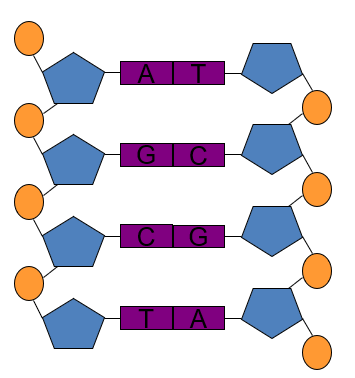
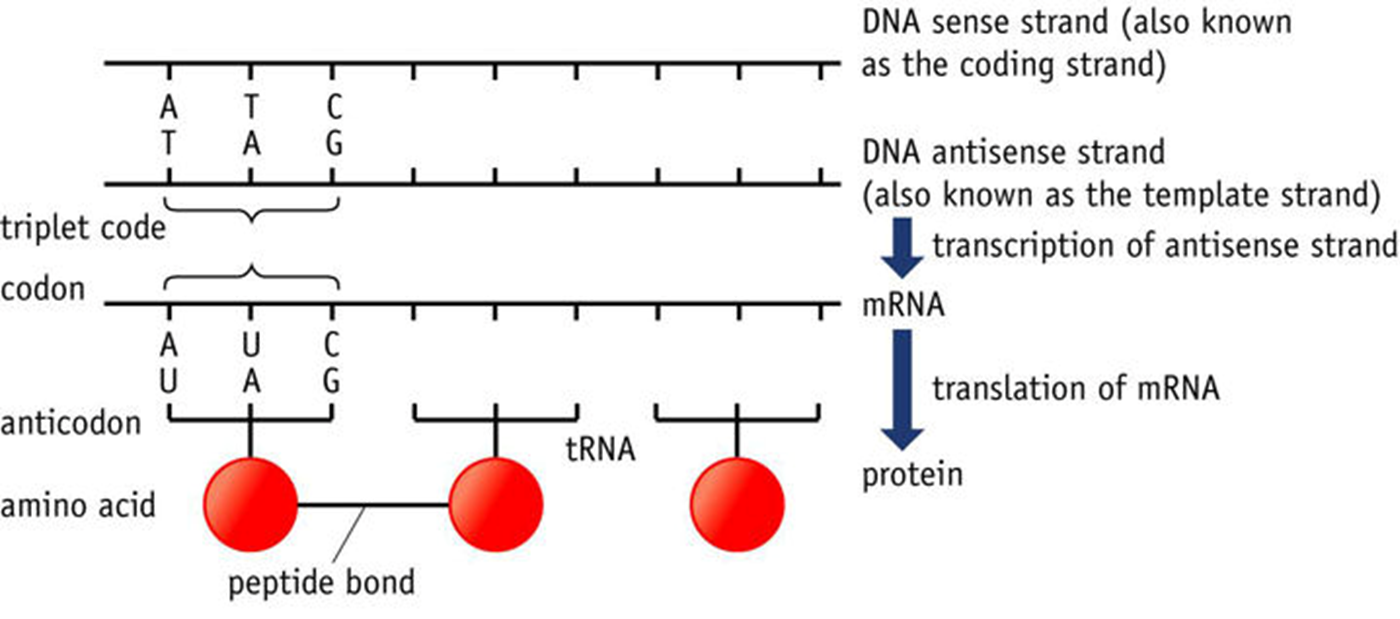
one strand acts as a template ( the anti - sense strand)
free RNA nucleotides complementary base pair to the exposed bases on this strand by forming hydrogen bonds
RNA polymerase forms phosphodiester bonds between nucleotides
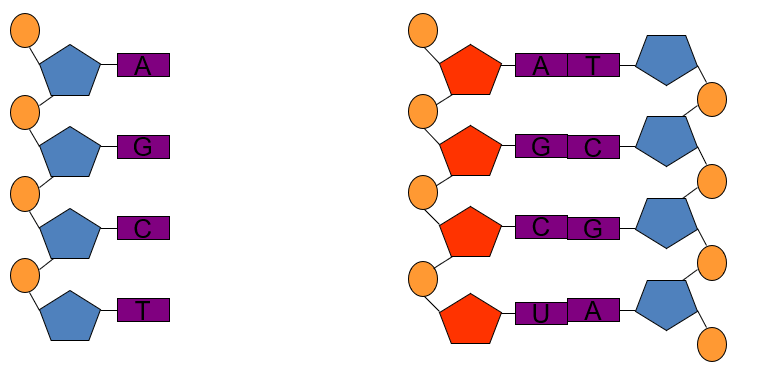
the mRNA detaches
the two DNA strands join together by complementary base pairing
the DNA molecules winds back up into a helix
Translation: ( cytoplasm)
mRNA attaches to ribosomes ( attached to rER)
tRNAs in the cytoplasm carries specific amino acids
tRNA triplet of bases ( anticodon) complementary base pairs with mRNA triplet ( codon) - triplet code
the first codon is always a start codon that code for methionine
peptide bonds between the amino acids are made in the ribosome using a condensation reaction
the ribosome moves along the mRNA until it reaches a STOP codon