SOLUTIONS Yr 9 Revision Booklet.docx
Yr. 9 Science – Revision booklet
Nervous system
Success criteria - Nervous system |
|
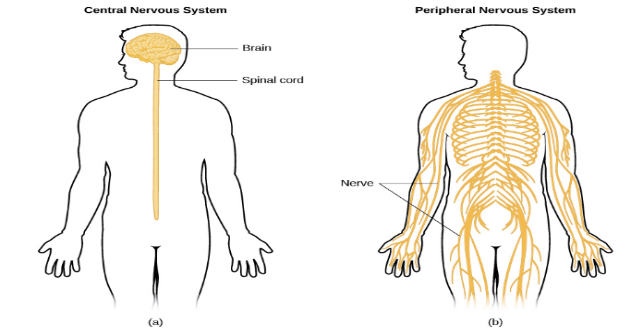   Every action and thought that we have happens because of our____________________.  The nervous system is the part of an animal’s body who _________ and coordinates ______________.   All animals have a nervous system, except super simple ones like sea _____________.  The nervous system is composed of two major parts:
 
 The central nervous system is the ________ centre of the body, it analyses things and ____________ what to do.  It then sends a ___________ to the peripheral nervous system who takes action by _________________ (stimulating) the appropriate _________ or gland. This _____________ division of the peripheral nervous system     can either be ____________ like the contraction of a leg or autonomic like the contraction of the ______________.   The sensory division of the peripheral nervous system detects ______________, with the help of sensory neurons,  and sends signals the _______________ nervous system which then decides whether or not an action should be taken. If the stimuli indicate that the body is in _____________ (for instance a hand on a hot stove),   the signal only passes through the _________________ and is immediately sent to the muscles.  These _____________ happen in a fraction of a ____________. However, if the body isn’t in direct danger,   the signal passes through the spinal cord and goes to the brain which eventually __________ what to do. 


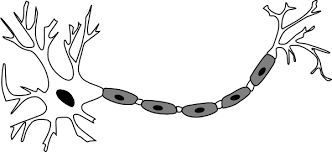  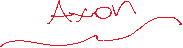   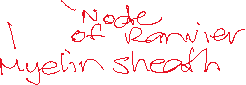  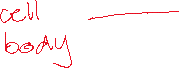  
Neurons communicate to each other sending ____________ throughout your body – powering all your ____________ and _____________. Neurons talk to each other using both _____________ and _____________ signals. Messages start as electrical _____________travelling rapidly down an axon. These are called action potentials. When the electrical signal reaches the axon terminals it is transferred into a ___________ signal called a neurotransmitter. Neurotransmitters enter the space between the neurons known as a ____________. Receptors on the next neuron become activated by chemical signal causing another electrical signal down the next ____________or sometimes stopping the electrical signal all together.         
Sensory, Interneuron, Motor  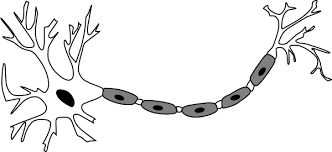   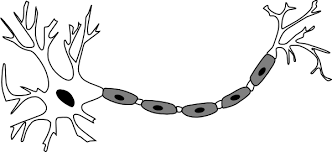 Point A 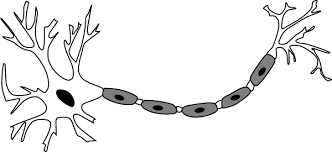 Muscle Point C Point B
Point A: Electrical messages are received by the dendrites of the interneuron from the axon terminals of the sensory neurons. Point B: Neurotransmitters in the axon terminal for the interneuron change the electrical signal to chemical signals so that the message can be passed across the synapse to the dendrite of the motor neuron. Point C: Neurotransmitters in the axon terminal for the motor neuron change the electrical signal to chemical signals to that the message can be passed across the synapse to get a response form the effector ie the muscle.
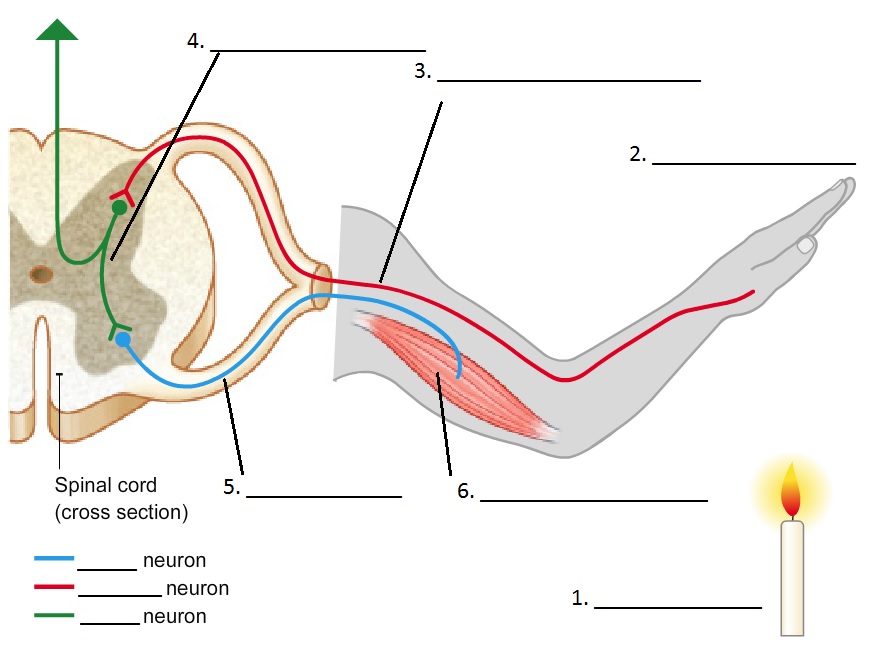 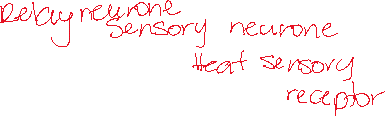    
Unconscious
The nerves involved in …………..….. ……………….….. form a reflex arc. This is made up of different types of neurone each one separated by a tiny gap called a ………………...………. In the diagram above the ……………………. is a hot surface. It is detected by a …………...……… receptor in the skin. This causes …………………… ………………. to pass along the sensory neurones to the ……………….. In the CNS, impulses are passes from sensory neurones to ………………...…… …………….………… via ………….…………. neurones. Motor neurones then transmit impulses to an ………….…………… which carries out a response. In this case a ……………………....… contracts and the finger is pulled away.             |

Endocrine system
Reproduction - Success criteria |
By the end of the unit I can
|
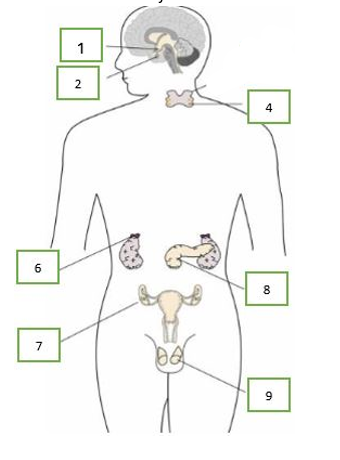    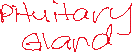     
  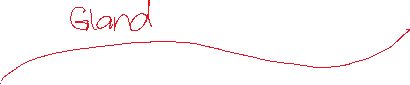  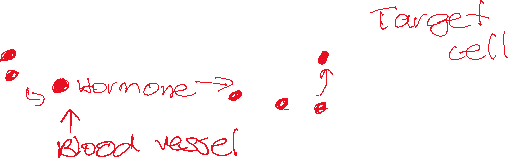 
When the hypothalamus (a part of the brain) detects that something is off, it sends signals to the pituitary gland, which is often called the "master gland" because it controls the activity of many other glands in the body.
The pituitary gland then releases specific hormones into the bloodstream to tell other glands what to do. For example, it can signal the thyroid gland to release hormones that control metabolism (energy), or the adrenal glands to release stress hormones like adrenaline
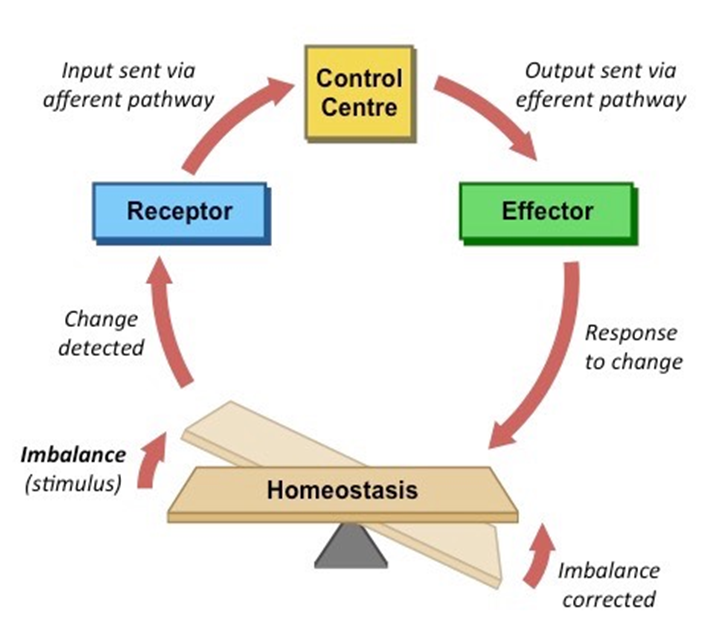
5. Compare the process of thermoregulation when too hot or too cold.
No. A hormone will only act on a part of your body if it “fits” — if the cells in the target tissue have receptors that receive the message of the hormone. The hormone is specific to the specific receptor on the target cell. |
Reproduction
Reproduction - Success criteria |
By the end of the unit I can
|
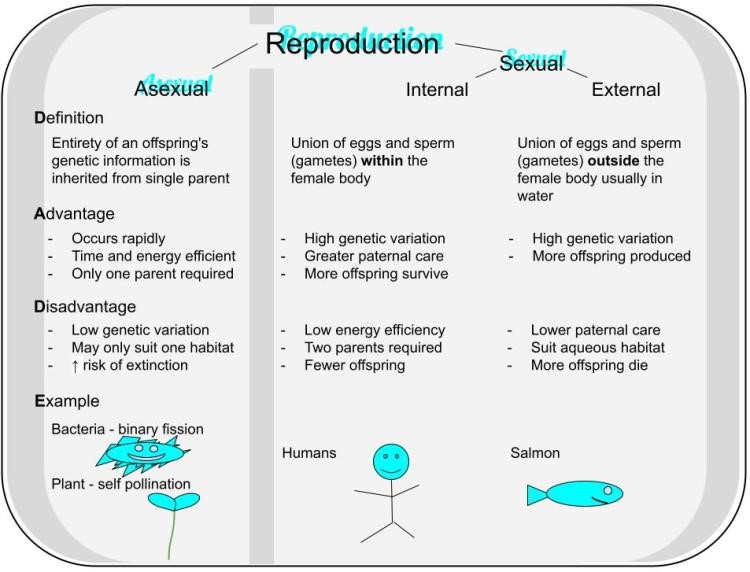
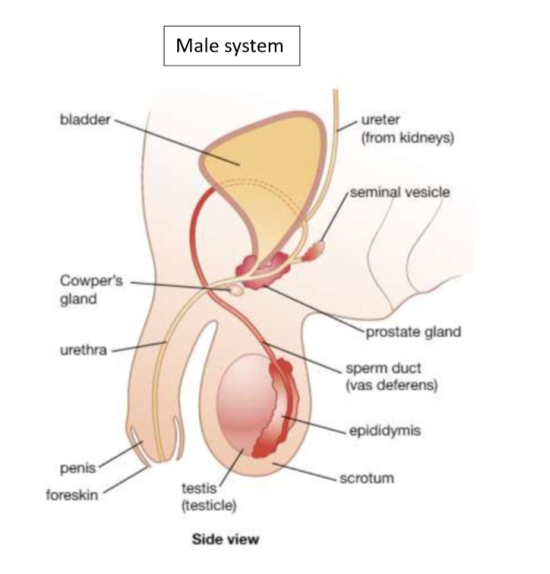
Male
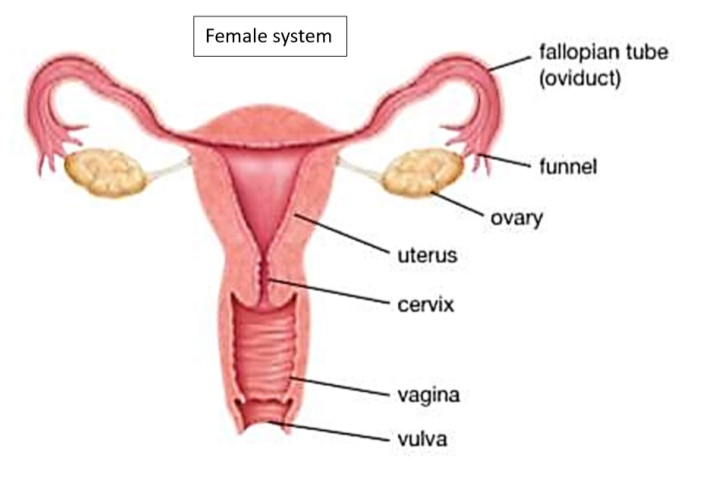
Female
Promote ovulation (release of the egg).
Maintains the lining of the uterus.
|
Science inquiry skills
Data set 1

- Identify the rat’s temperature at 40 degrees.
32-33°C
- Compare the body temperature of the lizard and rat when the external temperature is 10 degrees.
When the external temperature is 10°C the lizards’ body temperature is approximately 10°C whereas the rats’ is approximately 32°C. A difference of 22 degrees.
- Use evidence from the graph to determine if the rat or lizard most likely controls their temperature using a negative feedback loop.
The rat is most likely to control their body temperature by a negative feedback loop because they maintain a relatively constant body temperature between 32-33°C across all environmental temperatures from 0-40°C. Unlike the lizard whose body temperature increases as the environmental temperature increases. At 0°C environmental temperature the body temperature is 0°C and as the environmental temperature increases the body temperature increases to match the external temperature. For example, at 10°C the body temperature is also 10°C all the way to 40°C with a matching body temperature of 40°C.
Data set 2
A group of year 9 students completed the Stroop experiment on a group of fellow year 9 students.
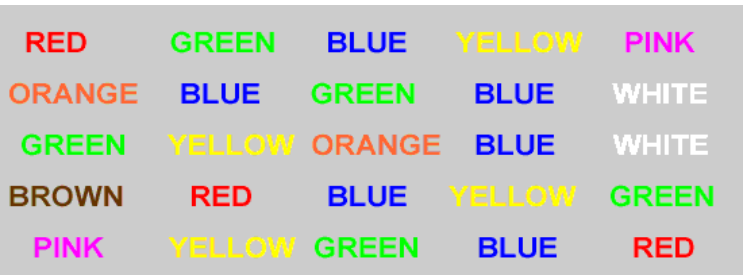
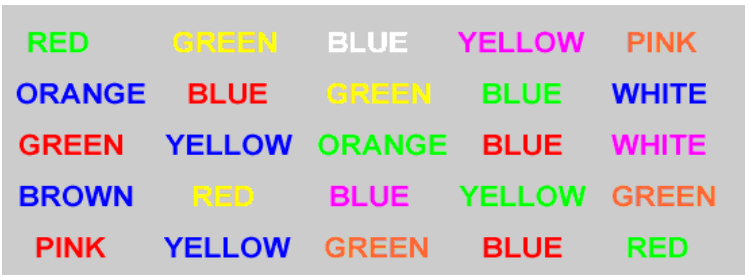
There are two tests in the Stroop experiment. During both tests participants are timed (in seconds) on how long it takes them to say out loud the colour a series of words are written in. For example for the word, RED, they should say "Blue."
The first experiment tested participants’ automatic processes. The series of colours the participants had to say out loud are in the picture below.
The second test tested participants-controlled processes. The series of colours the participants had to say out loud are in the picture below.
The results of their experiment are below. All values are represented as seconds.
Automatic processes | Controlled processes | |
13.0 | 26.0 | |
10.1 | 33.7 | |
14.1 | 24.2 | |
39.7 | 27.9 | |
22.1 | 70.7 | |
14.5 | 20.3 | |
12.3 | 27.5 | |
Average | 18.0 | 32.9 |
- Compare the test completed for automatic and controlled processes. How are the tests different?
For the automatic process, participants completed the activity in an average of 18 seconds compared to the controlled processes which were completed in an average of 32.9 seconds.
- Calculate the average for the controlled processes. Show all working.
Average =
= 32.9
- Identify the dependent variable of the study.
Time (seconds) or Time to read words (seconds)
- Write a conclusion for the study. Use data to summarise the difference in performance between experiment 1 and 2.
As seen in the results, the controlled processes were on average 14.9 seconds slower than the automatic one. This is because the brain had to process the response for the controlled process as what they had to say was different from the word they were looking at. It was faster for the automatic processes as the brain required less processing time as the colour and the word were the same.