Organs, Systems and Organisms
Organs
Organs are body structures that are made up of 2 or more types of tissue. For example, the heart is made up of muscular tissue, specifically cardiac muscle specifically while it is lined with epithelial tissue. ➡The tissues of an organ work together to carry out a particular task
Organs can be large or small they can include
heart
kidney
liver
brain
stomach
lungs
nails
hair
sweat glands
nerves
AND MORE
Systems
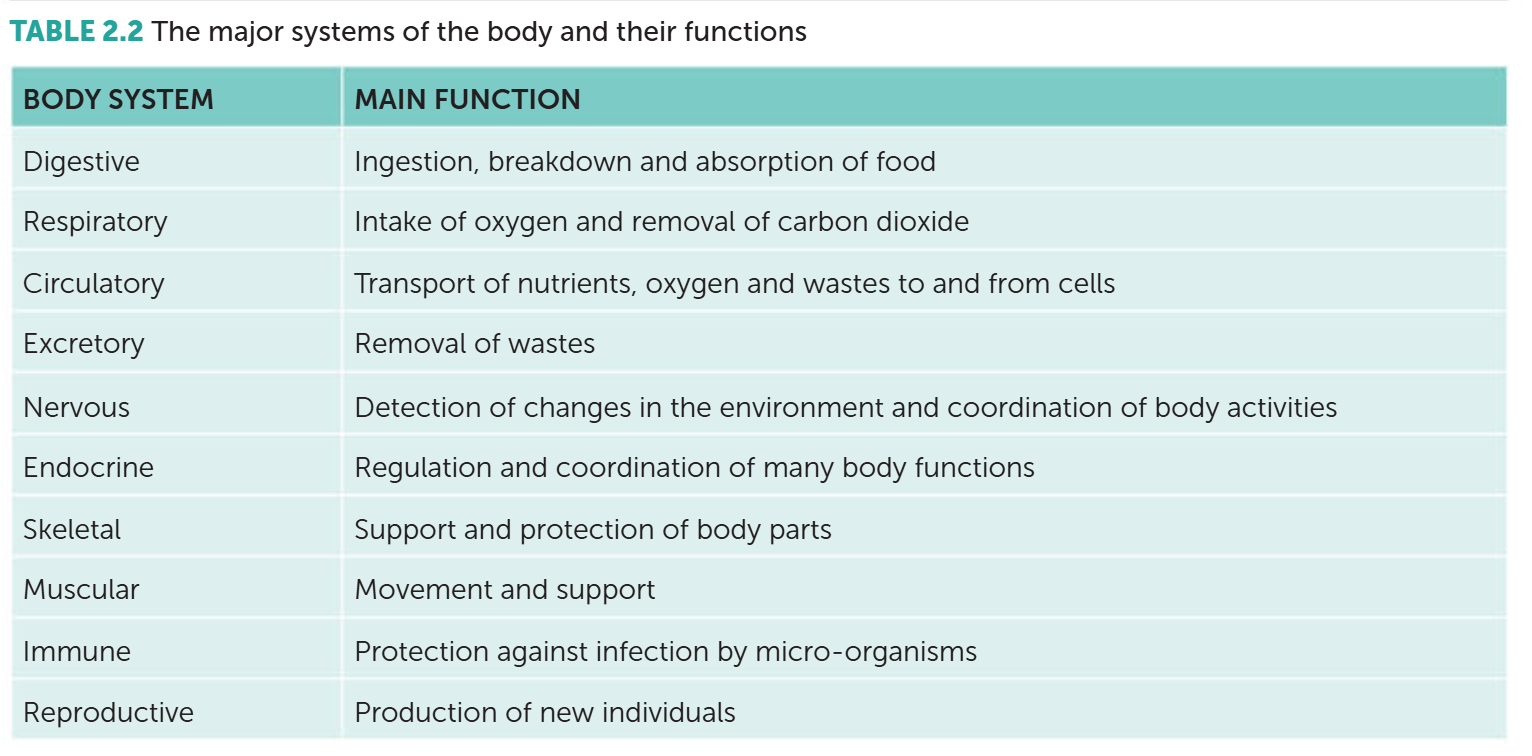
Many organs are organised into body systems, sometimes called organ systems. (A system is a group of organs that work together to carry out a particular task.
For example, the role of the digestive system is to break down food and to absorb it into the blood, and some of the organs that work together to achieve this include the mouth, stomach, intestines and liver.
“The Organism”
All of the body systems work together to meet the needs of the functioning organism. No one system can work in isolation, and they all cross over and depend on each other.
For example, the heart needs oxygen, which the respiratory system supplies; the brain needs nutrients and which come from the digestive system.
Some organs are a part of more than one system, for example, the pancreas is in the digestive system and also the endocrine system.