Unit 4 – Study Guide
I. DNA/Genetic Material
a. Role of DNA- contains the instructions needed for an organism’s survival.
- basicunit:Nucleotide
- fourbases−adenine,thymine,guanine,andcytosine(appleinthetree,carinthegarage)
- function:storeinformation,copyinformationfromparentcell,transmitinformationtodaughtercells
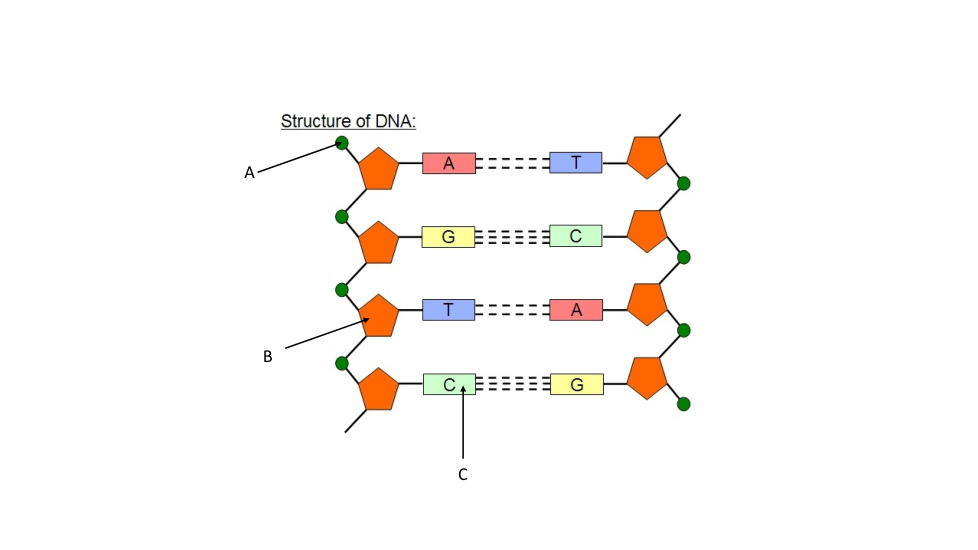
b. Structure of DNA-twisted double helix laddere
- a.ThePhosphate
- b.TheDeoxyriboseSugar
- c.TheBase
c. What does DNA stand for?
- DeoxyribonucleicAcid
d. What are chromosomes?
- AstructurethatconsistsofaDNAmoleculetightlywrappedaroundpackagedproteins
- Throughoutmostofacell’slifecycle,theDNAisunraveled.TheDNAonlycondensesintochromosomesduringcelldivision.
e. What are homologous chromosomes?
- apairofchromosomesthataresimilarinlengthaswellasgeneandcentromereposition
f. Define haploid and diploid.
- Haploid−afullsetofchromosomes
- Diploid−ahalfsetofchromosomes.
g. What is the normal human chromosome number?
- 46chromosomes
h. What are gametes?
- amature,haploidreproductivecellthatiscreatedasaresultofmeiosis
II. Meiosis
a. When does crossing over take place?
- Crossingovertakesplaceduringsynapsis.Createsgeneticvariationandwhyyoursiblingsarenotidenticaltoyou.
b. What is the main purpose of Meiosis?
- Toproduceanoffspringthatishalfofeachoftheparent’schromosome,ratherthanbeingidenticaltooneoftheparents.
c. What is the result of Meiosis?
- Fourgeneticallydifferentcells
III. Mitosis
a. What is the results of Mitosis?
- Twogeneticallyidenticalcells
IV. Inheritance Terminology
a. Gene
- determinesanindividualstraits,genotype
b. Allele
- oneoftwoormoreDNAsequencesoccuringataparticulargenelocation
c. Trait
- specificcharacteristicsofanindividual,phenotype
d. Homozygous
- BBorbb,twoofthesameallelesandcanbeeitherdominantorrecessive
e. Heterozygous
- Bb,oneofeachallele
f. Dominant
- BB,theonethatisexpressed
g. Recessive
- expressedwhenthegenotypeishomozygous,bb
VI. Punnett Squares (reference practice sheets)
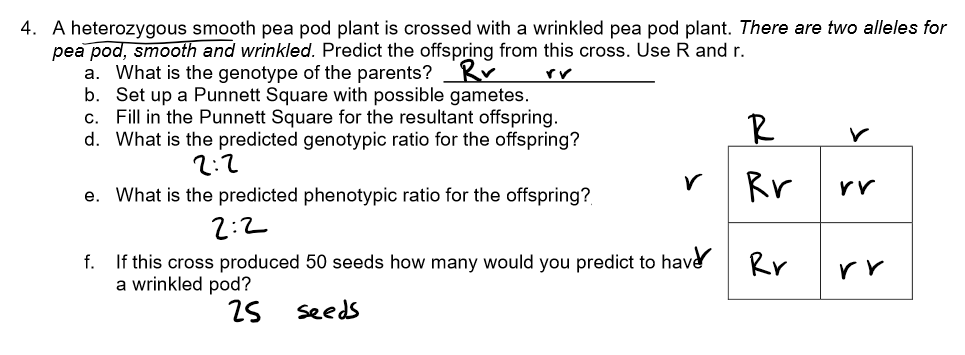
a. Single Trait
- normalpunnettsquare
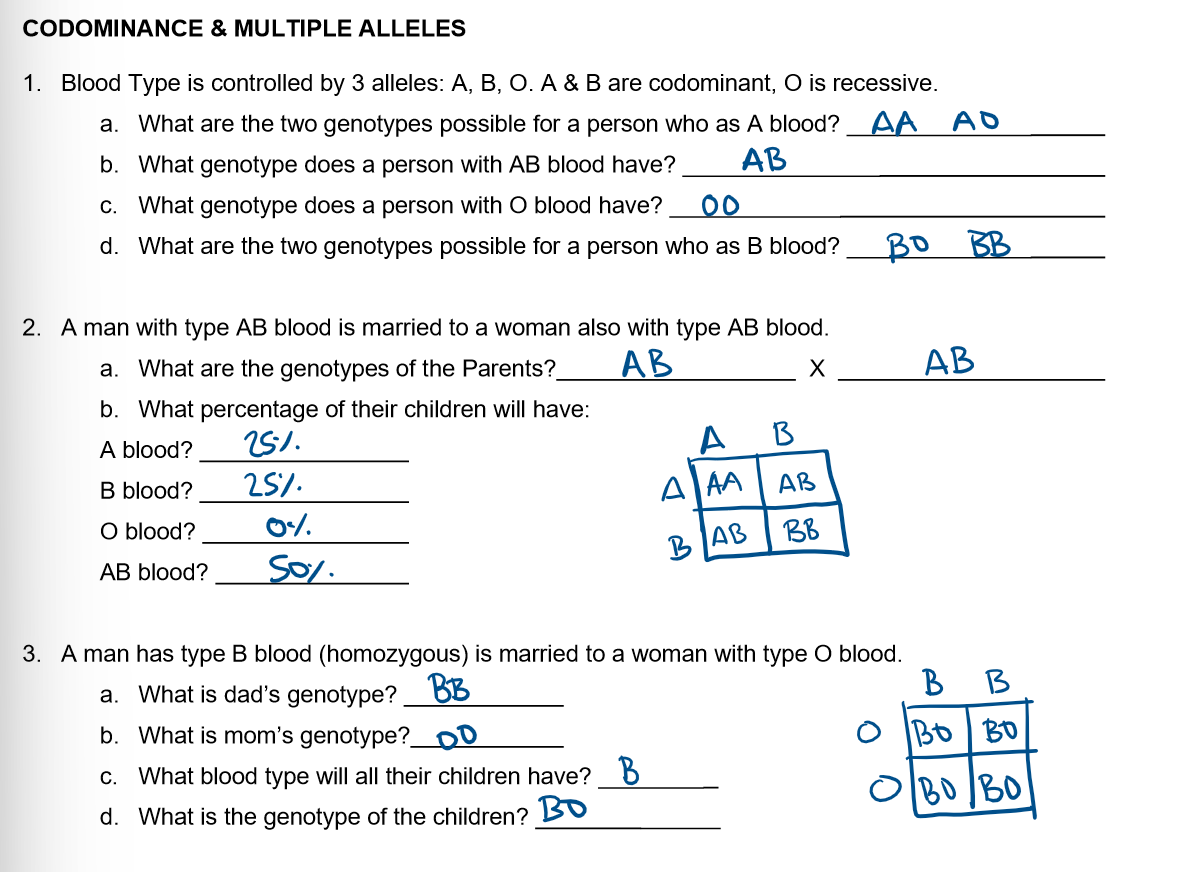
b. Codominance
- bothgenesareequallystrongandvisible
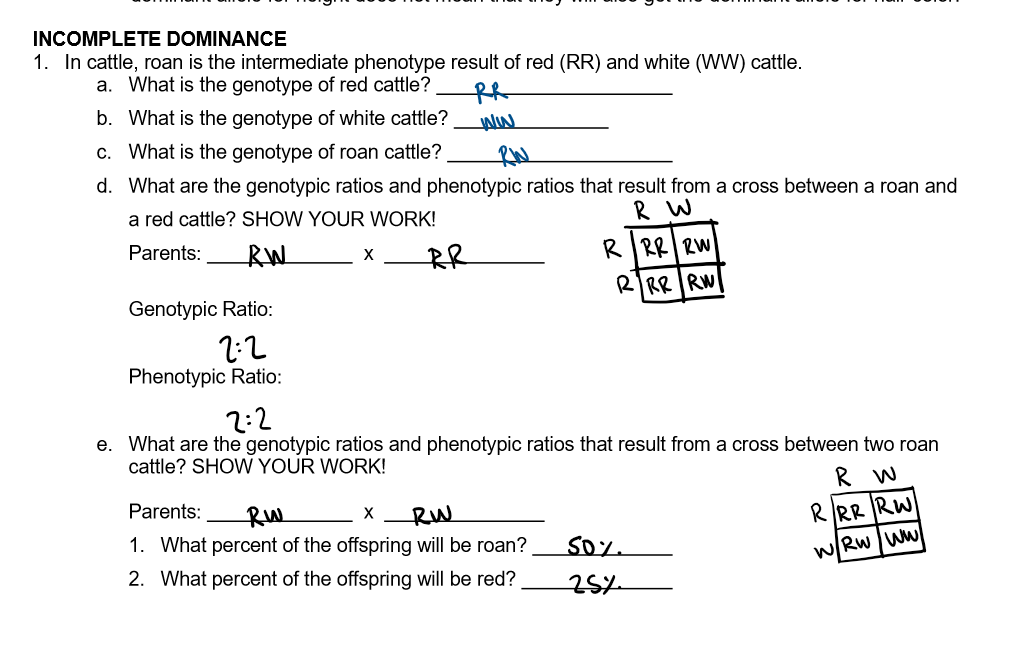
c. Incomplete Dominance
- resultsfromacrosswherebothparentalcontributionsarevisible,creatingageneticallyuniquephenotype
d. Sex-linked
- thegeneisfoundontheXchromosome(xn),occursmoreofteninmen(XY)withthepossibilitiesbeingXrYorXRYandwomenbeingXRXR,XRXr,oracarrierofXrXr
V. Pedigrees
a. Rules for Autosomal vs. X-linked
- IfmostofthemalesinthepedigreeareaffectedthedisorderisX−Linked
- Ifitisa50/50ratiobetweenmenandwomen,thedisorderisautosomal
b. Rules for Dominant vs. Recessive
- Ifthedisorderisdominant,oneoftheparentsmusthavethedisorder
- Ifthedisorderisrecessive,neitherparentmusthavethedisorderbecausetheycanbeheterozygous
c. Know all symbols and how to differentiate between a marriage and offspring 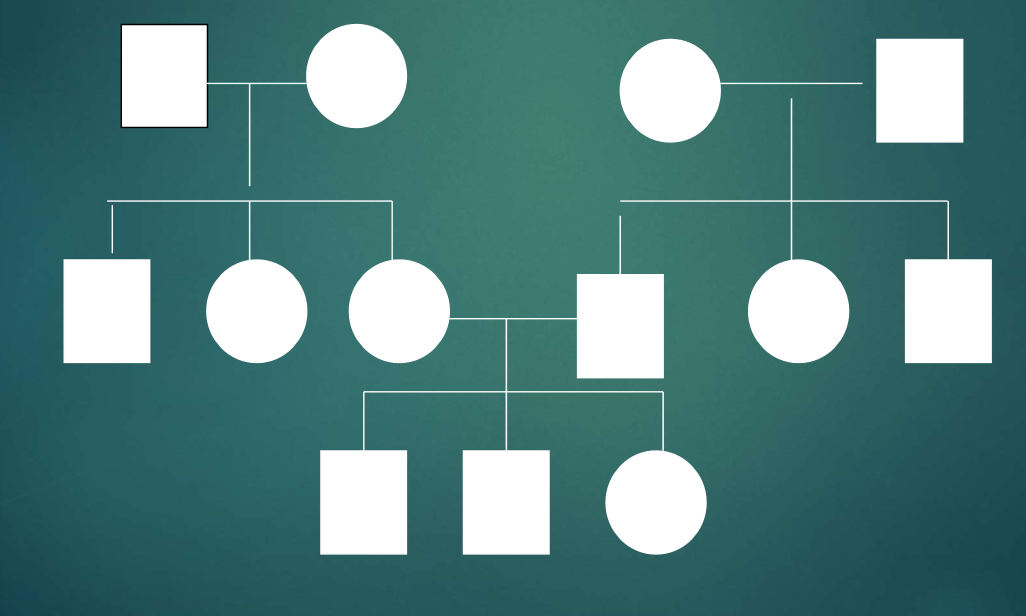
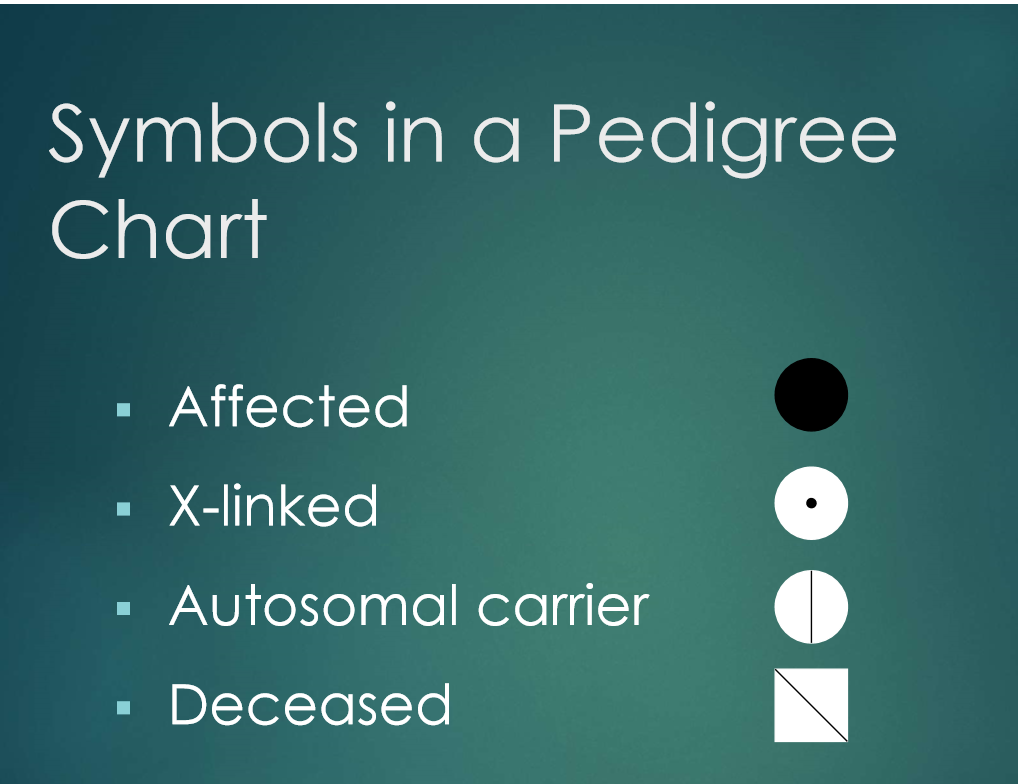
d. Know how many generations are listed
- eachverticalline(seeabove)
e. Know the difference between Male and Female
- female−circle
- male−square
VII. Karyotype Interpretation
a. Know how to tell if it’s Male or Female
- femalexxmalexy
b. Know whether the Karyotype is demonstrating a disorder or not
- extrachromosomes,etc
c. How are karyotypes arranged?
- orderedfrombiggest/longesttoshortest/smallestandtheXXorXYgenes