Bio Psychology Quiz - PSYCH 1
Neurotransmitters
(ACH) Acetylcholine - muscle function, learning & memory, attention
Glutamate - brain’s main excitatory neurotransmitter, basis of learning & long term memory
Dopamine -mood & arousal & emotion
Serotonin - hunger & sleep, mood regulation
Norepinephrine - arousal & alertness, flight or fight, mood elevation
Endorphins - pain control, stress reduction, positive emotions
GABA - brain’s main inhibitory neurotransmitter, regulates sleep cycles
Neuron Structure
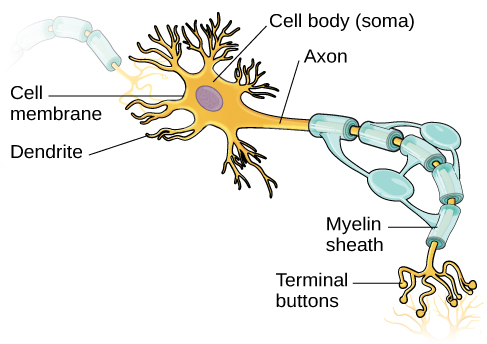
Dendrite - input sites where signals are received from other neurons
Soma - cell body
Axon - major extension of the soma (cell body)
Terminal buttons - house neurotransmitters (send the chemical message)
Myelin sheath - coats the axon acting as an insulator increasing the speed at which the signal travels crucial for normal operation of neurons
Nodes of Ranvier - gaps in the myelin sheath
Synaptic cleft - space between two neurons that where communication occurs
Receptors - proteins on the cell surface where neurotransmitters attach to “matching” neurotransmitters
Neuronal Communication
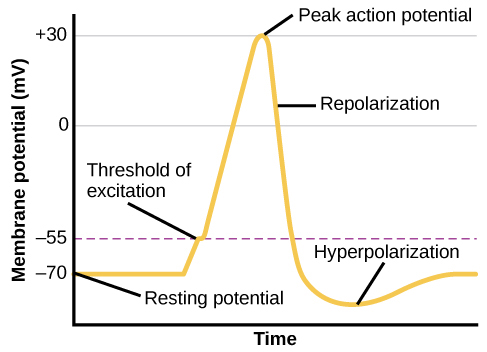
Resting potential - neuron membrane’s potential is held in a state of readiness
Threshold of excitation - neuron becomes active and action potential begins
Peak action potential - terminals. The electrical signal moves down the axon with the impulses jumping between the Nodes of Ranvier. all-or-none, no returning off action potential once it starts
Repolarization - the return of electrical charges to their original resting state
Hyperpolarization - when the membrane potential becomes more negative at a particular spot on the neuron's membrane
after the signal is sent:
reuptake - excess neurotransmitters are reabsorbed
Brain Hemispheres and Lobes
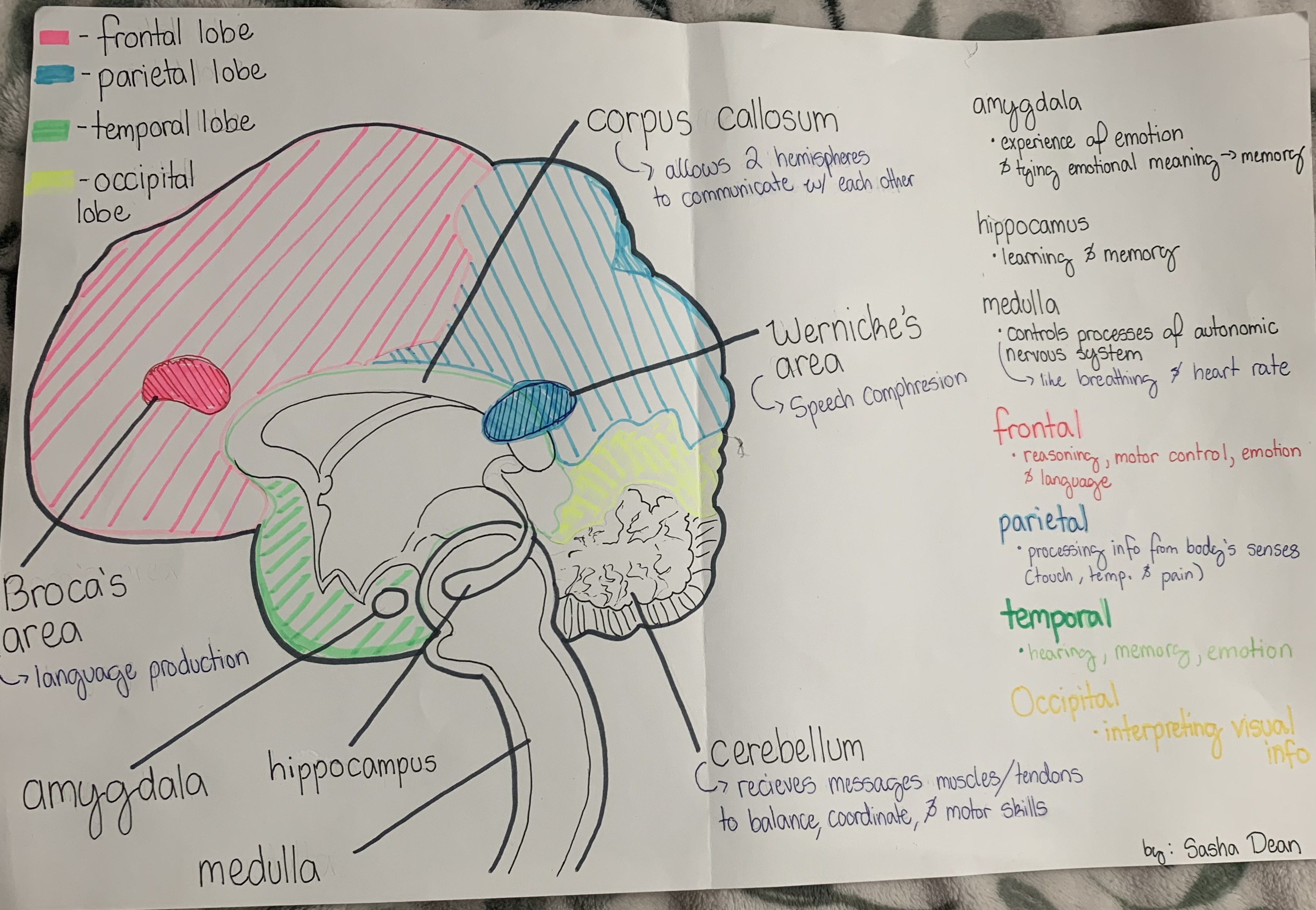
Frontal Lobe - which includes the prefrontal cortex and the motor cortex
prefrontal cortex - judgement reasoning & impulse control, higher level cognitive functioning
motor cortex - planning & coordinating movement
Occipital lobe & visual cortex - interpreting visual info
Parietal lobe & somatosensory cortex - processing sensory info (touch, temp, pain, etc)
Temporal lobe & auditory cortex - hearing, memory, emotion, processing, auditory info
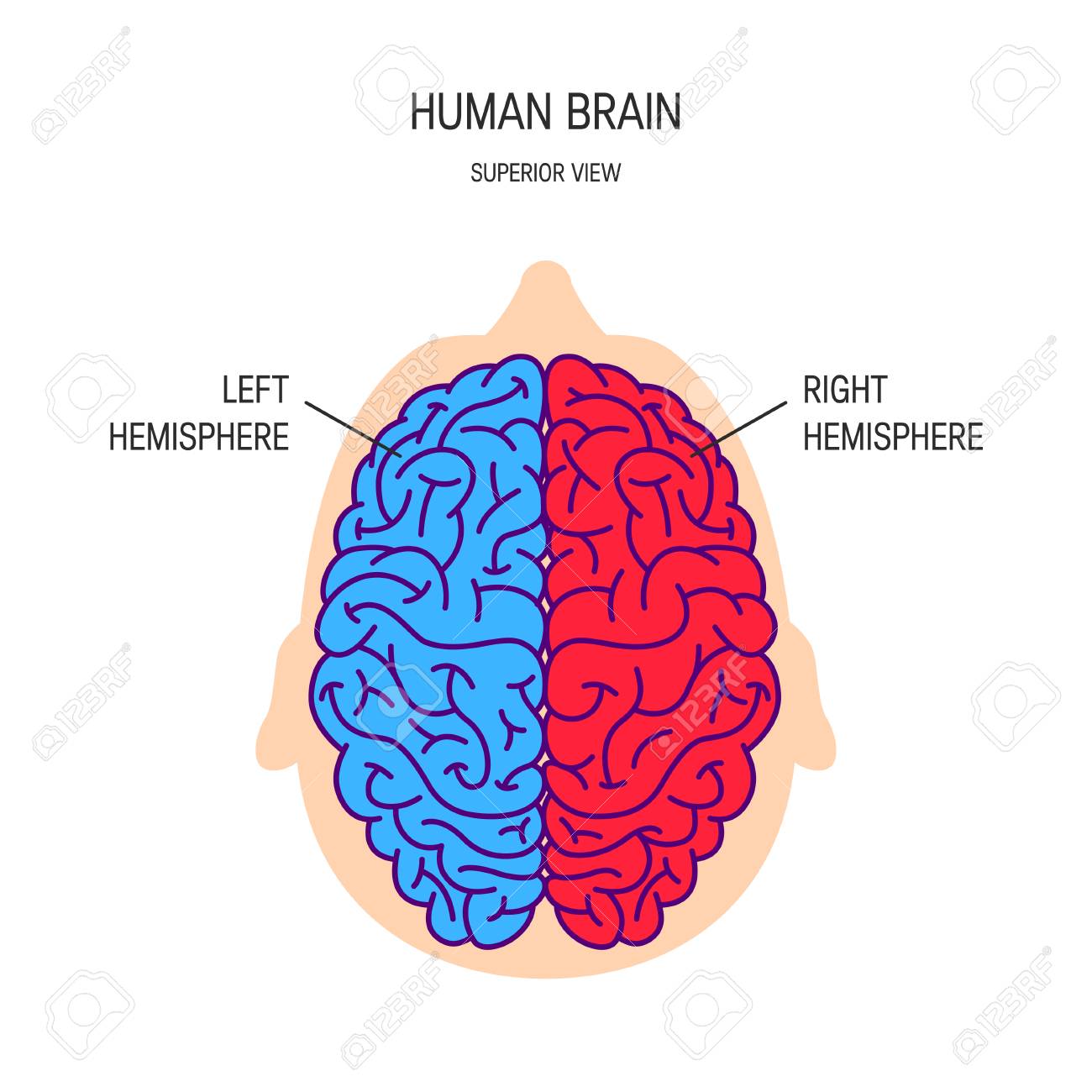
Left Hemisphere
controls right side of the body, verbal abilities (sign language & speech) math abilities, analytic skills, literal interpretation
Right Hemisphere
controls the left side of the body, non-verbal language (i.e intonation) spatial abilities (geometry, patterns), artistic/music abilities, combining two parts into a whole emotion, inference
RECOGNIZING FACES
The Brain Structure
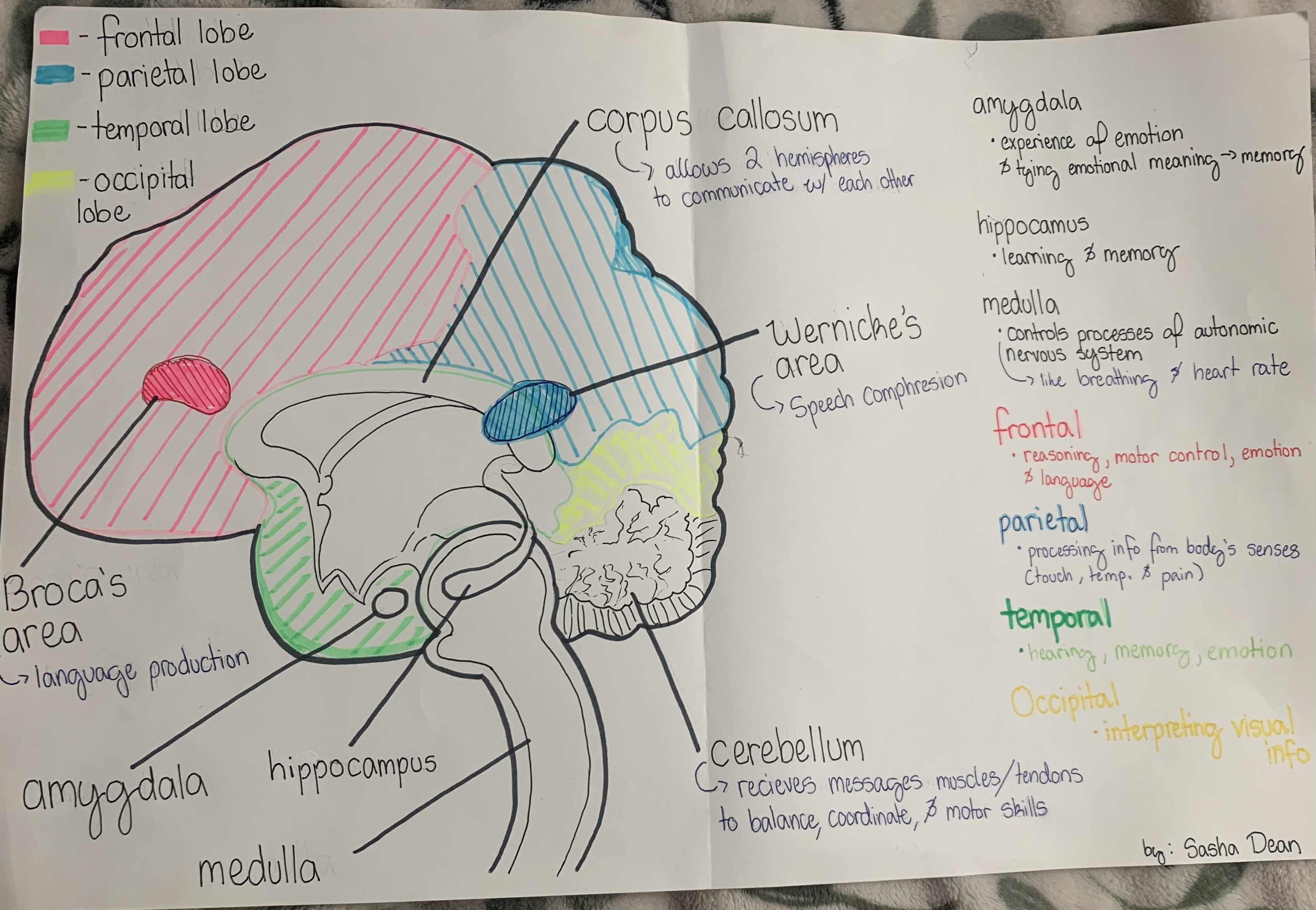
medulla oblongata - controls processes of autonomic nervous system (breathing & heart rate)
cerebellum - receives messages to tell muscles/tendons to balance, coordinate & motor skills
amygdala - experience of emotion & tying in emotional meaning to memories
hippocampus - learning & memory
corpus callosum - allows the two hemispheres to communicate with each other
Broca’s area - language production
Wernicke’s area - speech comprehension
Brain Imaging
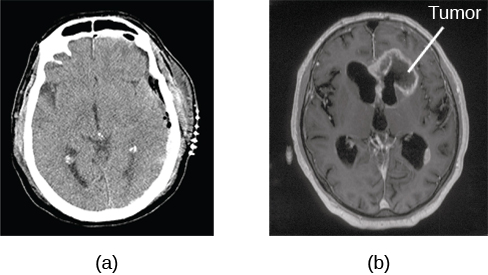
CT scan - often used to determine whether someone has a tumor or significant brain atrophy taking a lot of x-rays of a specific section of a persons body/brain
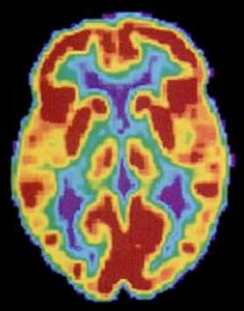
PET scan - drinks/injected with a mildly radioactive substance (tracer). Once in the bloodstream, the amount of tracer in any given region of the brain can be monitored.
MRI - person is placed inside a machine that generates a strong magnetic field the waves give diff. signals which makes image on computer
fMRI - operates on the same principles, but it shows changes in brain activity over time by tracking blood flow and oxygen levels
B/c high level of detail, MRI and fMRI are often used to compare the brains of healthy individuals v brains of individuals diagnosed with psychological disorders
This comparison (fMRI and MRI) helps determine what structural and functional differences exist between these populations
EEG - electrodes are placed on head then tracks electrical activity in the brain helpful to researchers studying sleep patterns among individuals with sleep disorders
The Nervous System
The nervous system is made up of two basic cells
glial cells - helps w/ neuronal communication, transports nutrients, mediate immune responses
neurons - interconnected info processors
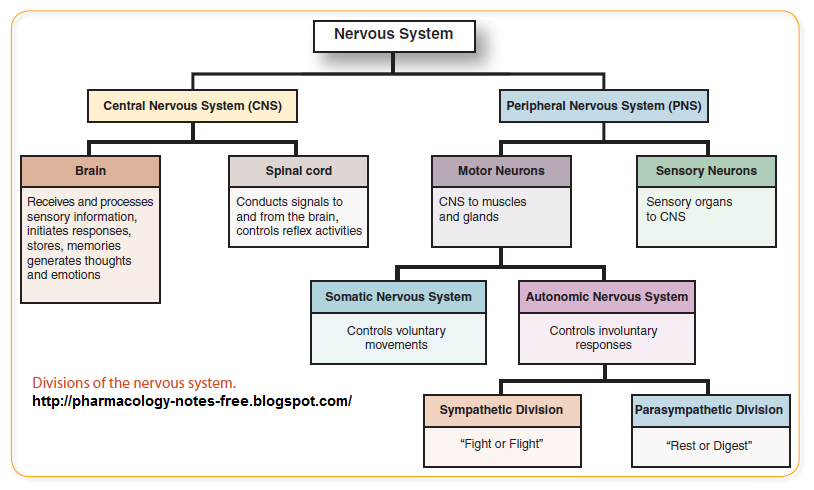
split into two systems the Central Nervous System & Peripheral Nervous System
CNS - brain & spinal cord
PNS - connects the CNS to the rest of the body, nerves carry messages back & forth from the CNS to organs/muscles, etc. & is made up of efferent fibers (both efferent, exit, and afferent, arrive, neurons to send messages)
PNS splits into the autonomic & somatic nervous system
autonomic nervous system - organs/glands (automatic functions)
somatic nervous system - controls conscious/voluntary, comprised of motor & sensory neurons
Autonomic Nervous System splits into 2 parts
sympathetic - prepping body for stress related activities (i.e dilating pupils, inhibits salivation, etc)
parasympathetic - returning body to routine day-to-day operations (i.e constricts pupils, stimulates salivation, etc)
Endocrine System
endocrine system - releases hormones into bloodstream & is slower than neurotransmitters
pituitary gland - messenger hormones control all the other glands in the endocrine system secretes growth hormone, endorphins for pain relief, and a number of key hormones that regulate fluid levels in the body.
thyroid - regulate growth, metabolism, and appetite
adrenal glands - secrete hormones involved in the stress response (epinephrine & norepinephrine)
pancreas - secretes hormones that regulate blood sugar levels: insulin and glucagon
gonads - secrete sexual hormones, reproduction, and mediate both sexual motivation and behavior (ovaries and testes)
pineal - Regulate some biological rhythms such as sleep cycles (controls melatonin)
Prosopagnosia - face blindness
neuroplasticity - the ability for nervous system to adapt/change (+ account for damage)
neurogenesis - growth & development of nervous tissue, forming new neurons