Synapses
Synapse process
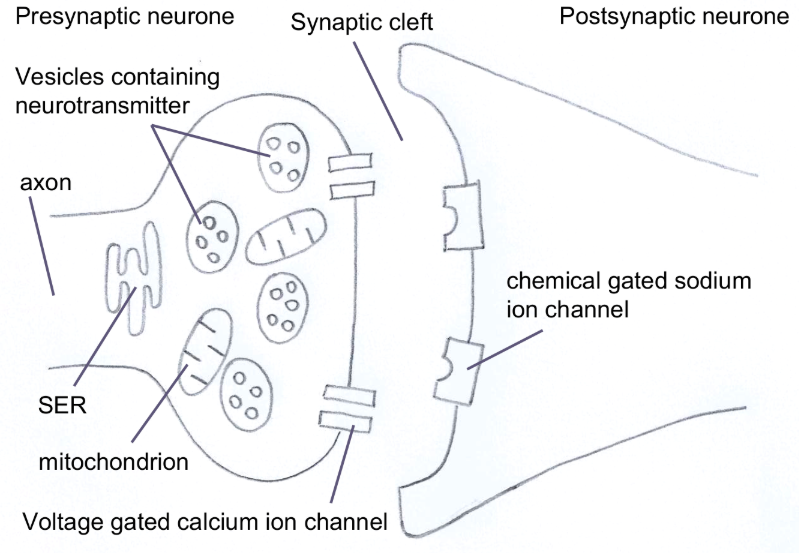
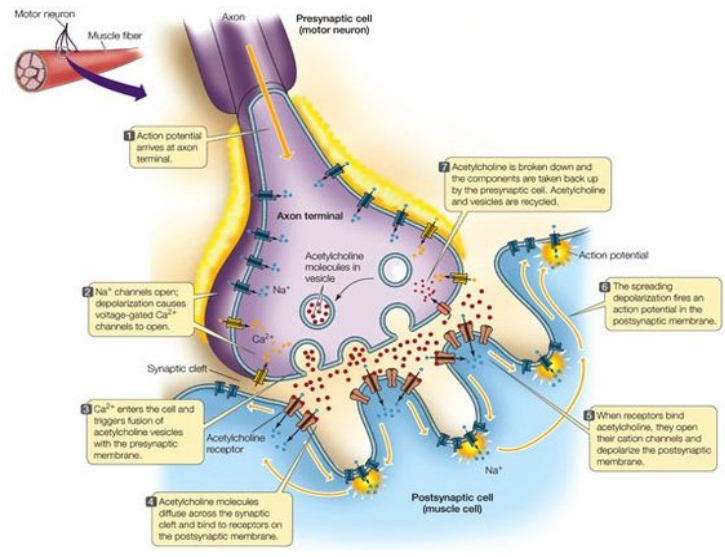
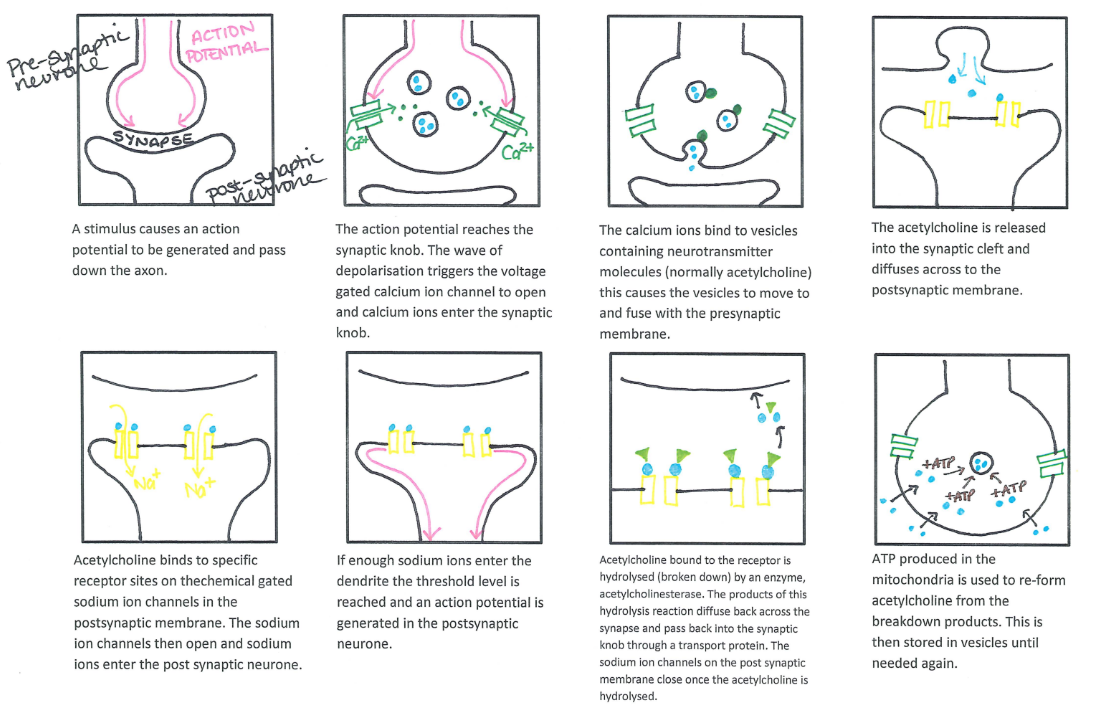
action potential arrives at axon terminal
Na+ channels open: depolarisation causes voltage gated Ca2+ channels to open
Ca2+ enters the cell and triggers fusion of acetylcholine vesicles with the presynaptic membrane
acetylcholine molecules diffuse across the synaptic cleft and bind to receptors on the post synaptic membrane
when receptors bind they open their cation channels and depolarise the postsynaptic membrane
the spreading depolarisation fires an action potential in the postsynaptic membrane
acetylcholine is broken down and the components are taken back up by the presynaptic cell
acetylcholine and vesicles are restored
Types of synapse
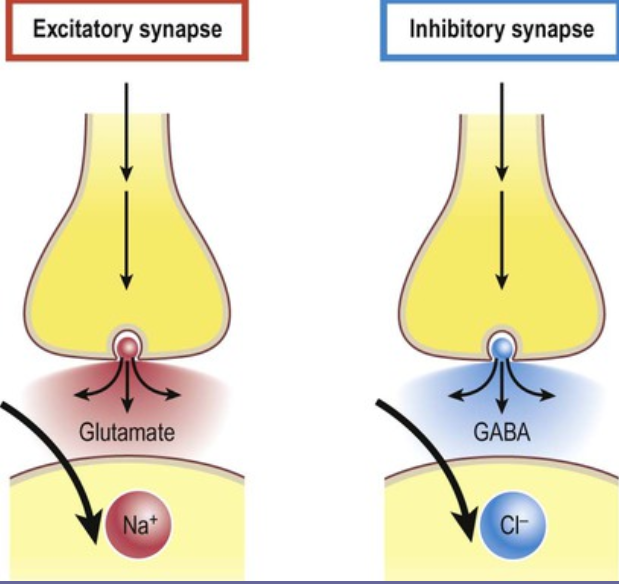
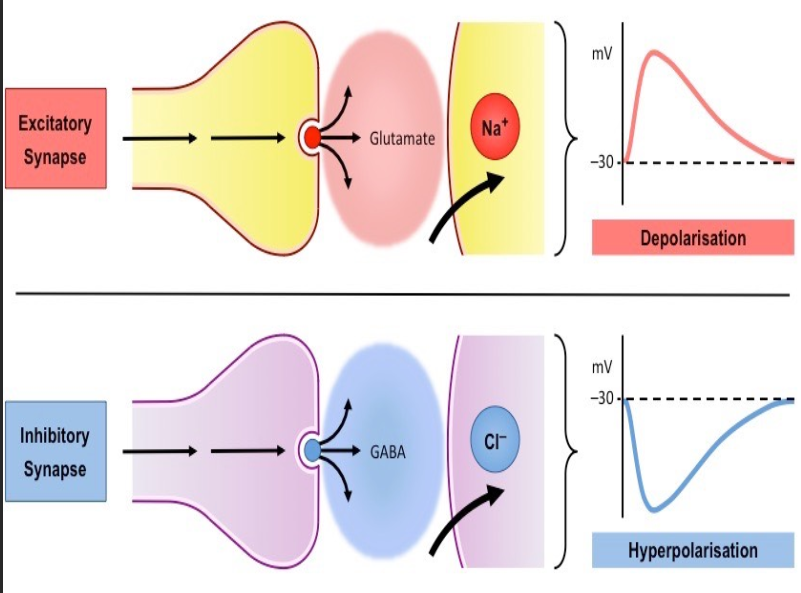
Excitatory
neurotransmitters cause the depolarisation of the postsynaptic membrane
potential difference across membrane becomes less negative
acetylcholine
Inhibitory
neurotransmitters cause the hyperpolarisation of the post synaptic membrane
potential difference across the membrane becomes more negative
GABA
Role of synapses
ensures impulses are unidirectional
receptors only on the post-synaptic membrane
an impulse from one neurone can be transmitted to many
a single stimulus can cause many responses
an impulse from many neurones can be transmitted to a single post-synaptic neurone
many stimuli can produce a single result
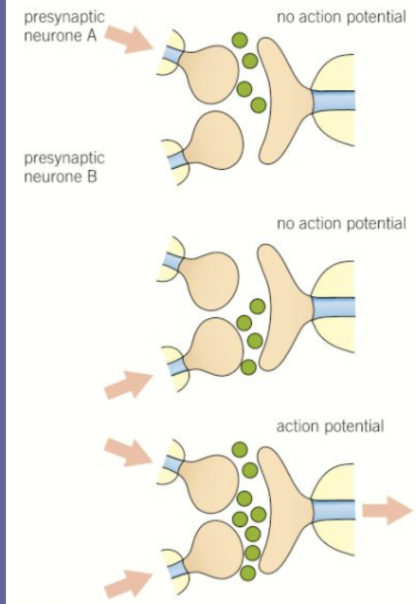
Spatial summation
neurotransmitter from one synapse does not cause the threshold potential to be reached
neurotransmitter must be released from several presynaptic neurone before the action potential is passed on
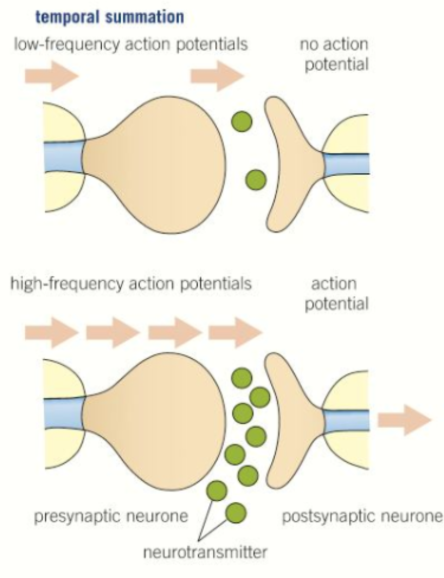
Temporal summation
multiple action potentials in a given period of time are required to trigger an action potential in the post-synaptic neurone
Action of drugs
similar shape to neurotransmitter
nicotine
stimulate release of neurotransmitter
caffeine
MDMA
cocaine
Block receptor
curare
inhibit action of enzyme at synapse
nerve gas