Chapter 17 Smell
The human nose contains 10-100 million receptor cells
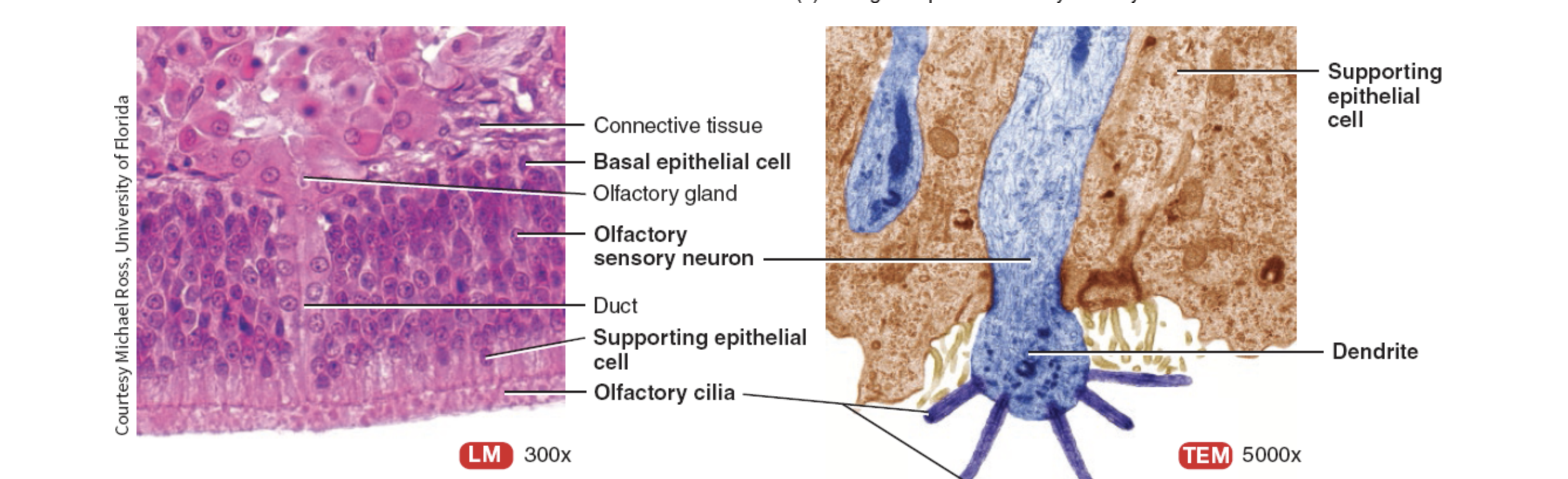
Olfactory receptor cell- Bipolar neuron with a knob shaped dendrite
Extending from the dendrite are several nonmotile olfactory cells
Sites of olfactory transduction conversion of stimulus energy into a graded potential in a sensory receptor
Supporting cells- Columnar epitheal cells of the mucous membrane
lining the nose
Function- provide physical support, nourishment, electrical insulation for the olfaction reeption cells and detoxify chemicals
Basal cells- stem cells located between bases of supporting cells
Function- undergo cell division to produce new olfactory receptor cells
Olfactory receptor cells live for about 2 months
Olfactory glands = Bowman’s glans- produce mucus that is used to dissolve odor molecules so that transduction may occur
Steps of transduction of olfaction…
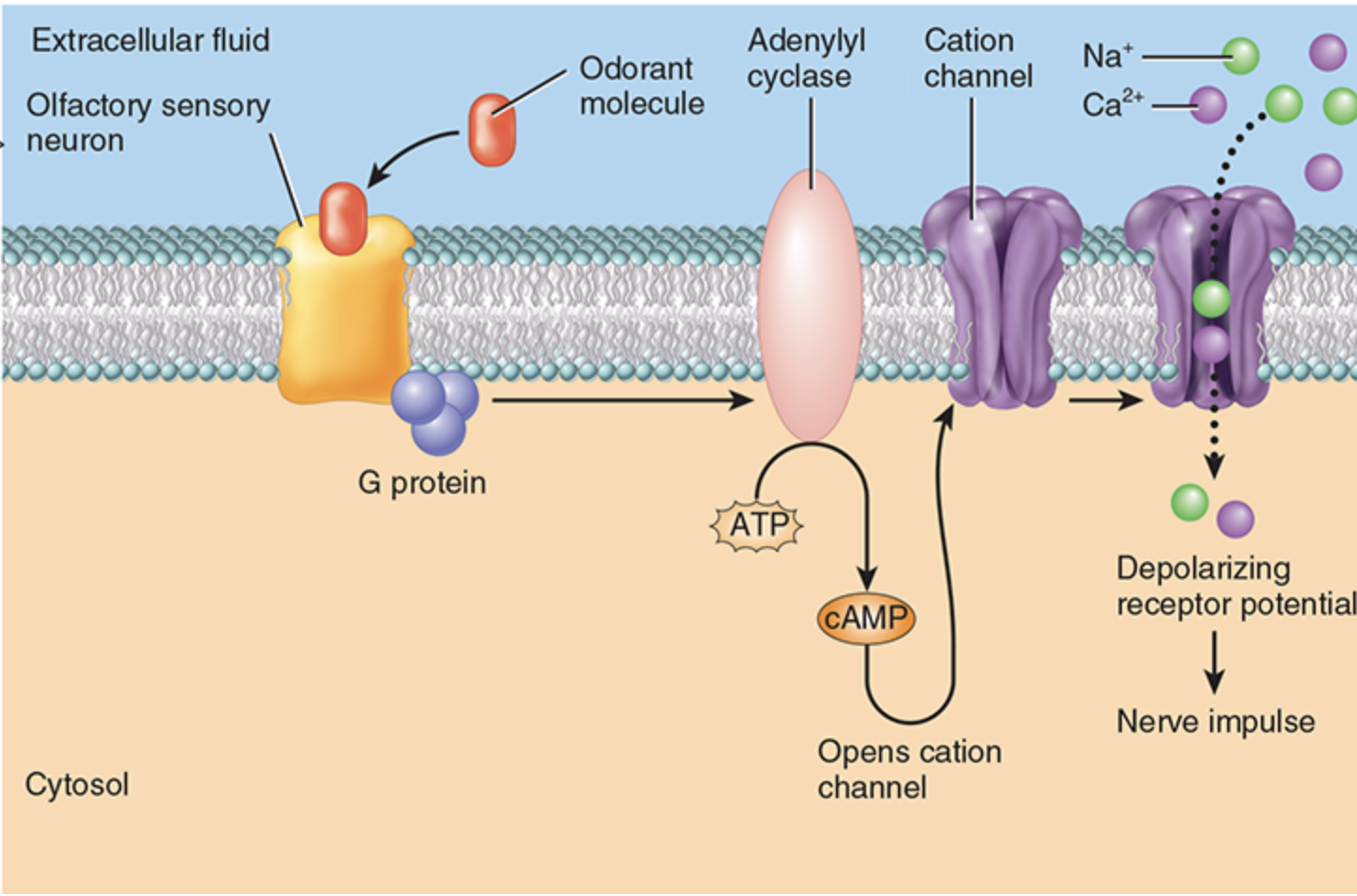
Binding of an odorant to an olfactory receptor protein in a olfactory cillium stimulates a membrane protein called a G protein
G protein activates an enzyme that produces cAMP, a type of second meassenger molecule
cAMP opens cation channels that allows Na+ and Ca+ to enter cystol
Depolarizing potential forms in the membrane of the receptor cell, and action potential generates along its axon
After the odor impulse is generated…
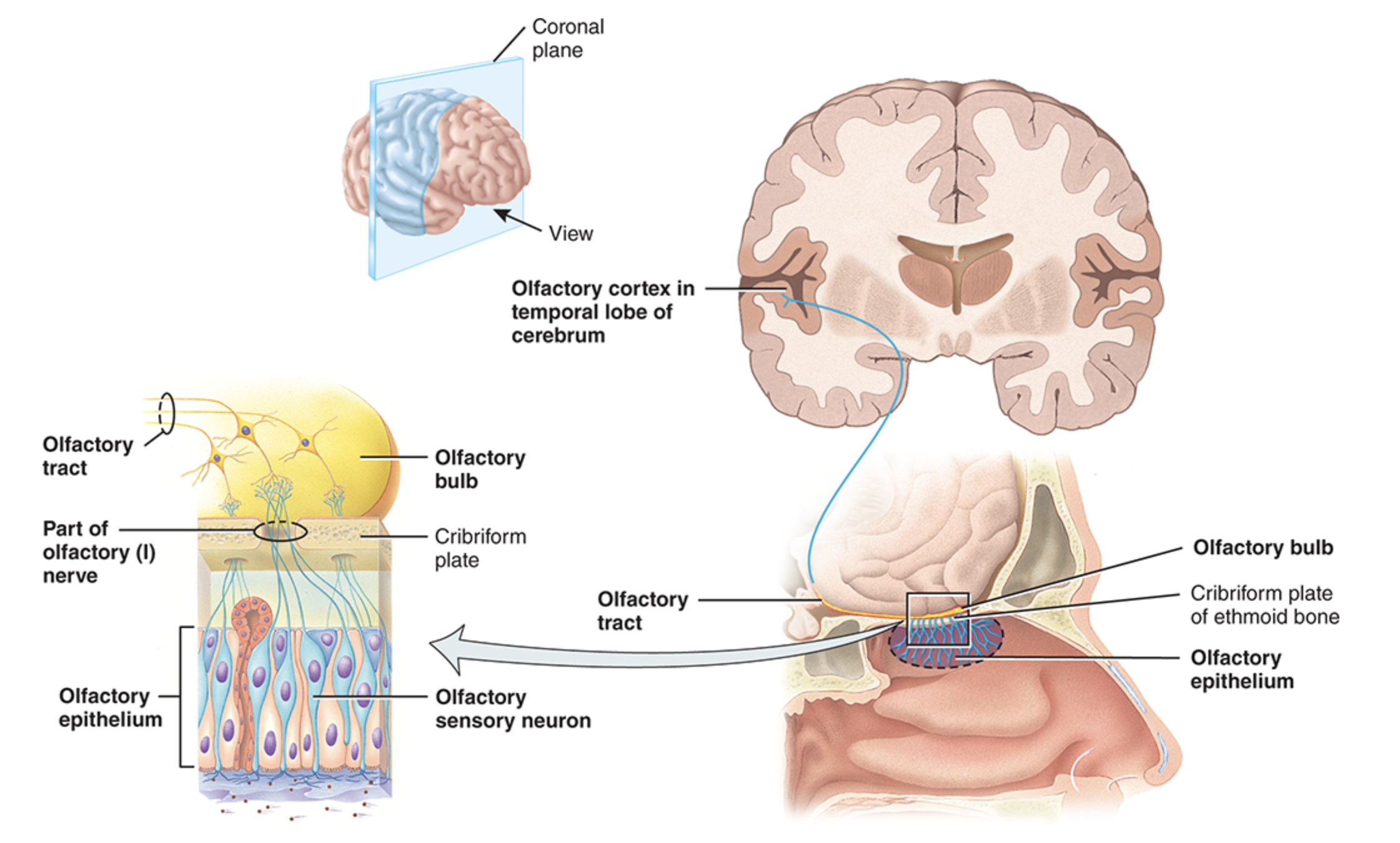
Bundles of axon form the right and left olfactory nerves
Olfactory nerves pass through the olfactory foramina of the ethmoid bone and extends to the olfactory bulbs. These bulbs contain ball like arrangements called glomeruli
Within each glomeruli axons of the OR cells converge to mitral cells, second order neurons of the olfactory pathway
Axons of the mitral cells form the olfactory tract
Some axons project to the temporal lobe, where concious awareness of smell occurs
Some axons project to the limbic system to emotional response to odors
From temporal lobe primary olfactory area, pathway exists to orbifrontal cortex where odor identification occurs