BIOL 310 - Ch 21 Lecture Notes
what is epigenetics?
study of the mechanisms that produce non-heritable and heritable changes in transcriptional regulation without changes in DNA sequences
changing chemistry of the DNA molecule by adding methyl group without changing the bases (sequence stays the same)
the mechanism of epigenetics
DNA methylation
CpG islands — ~1% of human genome; 70-80% methylated
Histone modifications
the histone code — methylation & acetylation
DNA methylation is “normal”
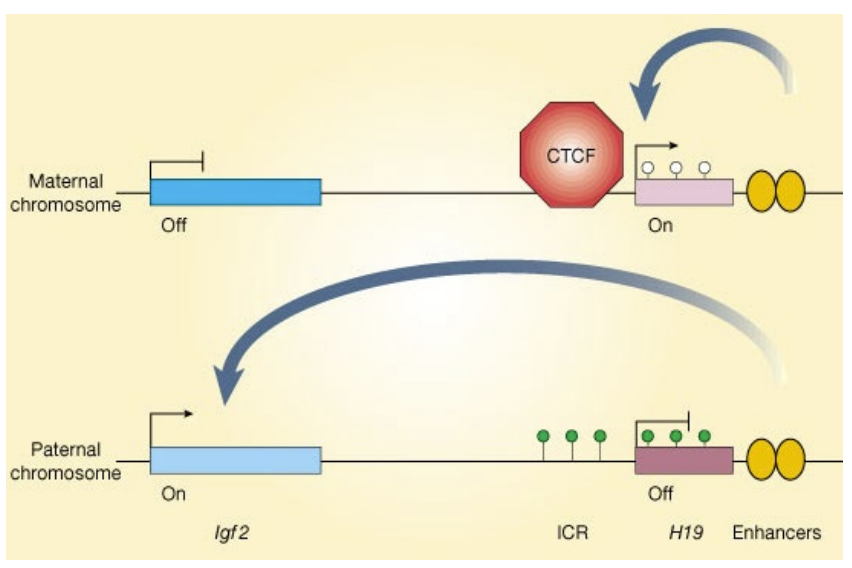
epigenetic imprinting
imprinting control regions (ICR)
maternal allele for IGF2 is turned off and the paternal allele is turned on; size of the offspring is regulated by IGF2
cytosine methylation
methyl groups present for proteins to bind
steric hindrance — two things cannot exist in the same time in space
DNA/protein interactions
if the methyl groups are there and bound by methyl-CpG binding proteins transcription is downregulated
CpG-Met and gene expression
over-methylation / Beckwith-Wiedemann syndrome
deregulation of maternal imprinting at 11p15.5
over-expression of IGF2
individuals will have low blood sugar in babies, large body, large tongue, propensity for some cancer
under-methylation
fetal alcohol syndrome (paternally inherited)
“General rule”
increase in methylation = decrease in gene expression (vise versa)
methylation blocks transcription factors
methylome creation & maintenance
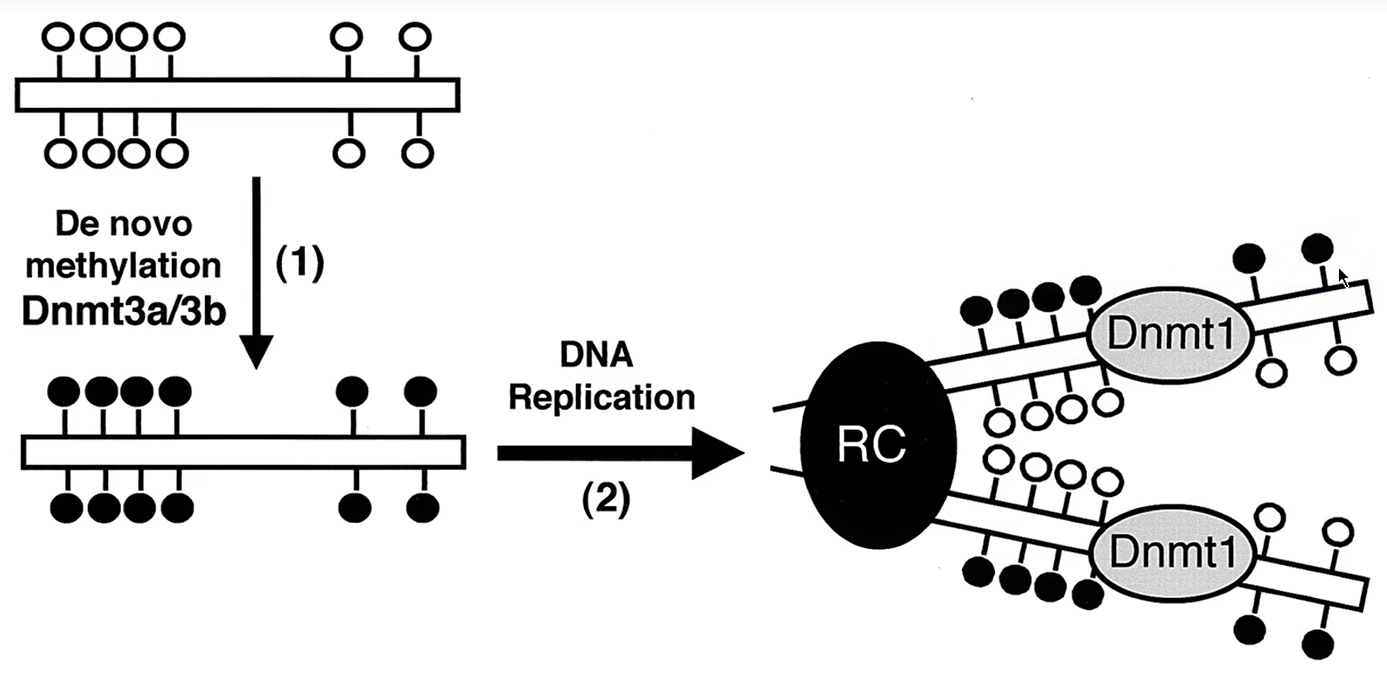
determining the methylome
bisulfide-treated DNA analysis
the histone code
histones in DNA packaging
nucleosomes
higher-order packaging
nucleosome
histone octamer
H2A, H2B, H3, and H4
H1-linker
N-terminus “tails” — certain tails have higher likelihood of modifications
147 bp
2.2 × 10⁷ per cell
histones and DNA availability
plastic tail = protein recruitment = change in DNA affinity
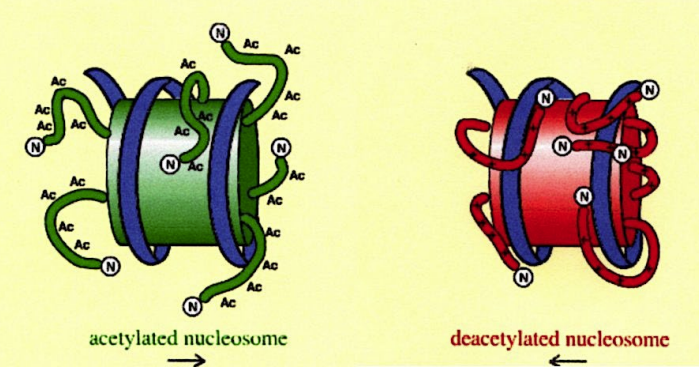
one pattern of gene expression will differ depending on where acetylation on the histone tail occur
differs in subset of modifications on specific tails of histones
histones mods and cancer
H4K16Ac + H4K20Me3
present in many primary tumors
regulate higher order chromatin structure — hypothesized that histones have methylation conserved across the replication fork
inheriting the histone code
histone modification with chip-seq