ADH Received Context Notes
A Doll’s House – Received Contexts
N.b. some of this taken from different online sources (e.g. Wikipedia) so watch out for potential errors!
1870s India:
 In 2012, BBC Radio 3 broadcast an adaptation by Tanika Gupta transposing the setting to India in 1879, where Nora (renamed 'Niru') is an Indian woman married to Torvald (renamed 'Tom'), an English man working for the British Colonial Administration in Calcutta. It was first performed on stage in 2019. As Gupta said, “The wider environment and the central relationship are thus bound up with colonial attitudes to race, sitting alongside and interwoven with patriarchy. This moves it beyond being simply an ‘all Asian’ Doll’s House, enabling an analysis of different forms of subjugation and servitude. Nora breaking free of her shackles is thus all the more poignant at the end of the play.”
1880s England:
“The first known English rewriting of A Doll’s House appeared five years before the unadapted Doll’s House made its debut at the Novelty Theatre. Henry Arthur Jones and Henry Herman adapted Nora’s story into an English domestic melodrama titled Breaking a Butterfly, which was produced at the Prince’s Theatre in March 1884. For the first two acts, the play follows the outline of Ibsen’s plot, with the naïve child-wife hiding her past accidental crime and the villainous creditor threatening her with exposure. The sudden break from the original comes late in the play, at the moment of discovery; whereas Ibsen’s Torvald Helmer, in discovering his wife’s unwitting forgery, denounces her as a criminal, Jones and Herman depict the husband protecting his wife by claiming guilt for her crime, thus preserving the wife’s domestic ideals intact and displaying the heroic manliness Torvald fails to achieve. Jones and Herman’s adaptation doubly domesticates Ibsen’s play, not only in the moral and familial sense, with strictly appropriate gender roles and a conventional happy ending, but also linguistically, giving English names to characters and places. Torvald Helmer becomes Humphery Goddard, Nora becomes Flora, and the blackmailer Nils Krogstad becomes Philip Dunkley, who is foiled in his villainous schemes by the eccentric but good-hearted Dan Birdseye. Jones later described this adaptation as an attempt to turn Ibsen’s drama into a “sympathetic play” along the lines of Tom Robertson, the father of cup-and-saucer comedy and an early pioneer of modern English playwriting.” (https://www.mdpi.com/2076-0787/8/2/82)
1910s Japan:
“In September 1911, Tsubouchi Shöyö's Literary Society staged the first Japanese production of Ibsen's A Doll House in its own small theater. It was such a success that it moved to the Imperial Theater that November for a week-long run. Although Tsubouchi' s translation of and lectures on A Doll House had appeared the preceding year, it was the actual performance that stirred up active media attention. Literary critics, scholars, journalists, and feminists wrote articles in several newspapers and journals to explain, analyze, admire, and critique the play. At the center of the discussion were the women of Seitõsha, the feminist literary organization founded the same month A Doll House premiered. Journalists were quick to label these independent, creative women "Japanese Noras" and "New Women" (atarashii onna) These terms were used both to dismiss these women as frivolous and immature and to warn of their dangerous and destructive nature. Several Seitõsha women decided to engage in the discussion and to provide their own serious examination of the play, its female protagonist, and Japan's existing gender roles. In the January 1912 issue of their magazine Seitõ (Bluestockings), they included a 110-page supplement devoted to A Doll House's Nora.” (https://www.jstor.org/stable/42771912)
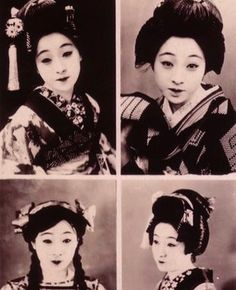 “In 1912, the first Japanese women's literary journal, Seitõ (Bluestocking), founded by Hiratsuka Raichö, devoted an entire issue to the discussion of Ibsen's play "A Doll's House" (Sievers 1983). Although Ibsen's protagonist Nora had been touted as a proto- feminist heroine in Western circles, prominent Japanese feminist readers reacted with disdain toward her momentous decision to walk out of her marriage with Torvald, slamming the door behind her. An advocate of "maternalist feminism"- the view that family and motherhood should be the platforms for Japanese feminist activism- Hiratsuka expressed her own views in an open letter to Nora: “Dear Nora, Japanese women cannot quite believe that a woman like you . . . not a young girl of fourteen or fifteen, but the mother of three children, exists. . . . The slamming of the door behind you was a powerful act. But once outside, you found yourself in total darkness, . . . your steps so uncertain that one wanted to follow after you” (https://www.jstor.org/stable/42772174)
1920s China:
 After the May Fourth Movement (1929) promoted a revolutionary Chinese nationalism, Marxism and Leninism swept through China leading to the founding of the Chinese Communist Party in 1921.
Chinese writer Lu Xun gave a speech entitled “What happens after Nora leaves home” at the Beijing Women's Normal College in 1923. Concerned with the blind following of Nora's rebellion, Lu Xun spoke to address its potential danger, stating that her follow-up options are either prostitution or a humiliating return because of her economic incapability. Also discusses the general political and economic oppression facing Chinese society. He believes economic independence is the foundation of a liberated mind, and could only be achieved through radical social revolution, which will free China from all forms of enslavement.
Extract: “What happens after Nora walks out? A few people have given their opinions on this. An English playwright wrote a version in which a modern woman leaves home, but as she has nowhere to go, she becomes degraded and enters a brothel. There’s also a Chinese man … who claims to have seen a version … in which Nora eventually returns home. … Logically, however, Nora really has only two options: to fall into degradation or to return home. A bird in a cage lacks any kind of freedom, no doubt, but should it leave its cage, dangers lurk outside: hawks, cats, and so on; and if it has been shut up for so long that its wings have atrophied or it has forgotten how to fly, then truly it has no way out. There is another possibility—that is, to starve to death—but since starving means departing from life, it’s no solution to the problem and so is not a way out either.”
1940s Nazi Germany:
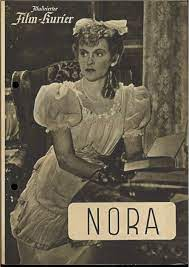
Harold Braun’s film adaptation entitled Nora retold the story to conform with Nazist ideology concerning the place of women in the home. The Nazis believed in a strongly traditionalist system of gender roles, with women being expected to look after the home and raise children, emblemised by the phrase ‘Kinder, Küche, Kirche’ (children, kitchen, church). Braun’s adaptation used Ibsen’s alternative ending where Nora collapses at the thought of leaving her children rather than slamming the door. (Further reading: https://sciencenorway.no/film-history-nazism/how-the-germans-used-ibsen-to-spread-nazi-ideology/1633794)
1940s Argentina:
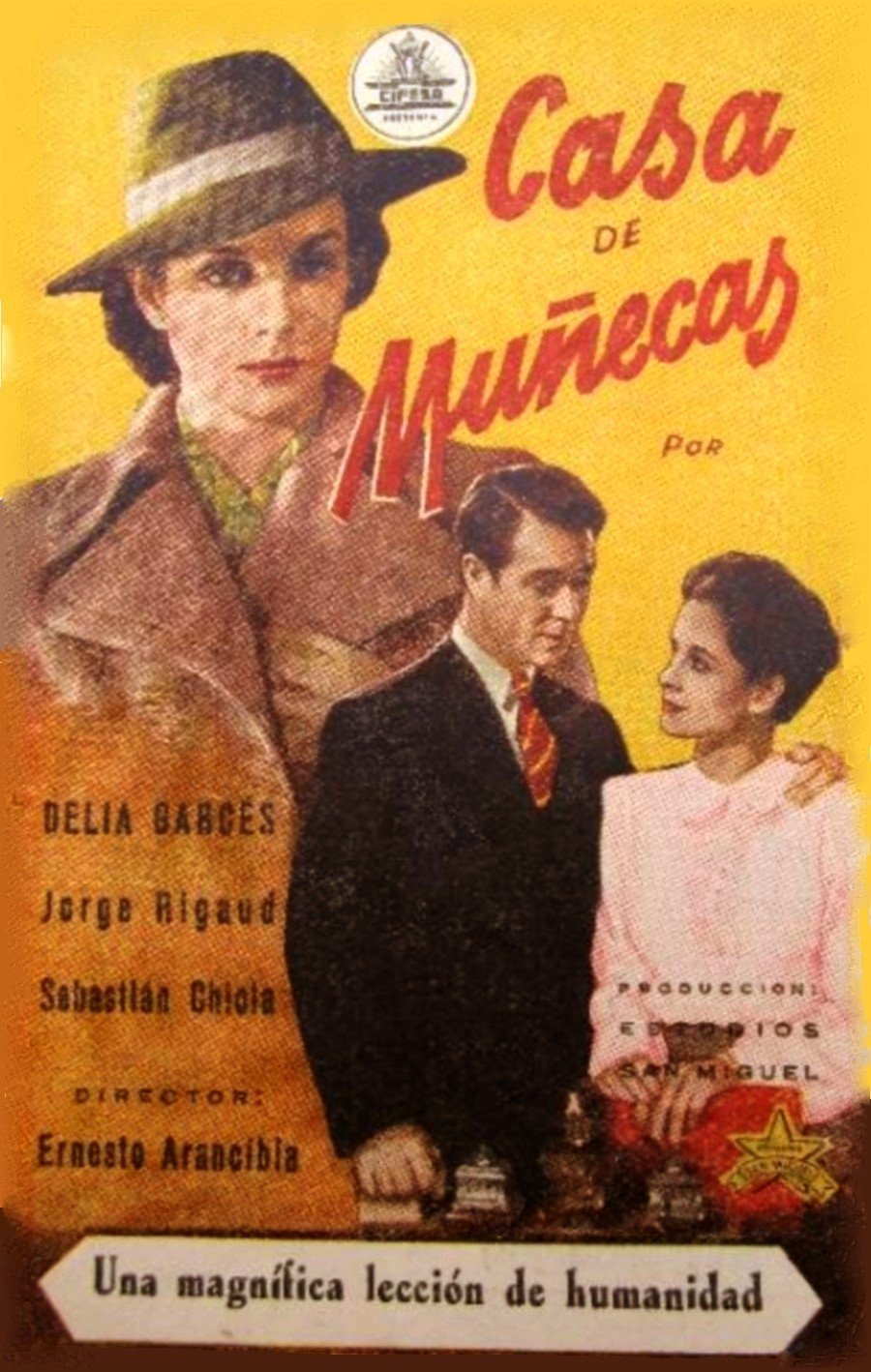
Partly due to its Catholic culture, Argentina has historically been strictly conservative in its attitudes towards women, with divorce only legalised in 1987 and adultery decriminalised in 1995. The 1943 Argentine film Casa de muñecas starring Delia Garcés modernised the story but also used the alternative ending (where Nora doesn’t leave).
1950s Mexico:
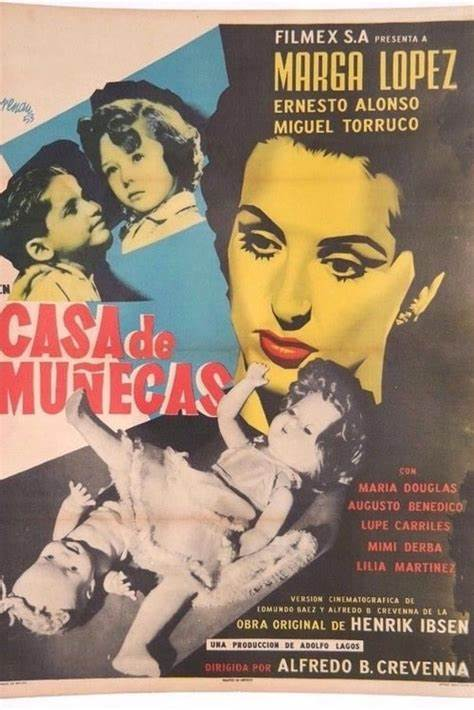 The 1954 Mexican film Casa de muñecas, directed by Alfredo B. Crevenna and starring Marga López, Ernesto Alonso and Miguel Torruco, sets the story in modern-day Mexico, adds a flashback framing device, turns Dr. Rank (renamed Dr. Eduardo Anguiano and played by Alonso, who gets second billing) into Nora's doomed suitor and saviour, changes Nora's motivation for leaving her house, and adds a happy ending the following Christmas Eve when Nora returns. (This was released the year after women were given the vote in 1953.)
1990s Iran:
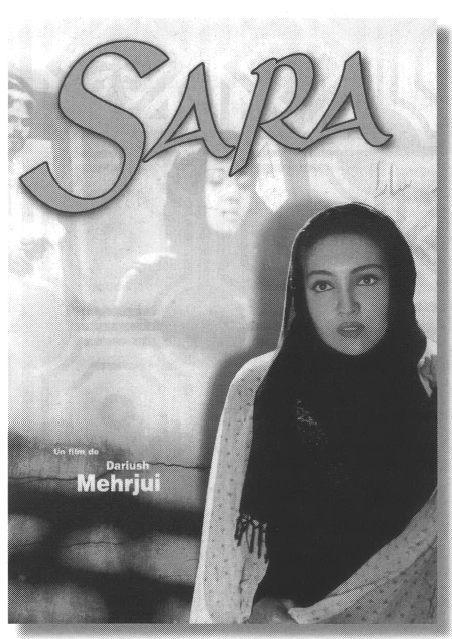
Dariush Mehrjui's 1992 film Sara is based on A Doll's House, with the plot transferred to Iran (a theocratic and harsh regime post-Islamic Revolution). Sara, played by Niki Karimi, is the Nora of Ibsen's play. The “story follows Ibsen closely, but the somewhat dated chestnut gains new interest from being set in a country that sanctions separate social rules for its female population. In their dark clothes and head coverings, worn at all times, the women in “Sara” seem totally out of synch with the modern city they are a part of.” (Deborah Young, Variety)
2000s Nigeria:
Tracie Utoh-Ezeajugh rewrote A Doll’s House for a Nigerian context, entitled Nneora: An African Doll’s House.
“Besides an expansion of Ibsen’s text, to give her version the necessary Nigerian context, Utoh-Ezeajugh’s eponymous heroine Nneora is also greatly transformed compared to Ibsen’s Nora. This transformation, beginning with her name, Nneora, which translates as ‘mother of all’, to her characterisation as a strong industrious woman not at all as helpless and naïve as Nora may be read, I argue is as a result of African conceptions of feminism and womanhood. African feminism, like all other contemporary theoretical conceptions on the continent, is conditioned by the social and cultural matrix. What African women see as priorities in their fight for equal rights are not always the same as what Euro-American feminists would consider as priorities. For example, Mikell (1989) notes that the reference points for Western feminists and African women activists have been totally different, because Western women were emphasising individual female autonomy, while African women have been emphasizing culturally linked forms of public participation. Utoh-Ezeajugh thus brings her uniquely African perspectives of feminism to Ibsen’s play. While the initial reception of Ibsen’s play was met by a controversy as to whether his play was really about ‘the woman question’, there is no doubt whatsoever about Utoh-Ezeajugh’s text. It is in every way about ‘the woman question’, exploring as it does, the relationship between men and women in a marriage context and how women, despite their contributions, may often be regarded as subservient to men. Utoh-Ezeajugh’s handling of Nneora and her friend Linda shows the strength and fortitude of African women in the face of the most dehumanising treatment. UtohEzeajugh also demonstrates how African women take pride in their role as mothers without sacrificing their autonomy and agency. To be a woman is to be a mother. In the African context this is not necessarily a limitation. Nneora is proudly ‘mother of all’.
…
The most significant departure from Ibsen’s text is how Utoh-Ezeajugh ends the play. Nneora does not disown her duty to her children, but decides to take them with her. She says to her husband when he questions her about her duty to him and their children: “Keep my children out of this Ikenna! They shall be well taken care of. As for my duty to you, I have another duty just as sacred…My duty to myself” (120, emphasis added). Utoh-Ezeajugh thus separates Nneora’s roles as a mother and a wife.” (https://journals.library.ualberta.ca/crcl/index.php/crcl/article/view/24541/18168)