Biology 9th Grade - Comprehensive Study Notes
Biology 9th Grade Notes
Scientific Method
Steps:
Identify the problem.
Make a hypothesis.
Create an experiment.
Perform the experiment.
Analyze data.
Publish lab results.
Variables in Experiments
Independent variable: What you change in the experiment to test the subject.
Dependent variable: The change caused by the independent variable.
Control: Serves as a standard or comparison.
Scientific Theories and Laws
Scientific theory: A system of ideas supported by evidence that explains many observations.
Scientific laws: Truths that are found across the universe.
Opinion: A biased point of view.
Measurement Tools
Microscopes: Enlarge images of small objects.
Thermometers: Measure temperatures.
Balances: Measure mass.
Meter (m): Measures length.
Gram (g): Measures mass.
Fahrenheit/Celsius: Measures temperature.
Liter (l): Measures volume.
Properties of Life
Metabolism: Sum of all chemical reactions.
Homeostasis: Maintaining stable internal conditions.
Reproduction: The sexual activity of conceiving and bearing offspring.
Heredity: Genetically transmitted from parent to offspring.
Evolution: Change over time.
Magnification
Total magnification = ocular lens × objective lens
Trophic Levels
Autotrophs: Organisms that make their own food.
Heterotrophs: Organisms that cannot make their own food.
Consumers: Organisms that obtain energy and nutrients by feeding on other organisms or their remains.
Primary consumers: Eat producers.
Secondary consumers: Eat primary consumers.
Decomposers: Organisms that break down wastes and dead organisms, returning raw materials to the environment.
Producers: Organisms that make their own food
Predators: Animals that prey on others.
Prey: Animals hunted or caught for food.
Food Chains and Food Webs
Food chain: A series of steps in which organisms transfer energy by eating and being eaten.
Food web: A community of organisms where there are several interrelated food chains.
Trophic level: Each step in a food chain or food web.
Populations, Communities, and Ecosystems
Population: A group of organisms of the same species populating a given area.
Community: A group of interdependent organisms inhabiting the same region and interacting with each other.
Ecosystem: All the living (biotic) and nonliving (abiotic) things in an environment, including their interactions with each other.
Habitats and Niches
Habitat: Place where an organism lives.
Niche: Physical use of habitat and function within the ecological community.
Biotic and Abiotic Factors
Biotic: Living things.
Abiotic: Non-living things.
Limiting Factors and Ecological Succession
Limiting factors: Conditions in the environment that limit where an organism can live.
Ecological succession: Gradual change in living communities that follows a disturbance.
Biodiversity
The variety of species living within an ecosystem.
Atoms and Chemical Bonds
Atom: Basic unit of matter.
Proton: Positively charged particle.
Neutron: Elementary particle with 0 charge and mass about equal to a proton.
Electron: Elementary particle with negative charge.
Atomic number: Number of protons.
Atomic mass: Protons + Neutrons
Ionic bond: Formed when one or more electrons are transferred from one atom to another.
Covalent bond: A shared pair of electrons; involves sharing a pair of electrons between atoms in a molecule.
Compounds and Mixtures
Organic compound: Contains carbon.
Mixture: Two or more substances mixed together in various portions.
Homogeneous mixture: Substances are evenly distributed throughout the mixture.
Heterogeneous mixture: Can see different parts of the mixture (e.g., salt and pepper).
Solutions and pH Scale
Solutes: Mixtures when both substances are evenly mixed.
Solvents: Dissolves the solute.
Solute: Dissolves in the solvent.
pH scale: A range of numbers used to describe how acidic or basic a solution is; ranges from 0 (most acidic) to 14 (most basic). 7 is neutral.
Chemical Reactions
Reactant: A chemical substance present at the start of a chemical reaction.
Product: A chemical substance formed as a result of a chemical reaction.
Enzymes: Protein substances that speed up chemical reactions.
Factors Affecting Reactions
What affects pH? Temperature.
Exothermic: Gives off heat.
Endothermic: Takes in heat.
Cell Biology
Cell: The basic structural and functional unit of all organisms.
Prokaryotic: Having cells that lack membrane-bound nuclei.
Eukaryotic: Having cells with membrane-bound nuclei.
Cell Structures
Plant cell has a cell wall, chloroplast, and central vacuole (which animal cells do not).
Animal cell has vesicles and mitochondria (which plant cells contain them as well).
Cell membrane: A thin membrane around the cytoplasm of a cell.
Cytoplasm: A jellylike fluid inside the cell in which the organelles are suspended.
Ribosomes: Make proteins.
Nucleus: A part of the cell containing DNA and RNA and responsible for growth and reproduction.
Vesicle: A membrane-bound sac that contains materials involved in transport of the cell.
Rough ER: Portion of the endoplasmic reticulum studded with ribosomes.
Smooth ER: Portion of the endoplasmic reticulum that is free of ribosomes (lipid synthesis occurs here).
Vacuole: A tiny cavity filled with fluid in the cytoplasm of a cell (plant cell).
Chloroplast: An organelle found in plant and algae cells where photosynthesis occurs.
Mitochondria: Powerhouse of the cell; organelle that is the site of ATP (energy) production.
Flagella: Tails that transport cells through the surrounding environment.
Tissues and Organs
Tissue: A group of cells with similar functions.
Organs: Structures that carry out specialized jobs within an organ system.
Membrane Structure and Permeability
Lipid bilayer: Structure of membrane; two sheets of lipid molecules with tails pointed inward, proteins embedded in bilayer (serve as channels) along with carbohydrate molecules (identification markers).
Selective permeability: A process in which a membrane allows some molecules to pass through while keeping others out.
Solutions and Transport
Hypotonic: When comparing two solutions, the solution with the lesser concentration of solutes.
Hypertonic: When comparing two solutions, the solution with the greater concentration of solutes.
Isotonic: Having the same or equal osmotic pressure.
Diffusion: Process by which molecules tend to move from an area where they are more concentrated to an area where they are less concentrated.
Osmosis: The diffusion of water molecules through a selectively permeable membrane from an area of lower solute concentration to an area of higher solute concentration.
Active transport: The movement of materials through a cell membrane using energy.
Cellular Respiration and Energy
Cellular respiration: Process that releases energy by breaking down glucose and other food molecules in the presence of oxygen.
ATP (adenosine triphosphate): Main energy source that cells use for most of their work.
ADP (adenosine diphosphate): Molecule that ATP becomes when it gives up one of its three phosphate groups.
Krebs Cycle: A series of chemical reactions used by all aerobic organisms to generate energy through the oxidation of acetyl-CoA derived from carbohydrates, fats, and proteins, producing ATP, NADH, and FADH2.
Biotechnology
Biotechnology: The use of living systems and organisms to develop or make products.
Applications include:
Medicine: Development of new drugs and therapies.
Agriculture: Creation of genetically modified crops.
Environmental science: Cleaning up pollution.
Genetic engineering: Modification of an organism's genes.
Techniques:
Gene cloning: Creating multiple copies of a gene.
Recombinant DNA technology: Combining DNA from different sources.
Genome editing: Precisely altering DNA sequences within a cell or organism.
CRISPR-Cas9: A revolutionary genome editing technology.
Applications of Biotechnology
Pharmaceutical Biotechnology:
Drug Discovery and Development: Discovering new drug candidates using techniques like high-throughput screening and combinatorial chemistry.
Biopharmaceuticals: Production of therapeutic proteins, antibodies, and vaccines using genetically engineered cells or organisms.
Personalized Medicine: Tailoring medical treatments to individual patients based on their genetic makeup and other factors.
Agricultural Biotechnology:
Genetically Modified (GM) Crops: Developing crops with desirable traits such as pest resistance, herbicide tolerance, and enhanced nutritional content.
Marker-Assisted Selection (MAS): Using DNA markers to identify and select plants or animals with specific traits, accelerating the breeding process.
Biopesticides: Developing biological agents such as bacteria, fungi, and viruses to control pests and reduce the use of chemical pesticides.
Industrial Biotechnology:
Biomanufacturing: Using genetically engineered microorganisms or enzymes to produce chemicals, materials, and biofuels.
Enzyme Engineering: Modifying enzymes to improve their stability, activity, and specificity for industrial applications.
Bioremediation: Using microorganisms to remove or detoxify pollutants from soil, water, and air.
Environmental Biotechnology:
Bioremediation: Using microorganisms to clean up contaminated sites by degrading pollutants into less harmful substances.
Wastewater Treatment: Utilizing biological processes to remove organic matter, nutrients, and pathogens from wastewater.
Bioenergy: Producing biofuels such as ethanol and biodiesel from renewable biomass sources.
Diagnostic Biotechnology:
Molecular Diagnostics: Developing diagnostic tests based on DNA, RNA, and proteins to detect diseases, infections, and genetic disorders.
Immunoassays: Using antibodies to detect and quantify specific molecules in biological samples for diagnostic purposes.
Point-of-Care Diagnostics: Developing rapid and portable diagnostic devices for use at the patient's bedside or in remote locations.
Ethical Considerations in Biotechnology
Genetic Engineering of Humans:
Germline Editing: Concerns about the potential for unintended consequences and off-target effects of editing genes in human embryos.
Designer Babies: Ethical debates surrounding the use of genetic engineering to enhance human traits and create "designer babies."
Informed Consent: Ensuring that individuals undergoing genetic testing or gene therapy fully understand the risks and benefits.
Genetically Modified Organisms (GMOs):
Environmental Impact: Concerns about the potential effects of GMOs on biodiversity, ecosystems, and non-target organisms.
Food Safety: Debates over the safety of consuming foods derived from GM crops, including potential allergenic and toxic effects.
Labeling: Controversy surrounding the mandatory labeling of GMO foods to allow consumers to make informed choices.
Data Privacy and Security:
Genetic Information: Protecting the privacy and confidentiality of individuals' genetic information obtained through genetic testing and research.
Data Sharing: Balancing the need for data sharing to advance scientific knowledge with the protection of individuals' privacy rights.
Cybersecurity: Safeguarding against unauthorized
Replace my note with thisAdd to the bottom of my noteTry againCancel
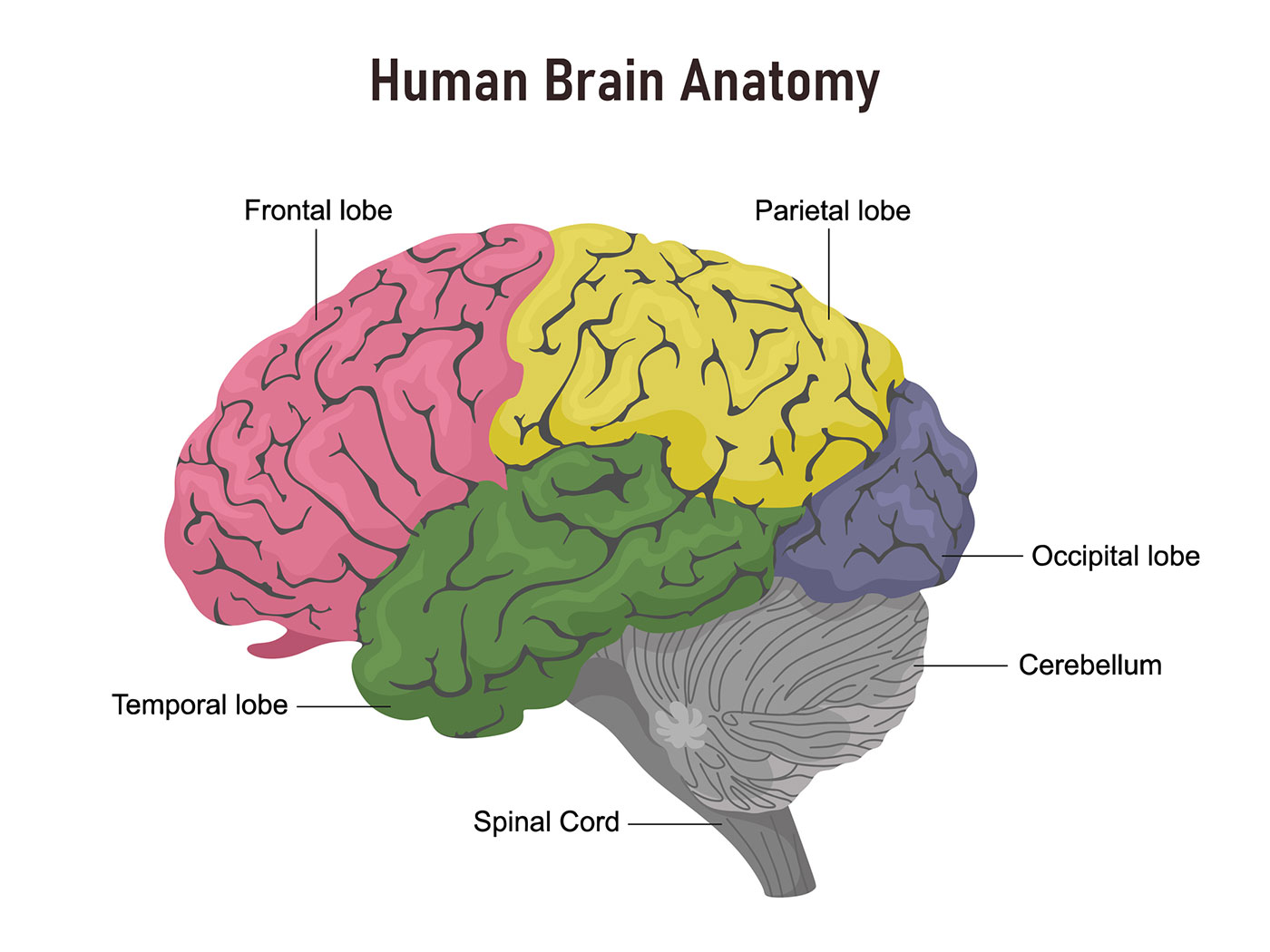
Frontal Lobe: Region of the brain responsible for higher cognitive functions such as reasoning, planning, problem-solving, and emotional regulation.
Parietal Lobe: Region of the brain involved in processing sensory information such as touch, temperature, and pain, as well as spatial orientation.
Occipital Lobe: Region of the brain primarily responsible for visual processing and interpretation, allowing us to understand and respond to what we see.
Temporal Lobe: Region of the brain essential for auditory processing, memory, and language comprehension, as well as emotional responses.
Cerebellum: Region of the brain that plays a key role in coordinating voluntary movements, balance, and motor learning, helping to fine-tune our physical activities.
Spinal Cord: The major pathway for transmitting information between the brain and the rest of the body, facilitating reflex actions and voluntary movements by relaying sensory data and motor commands.