Chapter 3 Notes: The Role of Culture
Culture Defined
Culture: An integrated system of learned behavior patterns that distinguish members of a society.
Reflects how people behave in different places and organizations. Understanding culture is important for market profitability.
For example, Dubai is multicultural and diverse, meaning there are many sub-cultures to target within one market. Utilizing the understanding of cultures and sub-cultures helps succeed in a given market by constructing an effective marketing strategy.
For instance, the China market often builds upon what the US does first, focusing on improvement, profitability, and efficiency rather than egotism.
Encompasses a wide variety of elements, from material to spiritual.
Culture is conservative, resists change, and fosters continuity.
Acculturation
Acculturation: Adopting or adjusting to some elements of a culture other than one's own.
In a personal sense, it is learning a behavior; for example, saying
For example, saying “As-salamu alaykum” in cultures where it is a common greeting.
Business-wise: Decision-making varies between cultures (e.g., Japan vs. US). It is important that businesses should not consider international markets without having a solidified acculturation.
High-context vs. Low-context Cultures
High-context culture: Context is as important as what is said; relies on a common understanding of context; more formalities than realities.
Example: Japan, China, or Arab cultures where communication is often indirect and requires significant understanding of the shared context and nonverbal cues.
Pros:
Fosters strong, long-term relationships.
Promotes group harmony and cohesiveness.
Less need for explicit verbal explanation, leading to perceived efficiency among insiders.
Cons:
Communication can be ambiguous and difficult for outsiders to understand.
Slower decision-making due to emphasis on consensus and indirectness.
Potential for misunderstandings with low-context cultures.
Low-context culture: Information is explicit in words; more straightforward and explicit in dealing with others.
Example: Germany, Switzerland, or the United States where communication is direct, explicit, and information is conveyed primarily through words.
Pros:
Clear, direct, and explicit communication.
Faster decision-making processes.
Easier for new members to understand rules and expectations.
Cons:
Can be perceived as overly blunt or aggressive by high-context cultures.
May overlook subtle nonverbal cues important in some interactions.
Less emphasis on implicit relationship building, potentially leading to shallower connections.
Roles of an International Manager
Identify cross-cultural and intracultural differences.
Isolate potential opportunities and problems.
The international business entity acts as a change agent by introducing new products, ideas, and practices, thus leading to social and cultural change.
It is generally best for an international manager to analyze cultural dynamics rather than actively seeking to be a change agent, focusing on adaptation over transformation.
Change Agents and Social Change in Marketing
Change agents lead to changes in:
Manner of consumption: Marketers should adopt existing manners of consumption rather than attempting to change them. For instance, while phone usage in classrooms might be common in some Western countries, it is often considered disrespectful in many Eastern cultures. A business should adapt to these local behavioral norms rather than forcing a change. For a business, this means tailoring advertisements to align with how people already consume media or interact with products in their daily lives, rather than trying to introduce entirely new consumption rituals.
Type of products consumed: The purchasing power for certain product types is primarily linked to social class rather than culture itself. While culture might influence the attitude towards consuming a product, the accessibility and demand for a full range of products (like luxury cars in the UAE versus a country with lower average income) is tied to economic capacity. The challenge for marketers is recognizing that cultural attitudes dictate how these products are perceived and valued within a market, even when purchasing power exists.
Social organization: This refers to how a society structures its groups, relationships, and institutions, which significantly impacts consumption patterns and marketing strategies. For example, coffee culture in China is often evolving from traditional tea houses, where coffee might be a status symbol or a Western experience, leading to sophisticated cafes with unique ambiances for socializing. In contrast, Australia has a deeply ingrained coffee culture focused on high-quality, specialty coffee for daily consumption and quick social interactions. Marketers must understand these underlying social structures to effectively position their products and services.
Cultural Imperialism
International marketers may be accused of cultural imperialism.
This often occurs when businesses from dominant 'empire' markets introduce products or practices to less dominant markets without sufficient cultural adaptation, causing local cultural forms to be challenged or replaced.
Cultural imperialism: Changes are dramatic, or culture-specific adaptations are not made in the marketing approach.
Example: A Western clothing brand promoting short skirts or revealing attire in advertisements in a conservative market where such dress is deemed inappropriate can be seen as cultural imperialism, failing to adapt to local dress codes and potentially imposing foreign norms.
Global marketers and media have helped national and regional artists break into worldwide markets.
How can a Dubai chocolate lead to cultural imperialism in another market?
For Dubai chocolate to contribute to cultural imperialism, its marketing and consumption would need to dramatically overshadow or alter existing local traditions around sweets, gifts, or snack consumption in the target market. For example, if Dubai chocolate is aggressively marketed as a superior, aspirational product linked to a 'Dubai lifestyle' that implicitly devalues local confectionery or gifting customs, it could lead to consumers abandoning cherished local brands or practices in favor of the externally imposed product, thus eroding indigenous culinary or social traditions.
Elements of Culture
Cultural Universals
Cultural universals: Manifestations of the total way of life of a group.
Included elements:
Body adornments
Courtship
Respect
Etiquettes
Additional Elements of Culture
Family gestures
Joking
Mealtimes
Music
Personal names
Status differentiation
Trade
Language and Communication (Exhibit 3.1)
Language is the mirror of a culture and is multidimensional by nature.
Includes both verbal and nonverbal communication.
Language mastery requires more than technical competence.
Note: Some countries prefer using their own language; others do not.
Back-translation
Translating a foreign-language version back to the original language by a different person from the one who did the first translation.
Used by many global companies to ensure that the marketing message conveys the intended meaning in other countries.
Nonverbal Language
Managers must analyze and become fluent in a diversity of culturally derived behavioral displays.
Five key topics to understand:
Time: Cultural perceptions of time vary significantly. Some cultures operate on a long-term orientation, emphasizing patience and future rewards, while others are more short-term focused, valuing immediate results. Punctuality is another key aspect; some cultures have a deep respect for time and strict adherence to schedules, viewing tardiness negatively, whereas others have a more flexible approach, where being late is more common and less culturally offensive.
Space: Personal space is a culturally defined concept. Some people value a large personal bubble, feeling uncomfortable with close physical proximity, while others are more touchy and accustomed to tighter personal spaces. Office styles also reflect this; some cultures prefer open-format offices to foster collaboration, while in others, private offices are essential for status and focus. Meeting locations can also depend on the desired formality; highly formal meetings might take place in dedicated boardrooms, while informal discussions occur in more relaxed settings.
Material possessions: Cultures hold different attitudes towards materialism and the display of wealth. Some are very critical of overt displays of material possessions, prioritizing modesty or communal values. This can influence office layouts, where CEOs might have extensive, opulent offices in some cultures to signify power, while in others, top managers might have more modest spaces to avoid appearing excessive.
Friendship patterns: The norms around friendship and social interactions vary widely. In some cultures, it is common for one person to pay for an entire group's meal as a gesture of hospitality or status. In contrast, other cultures prefer to split the bill, with individuals ordering and paying for their own checks, reflecting a more individualistic approach to social gatherings.
Business agreements: The approach to business agreements is deeply cultural. In some cultures, a verbal agreement or a handshake based on trust and long-standing relationships is considered highly binding, and a detailed written contract is secondary or even insulting. In contrast, other cultures prioritize detailed, legally binding written contracts and view verbal commitments as less formal. The negotiation style also differs, with some cultures preferring direct, explicit negotiations, while others use more indirect and nuanced approaches where explicit agreement might only come after significant relationship building. The time taken to finalize an agreement can also vary, with some cultures valuing a quick decision, and others expecting a lengthy process involving multiple meetings to build consensus and trust.
Religion and Culture
Religion defines life ideals, reflected in values and attitudes, and functions as the belief structure of a society.
International marketers must understand how religion is practiced and applied in a specific culture.
There are formal and informal belief levels:
Formal belief levels: Refers to the extent to which a religion's doctrines and principles are genuinely held and believed by individuals.
Informal practice levels: Refers to the extent to which religious beliefs are actively practiced and integrated into daily life and behavior.
Religion provides a basis for transcultural similarities under shared beliefs.
International marketers must analyze levels of formal and informal belief and intensity of religious practice.
Major Religions (Overview)
Christianity: Catholicism and Protestantism; stresses accumulation of wealth.
Islam: Pervasive in followers' life; supports entrepreneurship, discourages exploitation.
Hinduism: Family is central; extended family influences purchasing power and consumption.
Buddhism: Life viewed as suffering; emphasizes spiritual over worldly goods.
Confucianism: Code of conduct; stresses loyalty and relationships.
Values and Attitudes
Values: Shared beliefs or group norms internalized by individuals.
Attitudes: Evaluations of alternatives based on values.
Example: If a culture highly values environmental preservation (a value), individuals in that culture are likely to have positive attitudes toward eco-friendly products and sustainable business practices, and negative attitudes toward polluting industries.
Attitudes toward change:
Positive in industrialized countries.
Suspicion in tradition-bound societies.
Manners and Customs
Manner and customs describe how people behave, individually or collectively.
Understanding manners and customs is important in negotiations.
Cultural convergence: Globalization cannot be rejected; it represents transformation.
Modern marketing is not only about culture, but also about buying power. This means that while understanding a market's culture is crucial for effective marketing strategies, the economic capacity of consumers (their buying power) is equally important. Marketers must integrate cultural sensitivity with an analysis of economic realities to succeed, as even the most culturally appropriate product will not sell if consumers cannot afford it or are not willing to pay for it.
Potential Problem Areas for Marketers
Insufficient understanding of different ways of thinking.
Failure to save face in some cultures.
Inadequate knowledge and appreciation of the host country.
Misunderstanding decision-making processes and the role of personal relations and personalities.
Inadequate allocation of time for negotiations.
Material Culture and Infrastructures
Material culture results from technology.
Related to how a society organizes its economic activity.
Manifested in basic infrastructures:
Economic
Social
Financial
Marketing
How culture indicates levels of materialism:
Materialism is defined differently by individuals and is heavily influenced by the importance their culture places on material possessions. For instance, some individuals may purchase an expensive car but opt for a cheap watch, indicating a selective valuation of material goods. Different cultural groups view materials in distinct ways: some individuals may not care about material possessions, while others prioritize them. For marketers, the primary concern is understanding what motivates people to buy a product, rather than the source of their money. This involves identifying cultural perceptions of value, status, and utility that drive consumer behavior.
Aesthetics
Each culture defines good taste in arts, symbolism of colors, form, and music.
This includes how people entertain themselves, their food preferences, the importance of dress, and general artistic expressions like music and films.
For example, American music has been successful globally, influencing the sense of musical aesthetics, while groups like K-pop/Blackpink are further shaping new aesthetic senses.
Color symbolism varies significantly; for instance, red may be dangerous in some cultures but lucky in China, where white might signify death.
This cultural understanding is crucial in marketing, as color and aesthetic responses impact product perception and packaging decisions. For example, when sending packages to China, the color of the package should be culturally appropriate.
Color can be used for:
Brand identification
Feature reinforcement
Differentiation
Education
Formal and informal education shapes culture and its transmission. This includes how people perceive education, which is crucial for cultural analysis.
Educational levels can be assessed by literacy rates and enrollment in higher education.
Education influences common ideas within a culture, as people are often educated in specific ways that foster shared beliefs.
Different cultures hold varying perceptions regarding the value of educational modalities; for example, some cultures may deem AI and online learning less valuable than in-person education, while others embrace new educational trends.
Curriculum differences globally mean that the content taught varies significantly across cultures.
There are cultural variations in the appropriate age to begin formal education; some cultures view starting education younger (e.g., at age 3) as a marketing trap, while others do not.
Cultures also value specific types or trends of education differently.
Understanding the educational context of a culture can inform the best tool to use when marketing a product, as it is linked to how people learn and receive information.
Education impacts business functions and approaches to learning about new products and services.
Social Institutions
Social institutions affect how people relate to each other in groups. These groups, including social clubs and online communities, significantly influence the buying behavior of a population.
Understanding these diverse social groups is essential for marketers to effectively influence consumer choices.
Family relations and a strong obligation to the family are important considerations for marketers and managers.
Social Stratification and Reference Groups
Social stratification: Division into social classes.
Higher strata control most buying power and decision-making positions.
Reference groups (primary or secondary) influence values and attitudes that shape behavior.
Social organization determines managerial and subordinate roles and relationships.
Sources of Cultural Knowledge
Cultural: How knowledge is acquired.
Factual: Obtained through communication, research, and education.
Experiential: Gained by involvement in another culture.
Interpretive: Gained by understanding nuances of different cultural traits and patterns. For example, understanding how social clubs and online groups function as social institutions to influence buying behavior helps in interpreting population tendencies.
Cultural Analysis
Dimensions of Culture
Individualism–Collectivism
Power distance
Uncertainty avoidance
Gender-role orientation
Long-term versus short-term orientation
Self-Reference Criterion (SRC)
Unconscious reference to one’s own cultural values.
Recommendations to reduce SRC influence:
Define the problem in terms of domestic and foreign cultural traits, habits, or norms.
Isolating SRC and Redefining Problems
Isolate SRC influence in the problem to see how it complicates the situation.
Redefine the problem without SRC influence and solve for the optimal goal situation.
Ethnocentrism
Ethnocentrism: The belief that one’s own culture is superior to others.
Major threat for all companies planning international marketing.
Can be mitigated by acknowledging and properly adjusting to its potential effects in managerial decision making.
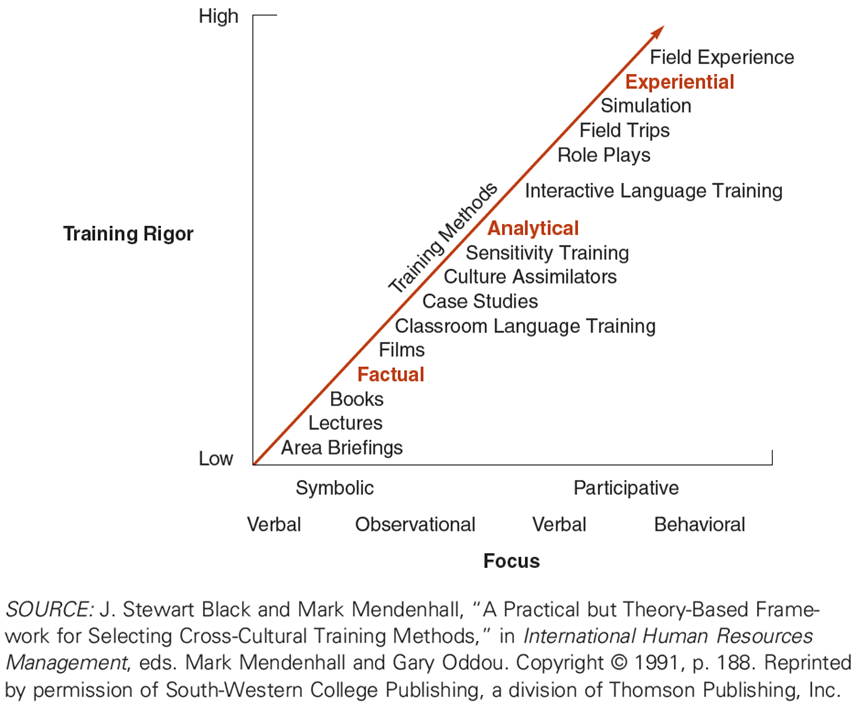
The Training Challenge
Objective: Foster culture sensitivity and acceptance of new ways of doing things.
Internal education programs should be included.
Training objectives include:
Preparedness
Sensitivity
Patience
Flexibility in managers and other personnel
Strategies for International Marketing Success
To achieve marketing success in diverse cultural environments, international managers should systematically apply a range of strategies:
Embrace Local Culture: Actively adopt and adjust to elements of the local culture (acculturation) rather than imposing foreign norms. This involves gaining a deep understanding of local values, attitudes, manners, and customs, and reflecting them in marketing communication and product offerings. This approach helps avoid accusations of cultural imperialism and fosters a positive reception in the market.
Build Relationships: Prioritize developing strong, long-term relationships, especially in high-context cultures where trust and rapport are crucial for business agreements and communication. Understanding local friendship patterns, nonverbal cues, and preferred negotiation styles is vital for establishing these connections.
Employ Locals to Gain Cultural Knowledge: Utilize the expertise of local personnel to acquire factual, experiential, and interpretive cultural knowledge. Local employees can provide invaluable insights into nuanced cultural traits, consumer behaviors, and market dynamics, significantly reducing the influence of the Self-Reference Criterion (SRC) in decision-making.
Help Employees Understand You (Cross-Cultural Training): Implement comprehensive cross-cultural training programs for all employees involved in international markets. The objective is to foster cultural sensitivity, preparedness, patience, and flexibility, ensuring that internal teams can effectively adapt and communicate with foreign partners and consumers. This also helps mitigate ethnocentrism within the organization.
Adapt Products and Processes to Local Markets: Tailor products, services, and marketing processes to align with local consumption patterns, aesthetic preferences, and material culture. This means, for instance, adapting to existing manners of consumption and local tastes rather than attempting to change them, and ensuring product design, packaging (e.g., color symbolism), and advertising messages are culturally appropriate (e.g., avoiding inappropriate dress codes).
Coordinate by Region: Develop marketing strategies that are regionally coordinated, acknowledging distinct cross-cultural and intracultural differences. This involves conducting thorough cultural analysis (e.g., using dimensions of culture) to segment markets effectively and customize approaches based on specific cultural nuances and buying power within each region.
Exhibit 3.8 – Cross-Cultural Training Methods