Electrical Motor Losses
Electrical motors experience various losses that affect their efficiency and performance. Here are the primary types of electrical motor losses:
1. Copper (I²R) Losses
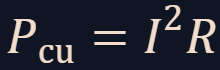
These losses occur in the stator and rotor windings due to the resistance of the conductors. Copper losses are proportional to the square of the current and can be calculated using the formula:
2. Iron (Core) Losses
Iron losses occur in the motor's magnetic core due to alternating magnetic fields. These losses consist of:
Hysteresis Loss: Due to the magnetization and demagnetization of the core material.
Eddy Current Loss: Caused by circulating currents induced within the core by the changing magnetic field.
3. Mechanical (Friction and Windage) Losses
These losses are due to friction in the motor's bearings and windage, which is the resistance caused by the movement of air around the rotating parts.
4. Stray Load Losses
Stray load losses are caused by leakage flux and other non-idealities in the motor's design. These losses can vary with the load.
5. Brush and Commutator Losses (in DC Motors)
In DC motors, additional losses occur due to the friction and electrical resistance in the brushes and commutator.
6. Magnetostriction Losses
These losses are caused by slight changes in the dimensions of the motor's core material due to the magnetic field, resulting in mechanical vibrations and heat.
Understanding these losses is crucial for optimizing motor performance and efficiency.