CS102: Positional Number Systems
Decimal (power base 10)
The weight of each digit is determined by its relative position.
ex. 1(1000’s) + 1(100’s) + 1(10’s) + 1(1’s) = 1111
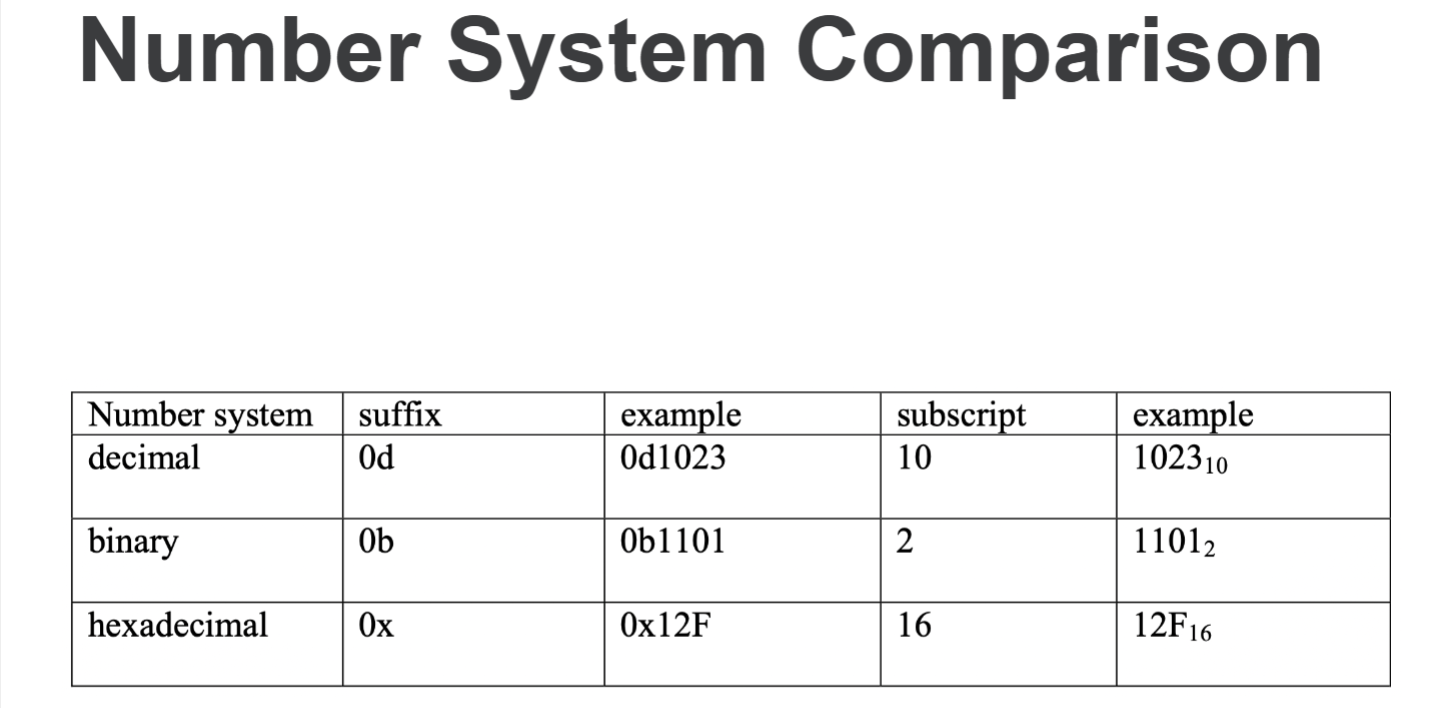
Binary (power base 2) (DISTINGUISHED BY 0b)
A binary digit (0 or 1), and the weight of each of its bits, depends on its relative position within the number.
Each place increase results in a growth by a magnitude of 2
ex. 1(2^7) + 1(2^6) + 1 (2^5) + 1(2^4) + 1 (2³) + 1 (2²) + 1 (2^1) + 1 (2^0) = 1111 1111
Distinguished by a “0b” before a binary series of digits
Binary uses 0 and 1 to represent “True” and “False” values
Groups of 8 bits are referred to as bytes
ex. 0b 1111 1111 is a byte reference
Hexadecimal (power base 16) (DISTINGUISHED BY 0x)
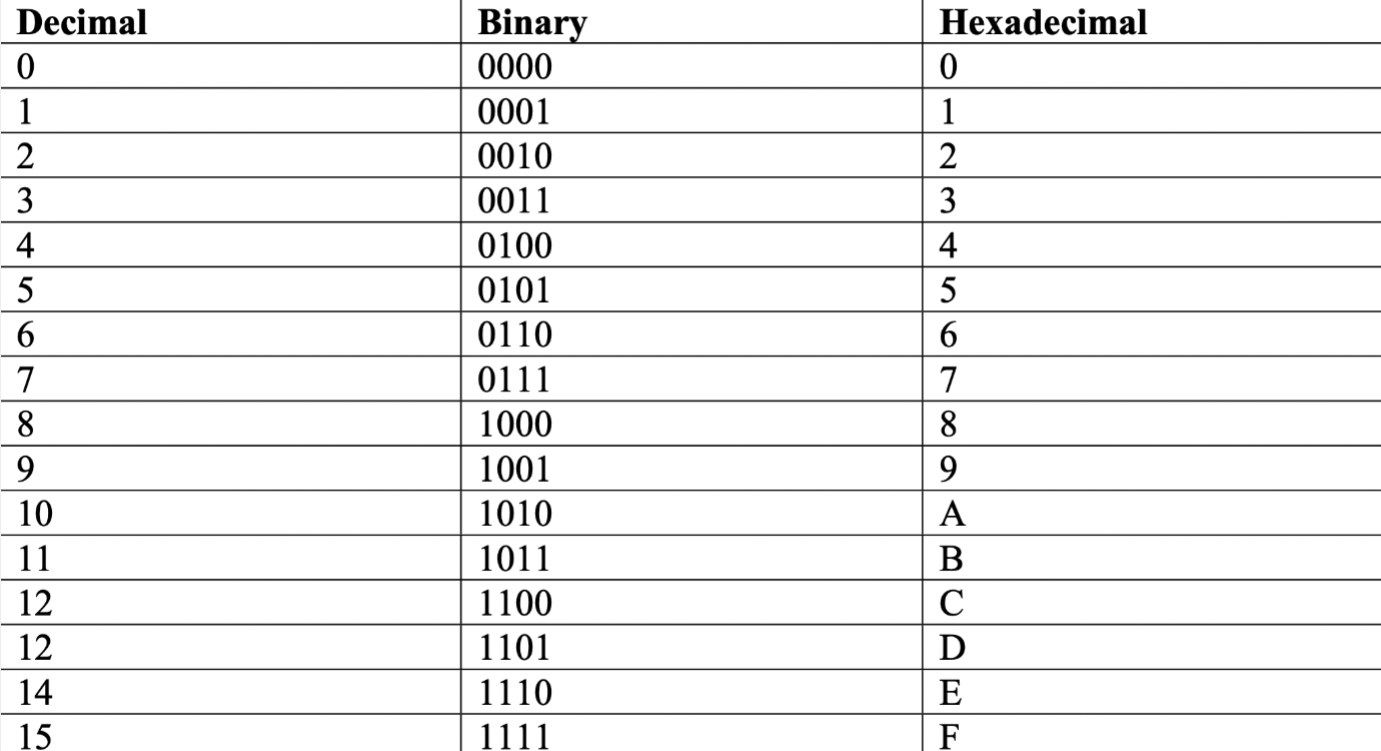
Since Hexadecimals have a base of 16, digits 1-9 are represented by 1-9, but digits 10-16 are represented by A-F.
A = 10, B = 11, C = 12, D = 13, E = 14, F = 15
ex. 6572 = 1(4096) + 9(256) + A(16) + C(1) = 19AC
Number System Comparison: