Alteration in digestion/bowel elemination
Learning Objectives
Explain the pathophysiology for digestion and bowel elimination.
Explore epidemiological and etiological risk factors that contribute to clients experiencing alterations in digestion and bowel elimination.
Describe the impact of alterations in digestion and bowel elimination on a client’s overall health.
Differentiate the clinical presentation of clients experiencing alterations in digestion and bowel elimination.
Explore the role of the nurse when caring for clients experiencing alterations in digestion and bowel elimination.
Apply the nursing process through use of the clinical judgment functions while providing care to clients experiencing alterations in digestion and bowel elimination.
Scope of Practice Note
For differences in the scope of practice between RNs and PNs, Engage Adult Medical Surgical includes callout boxes focused on PN practice considerations. In addition, PN scope of practice varies by state. For example, some states may allow the PN to contribute directly to a plan of care, while other states limit PN participation to assisting the RN to develop the plan of care. Similarly, most states require the PN to be under the supervision of an RN. As such, PN students should reframe certain discussions in this product to align with their state’s scope of practice. Ultimately, the PN is responsible for functioning within their scope by knowing and abiding by state guidelines for safe practice.
The digestive system is a general term that comprises the gastrointestinal (GI) tract and the essential organs that support digestion (liver, gallbladder, pancreas). Increasing one’s insight and appreciation of the intricate mechanisms involved with the ingestion, processing, absorption, and elimination of food within the human digestive system assists nurses in understanding the relationship between nutrition and health. The GI tract can be split into two main groups: the upper GI and the lower GI. The upper GI tract is comprised of the mouth (oral cavity, salivary glands), pharynx, esophagus, stomach, and the first portion of the small intestine called the duodenum . The lower GI tract begins at the middle portion of the small intestine, called the jejunum, and extends to include the large intestine, rectum, and anus. The liver, gallbladder, and pancreas are known as accessory organs. While working together, these accessory organs support other areas within the digestive system by the secretion and storage of enzymatic juices or the release of hormonal regulators during the digestive process.
Living cells make up the framework of an individual’s anatomical structures and require nutrients and hydration in order to sustain life. Food and liquids are initially ingested by way of the mouth and travel through a vast tubular network within the body. Once these food substances become smaller molecules, their nutrients can be easily absorbed by the cells to maintain and promote the body’s growth, development, and wellness.
In this module, the anatomy, physiology, and pathophysiology of the digestive system will be explored as well as the nurse's role in caring for clients who are experiencing disorders related to digestion and bowel elimination.
digestion
pharynx
duodenum Anatomy
The oral cavity incorporates the first component of the digestive system. It lies just below the nasal cavity, beginning at the lips and extending to the opening of the oropharynx. Among the other parts of the oral cavity are the hard palate, the gums (gingivae), teeth, soft palate, the floor of the mouth along with the mobile portion of the tongue, buccal mucosa, and the retromolar trigone. The salivary glands are also located in several locations within the mouth. The two parotid glands are the largest, and the submandibular and sublingual glands are those that are smaller in comparison.
oropharynx
hard palate
soft palate
buccal mucosa
retromolar trigone
As particles of food are taken in through the mouth, vigorous maneuvers of the lips, cheeks, and tongue along with the tearing, grinding, and shearing forces of the teeth with assistance from the jaw increase the production of saliva and assist in the initial breaking down of the carbohydrate portion of the meal. In fact, most solid food is broken down by the mechanical mechanisms employed within the oral cavity. Chewing, also called mastication, along with the lubrication of the saliva convert food particles into a food bolus so that they can be safely swallowed. The pH range of saliva is acidic and contains mostly water. However, tiny amounts of proteins, mucins, enzymes, and electrolytes are also mixed in. Interestingly, studies have found the flow of salivary fluids increases when firmer textured foods are introduced. For example, tough meat will produce a greater rate of saliva than tender meat does.
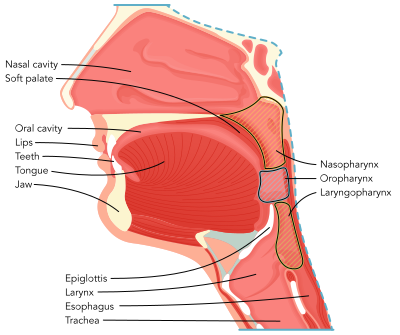
Anatomy of the oral cavity and esophagus showing the nasal cavity, soft palate, oral cavity, lips, teeth, tongue, jaw, epiglottis, larynx, esophagus, trachea, nasopharynx, oropharynx, and laryngopharynx
ORAL CAVITY AND ESOPHAGUS ANATOMY
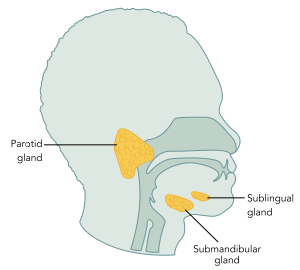
Salivary glands showing the parotid gland, sublingual gland and submandibular gland
THE SALIVARY GLANDS
Once the food bolus is deemed safe to swallow, it begins its descent from the oral cavity into the pharynx. The pharynx is a muscular structure where the tonsils, also called the palatine tonsils, are visibly suspended and are divided into three sections: the nasopharynx, oropharynx, and laryngopharynx. The epiglottis is a leaf-like flap of cartilage that closes over the entrance of the larynx to protect the airway during swallowing. The muscles of the pharynx assist in swallowing and push the food into the esophagus. The esophagus is a long muscular tube measuring approximately 25 cm (10 in) in length and is positioned behind the trachea). It is also divided into three segments: the cervical, thoracic, and abdominal esophagus. The esophagus enters the stomach, and gradually propels the food bolus using the process of peristalsis.
nasopharynx
laryngopharynx
epiglottis
peristalsis
Esophageal sphincters, which are ring-shaped bands of muscles, are located at the top and bottom of the esophagus. These remain closed at rest (via contraction of the muscle) as a protective mechanism to prevent substances from moving forward or flowing backward. The upper esophageal sphincter (UES), also called the cricopharyngeus, is situated between the lower segment of the pharynx and the cervical esophagus. The UES works by blocking the passage of air into the esophagus to inhibit the aspiration of food or liquids into the airway. Fundamentally, it blocks the movement of air into this same anatomical structure during breathing. The motor function of the UES as well as its ability to respond to stimuli (response to swallowing) are controlled by the branches of the vagus and glossopharyngeal nerves. The UES opens up via relaxation of the cricopharyngeus muscle as a reflex mechanism that is triggered once a food bolus or liquid is swallowed. The purpose of the lower esophageal sphincter (LES) is to prevent the regurgitation of acidic content in the stomach into the lower segment of the esophagus. The diaphragm also assists the LES with this primary function. The LES remains closed until an individual swallows a food bolus or liquid. Once substances are swallowed, the LES will relax and open briefly to allow passage of the ingested substances into the stomach. Relaxation of the LES is facilitated by the afferent sensory branch of the vagus nerve.
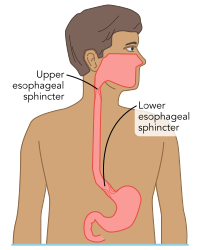
ANATOMY OF ESOPHAGEAL SPHINCTERS
The stomach is in the upper abdomen on the left side of the body and connects to the LES. It is a muscular, hollow organ that secretes digestive juices to break down food. The chemical breakdown of food containing carbohydrates and fat is carried out by the enzymes that were introduced into the oral cavity through the saliva, but further and more intense decomposition continues in the stomach. For the body to absorb the nutrients that are needed for nutritional well-being, the food particles need to be tiny enough to permeate the mucosa of the small intestine.
Contractions of the muscles of the stomach along with the release of gastric secretions work together to swirl and stir the crumbling bolus into a mixture called chyme. The stomach’s unique muscular churning capabilities coupled with the release of enzymatic gastric secretions essentially mimic the actions of a concrete mixer truck. The stomach stores chyme until it is ready to progress toward the small intestine. The distal part of the stomach connects by way of the pyloric sphincter, a band of smooth muscle, to the duodenum. About every 20 seconds, the pyloric sphincter opens allowing small amounts of acidic chyme to move from the stomach into the duodenum.
duodenum
As noted, enzymes are released by the body to aid in further digestion of the consumed food boluses. The pancreas, which is an exocrine gland located in the back of the abdomen, produces and releases these enzymes, including amylase, protease, and lipase. The pancreas is approximately 12 to 15 cm long and shaped somewhat like a hockey stick. It is divided into segments called the head, uncinate process, neck, body, and tail.
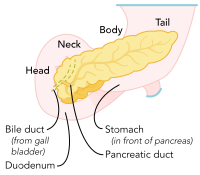
Anatomy of the pancreas showing the head, neck, body, duodenum, bile duct from gall bladder, pancreatic duct, and stomach in front of pancreas
ANATOMY OF THE PANCREAS
Amylase is a component of saliva that assists in the destruction of starches, polysaccharides, and complex carbohydrates. Amylase is also released to continue its enzymatic activity in the proximal small intestine. Protease is the enzyme that breaks down proteins and polypeptides. Lipase aids in the digestion and absorption of dietary fats. Pepsin, an enzyme that is released in the stomach, is responsible for the degradation of proteins and is activated when acid levels are high in the stomach. Trypsin and chymotrypsin, proteolytic enzymes secreted by the pancreas, serve to also breakdown proteins and polypeptides into smaller components for easier absorption. These enzymes flow from the cells of the pancreatic acini to the pancreatic duct. This duct connects to the common bile duct at the sphincter of Oddi from which the pancreatic juices flow into the duodenum. Other enzymes and hormones perform an essential action in digestive regulation, as well.
pancreatic acini
The liver is an essential organ of the body that comprises about 2% of an adult’s body weight. The liver plays a large role in the overall health of every organ of the body and is vital to digestion and the elimination of toxins. It is considered a gland and is spongy, wedge-shaped, and reddish-brown in color. The liver makes bile, which is a fluid mixture of cholesterol, bilirubin, and bile salts that is used to assist in the digestion of dietary fats. The liver filters the blood of any toxins and creates albumin, which is a blood protein that transports hormones, vitamins, and fatty acids. In addition, the liver removes excess glucose from the blood and stores it as glycogen to assist in the regulation of blood sugar. The liver has four lobes, and within these individual segments, there are ducts that carry the bile toward the common hepatic duct.
The Role of the Liver
The liver is a vital organ that has responsibility for many important roles in the body.
Breaks down red blood cells
Regulates the chemical makeup of the blood
Produces and detoxifies hormones
Helps absorb vitamins
Deactivates toxins
Produces bile
Produces proteins and cholesterol
Controls metabolic processes
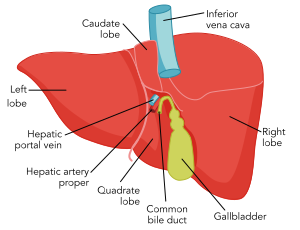
Liver anatomy showing the inferior vena cava, caudate lobe, left lobe, hepatic portal vein, hepatic artery proper, quadrate lobe, common bile duct, gallbladder, and right lobe
LIVER ANATOMY
The gallbladder is an organ that resembles the shape of a pear and is located under the liver in the upper right quadrant of the abdomen. It is a reservoir that stores and releases bile. The gallbladder is pliable and expands when it is filled with bile and then deflates when it is empty. Bile passes from the gallbladder through the common bile duct into the duodenum.
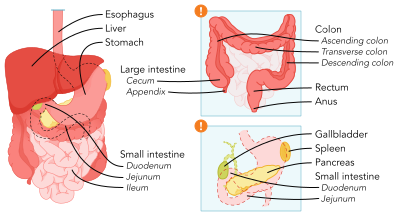
Enlarged anatomy of the GI tract showing the esophagus, liver, stomach, and duodenum, jejunum, and ileum outline of small intestine next to a detailed anatomy of the three colons: ascending, transverse, and descending and another third detailed anatomy of gallbladder, spleen, pancreas, and the duodenum and jejunum of the small intestine
THE GASTROINTESTINAL TRACT
The intestinal system is a structure in the abdomen, tubular in shape, that absorbs nutrients from foods. It is divided into the small intestine and the large intestine. The small intestine, around 5 m (16.4 ft) in length, is further divided into three sections: the duodenum, jejunum, and ileum. The small intestine accounts for most of the nutrient absorption, with most of the absorption occurring in the duodenum.
jejunum
ileum
The duodenum, the shortest section of the small intestine (20 to 25 cm [7.9 to 9.8 in]), is connected to the antrum of the stomach at the pylorus and at the proximal end and the jejunum on the distal end. The duodenum receives chyme from the stomach along with digestive enzymes and sodium bicarbonate from the pancreas and bile from the liver to assist in the breakdown and absorption of lipids. The pancreatic liquids and bile enter the duodenal papilla to enter the duodenum. The duodenum also absorbs a large portion of water, as well as iron, calcium, phosphorous, copper, and zinc. Sodium bicarbonate is secreted into the duodenum to neutralize the acid from the stomach and protect the duodenum’s lining. The structures of the upper GI stop at the end of the duodenum.
The first structure of the lower GI tract in the digestive process is the jejunum, which is the middle section of the small intestine. It is approximately 2.5 m long. The jejunum is responsible for absorbing sugars, amino acids, and fatty acids.
The last segment of the small intestine is called the ileum. It measures an estimated 3 m in length, and its major role is to absorb any remaining nutrients and bile acids that will be reused by the body. Of particular importance is the absorption of vitamin B12, which is responsible for both hematologic and metabolic functions. An intrinsic factor (a glycoprotein) made by the parietal cells that line portions of the stomach facilitates the absorption of vitamin B12exclusively in the terminal ileum.
Breakdown of Food: Chemical Digestion Location
Anatomy | Food Molecule/Content |
|---|---|
Mouth | Carbohydrates, fat |
Stomach | Carbohydrates, fat, protein |
Small Intestine | Carbohydrates, fat, protein, nucleic acids |
The brush border is a specific site at the apex of the small intestine that contains a complex plasma-rich membranous lining made up of multiple micro-sized passageways, enterocytes, and enzymes that are key in moving nutrients from the lumen to the interstitial fluid and blood. The final major digestive and absorptive events occur at the brush border.
enterocytes
Explore the 3D visualization of the small intestine below.
The large intestine, commonly known as the colon, follows the ileum via the connection known as the ileocecal valve. The large intestine is divided into five parts: the cecum, ascending colon, transverse colon, descending colon, and sigmoid colon. The colon contains bacterial flora that serve to break down dietary fibers and synthesize vitamins such as niacin, vitamin B1, and vitamin K. Its function is to absorb water and salts into the body and synthesize and absorb vitamins, such as niacin, vitamin B1, and vitamin K.
Once the chyme reaches the large intestine, the absorption of water (with electrolytes) is the main focus, and the remaining undigested material, measuring approximately 150 mL, is waste. The colon solidifies the waste, along with sloughed-off mucosal cells, dead bacteria, and food residue, into formed stool and holds the feces until it is ready to be eliminated by defecation. The descending colon is where most of the stool is stored until it is ready to enter the sigmoid colon and then into the rectum.
The rectum begins at the sigmoid colon and ends at the anus. The anus remains closed until an individual has a bowel movement. The rectum functions primarily as a reservoir for the stool and plays a key role in maintaining continence. It is supported by the pelvic floor muscles, which also assist in defecation and continence.
From the first bite of food until it is eliminated in the individual’s stool, takes anywhere from 24 to 72 hr. The normal food travel time is comparable to gastric emptying, which takes 2 to 5 hr; small bowel travel, which takes 2 to 6 hr; and colonic travel, which can take anywhere from 10 to 59 hr.
Which of the following vitamins is only absorbed in the terminal ileum and nowhere else in the intestines?
A
Vitamin A
B
Vitamin B12
C
Vitamin C
D
Vitamin D.Pathophysiology
Disorders that affect the oral cavity and esophagus can bring about anguishing side effects that impact an individual’s ability to eat such as pain, nausea, vomiting, heartburn, anorexia, and an array of other discomforts and deficits that are unpleasant and unhealthy for most individuals to endure over a long period of time. These disorders include oral herpes simplex virus type 1 (HSV-1), oral aphthosis, oral candidiasis, periodontal disease, oral cancer, and Barrett’s esophagus.
heartburn
oral candidiasis
Oral herpes simplex virus type 1 (HSV-1) is an infection that may produce lesions called cold sores or fever blisters, which are commonly found on the lips and often appear during certain vulnerable periods, such as during times of increased stress or due to a weakened immune system. Oral aphthosis is a circular, reddened lesion that most often presents with a white, gray, or yellowish center and is commonly known as a canker sore. The cause of aphthosis ulcers is not fully understood, but there is a link between several different bacterial species. Oral candidiasis is a fungal yeast infection, also known as thrush, that can occur in clients older than 65 years of age or in individuals who have a weakened immune system. Periodontal disease, including gingivitis and tooth decay, is a detrimental inflammatory gum condition that is caused by the invasion of harmful pathogens, particularly gram-negative anaerobic bacteria. Oral cancer involves cancer of the tongue, gums, floor of the mouth, inner lining of the cheeks, and lips. It is known that the oral microbiota environment is directly correlated to an individual’s overall health status and the potential to develop oral cancer, and there are more than 700 various bacterial varieties colonized in the human mouth. As of 2020, the prognosis for oral cancer remains dismal with a 5-year survival rate.
Barrett’s esophagus is characterized by an abnormal change in the tissues that line the distal esophagus demonstrating precancerous changes linked to the chronic inflammation attributed to gastroesophageal reflux disease (GERD). In clients who have Barrett’s esophagus, there is an abnormal alteration in cell activity that causes the usual tissue lining of the esophagus to be replaced by precancerous intestinal epithelium, containing goblet cells that are normally found in the small intestine. Barrett's esophagus is the only known change in this anatomical area that is associated with the development of esophageal adenocarcinoma.
gastroesophageal reflux disease
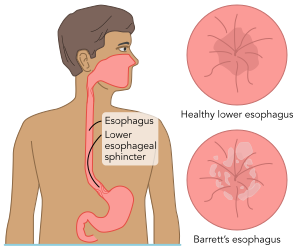
Male client with Barrett's esophagus showing the lower esophageal sphincter and comparison of a healthy lower and Barrett's esophagus
BARRETT’S ESOPHAGUS
Etiology and Risk Factors
In recent years, more research has supported a significant connection between poor oral health and a higher risk for associated diseases, including cancer. Furthermore, there are many pathogens—such as bacteria, viruses, or fungi—that can also invade the oral cavity and precipitate a decline in an individual’s oral health.
The incidence of oral herpes is vast. Globally, one-third of the world’s population is affected. In countries with high socioeconomic status, an estimated 40% to 60% of the population have had the infection by the age of 70. People who are at greater risk are those who have had close contact with an individual who is infected, such as through direct skin-to-skin contact, clients who are immunosuppressed, infants, young children, and people who have elevated physical or emotional stress. Exposure to sunlight or other ultraviolet (UV) light is also a risk factor. Some studies have found that urban living and having an increased number of siblings may increase risk, likely due to close living conditions. In addition, low socioeconomic status in childhood poses a greater risk.
Oral aphthous ulcers occur worldwide but are more prevalent in geographical areas with a greater proportion of middle- and high-income communities. The ulcers impact anywhere between 20% to 25% of the overall population. They often occur in clients older than 10 years and may be precipitated or caused by menstruation, increased stress, trauma to the inside of the mouth (biting, rubbing against dental orthodontics), or contact with certain hot temperature or spicy foods.
Oral candidiasis has an estimated incidence of two million cases occurring annually and is the most frequently encountered fungal disease. It is commonly observed when there are factors and conditions that inhibit the immune system. Individuals who have vulnerable immune systems, including adults 65 years of age and older, are more prone to oral candidiasis. Additionally, clients who are immunosuppressed or using certain medications, such as prednisone (including inhaled corticosteroid medicine) and antibiotics, are at increased risk of developing this condition, as are those who have oral conditions, such as dentures that do not properly fit, and those who use tobacco.
Periodontal disease affects approximately 4 out of every 10 adults over the age of 30 in the U.S. and over age 60, that number rises to 6 our of 10. Social determinants of health (SDOH) are factors closely attributed to gingivitis and tooth decay because socioeconomic barriers make access to quality oral health care difficult for some populations. For more information on SDOH, see Wellness to Illness Continuum.
social determinants of health (SDOH)
According to the American Cancer Society around 60,000 cases of oropharyngeal cancer are diagnosed in the U.S. annually, making up almost half of all diagnosed head and neck cancers. Males are twice as likely as females to develop oral cancer. Oral cancer risk factors include chewing and smoking tobacco, high alcohol consumption, poor oral hygiene, ultraviolet light exposure, human papillomavirus (HPV), candida infections, immunosuppression, and chronic inflammation in the mouth. Disparities in access to professional oral health care are another unsettling risk factor. Thus, it is imperative to understand preventative measures to identify to decrease an individual’s susceptibility to this disease.
The prevalence of Barrett’s esophagus is difficult to validate since world experts have not yet firmly established and/or agreed upon a consistent routine screening strategy for this condition. However, it is estimated to be around 1% or 2% of the general population worldwide. Identified risk factors for Barrett’s esophagus include chronic GERD manifestations (weekly for 5 or more years), assigned male at birth, age 50 years or older, and a history of smoking. Individuals who are white or obese or who have a family history of Barrett’s esophagus and/or esophageal cancer are also at risk. It is estimated that 5% to 12% of clients who have GERD will have Barrett’s esophagus.
A nurse is caring for clients who have oral and esophageal conditions. Which client has the greatest risk of developing oral candidiasis?
A
A client who has oral ulcers
B
A client who has periodontal disease
C
A client who has an autoimmune disease
D
A client who has Barrett’s esophagus
Impact on Client’s Overall Health
Physiological
Because the oral cavity can be a sensitive site for injury, disorders of the mouth can cause considerable pain while eating or swallowing and may contribute to nutritional deficits. For instance, painful skin lesions from HSV-1 or erythematous lesions from an oral aphthosis can linger for days to weeks and make it difficult to chew food. In some clients, even speech may be affected, particularly by tooth loss or disfigurement from periodontal disease or oral cancer. Due in part to its inflammatory reactions, periodontal disease can increase the risk for developing atherosclerotic cardiovascular disease, including peripheral artery disease, congestive heart failure, coronary heart disease, and aneurysms. Besides functionality issues of the mouth and teeth structures, esophageal disorders can contribute to difficulty in swallowing as well as changes in tissue composition that can raise the risk for cancer. As of 2020, the prognosis for oral cancer remains dismal with a 5-year survival rate of less than 50%. The prognosis of clients who have esophageal adenocarcinoma is poor, with survival less than 20% at 5 years.
Psychosocial
Psychosocial ramifications that can impact a client who is experiencing oral disorders and disease should not be overlooked or trivialized because many aspects of an individual’s self-esteem are associated with their external image, which includes the appearance of their teeth and smile, ability to speak clearly, or even the smell of their breath. Disfigurement of dentition and gums and the accompanying uneasiness with eating in public can lead to potential self-consciousness, impairing social interactions and impacting an individual’s quality of life. In addition, there are studies to support the strong association between GERD and its interference with healthy sleep and work, which can take a toll on an individual’s mental and emotional well-being. If HSV-1 also presents in the genital area, there may be feelings of embarrassment, shame, anger, or depression in these clients.
Considerations of the Aging Adult
Be aware of the impact that oral and esophageal diseases can have on the older adult population. For instance, it has been found that community-dwelling older adults can demonstrate a greater risk of HSV-1 reactivation. Moreover, because of a less robust immune system, clients 65 years and older tend to develop oral candidiasis repeatedly. Denture use due to tooth loss is prevalent in the older adult population and can contribute to eating difficulties, self-esteem concerns, or issues with chronic gum irritation and discomfort.
A nurse is caring for a client who has poorly fitting dentures. Describe in your own words how this can impact the client.
Enter your response and submit to compare to an expert response.
Clinical Presentation
Initially, oral HSV-1 lesions may appear like fluid-filled pimples with a thin-walled, intra-epidermal vesicle and then eventually crust over, dry, and heal. Generally, this is a self-limiting condition that is transmitted by personal contact. Some clients experience recurring episodes and accompanying manifestations of malaise, sore throat, swollen lymph nodes, and other flu-like complaints, and other individuals have no manifestations at all.
Oral aphthous ulcers present as erythematous lesions of the mouth that come in different sizes and shapes and often present with a yellow-gray wound base. Ulcers usually last 7 to 10 days.
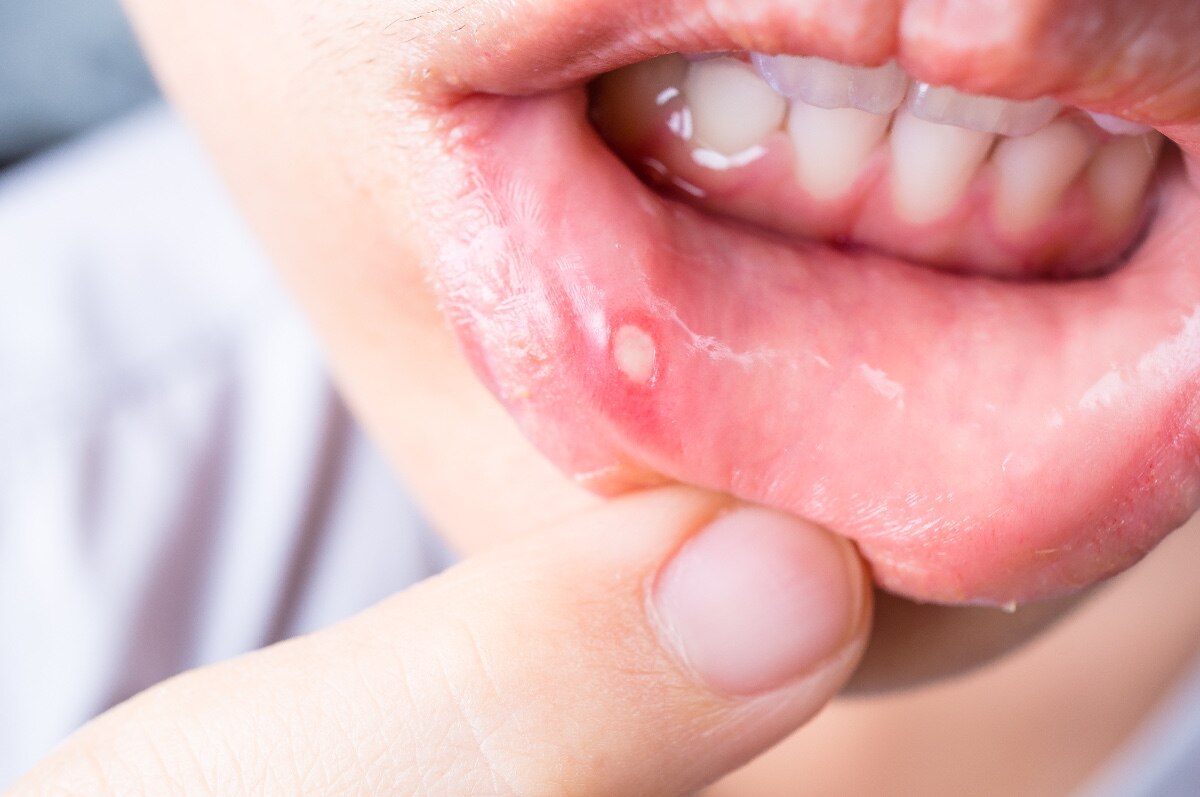
ORAL APHTHOUS ULCERS
Oral candidiasis frequently presents with raised, bright white patches or coatings that appear on the tongue and inside of the cheeks. It can cause irritation, redness, and mouth pain (burning), which may lead to difficulties with eating. In addition, it can also be found in the pharyngeal (throat) and esophageal areas, which may be quite distressing for the client.
With tooth decay, the client may begin to have sensitivity or discomfort in the tooth area that is affected by the cavity. However, sometimes a small cavity may not be detected until a dentist discovers the area. In some instances, the tooth may display a white spot or darker discoloration in the cavity. Sometimes there will even be an obvious hole or crack in the tooth or swelling, redness, and bleeding on the gum next to the tooth in question.

ORAL CANDIDIASIS
With gingivitis, pain is usually not a manifestation. In fact, many people are not even aware that they have it. However, the gums may appear reddened or puffy or may bleed easily after brushing or flossing. Additionally, a person may experience bad breath that does not go away due to the build-up of plaque. Gingivitis can be reversible with aggressive, high-quality oral care hygiene. However, if the damage persists, the ramifications can lead to periodontal disease.
With advancing periodontal disease, the gums will continue to swell, bleed, and cause soreness in the mouth. Receding of the gums is present, and they can take on a dark red or even purplish appearance. Tooth sensitivity, persistent bad breath, formation of pus pockets within the gums, and loose or separating teeth can also occur.
Scientific studies continue to report a link between long-term inflammation of an organ and the potential for the later development of cancer. The following client manifestations may be a warning manifestation of oral cancer.
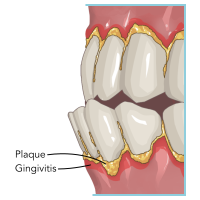
GINGIVITIS
Sores in the oral cavity that do not heal
A white or reddish patch on the inside of the mouth
Lump or growth in the oral cavity
Mouth or ear pain
Discomfort, numbness, or difficulties while swallowing, opening the mouth, or chewing
Enlarged cervical lymph nodes
Voice changes
Unintentional weight loss
The clinical manifestations of Barrett’s esophagus are not glaringly apparent from an external standpoint, but there are certain subtle indications, such as frequent heartburn, pain or difficulty swallowing, the sensation of food being stuck in the esophagus, constant sore throat, bad breath, unintended weight loss, blood in the stool, or vomiting.
Lab Testing and Diagnostic Studies
Laboratory and other diagnostic testing for oral and esophageal disorders are vast. The following is only a limited list of some studies that may be ordered to determine if the client could have a specific etiology that was earlier discussed. If a female client is of childbearing age, obtain an order for a urine or serum pregnancy test to assist with baseline information before specific diagnostic imaging or treatment options when indicated.
Oral HSV-1 has no laboratory or diagnostic tests to diagnose this disorder. The diagnosis is made from the history provided by the client and the manifestations the client has or is experiencing. A detailed history is necessary to rule out other conditions. For example, at times the client who has oral HSV-1 will have manifestations that precede the development of the lesion, such as a burning sensation, fever, or tingling in the area.
Aphthosis does not have any specific lab tests or diagnostic studies to diagnosis the disorder. A thorough history from the client and a thorough examination of the oral cavity need to be completed to rule out other causes for the lesions.
Diagnosis of fungal infections of the mouth, such as oral candidiasis, are made also through client history, thorough examination, and assessing risk factors. Once this information is obtained, other conditions are excluded and the response of the lesions to treatment are further used to diagnose the disorder. Since certain types of candidiasis can resemble malignant lesions, a biopsy is performed along with the treatment. If treatment is not effective, a health care provider may obtain a specimen or a scraping of the plaque from a mouth lesion to sample and test for a Gram stain culture to confirm a diagnosis of oral candidiasis.
Medical and dental history, clinical assessment, and measuring the depth of the pocket between the teeth and the gum are used to diagnose gingivitis. If deeper pockets are noted, x-rays may be used to check for bone involvement.
If a health care provider finds a suspicious finding on a routine exam of the oral cavity or a client presents with a manifestation suggesting oral or oropharyngeal cancer, the health care provider will first ask about risk factors. From there, a thorough assessment and examination of the head and neck will occur. Diagnostic tests will then be ordered to confirm or rebut the presence of cancer. There is no laboratory test that will specifically diagnose oral or oropharyngeal cancer. If oropharyngeal cancer is suspected, an indirect or a direct pharyngoscopy and laryngoscopy is performed. The indirect test is comprised of visualization of the throat, the base of the tongue, and part of the larynx by using small mirrors that are on a long handle. The direct test uses a fiber-optic scope that is passed through the mouth or nose to get a clearer picture of the above areas.
Other tests the health care provider can perform to diagnose oral or oropharyngeal cancer include scrapping of the area and placing the scraping on a slide that is stained with a dye. If abnormal cells are detected, a biopsy of the area is obtained. If the health care provider confirms through the biopsy that cancer is present, the sample is tested for the human papillomavirus (HPV), especially HPV16.
A diagnostic procedure called an esophagogastroduodenoscopy (EGD),along with a tissue sample or biopsy, will be performed by a gastroenterologist who specializes in the digestive system to visualize and evaluate the inner surface of this area when there is any suspicion of Barrett’s disease.
esophagogastroduodenoscopy (EGD)
Connections
Nutrition
Oral and esophageal irritation or lesion pain may be exacerbated by contact with certain hot temperature or spicy foods. Ingesting food and drinks high in sugar content can increase the risks of tooth decay and gingivitis. Clients who have dental and gum issues may experience difficulties with biting, chewing, and swallowing that can negatively impact a person’s nutritional intake. Therefore, a provider may want to investigate some of the client’s nutritional indicators further by potentially ordering serum laboratory tests to measure for the following nutrients: folate, vitamin B1, vitamin B2, vitamin B6, vitamin B12, magnesium, and/or zinc.
Role of the Nurse
Nurses play an important role not only in providing direct care to clients but in promoting and advocating for the health and well-being of individuals who may be at risk for conditions affecting the oral cavity and esophagus. Nurses should be prepared to positively impact the quality of care and promotion of health for clients within every age group and diverse cultural background who may come to experience alterations in the oral cavity or esophagus. As is always the case when seeing a client for the first time, obtain, address, identify, or review the individual’s history of current illness and any past medical and surgical history, including medication allergies and social history of alcohol, drug, or tobacco/vaping product use, and their vaccination status.
Environmental Factors
Considering the extensive composition and interconnection of the structures that support digestion, as well as the number of organs involved, there are numerous conditions that can disturb the homeostasis of their functioning. Both genetic and environmental circumstances can threaten the welfare of these systems, including medical conditions influenced by heredity, chronic diseases such as alcohol use disorder (AUD), repercussions of long-term stress on the body, tobacco use, and factors impacted by the SDOH (food insecurity, limited access to healthy food choices).
Safety Considerations
Nurses are instrumental in educating the client about safety considerations that may prevent the spread of contagious oral disorders, such as good handwashing and avoidance of oral sexual contact with active mouth lesions from oral HSV-1. Additionally, good oral hygiene practices are important when caring for the mouth, and nurses should teach the client to replace their current toothbrush with a new one often, especially after illness; use a toothbrush with soft rather than hard bristles in order to prevent trauma to the gums; replace a toothbrush at least every 3 months; disinfect dentures frequently (clean dentures and soak them overnight); and rinse their mouth with water after using a corticosteroid inhaler or spacer.
Individual Factors
Individuals who have orthodontic braces on their teeth or who use dentures may experience chronic oral cheek or gum trauma that can make them more susceptible to mouth sores or long-term inflammation and potentially increase their risks for oral cavity or dental disorders. Additionally, high-sugar dietary choices, smoking and tobacco use, limited or no history of dental or periodontal professional health care visits, and inadequate dental hygiene can also increase risks. Thus, nurses are instrumental in teaching and promoting adequate nutritional food intake and dental health with the need for regular professional dental and periodontal examinations and follow-up care.
Client Education
Nurses are instrumental in educating the client about methods that may prevent some of the oral and esophageal disorders. Clients should receive teaching regarding the use of lip balm with a sun protection factor (SPF) of at least 15. Provide education on maintaining good oral hygiene, such as brushing and flossing teeth several times per day, or using warm, saline water as a mouth rinse to soothe discomfort. In addition, encourage clients to stop smoking or using tobacco products and to reduce or stop the use of alcohol. Provide information on the benefits of receiving the HPV vaccine series. This vaccine is effective in preventing infections that can lead to the risk of developing such malignancies as oropharyngeal (throat) cancer.
Education to be provided for clients who have Barrett's esophagus will include instruction of the manifestations that indicate a worsening of the condition, such as more difficulty swallowing, blood in the stool, weight loss, and more frequent heartburn. Additionally, provide information on how to decrease gastric reflux from occurring, such as incorporating small meals throughout the day and avoiding large meals, eating at least 3 hours before going to bed, and avoiding foods that may trigger heartburn and reflux.
Nursing Process
The nursing process is a comprehensive and systematic approach to appropriately addressing a client’s needs and implementing interventions to solve problems that are barriers to the client’s progress.
Recognize Cues (Assessment)
Begin the assessment by obtaining information about the client’s dental and oral care history and routine, including the use of removable or fixed orthodontic devices. In addition, determine whether the client has any current issues with their mouth, teeth, throat, or other areas of concern with the oral cavity or esophagus. Also inquire if the client has problems with ear, gum, mouth, or throat pain, with their ability to swallow or the need to vary their eating patterns due to an oral cavity or other bothersome concern of their mouth. Ask the client about any recent changes in their weight and any alterations in their speech. Inspect the individual’s face, mouth, lips, oral cavity, palate, gums, cheeks, tongue, dentition, and throat with a direct light source and tongue blade while using standard precautions. In addition, palpate lymph nodes and note any enlargement or pain. Use safe ergonomics and appropriate equipment when performing the assessment.
Because the manifestations of Barrett’s esophagus are not readily apparent, further question the client on frequent heartburn and acid reflux, any sensations of food being lodged in the throat, constant sore throat, bad breath, any noted blood in the stools, or vomiting.
Analyze Cues (Analysis)
Analyze data from the history, assessments, and laboratory and diagnostic testing results to determine the presence of oral care concerns or if the client has indications of any oral and esophageal issues.
Prioritize Hypotheses (Analysis)
In analyzing data, determine the highest priority needs of the client. Any abnormal oral or esophageal findings can lead to decreased fluid and nutritional intake, leading to weight loss and dehydration.
Generate Solutions (Planning)
Next, use all the above information to formulate a plan of care. Include the client and their family in this plan as well as their interprofessional health care team (speech therapist, dietitian, dentist, dental hygienist, otolaryngologist, oral surgeon). The plan of care will include manifestation relief of any oral and esophageal problems, such as pain associated with open areas, thrush, receding gums, treatment of the disorder and prevention of further episodes or the condition worsening.
Take Actions (Implementation)
Implement the plan and proceed with the designated interventions. Continue to collaborate with members of the interprofessional health care team as needed, and continuously involve and provide education to the client and their family.
For an opened lesion or sore within the oral cavity, it is important to keep this area clean by rinsing with warm water or prescribed medicated solution. Offer a moist cold or warm compress for painful and inflamed lip lesions. Ensure that clients who have Barrett’s esophagus are provided with small, frequent meals during the day and that medications to reduce stomach acid production are administered as prescribed.
A nurse is preparing to provide teaching to a client who has open oral HSV-1 lesions. Which of the following instructions should the nurse plan to provide?
A
Replace toothbrushes every 3 months.
B
Expose lip lesions to intermittent UV light.
C
Brush teeth with a hard toothbrush.
D
Avoid rinsing the mouth with warm water.
Evaluate Outcomes (Evaluation)
Evaluate the effectiveness of the implemented plan and interventions and modify, update, and continue to review nursing actions based on the client’s response and clinical findings, as needed. Specifically, determine if the lesions in the oral cavity or on the lips were healed, if the thrush or gingivitis was resolved, and if the manifestations of Barrett’s esophagus were decreased or resolved.
Treatments and Therapies
For oral HSV-1 lesions, there are several options that can assist the individual with treatment, comfort, and increased relief of the condition such as over-the-counter (OTC) creams and ointments applied directly to the sore as indicated by the package and label’s instructions, or the topical application of antiviral creams to lesions as prescribed and dispensed via a prescription from a provider. Additionally, OTC pain-relief medications, such as ibuprofen (Advil, Motrin), may assist with occasional discomfort from sores, as needed.
Antiviral Medication
Dexamethasone Mouthwash
Antifungal Medications
Chemotherapeutic Medication
A provider may also prescribe a course of an antiviral medication such as acyclovir (Zovirax®) to alleviate outbreaks of the HSV-1 virus and reduce the spread and severity if there is an outbreak of sores.
CLASS With Prototype:
Antiviral medications (Acyclovir, Famciclovir, Valacyclovir)
Action: This medication prevents the duplication of the viruses’ DNA by forcing the virus to construct ineffective DNA sequencing instead.
Therapeutic Use: To improve the condition.
Episodic Oral Treatment: Acyclovir: 200 mg by mouth or PO (stands for the Latin term: per os) 5x/day or 400 mg. 3x/day; Famciclovir: 1500 mg PO 1x/day; or Valacyclovir: 2 g PO twice for 1 day.
Adverse Effects:
Central nervous system (CNS): Headache, depression, paresthesia, neuropathy
Gastrointestinal (GI): Nausea, vomiting
Genitourinary (GU): Renal dysfunction and failure
IV and topical site: Rash, inflammation, burning sensation. Cidofovir associated with severe renal toxicity and granulocytopenia.
Valganciclovir associated with bone marrow suppression
Client Teaching:
The client should stay well hydrated while taking this medication.
The client is to take all the prescribed medication regardless of improved manifestations or if they feel better.
Commonly Prescribed Medications for Esophageal and Stomach Conditions
Class - Generic (Brand) Names | Action | Therapeutic Use | Adverse Effects | Client Teaching |
|---|---|---|---|---|
Proton pump inhibitors (PPIs)
| Inhibits the secretion of gastric acid | To relieve manifestations of heartburn and regurgitation associated with GERD, gastritis, or peptic ulcer | Headache, diarrhea, constipation, abdominal pain, flatulence, risk for hypocalcemia, hypomagnesemia | Recommend to take once daily doses at bedtime. Recommend to take twice daily doses in the morning and in the evening. Monitor for hypocalcemia, hypomagnesemia, Clostridium difficile infections, osteoporosis-related fractures, vitamin B12deficiency, and pneumonia. Add magnesium-rich foods such as spinach, almonds, yogurt, and avocados. |
H2 receptor antagonists (H2 blockers)
| Decreases gastric acid production by blocking gastric histamine receptor sites | Used for treatment of mild to moderate heartburn and esophageal irritation associated with GERD, gastritis, or peptic ulcer | Headache, diarrhea, constipation, tiredness, and muscle discomfort. | Recommend to take once daily doses at bedtime. Recommend to take twice daily doses in the morning and in the evening. Monitor for kidney or liver dysfunction. |
Antacids
| Neutralizes gastric acids | Used to decrease heartburn or esophageal irritation caused by increased gastric acid | Constipation, decreased appetite, n/v, flatulence, and dry mouth Nausea and vomiting Gas Dry mouth | Over-the-counter (OTC). Does not require a prescription. Chew tablet completely before swallowing. Drink fluid after taking. Take before meals and before bedtime. |
Skeletal Muscle Relaxant
| Reduces the intermittent relaxation of the lower esophageal sphincter that causes GERD manifestations | To decrease episodes of reflux activity after meals and during sleep | Drowsiness, dizziness, constipation | Recommend to take 3 times per day. Use caution when driving or using heavy machinery. Alcohol may increase the dizziness and drowsiness caused by baclofen. Increase dietary fiber. |
A significant management strategy for clients who have been diagnosed with Barrett’s esophagus is intensive surveillance through an EGD along with the use of adjunctive endoscopic eradication therapy (EET) as necessary.
endoscopic eradication therapy (EET)
For larger and/or invasive malignancies of the esophagus, a complex surgical procedure called an esophagectomy is usually performed to remove part of or possibly all the diseased esophagus. These clients will often have chemotherapy and radiation therapy as accompanying treatment options to assist in shrinking the tumors prior to the scheduled procedure. After the cancerous esophageal segment is removed, the remaining esophagus can be reconstructed by connecting it to the stomach, or depending on the extent of removal, the surgeon may need to use an excised segment of the client’s own small or large intestine, or other autologous (one’s own) tissue, to replace the removed esophagus and have it function as an artificial conduit for food passage from the mouth to the stomach.
radiation therapy
A nurse is preparing medications for clients who have oral and esophageal conditions. Match the medication the nurse will administer to the condition being treated.
Drag the options on the left to the corresponding category on the right (or select the option on the left and then the corresponding category on the right).
Acyclovir
Nystatin liquid suspension
Dexamethasone mouthwash
Omeprazole
Antineoplastics
HSV-1
Oral candidiasis
Oral aphthous
Esophageal cancer
Regurgitation from GERDGastroesophageal Reflux Disease (GERD)
Page 1
GERD is a disorder in which stomach acids travel up the esophagus, causing irritation to the esophageal lining. GERD can cause significant distress to clients and may upset their daily routine and quality of life. It is considered a chronic disease in developed countries due to risk factors such as obesity and smoking.
Pathophysiology
When the gastric contents regurgitate back up into the esophagus, it can cause a burning sensation in this area, irritation of the throat, or chest pain. It occurs when the LES valve fails to close tightly to prevent backflow of secretions from the stomach. Additionally, gastroesophageal reflux can be linked to psychological stress, and its severity may directly correspond to the degree of stress that is triggered. Over time, chronic episodes of GERD can increase the risk for a more serious complication called Barrett’s esophagus and potential stricture formation due to long-standing irritation and damage to its mucosa.
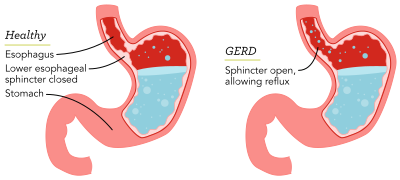
Comparison of healthy esophagus with lower esophageal sphincter closed and stomach and GERD with sphincter open, allowing reflux.
ANATOMY OF HEALTHY VS. GERD ESOPHAGEAL PRESENTATION
Etiology and Risk Factors
Researchers have noticed an increase in the proportion of Americans younger than 50 years of age experiencing GERD over the last decade. It is surmised that the increase in GERD among the younger population over the prior 10 years may be related to the types of food and drink that are being consumed, such as spicy foods and caffeine-laden drinks. Irritants from smoking, the increased prevalence of obesity, and decreased physical activity also likely contribute. Clients who are 50 years or older or white or have low socioeconomic status are at increased risk. Other risk factors that have been identified for GERD include excessive alcohol or caffeine consumption and lying down after eating. The presence of obesity causes increased intra-abominal pressure, which promotes reflux.
Comorbidities
Comorbidities related to GERD include hiatal hernia, connective tissue disorders, pregnancy, stress, and certain medications such as anticholinergic medications, NSAIDs, and aspirin.
Epidemiology
Clients of all sexes have GERD and suffer from these complaints; however, males may have a slightly higher incidence. Statistics show that the prevalence of GERD in North America is 18.1% to 27.8%.
Impact on Overall Health
Physiological
GERD contributes to gastric reflux or heartburn, which can be uncomfortable for the client. In addition, having chronic GERD increases a client’s risk for Barrett’s esophagus, which can lead to esophageal cancer.
Psychosocial Impact
Experiencing frequent episodes of GERD can affect a client’s quality of life. The client may have manifestations of heartburn that occur shortly after eating or that wake them during the night, thus interfering with their sleep quality. In addition, the individual may develop a sore throat or sour taste in their mouth that interrupts their meals and could trigger a decreased appetite and cause potential deficits in nutrition. Moreover, chronic GERD can also lead to halitosis, which can disrupt the client’s social interactions, leading to potential isolation and possible depression.
Considerations of the Aging Adult
Individuals who are 50 years of age and older have an increased incidence of GERD, which can affect their ability to enjoy meals and could lead to unintentional weight loss. For those that are older than 65 years of age, this weight loss can enhance fragility in some of these clients.
Clinical Presentation
A client who has GERD may experience frequent bouts of heartburn, which some clients may describe as chest pain, regurgitation, or a sour taste in their mouth after food intake. In addition, the individual can develop recurrent episodes of dysphagia, dyspepsia, odynophagia, belching, nausea/vomiting, hoarseness, or chronic cough.
dysphagia
dyspepsia
odynophagia
Lab Testing and Diagnostic Studies
The following is a list of typical laboratory and diagnostic testing used to investigate, evaluate, and confirm a diagnosis of GERD. However, it should be noted that in all cases in which a client presents with chest pain, it is a priority to rule out possible cardiac etiology. Sometimes GERD can mimic or be described as chest discomfort/pain, and this manifestation should always be initially investigated to eliminate any cardiac connection, especially in individuals with known risks for coronary artery disease.
Oftentimes, a provider will order an EGD as a routine diagnostic procedure when individuals are being evaluated for GERD to rule out any complications that can accompany its presence, such as Barrett’s esophagus or peptic ulcer disease. An ambulatory esophageal reflux monitoring test, also known as ambulatory pH monitoring or an esophageal pH monitoring test, is usually considered the current standard exam to conduct in which to confirm a GERD diagnosis. It is performed by using a pH sensor apparatus either introduced at the end of a thin plastic catheter that is inserted through the nose into the esophagus and left in place for 24 hr or by a wireless capsule, known as a Bravo probe, that is attached to the lining of the esophagus above the LES when placed through an EGD procedure.
When the capsule option is used and positioned during an endoscopy, it is left in the esophagus to record the acidic content over a 48-hr and up to a 96-hr time period before it eventually falls off on its own and is eliminated through defecation. This testing can be done before or after the client has started an acid-reducing or proton-pump inhibitor (PPI) medication regimen and measures the volume of acid that refluxes from the stomach into the esophagus. However, in some cases, this exam will evaluate the effectiveness of the medication already prescribed for GERD, and thus, the provider will order this analysis after treatment has begun. Both methods of testing use sensors that record the pH measurement within the esophagus, and the results are downloaded for the provider to review.
Lab Testing for Female Client of Childbearing Age
If a female client is of childbearing age, obtain an order for a urine or serum pregnancy test to assist with baseline information before specific diagnostic imaging or treatment options, when indicated.
Connections
Fluid and Electrolytes
The client may have an increased risk for dehydration and nutritional deficits if they experience persistent dysphagia, odynophagia, or nausea with GERD. If this is an issue, the client should be taught how to effectively manage this condition when manifestations appear and to also monitor for potential signs of electrolyte imbalance, such as muscle cramping or an increased heart rate related to recurring vomiting. If certain foods trigger an episode of acid reflux, the client should be instructed to avoid these irritating dietary selections as much as possible.
A nurse is caring for a client who has GERD and is experiencing chest discomfort. Which of the following actions by the nurse would be priority?
A
Notify the health care provider.
B
Obtain an order for a pain medication
C
Schedule an esophageal pH monitoring test.
D
Assess the pain location, intensity, and duration.
Role of the Nurse
Environmental
Several lifestyle and environmental factors can be associated with the development of GERD, including increased stress, weight gain or obesity, and presence of Helicobacter pylori infection. Encourage the client to practice relaxation and stress-reduction techniques and educate them on alternative methods to decrease stress-related episodes as well as to increase an overall healthy lifestyle. Weight gain or obesity causes an increase of pressure on the esophagus, which increases the occurrence of GERD. Encourage the client to make dietary and exercise modifications that will promote weight loss to help reduce the occurrence of GERD.
Helicobacter pylori
Safety Considerations
The nurse is instrumental in educating the client about safety considerations for their increased risks for Barrett’s esophagus and potential esophageal cancer. Encourage the client to visit a gastroenterologist for evaluation or surveillance of the esophageal tissue as directed and as needed. Medication safety discussions should address the risks associated with long-term proton pump inhibitor (PPI) use. This includes potential decreased absorption of calcium, vitamin B12, and magnesium due to reduced gastric acidity, which may necessitate supplementation. Clients should also be educated about the increased risk of gastrointestinal infections, particularly Clostridioides difficile (C. diff), and community-acquired pneumonia with prolonged PPI therapy.
Client Education
Nurses will provide education on lifestyle modification changes that can decrease the manifestations of GERD. The modifications include maintaining a healthy weight and avoiding tight-fitting clothes, both of which could cause increased abdominal pressure. Clients should also be informed of the need for smoking cessation and avoiding carbonated beverages and alcohol. Clients should avoid fried or spicy foods, caffeine, or chocolate. Meals should be scheduled to be completed at least 3 hours prior to bedtime, the client should avoid lying down after eating, and the client should sleep on their left side. Clients should be instructed to raise the head of their bed 6 to 9 inches or to sleep with extra pillows to raise the level of their head while lying down. Clients should be instructed on the importance of maintaining good oral hygiene practices since acid reflux can erode the enamel of the teeth over time and increase the risk for tooth decay.
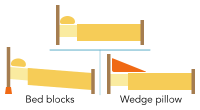
MANAGING GERD THROUGH NONPHARMACOLOGICAL INTERVENTIONS
Why is it important for a nurse to educate a client who has GERD about maintaining good oral hygiene?
Enter and submit your response to compare it to an expert response.
Nursing Process
Recognize Cues (Assessment)
Clients with GERD symptoms might present for care in various settings, including emergency departments (ED), urgent care clinics, or primary care offices. When a client reports chest discomfort, the nurse must promptly determine if this pain could be cardiac-related, particularly in individuals with known coronary artery disease (CAD). It is essential to quickly differentiate between GERD-related discomfort and cardiac chest pain by assessing specific details such as radiation of pain, the onset and duration, severity, character, factors worsening or relieving the pain, and accompanying symptoms like shortness of breath, diaphoresis, dizziness, nausea, or vomiting. Additionally, evaluate cardiovascular risk factors, including prior heart disease, hypertension, elevated cholesterol, smoking history, diabetes, and family history of CAD.
A thorough subjective assessment for GERD includes gathering information about manifestations such as heartburn or burning sensations in the throat or chest, sour taste in the mouth, frequent belching, abdominal bloating, regurgitation, chronic dry cough, or repetitive throat clearing.
Following the subjective assessment, the nurse should perform a focused physical examination. Inspect the client's oropharynx using a direct light source and tongue blade to check for signs of irritation and assess the condition of the teeth for enamel erosion indicative of chronic acid exposure. Next, conduct a comprehensive abdominal assessment with the client supine, beginning with auscultation of bowel sounds for approximately one minute in each abdominal quadrant, followed by gentle palpation to evaluate tenderness or any palpable abnormalities.
Analyze Cues (Analysis)
After collecting subjective data, medical and surgical history, and physical assessment findings, analyze this information to identify concerns related to GERD. Determine if the client's history and assessment findings correlate with typical risk factors and clinical presentations associated with GERD, integrating findings from relevant diagnostic tests such as upper endoscopy or esophageal pH monitoring.
It is not unusual for clients with longstanding, moderate-to-severe GERD to present suddenly at the ED or urgent care facility reporting difficulty swallowing or sensations of food becoming lodged in their esophagus. Typically, this happens when food is consumed hastily or inadequately chewed, revealing significant underlying narrowing of the esophagus or stricture formation from chronic acid reflux. It is important to ask if the client experienced similar, albeit milder, episodes previously and to evaluate if the clinical picture aligns with recurrent esophageal inflammation and scar tissue formation due to prolonged acid irritation.
Clients presenting with acute esophageal obstruction usually describe significant distress, immediately vomiting upon attempting to ingest any food or liquids. Promptly assess for signs and symptoms of dehydration and electrolyte imbalances, including dry mucous membranes, decreased urine output, dizziness, tachycardia, or hypotension, particularly if considerable time has elapsed since the initial onset of symptoms.
Prioritize Hypotheses (Analysis)
To prioritize nursing care for clients with GERD, integrate assessment findings, diagnostic data, and current evidence-based guidelines. Initially, care should address urgent needs such as differentiating between cardiac and GERD-related chest pain, managing acute dysphagia, and correcting any associated dehydration or electrolyte disturbances. Subsequently, management should focus on controlling chronic GERD symptoms and preventing complications through appropriate medication therapies, dietary changes, and lifestyle modifications such as avoiding dietary triggers, elevating the head of the bed, and weight loss when appropriate.
Client education is crucial, emphasizing the importance of adhering to prescribed medications and lifestyle modifications, awareness of potential complications such as dysphagia or gastrointestinal bleeding, and maintaining regular follow-up appointments. Collaboration with interdisciplinary healthcare team members—including gastroenterologists, dietitians, and primary care providers—is essential to provide comprehensive and individualized care tailored to the client's specific needs and circumstances.
Generate Solutions (Planning)
Next, use all the above information to formulate a plan of care. Include the client and their family in this plan as well as their interprofessional health care team (dietitian, gastroenterologist). The goal is to prioritize interventions, identify outcomes, and modify and make changes as needed.
Take Actions (Implementation)
Implement the plan and proceed with designated interventions. Continue to collaborate with members of the interprofessional health care team as needed, and continuously involve as well as provide education to the client and their family. Ensure that the head of the client’s bed is elevated while the client is sleeping or when lying supine. Also administer prescribed medications, including PPIs, H2 blockers, or OTC antacids.
Document all information in a timely manner in the medical record.

HEAD OF BED ELEVATED WITH CLIENT WHO HAS GASTROESOPHAGEAL REFLUX DISEASE
Evaluate Outcomes (Evaluation)
Lastly, evaluate the efficacy of the plan that was implemented for the client who presents with GERD. This is an ongoing process. Be prepared to make revisions as necessary based on the individual’s response and/or outcomes to the plan. Take the time to ensure that the client and their family understand that much of what is found to assist in alleviating and improving the manifestations of GERD is lifestyle changes and preventative measures and reinforce adherence of these health-promoting recommendations.
A nurse is preparing to provide teaching to a client who has GERD. Which of the following instructions should the nurse plan to provide?
A
Eat 30 minutes before bedtime.
B
Lie down after eating.
C
Use warm water as a mouth rinse.
D
Sleep with an extra pillow under head.
Treatments and Therapies
Medications
Providers will prescribe medications such as H2 blockers (cimetidine or famotidine) to reduce production of gastric acid, PPIs (pantoprazole or omeprazole) to inhibit the production of gastric acid, or antacids (Tums or Milk of Magnesia) to neutralize gastric acid. See the medication table in “Oral and Esophageal Conditions” section.
Surgical Intervention
Clients who frequently experience issues with dysphagia due to benign esophageal strictures caused by chronic GERD irritation may need to be evaluated by a gastroenterologist to undergo a periodic procedure to widen the narrowed area called an endoscopic dilation. Additionally, in some severe cases of GERD in which medical therapy using prescribed medications are not effective and/or in which an individual has significant issues with a large hiatal hernia that exacerbates the acid reflux issues, a surgical procedure may be indicated to reinforce the lower esophageal sphincter (LES) to prevent the reflux of acid. One variation of the surgery performed is called a Nissen fundoplication procedure. With this antireflux surgical correction, the surgeon reinforces the coupling between the esophagus and stomach by wrapping the upper portion of the stomach around the LES valve.Hiatal Hernia
Page 1
Pathophysiology
A hiatal hernia is a condition caused by increased intra-abdominal pressure that results in pushing the stomach and other abdominal viscera up and into the mediastinum. Because of the bulging of these anatomical structures, a client may exhibit manifestations like those experienced with GERD, including heartburn, regurgitation of contents into the esophagus or mouth, chest pain, and nausea. There are two main or general types of hiatal hernias: sliding and paraesophageal hernias. Sliding hernias are the most common and occur when the upper section of the stomach occasionally slides up or protrudes into the chest area through the hiatus. A paraesophageal hernia (PEH) is the more advanced and concerning variety and occurs when a greater portion of the stomach, a part of the esophagus, or perhaps the intestines have migrated up into the chest cavity through the hiatus.
Explore the 3D visualization of a hiatal hernia below.
Etiology and Risk Factors
A hiatal hernia occurs for many reasons but is most often due to unrelated medical conditions and predisposing factors. Risk factors for hiatal hernia include a history of multiple pregnancies, skeletal disorders with bone decalcification and degeneration, chronic constipation, and chronic obstructive pulmonary disease (COPD). Because of increased muscle weakness and decreased elasticity, it is estimated that 55% to 60% of people over the age of 50 years old have a hiatal hernia. Hiatal hernia is estimated to occur in approximately 94% of clients who have GERD and is present in roughly 40% of clients who are morbidly obese. In addition, there is a greater prevalence in clients who are pregnant or after pregnancy due to the increased intra-abdominal pressure attributed to the enlarged uterus.
PEH is a rare type of hiatal hernia and is most often seen in adults 50 years and older (median age of 65 to 75 years); however, there is an elevated occurrence in individuals with increased central (abdominal) obesity and clients who smoke. At times, it may be considered an emergency if the stomach bulges up into a weakness or tear in the hernia toward the diaphragm. There is potential for this condition to decrease the blood supply to the organ, and then surgery is needed.
Impact on Client’s Overall Health
Physiological Impact
A hiatal hernia can increase the incidence of chronic gastric reflux or heartburn, which can be uncomfortable to the client and potentially lead to erosion of the lining of the esophagus over time and increase one’s risk for Barrett’s esophagus and potential esophageal cancer.
Psychosocial Impact
A hiatal hernia can exacerbate GERD and affect a client’s quality of life by causing disruptions in their meals with manifestations of heartburn that occur shortly after eating. Heartburn can also wake them during the night and interfere with their sleep.
Considerations of the Aging Adult
Individuals who are over 65 years of age are at increased risk for a hiatal hernia due to the progressively weakening muscle strength, depleting muscle tone, and diminishing tissue elasticity of the abdominal area and surrounding diaphragmatic muscular region as one ages. The development of a hiatal hernia in older adults who also experience GERD can lead to nutritional deficits that affect absorption of essential nutrients.
Clinical Presentation
A client who develops a hiatal hernia may experience frequent bouts of heartburn, regurgitation, or a sour taste in their mouth after food intake. In addition, because of the increase in GERD manifestations, the individual can develop recurrent episodes of dysphagia, odynophagia or painful swallowing, belching, nausea, hoarseness, or chronic cough. Furthermore, the client may report bloating, early satiety, and postprandial fullness.
As the hiatal hernia enlarges, it may give rise to more concerning and less common manifestations such as esophageal compression, which can exhibit a type of discomfort that may be described as a “heavy or full” feeling of the epigastric region. Additionally, expanding hiatal hernias can produce intestinal obstruction or gastrointestinal bleeding as well as gastric strangulation due to abnormal rotation of the stomach, which is called gastric volvulus. Other less commonly seen presentations of hernias can cause ulcerations, called Cameron lesions, within the gastric body mucosal folds at the level of the diaphragm where traumatic erosion occurs due to enlargement of the hernia. The blood loss from these lesions most often goes unnoticed and is occult but can lead to iron deficiency anemia.
epigastric region
occult
Other rare and serious occurrences that may arise from an expanding and untreated hiatal hernia can demonstrate pulmonary symptoms if the now advanced hernia encroaches further up into the chest and presses against the lungs, causing dyspnea and possibly atelectasis and decreased lung capacity.
A nurse is caring for a client who was admitted with a hiatal hernia. Which of the following manifestations would the nurse expect the client to experience?
Select all that apply.
A
Heartburn
B
Regurgitation
C
Chronic cough
D
Hoarseness
E
Diarrhea
F
Vomiting
Lab Testing and Diagnostic Studies
The following is a list of diagnostic testing that may be used in investigating and confirming the etiology of the client’s presenting manifestations of a potential hiatal hernia. There are no specific laboratory tests that will identify or confirm a hiatal hernia.
Other than the possibility of finding an undiagnosed hiatal hernia by chance on a routine chest radiograph or x-ray, an EGD is one common outpatient diagnostic exam that is frequently used for gastroenterology testing and is also a method to evaluate the possibility of a hiatal hernia. The flexible endoscope that is inserted through the sedated client’s throat into the esophagus can be used to directly visualize the structures and not only determine if there are anatomic distortions but also inspect the mucosal lining of the GI tract, take samplings of the tissue for biopsy, and even assist a surgeon with intraoperative repair of a hernia during surgery.
An esophageal manometry exam, which is also known as an esophageal motility study, is another diagnostic test that can be used to determine if an individual has a hiatal hernia. It measures the strength and maneuverability of the muscles that coordinate the esophagus as well as the quality of the sphincter function by inserting a thin catheter that is equipped with sensors into the client’s nose down into the esophagus and to the stomach.
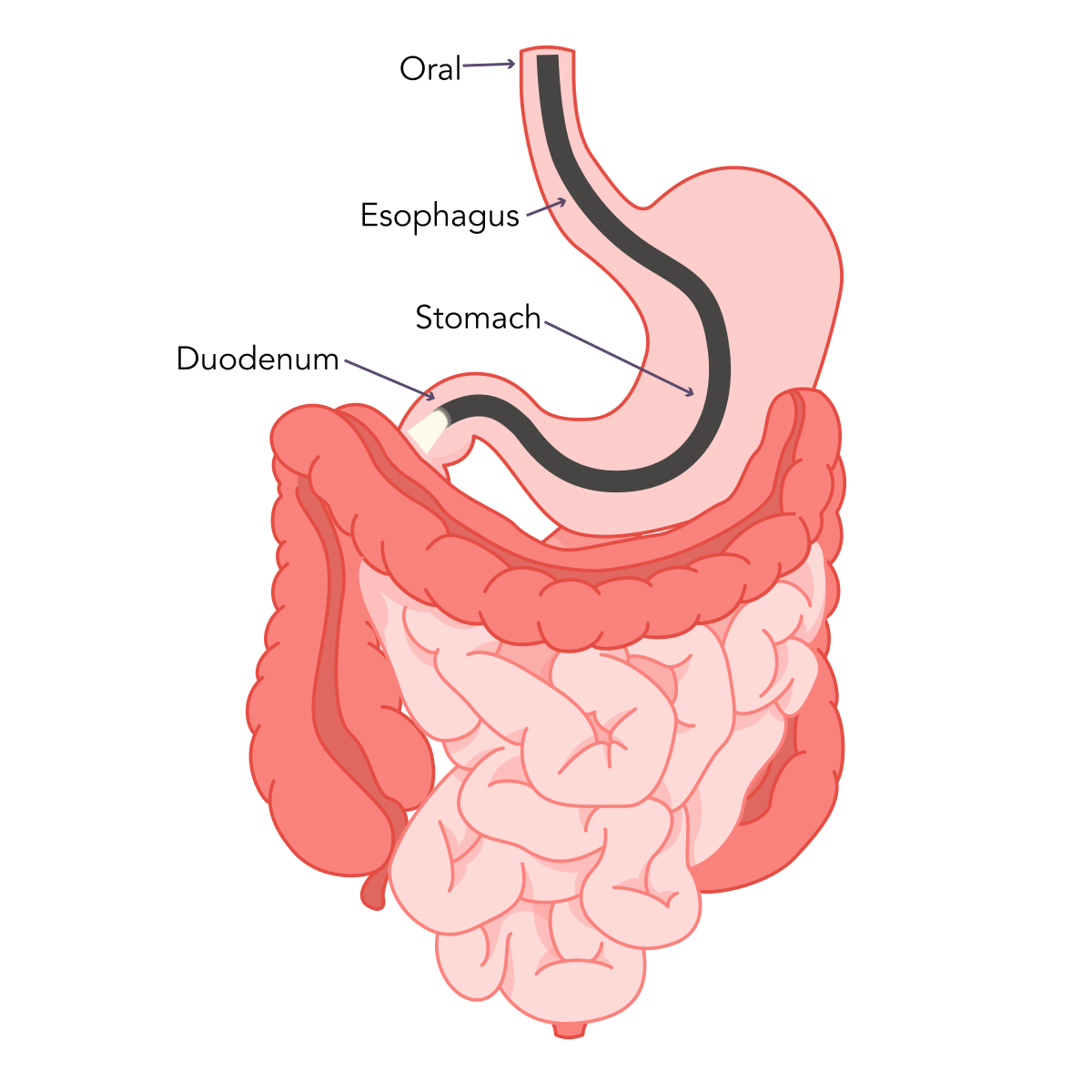
ESOPHAGOGASTRUDUODENOSCOPY (EGD)
As discussed when evaluating clients for GERD, an ambulatory esophageal reflux monitoring test can also be used to determine if a client has a hiatal hernia. Additionally, a barium esophagram or swallow test is another way radiologists and providers can diagnose hiatal hernias after the client swallows the contrast-enhanced barium to easily visualize the anatomy and structures of the GI tract in radiographic images.
In some situations, a CT scan may be needed to diagnose a more complex hiatal hernia to more accurately detail the anatomy involved, especially when surgery is necessary for repair of the herniated defect.
Connections
Nutrition
A hiatal hernia can cause an increase in manifestations of GERD when irritated by substances such as caffeine or spicy foods.
Fluid and Electrolytes
A client who has a hiatal hernia may have an increased risk for dehydration and nutritional deficits if they experience persistent nausea and vomiting that interferes with their oral intake.
Role of the Nurse
Environmental
The environmental factors for clients who have a hiatal hernia are the same as presented for GERD.
Individual Factors
Tobacco use can increase the manifestations of a hiatal hernia.
Client Education
Provide education similar to that provided for GERD. Teaching will include eating smaller and frequent meals; avoiding fried or spicy foods; decreasing or eliminating smoking, alcohol, and caffeine products; and increasing exercise to help maintain or decrease weight. Additionally, it will be helpful to teach the client to avoid tight-fitting clothes around the abdomen to decrease some of the manifestations caused by a hiatal hernia.
A nurse is caring for a client who has a hiatal hernia. Which of the following statements should the nurse make?
A
Increase intake of carbonated beverages.
B
Lie down for 30 minutes after eating.
C
Increase the intake of raw vegetables.
D
Eat small, frequent meals.
Nursing Process
Recognize Cues (Assessment)
Begin by assessing the client’s subjective and objective presenting manifestations.
As is always the case when seeing a client for the first time, such as on admission or with a new or updated visit, obtain, address, identify, or review the individual’s history of current illness and any past medical and surgical history.
As the usual presenting manifestation of a hiatal hernia are similar to those found with GERD, question the client regarding the presence of heartburn and regurgitation. Also inquire if the regurgitation is digested or undigested food as undigested food could be due to other conditions such as diverticulosis. Chronic cough and the presence of asthma are also manifestations that should be assessed as both can also be indicative of a hiatal hernia.
Palpate the abdomen assessing for any areas of tenderness or discomfort, noting location and description of the tenderness or discomfort.
Analyze Cues (Analysis)
Analyze the data from the history and assessments to determine concerns that are consistent with GERD and the development of a hiatal hernia. Analyze the determined risks for stomach and duodenal-related manifestations and review diagnostic test results to identify findings indicative of the presence of a hiatal hernia.
A nurse is collecting data about a client. Which of the following should the nurse identify as a risk factor for hiatal hernia?
Select all that apply.
A
The client has had multiple pregnancies.
B
The client has chronic constipation.
C
The client has an immune system disorder.
D
The client has a history of human papilloma virus (HPV).
E
The client has a low BMI.
Prioritize Hypotheses (Analysis)
Compare current findings and manifestations to evidence-based resources. The analysis of risk factors, assessment findings, and diagnostic testing results will allow nurses to identify any potential complications as well as assist them in organizing and prioritizing nursing care.
Once all the data has been analyzed, prioritize relief of manifestations, particularly pain, nausea, and vomiting.
Generate Solutions (Planning)
Next, use all the above information to formulate a plan of care. Include the client and their family in this plan as well as their interprofessional health care team (dietitian, gastroenterologist). The goal is to prioritize interventions, identify outcomes, and modify and make changes as needed.
The plan should include decreasing the present manifestations, prevention of further episodes, and education of the client on how to prevent recurring episodes.
Take Actions (Implementation)
Implement the plan and proceed with designated interventions. Continue to collaborate with members of the interprofessional health care team as needed, and continuously involve as well as provide education to the client and family. Specific actions to implement are the same as those performed for GERD.
Evaluate Outcomes (Evaluation)
Evaluate the effectiveness of the implemented plan at this time and modify, update, and continue to review nursing actions based on the client’s response and clinical findings, as needed. Reassess the client to determine if the treatments and interventions were effective in resolving the manifestations the client presented with, such as pain, nausea, and vomiting.
Treatments and Therapies
Medications
H2-receptor blockers (cimetidine, famotidine), PPIs (lansoprazole, omeprazole), and antacids (Tums, Milk of Magnesia) may be prescribed or recommended by the health care provider to relieve heartburn in clients who have hiatal hernias. See medication table in the "Oral and Esophageal Conditions" section.
Surgical Intervention
In some instances, surgical intervention may be necessary if the client has not responded to medication therapy to relieve manifestations of indigestion and acid reflux or if complications such as strictures of the esophagus has occurred. A laparoscopic Nissen fundoplication (LNF) is one long-term surgical intervention in which the LES is reinforced. During this procedure, the surgeon pulls the stomach down into the abdomen and wraps the gastroesophageal junction around the lower portion of the esophagus with the fundus of the stomach. Nurses would be responsible for monitoring for postoperative complications, including bleeding or changes in respiratory statusGastroparesis
Page 1
Pathophysiology
Another type of stomach-related issue that can be seen in clinical practice is gastroparesis. Gastroparesis, sometimes also referred to as gastropathy, affects the movement of the muscles of the stomach due to neurological dysfunction. It is a chronic disorder that results in the delay or even absence of gastric emptying. In a sense, it is a type of paralysis of the stomach muscle. When an individual has gastroparesis, the emptying of the food particles from the stomach is slowed and sometimes it remains within this location for so long that the undigested food can harden into a tightly woven mass of unprocessed material called a bezoar.
Explore the 3D visualization of gastroparesis below.
Etiology and Risk Factors
Gastroparesis is thought to occur because of damage to the vagus nerve and unique cells called pacemaker cells that usually stimulate the muscles of the stomach wall to contract. The long-term and damaging effects of poor control of diabetes is one of the leading causes of this disorder as well as any injury that can cause harm to the vagus nerve, such as surgery. In addition, certain autoimmune or connective tissue diseases like scleroderma, Sjogren’s syndrome, multiple sclerosis, and hypothyroidism can contribute to a diagnosis of gastroparesis as can a cerebral vascular accident (CVA), myasthenia gravis, and Parkinson’s disease.
Technically, even side effects of medications that delay gastric emptying, such as opioid pain medications, tricyclic antidepressants, calcium channel blockers, and marijuana (THC), can cause temporary conditions that mimic a clinical feature of gastroparesis, but their use does not always lead to a permanent duration of the disorder as is the case with diabetes. However, there is evidence that long-term use of opioids and antidepressant medications can cause a chronic consequence of gastroparesis. Other risk factors include viral or bacterial infections that lead to this complication such as cytomegalovirus, Epstein-Barr virus, Varicella zoster virus, or Chagas disease.
A nurse is providing teaching to a client who has gastroparesis. Which of the following conditions will the nurse include as one of the leading causes of this disorder?
A
Uncontrolled diabetes
B
Hypertension
C
Use of opioids
D
Hyperthyroidism
Epidemiology
Gastroparesis is rarely a primary diagnosis, but most often it is a comorbidity related to another diagnosis or an adverse effect of commonly prescribed medications such as opioids, tricyclic antidepressants, calcium channel blockers, and GLP-1 agonists, among others. The incidence and prevalence of gastroparesis are not well known, although it is theorized that it may be underdiagnosed, especially in clients with diabetes mellitus.
Impact on Client’s Overall Health
Physiological Impact
Gastroparesis can disrupt one’s ability to eat as it may cause early satiety, nausea, vomiting, abdominal pain, and bloating. These manifestations may cause clients to not feel comfortable eating outside of their home.
Psychosocial Impact
Gastroparesis has been found to occur more frequently in clients who have an eating disorder, such as anorexia nervosa and bulimia nervosa, as an adverse health complication related to prolonged periods of restricted food intake causing a progressive weakening of the muscles of the stomach walls leading to delayed gastric emptying. When that occurs, the client’s decreased willingness to eat or lack of appetite can perpetuate into a vicious cycle due to the common symptomatology of both disorders.
Considerations of the Aging Adult
Older adults who have delayed gastric motility from gastroparesis are more likely to report early satiety when eating and can experience increased episodes of bloating and passing gas when compared with a younger population who often present with increased episodes of nausea, recurrent vomiting, and abdominal pain.
Clinical Presentation
Clients who have delayed gastric motility from gastroparesis usually present with nausea, vomiting that is recurring, abdominal bloating, abdominal pain, a feeling of fullness after eating a small amount of food or early satiety, acid reflux, decrease in level of energy, lack of appetite, or weight loss.
Lab Testing and Diagnostic Studies
Gastroparesis can be diagnosed by using several radiological tests. Likely, as stated with previous GI disorders, an EGD will be performed to inspect the lining of the esophagus, stomach, and duodenum to obtain a baseline evaluation. Gastric emptying tests will also be ordered by the provider to investigate the possibility of this diagnosis. Scintigraphy is one type of gastric emptying test and is considered the gold standard to diagnose a client with gastroparesis. It uses radiographic images that are taken externally to capture and trace how fast the prior ingested food impregnated with a designated amount of contrast dye can move through the stomach.
Another exam, called a gastric emptying breath test (GEBT) is gaining popularity as it is both noninvasive and nonradioactive. It uses a collected sample of a client’s breath before and several times during and after a special meal uniquely formulated for the exam that the individual eats in a provider’s clinic, outpatient center, or even in the setting of the individual’s own home to determine how fast the food empties the stomach and becomes metabolized. The test can take up to 4 hr to complete.
Connections
Nutrition
Gastroparesis can be concerning if the client does not ingest enough food to receive the required amount of daily vitamins and minerals to support nutritional well-being due to reports of early satiety.
Fluid and Electrolytes
Clients who have type 1 or type 2 diabetes and who have consistently elevated blood glucose levels that are consistently elevated are at a higher risk for developing gastroparesis. This is believed to be closely connected to a disruption in the normal gastrointestinal microbiome, rather than simply a result of hyperglycemia or side effects of medications; however, further research is needed to understand the highly complex physiologic relationship between DM and gastroparesis.
Role of the Nurse
Environmental
Lifestyle choices such as physical inactivity, tobacco use, alcohol consumption, and frequent intake of carbonated beverages can contribute to gastrointestinal dysmotility and exacerbate symptoms in clients with gastroparesis. These factors can impair antral contractility, delay gastric emptying, and increase gastric distention.
Safety Considerations
For clients with gastroparesis, symptom management and complication prevention are critical components of care. Constipation should be addressed using dietary modifications, such as increasing soluble fiber and fluids, and when necessary, with medications. To minimize the risk of malnutrition, clients should be encouraged to eat small, frequent meals that are low in fat and insoluble fiber, as these can slow gastric emptying and exacerbate symptoms.
Recurrent vomiting increases the risk of dehydration, electrolyte imbalance, and micronutrient deficiencies, particularly in thiamine, vitamin B12, and fat-soluble vitamins. Nurses should educate clients to maintain hydration by drinking 1 to 1.5 liters of fluid per day and suggest liquid nutritional supplements when oral intake is limited. Gentle physical activity, such as walking after meals, may also improve gastric motility and support digestion.
Individual Factors
Gastroparesis is more common among individuals who are overweight or obese, especially those with type 1 or type 2 diabetes mellitus. Poorly controlled diabetes is a major risk factor, as chronic hyperglycemia contributes to autonomic neuropathy and impairs gastric emptying. These findings highlight the importance of consistent blood glucose monitoring and glycemic control. Nurses should assess clients’ diabetes self-management behaviors and provide guidance on strategies to prevent gastroparesis-related complications, such as optimizing A1C levels and avoiding glucose variability.
Client Education
Provide instructions of dietary and lifestyle modifications that will aid in the management of manifestations associated with gastroparesis. Teaching will include the importance of decreasing or avoiding smoking, alcohol consumption, and the use of opioid pain medications. Dietary modification teaching will include eating frequent smaller meals, choosing low-fat food items, consuming cooked or steamed fruits and vegetables, and avoiding carbonated beverages that would increase feelings of bloating. Clients should be instructed to chew all food thoroughly before swallowing and to not lie down immediately after eating. Teach the client to monitor blood glucose levels.
Nursing Process
Recognize Cues (Assessment)
Begin by assessing the client’s subjective and objective presenting manifestations.
As is always the case when seeing a client for the first time, such as on admission or with a new/updated visit, obtain, address, identify, or review the individual’s history of current illness and/or any past medical or surgical history.
Clients who have gastroparesis can present with a wide variety of manifestations. Question the client regarding abdominal bloating or pain, presence of nausea and vomiting, especially undigested food a few hours after eating, and reflux and loss of appetite and weight.
Palpate the abdomen assessing for any areas of tenderness or discomfort, noting location and description of the tenderness or discomfort.
Current and present medications should be reviewed with the client as certain medications can lead to gastroparesis.
Gather all diagnostic and laboratory results to be reviewed.
Analyze Cues (Analysis)
Compare assessment and diagnostic test findings to determine if there are correlations that confirm an indication of gastroparesis. Identify any potential complications such as weight loss, changes in appetite, and reduced levels of energy that impact the ability to perform activities of daily living.
Prioritize Hypotheses (Analysis)
Once all the data has been analyzed, priorities of care will include pain relief, maintaining adequate nutrition and prevention of dehydration associated with nausea and vomiting. If the client is diabetic, the priority will include improved blood sugar control.
Generate Solutions (Planning)
Next, use all the above information to formulate a plan of care. Include the client and their family in this plan as well as their interprofessional health care team (dietitian, gastroenterologist). The plan should include decreasing the present manifestations of gastroparesis, prevention of potential complications, and education of the client on how to prevent recurring episodes.
Take Actions (Implementation)
Continue to collaborate with members of the interprofessional health care team as needed, and continuously involve as well as provide education to the client and their family. Specific actions to implement include administering prescribed medications for pain and to improve GI motility. Clients who have diabetes should have blood glucose levels monitored on a regular schedule. A dietitian should be consulted to provide the client with additional information on improving caloric and nutrient intake.

Pixel-Shot/Shutterstock
CONSULTATION WITH DIETITIANConsult a dietitian to provide information on improving the client's caloric and nutritional intake.
Evaluate Outcomes (Evaluation)
Reassess the client to determine if the treatments and interventions were effective in resolving the manifestations the client presented with, such as pain, dehydration, nausea, and vomiting.
Treatments and Therapies
Medications
Medications used to treat gastroparesis include those that help stimulate the muscles of the stomach, such as metoclopramide (Reglan) and erythromycin, and medications to control nausea and vomiting, such as ondansetron (Zofran) and prochlorperazine (Compazine).
Medications to Treat Gastroparesis
Class
| Action | Therapeutic Use | Adverse Effect | Client Teaching |
|---|---|---|---|---|
Antidopaminergic agents
| Assists in stimulation of muscles in GI tract to move food and liquids | Used to treat delayed gastric motility | Drowsiness, agitation, extrapyramidal effects (involuntary muscle spasms or twitching) | Take with full glass of water. Take on empty stomach. Do not take longer than 12 weeks, unless directed by health care provider. Monitor for depression or thoughts of self-harm. Do not drive if this medication causes drowsiness. Notify provider if you notice any muscle twitching. |
Antibiotics
| A motilin agonist that enhances gastric motility and improves gastric emptying | Used to treat delayed gastric motility | Diarrhea, tachycardia, skin rash, and tiredness | Notify provider of any food or medication allergies. May take with or without food. |
Antiemetics
| Blocks the action of serotonin that causes nausea and vomiting | Used to decrease nausea and vomiting | Headache, lightheadedness, blurry vision, tiredness, constipation, and prolonged QT | Report increased dizziness or feeling faint. Do not operate machinery if feeling dizzy or lightheaded. Monitor potassium and magnesium blood levels as ordered. Limit intake of alcohol. |
A nurse is providing education for a client who is taking metoclopramide for gastroparesis. Which of the following statements by the client should indicate to the nurse that the client understands the teaching?
Select all that apply.
A
“This medication will help my stomach muscles contract.”
B
“I should take it with a full glass of water.”
C
“It is important to take it with a meal.”
D
“I should have my magnesium levels monitored while taking it.”
E
“I should expect to take this medication for 6 months.”
Nonpharmaceutical Interventions
Clients who experience an increase in severity of manifestations of gastroparesis and have difficulty eating food or liquids may have a tube inserted through the nostril that runs down into the stomach. This tube is only temporary and will allow for liquid nutrition to be placed directly into the stomach. For clients who continue to be unable to tolerate eating and swallowing food or liquids, the provider may determine that the surgical insertion of a jejunostomy tube placed into the small intestine, is required to provide adequate, and regularly scheduled nutritionGastritis
Page 1
Pathophysiology
Gastritis is a term used to describe inflammation of the inner tissue lining of the stomach that causes the integrity of the gastric mucosal lining to become compromised and exposed to viral, fungal, and bacterial such as H. pylori infections. It can be an acute or chronic condition, and its causes are vast. On endoscopy, the mucosal lining of the stomach of someone who has gastritis appears reddened and swollen.
Etiology and Risk Factors
Acute and chronic gastritis can be caused by overconsumption of alcohol; eating spicy, fried, or acidic foods; taking NSAIDs; food poisoning; varying infections; acute stress caused by physiological or emotional trauma; or by smoking cigarettes. A bacterial infection by H. pylori is a common cause for chronic gastritis.
A client who has gastritis asks the nurse what causes gastritis. Which of the following will the nurse include in her response to the client?
Select all that apply.
A
Eating excessive amounts of spicy foods
B
Overconsuming ibuprofen
C
Helicobacter pylori (H. pylori)
D
Excessive intake of acetaminophen
E
Eating gluten
F
Acute stress due to a severe burn
Epidemiology
Gastritis is a globally widespread condition that is a frequent reason individuals seek acute medical care each year. In the U.S., acute and chronic gastritis occurs more frequently in adults older than 65 years old due to the thinning of the lining that comprises the stomach tissues and by decreasing circulation to its mucosal layers that typically accompanies aging.
Gastritis caused by the H. pylori bacterium is more prevalent in areas where residents consume poor quality water or food that is contaminated because of unsanitary conditions.
Impact on Client’s Overall Health
Physiological Impact
In some cases, gastritis can progress to ulcerations of the stomach if left untreated, increasing the likelihood of peptic ulcers. Additionally, periods of increased or sustained physiological stress have been positively linked to gastritis. Stress-induced gastritis is the medical term most often used for this disorder, but it has also been known by other terminologies, such as stress-related erosive syndrome and stress ulcer syndrome. Individuals who are critically ill with conditions such as massive burn injury, head trauma with elevated intracranial pressure, sepsis, severe trauma, or multisystem organ failure are significantly at an increased risk for stress-induced gastritis and often are given prophylactic acid-reducing or PPI medication during these catastrophic periods of illness as a protective measure.
Furthermore, there is increasing evidence that demonstrates an increased risk for the development of gastric cancer from an H. Pylori infection.
Psychosocial Impact
Research studies have discovered that individuals who experience increased levels of stress, either physical or emotional, can lead to the development of gastritis. It is essential for anyone who has gastritis to identify personal causes of stress and to develop methods to reduce those stressors.
Considerations of the Aging Adult
Gastritis can become more serious in an individual older than 65 years old, especially because this population has an increased likelihood to take OTC NSAIDs, which are harmful to the gastric mucosal lining and potentially lead to gastric bleeding.
Clinical Presentation
A client who has acute or chronic gastritis may complain of loss of appetite, bloating, increased belching, nausea/vomiting, or abdominal pain of the epigastric region. In some cases, an individual who has gastritis will present with black, tarry stools and blood in their emesis (vomit).
Lab Testing and Diagnostic Studies
Gastritis is usually diagnosed using a combination of laboratory and imaging tests. A complete blood count (CBC) will evaluate the client’s blood counts to check for anemia, a potential indication of a bleeding ulcer caused by the disorder. Additionally, the provider may order serum laboratory work to check the client’s overall health status by testing for liver, kidney, and pancreatic function, as well as obtain a stool sample to assess for GI bleeding.
complete blood count (CBC)
An EGD would be performed to obtain a tissue sample for biopsy to assess for H. pylori infection. This procedure is considered the gold standard analysis for detecting this bacterium.
Another diagnostic study used to determine if the client might have H. pylori infection is the urea breath test, also known as the rapid urease test or the CLO test. This test consists of the client drinking a specialized beverage provided by a radiology specialist that contains urea in it. Urea is a biomarker compound that is made by H. pylori, and through this chemical process, ammonia and bicarbonate are created, which are then converted to carbon dioxide. Thus, after the urea preparation is ingested, the client breathes into a bag that is analyzed by a laboratory technician, usually after 10 min, to detect if carbon dioxide is present as a positive indication of H. pylori infection.
A provider may also order a computed tomography (CT) scan of the abdomen to provide images of the gastric lining, which is analyzed by a radiologist to determine if there are indications of tissue inflammation and/or erosion, which can be manifestations of gastritis.
Connections
Nutrition
There is a positive correlation between adding more cruciferous vegetables (cauliflower, cabbage, broccoli) to one’s diet and improving the gut microbiome in individuals who have gastritis caused by H. pylori.
gut microbiome
Fluid and Electrolytes
A client who has gastritis may have an increased risk for dehydration and nutritional deficits if they experience persistent nausea and vomiting that interferes with their oral intake.
Role of the Nurse
Environmental
Socioeconomic and environmental factors significantly influence the transmission of Helicobacter pylori, the most common cause of chronic gastritis. Contributing factors include poor sanitation, contaminated water, crowded living conditions, and close person-to-person contact during childhood, which increase the risk of acquiring H. pylori infection early in life. Exposure to physical or psychological stress has also been associated with acute gastritis, particularly in hospitalized or critically ill individuals.
Safety Considerations
Nurses should empower clients to take an active role in managing and preventing recurrence of gastritis. This includes providing education on medication adherence, identifying aggravating factors, and promoting dietary and lifestyle modifications. For clients with H. pylori-associated gastritis, education should emphasize the importance of food hygiene, including proper handwashing, avoiding shared utensils, and disinfecting food preparation surfaces, as reinfection remains possible, especially in endemic areas.
Clients should be taught to avoid NSAIDs and alcohol, which can contribute to mucosal injury and exacerbate gastritis. They should also be advised to remain upright after meals and avoid lying flat for 2 to 3 hours to reduce reflux symptoms. Stress-reduction techniques, such as guided breathing or mindfulness exercises, may help manage stress-related gastritis and improve quality of life.
Individual Factors
Lifestyle behaviors such as smoking, alcohol use, and frequent NSAID consumption are strongly associated with gastritis and should be routinely assessed. In addition, autoimmune disorders, such as autoimmune thyroiditis or type 1 diabetes, can predispose individuals to autoimmune metaplastic atrophic gastritis (AMAG), which leads to vitamin B12 deficiency and increases gastric cancer risk. A history of major surgery, trauma, or critical illness may also contribute to the development of acute erosive gastritis.
Client Education
Nurses play a critical role in educating clients about proper hygiene and infection prevention. Clients diagnosed with H. pylori-related gastritis should be instructed to complete their full antibiotic and acid-suppressing regimen and follow up with their provider for test-of-cure, typically via stool antigen or urea breath test. Reinforce the need to avoid reinfection through household hygiene. Nutrition counseling should focus on avoiding irritants such as caffeine, alcohol, and spicy foods.
Clients with autoimmune gastritis should be screened for vitamin B12 and iron deficiencies and referred for appropriate supplementation and monitoring. These clients may require lifelong surveillance due to increased risk for gastric neuroendocrine tumors and adenocarcinoma.
Nursing Process
Recognize Cues (Assessment)
Begin by assessing the client’s subjective and objective presenting manifestations.
As is always the case when seeing a client for the first time, such as on admission or with a new or updated visit, obtain, address, identify, or review the individual’s history of current illness and any past medical or surgical history.
When assessing a client who has gastritis, gather information on whether the client has any abdominal bloating, pain in the upper abdomen, loss of appetite along with any weight loss, any bowel movements that are black and tarry, nausea and vomiting, vomiting blood, and any history of stomach ulcers.
Review current and lifestyle practices with the client as certain medications such as NSAIDs, and personal habits such as alcohol use can lead to gastritis.
Analyze Cues (Analysis)
Analyze the data from the history, assessment, and diagnostic testing to determine if the client’s reported manifestations are indicative of gastritis. Review the findings from blood work to identify if the client’s RBCs are decreased, indicating anemia, or if WBCs are elevated, indicating potential infection.
Prioritize Hypotheses (Analysis)
Once all the data has been analyzed, prioritize relief of manifestations, particularly pain, nausea, vomiting, and presence of H. pylori infection.
Generate Solutions (Planning)
The plan of care for a client experiencing acute or chronic gastritis should include decreasing the present manifestations such as nausea and vomiting, preventing further episodes that lead to chronic gastritis, and educating the client on how to prevent recurring episodes, including avoiding taking NSAIDs and alcohol.
Take Actions (Implementation)
Implement the plan and proceed with designated interventions. Continue to collaborate with members of the interprofessional health care team as needed, and continuously involve as well as provide education to the client and their family. Specific actions to decrease manifestations of gastritis include administration of medications such as PPIs, H2 blockers, antacids, and antibiotics. Instructions will be provided on lifestyle modifications, such as decreasing NSAID and alcohol use and avoiding lying flat after meals.
Evaluate Outcomes (Evaluation)
Reassess the client 4 weeks after initiation of medication treatments and lifestyle modification to determine the effectiveness in resolving the manifestations of gastritis such as pain, nausea, and vomiting, or presence of H. pylori infection.
Treatments and Therapies
Similar to the medication treatment for other esophageal or stomach conditions, H2 blockers (cimetidine, famotidine), PPIs (lansoprazole, omeprazole), and antacids (TUMS) can be recommended by the health care provider to relieve manifestations associated with gastritis.
Antibiotics, including metronidazole (Flagyl), can be prescribed if a bacterial infection, such as H. pylori, is the cause of the gastritis.
For more information on the prescribed medications for gastritis, see the “Medications to Treat Gastroparesis” table provided earlier in this lesson.
A nurse is planning care for a client who has gastritis. Which of the following should the nurse anticipate may be included in the plan of care?
Select all that apply.
A
NSAIDs
B
H2 blockers
C
Proton pump inhibitors
D
Antibiotics
E
Ulcers
Page 1
Pathophysiology
Stomach or gastric ulcers are open sores that occur in the inner lining of the stomach. They are also often referred to as peptic ulcers, and this term encompasses an open sore that can occur in both the stomach and the duodenum.
Peptic ulcer disease (PUD) occurs due to a defect in the protective gastric mucosa and destructive factors such as H. pylori infection. Once the protective mucosa integrity is damaged, acid from gastric juices can eat away at the inner layers. In addition, the capability of the cells of the mucosa to secrete bicarbonate is altered.
The integrity of the protective mucosa is further damaged when H. pylori colonizes the mucosa and causes the mucosa to become inflamed. Further destruction occurs as H. pylori alters bicarbonate secretion, causing acidity and the development of changes in the cells of the gastric mucosa (gastric metaplasia).
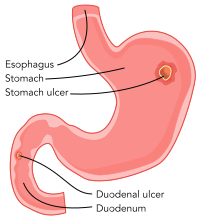
PEPTIC ULCERS
Etiology and Risk Factors
The most prevalent causes of PUD are H. pylori and the long-term ingestion of NSAIDs, which contribute to the development of PUD. Other causes include smoking, alcohol consumption, and conditions that produce a hypersecretory environment, such as cystic fibrosis, hyperparathyroidism, and Zollinger-Ellison syndrome. Although rare, additional causes of PUD include viral infections, radiation and chemotherapy, Crohn’s disease, lymphomas, gastric and lung cancers, and vascular insufficiency.
At one time, stress and eating spicy foods were thought to be risk factors, but these are myths. Neither stress nor eating spicy foods or a rich diet leads to PUD. However, eating spicy foods increases the production of gastric acids, which can aggravate an ulcer that is already present.
Risk Factors and Comorbidities
Risk factors for developing PUD include H. pylori infections and long-term use of NSAIDS. Additional risk factors include consumption of alcohol on a regular basis; smoking; liver, kidney, or lung disease; and a family history of PUD. Clients who have O blood type are at an increased risk for H. Pylori infection because the H antigen secreted in their gastric mucous membrane is more susceptible to H. pylori attaching to it.
Comorbidities associated with PUD complications and the reoccurrence of PUD include cirrhosis of the liver, renal insufficiency, and rheumatoid arthritis.
Epidemiology
In the United States, the incidence of PUD is approximately 4.6 million people per year. The risk increases as clients age. Gastric ulcers commonly occur in clients older than 40 years, and duodenal ulcers often occur in clients ages 20 to 50. The incidence of H. pylori has declined over the past 50 years, but the use of NSAIDs has increased.
Impact on Overall Health
Physiological
Ulcers of the gastrointestinal tract can be dangerous and life-threatening if the ulcers erode and cause internal bleeding or if built-up scar tissue from past healing causes obstruction. In addition, long-term inflammation from ulcerations can make an individual susceptible to gastric malignancy.
Psychosocial Impact
Clients who suffer from chronic pain may have a history of taking ASA or NSAIDs for long periods of time. These individuals are at risk for PUD and will need to adjust their pain-relief medication to another alternative that is less damaging to the lining of the mucosa of the stomach and intestines. Because of this disruption, they may exhibit anxiety or fear about changing a pain medication regimen. Additionally, individuals who overuse alcohol may verbalize that they are reluctant, fearful, or anxious about discontinuing the use of alcohol and may need reassurance and a referral for evaluation and treatment at an alcohol recovery program.
Considerations of the Aging Adult
Older adult clients can be asymptomatic in the initial stages of the disease; thus, the first presenting manifestation are typically unexplained weight loss or decreased appetite. Delayed diagnosis in the older adults could lead to dangerous complications such as hemorrhage, perforation, or obstruction.
A nurse is caring for an older adult client. Which of the following should the nurse recognize as early manifestations of a peptic ulcer for this client?
Select all that apply.
A
Unexplained weight loss
B
Elevated temperature
C
Hypotension
D
Decreased appetite
E
Anemia
Clinical Presentation
Clinical presenting manifestations of PUD include abdominal pain described as a burning or gnawing sensation noted most frequently after meals or at night, weight loss, nausea, vomiting, feeling bloated, and early satiety. The most important concern of PUD is the potential for perforation, causing bleeding or infection. Manifestations of bleeding and infection include hypotension, tachycardia, dizziness, lightheadedness, weakness, elevated temperature, shortness of breath, blood in the emesis or stool, or other signs of anemia.
Lab Testing and Diagnostic Studies
Clients who present with manifestations of PUD will need both lab work and diagnostic procedures performed. Routine lab work is usually not beneficial for clients who have uncomplicated PUD. However, CBC, liver function tests, amylase, and lipase may be useful in detecting infection and potential for bleeding.
The most accurate exam and considered the gold standard when diagnosing PUD is an EGD. This exam allows the health care provider to have an inside view of the esophagus, stomach, and duodenum. This exam also allows the health care provider to obtain biopsies and cytologic brushings to further differentiate between benign ulcers and cancerous lesions. It also detects infection caused by H. pylori.
All clients who present with peptic ulcers should be tested for H. pylori. When biopsies are obtained, a rapid urease test, histopathology, and cultures should be performed. One or more biopsies are placed in the rapid urease kit. If H. pylori is present, there will be a color change due to the bacterial urease converting the urea to ammonia. Fecal antigen testing can also be performed. This test detects H. pylori antigens in the clients' stools. This test is more accurate and less expensive than antibody testing.
Another test that can be completed to detect an active H. pylori infection is the urea breath test. If urease is present (produced by H. pylori), the radiolabeled carbon dioxide produced in the stomach will be absorbed in the bloodstream, diffused in the lungs, and exhaled.
Other tests to detect H. pylori include histopathology and obtaining serum, plasma, or whole blood specimens to check for H. pylori antibodies.
If clients are acutely ill and a perforation is suspected, a chest x-ray may be helpful in diagnosis, as free air from the abdomen will be noted.
An upper GI study with contrast can also be performed should a perforation be suspected. The contrast will leak out of the area that is perforated into the surrounding abdominal area if a perforation is present.
If Zollinger-Ellison syndrome is suspected, a serum gastrin level and secretin stimulation test will be obtained.
A nurse is admitting a client who is suspected of having PUD. The nurse would anticipate which of the following diagnostic tests be prescribed to diagnose PUD?
A
EGD
B
Scintigraphy
C
Barium esophagram
D
Ambulatory pH monitoring
Connections
Nutrition
A client who has PUD should avoid foods and beverages that would intensify manifestations. Alcohol and caffeine are potential irritants, and the client should be instructed to avoid these.
Fluid and Electrolytes
Clients who have PUD may have abdominal pain, bloating, the feeling of abdominal fullness and nausea and vomiting. All these manifestations can lead to poor nutritional and fluid intake.
Role of the Nurse
Environmental
Socioeconomic status, education level, and crowded living conditions contribute to the risk of Helicobacter pylori infection, a primary cause of peptic ulcer disease (PUD). Tobacco use, excessive alcohol intake, and poor dietary habits further increase the likelihood of both uncomplicated and complicated ulcers.
Nurses must recognize the influence of structural and social determinants of health (SDOH) and provide culturally sensitive education and resources to mitigate risks. For example, educating clients about avoiding shared utensils and improving hand hygiene can help reduce H. pylori transmission, especially in high-prevalence areas.
Safety Considerations
Early recognition of complications (e.g., bleeding, perforation, obstruction) is critical. Nurses should assess for hematemesis, melena, sudden abdominal pain, orthostatic hypotension, or signs of gastric outlet obstruction such as vomiting and early satiety.
Nurses coordinate care by ensuring appropriate diagnostic testing, monitoring lab values (e.g., hemoglobin), and preparing clients for possible endoscopy or surgery. For refractory or complicated ulcers, prompt communication with the healthcare team is essential.
Individual Factors
Risk factors include long-term NSAID use, smoking, high alcohol intake, older age, and stress. Individuals with autoimmune disease or a history of critical illness also have increased risk, particularly for complications such as perforation or bleeding.
Nurses should monitor for ulcer triggers and reinforce proper NSAID use, promote tobacco and alcohol cessation, and offer referrals to supportive programs. Clients should be advised to take NSAIDs with food and only as prescribed.
Client Education
Teach clients the importance of completing prescribed therapy for H. pylori infection and avoiding NSAID use unless medically necessary. If PPIs are prescribed, encourage intake of magnesium-rich foods such as leafy greens, nuts, and yogurt.
Clients should be advised to avoid irritants such as caffeine, alcohol, and spicy foods, although strict dietary restrictions are no longer routinely recommended. Encourage smoking cessation and support stress reduction techniques, such as guided breathing. Instruct clients to seek care if they experience black stools, vomiting blood, or severe abdominal pain.
Nursing Process
Recognize Cues (Assessment)
When assessing the client who has PUD, begin by gathering a thorough history and physical along with reviewing any diagnostic labs or tests. The client should be questioned regarding reported manifestations, such as abdominal discomfort, especially in the epigastric region, early satiety, feeling of abdominal fullness after a meal, and the presence of any blood in their emesis or stools. Inquire further on whether the pain they experience occurs before a meal or after a meal, as this can indicate whether the PUD has developed in the gastric or duodenal areas. Pain experienced after a meal indicates a gastric ulcer, whereas pain experienced before a meal and is relieved with eating can indicate a duodenal ulcer.
Auscultate the abdomen to assess for active bowel sounds and palpate to determine any pain or tenderness. Take note of the location of the pain and the intensity. In addition, assess the abdomen for any fullness or rigidity, which could indicate possible perforation and bleeding into the abdomen.

PALPATION OF THE ABDOMEN
The client should be questioned about past and present illnesses and conditions to determine risk factors for developing PUD. Ask about recent weight gain or unintentional weight loss in addition to social history regarding tobacco and alcohol use. Past and present medications should be reviewed, especially the use of ASA or NSAIDs.
Analyze Cues (Analysis)
Analyze the data from the history, assessment, and diagnostic testing to determine if the client’s reported manifestations indicate the development of PUD. Review the findings to identify the possibility of complications, including GI bleeding and abdominal infection.
Prioritize Hypotheses (Analysis)
The priority of care for clients experiencing PUD is preventing complications of GI bleeding or infection by monitoring for signs of active bleeding, abdominal rigidity, and an elevated temperature.
Generate Solutions (Planning)
Next, use all the above information to formulate a plan of care. Include the client and their family in this plan, as well as their interprofessional health care team (dietitian, and gastroenterologist). The goal is to prioritize interventions, identify outcomes, and modify and make changes as needed. The plan of care should include interventions that will promote early identification of potential complications, including bleeding and infection.
Take Actions (Implementation)
Implement the plan and proceed with designated interventions. Continue to collaborate with members of the interprofessional health care team as needed, and continuously involve and educate the client and their family. Specific actions to implement include managing the presenting manifestations, such as pain relief and controlling vomiting and monitoring vital signs frequently to detect any deterioration in the client's condition along with frequent assessments of the client. The health care provider should be notified immediately if any manifestations indicate perforation, infection, or bleeding. Laboratory findings should be reviewed and monitored as ordered.
Additional actions that should be implemented include monitoring intake and output and consulting the dietitian as needed to maintain adequate nutritional needs and assist weight loss if needed.
Evaluate Outcomes (Evaluation)
Determine if manifestations of PUD have been relieved, such as pain and vomiting. In addition, evaluate the absence of any complications.
After treatment for H. pylori is completed, the American College of Gastroenterology recommends the client be tested again for H. pylori to provide evidence that the H. pylori has been completely destroyed.
Treatments and Therapies
Medications
The treatment for PUD varies according to the cause of the disease and the manifestations that the client is experiencing. Treatment for clients with PUD includes the use of PPIs, as they heal the ulcer more effectively and quicker. Because long-term use of PPIs can cause osteoporosis leading to bone fractures, calcium supplements are frequently incorporated into the treatment plan.
For the client who has NSAID-induced PUD, the discontinuance or changing to a lower dose of the NSAID will be included in the treatment plan. At times, the health care provider will also prescribe a prostaglandin analog, such as misoprostol, prophylactically for these clients. This class of medication reduces gastric acid secretion and also increases the production of protective mucus.
Misoprostol
CLASS With Prototype: Antiulcer agent (Cytotec)
Action: Inhibits gastric acid secretion and increases mucus production in the stomach to protect the organ
Therapeutic Effects: Prevents the development of PUD due to NSAIDs
Adverse Effects: Headache, abdominal pain, diarrhea, constipation, nausea, vomiting, and miscarriage—contraindicated in the event of pregnancy or hypersensitivity to prostaglandins
Client Teaching: Do not share medication with others. Take medication as prescribed. Female clients of childbearing age should be informed that the medication will cause a spontaneous abortion. If they should become pregnant, they must stop the medication immediately and notify their health care provider.
For the client who has PUD that is caused by H. pylori, the treatment plan is three-fold. Two antibiotics, such as clarithromycin and metronidazole or amoxicillin, and a PPI, such as pantoprazole, or a PCAB, such as vonaprazan, will be prescribed for 7 to 14 days. The goal of treatment is to completely destroy the H. pylori.
Vonoprazan
Class: Potassium-competitive acid blockers (PCAB) (Voquezna)
Action: Suppresses gastric acid secretion by inhibiting both active and inactive proton pumps
Therapeutic Effects: Treatment of PUD, may be used with antibiotics. Prevention of PUD due to NSAIDs.
Adverse Effects: Diarrhea, abdominal pain, bloating, nausea, alterations in taste
Client Teaching: Adverse effects may be increased when taking vonoprazan with antibiotics. May be taken on an empty stomach or with food.
Clarithromycin
CLASS With Prototype: Antiulcer drug, agent for atypical mycobacterium (Biaxin)
Action: Inhibits protein synthesis of Helicobactor pylori, a bacterium that can cause ulcers
Therapeutic Effects: Elimination of Helicobactor pylori infection B
Adverse Effects: Headache, Torsades de Pointes, liver toxicity, Stevens-Johnson syndrome, Clostridium difficile-associated diarrhea. Contraindicated in clients with allergies to macrolide anti-infective medications, history of liver dysfunction with previous use of clarithromycin, prolonged QT interval, or electrolyte imbalance.
Client Teaching: Report signs of superinfection. Notify health care provider if rash, fever, or diarrhea occur or if pregnancy is planned or client is breastfeeding. If the client is taking zidovudine, must separate it from clarithromycin by 4 hours. Take a full course of medication as prescribed. May result in dizziness or confusion. Avoid hazardous activities such as driving until the effects are known.
A nurse is caring for a client who is taking a PPI and asks why a calcium supplement has also been prescribed. Describe in your own words how the nurse should answer the client’s question.
Enter your response and submit to compare to an expert response.
Surgery
Surgical interventions, such as a vagotomy or partial gastrectomy, may be needed if the client who has PUD is not responsive to medical treatment, is noncompliant, or is a high risk for complications.
A vagotomy is a surgical procedure that is reserved for clients who have severe cases of PUD. During this procedure, one of the branches of the vagus nerve that communicates with the stomach to produce gastric acid is severed. The purpose of the surgery is to decrease the secretion of stomach acid.
A partial gastrectomy involves the surgical removal of part of the stomach that is affected by PUDIntestinal Conditions
Page 1
Pathophysiology
There is an array of disorders that can impact the intestines and colon. Common conditions of concern are irritable bowel syndrome (IBS), Crohn’s disease, ulcerative colitis, bowel obstruction, diverticulitis, and celiac disease. Intestinal disorders often have overlapping manifestations and can be difficult to definitively diagnose. They may manifest as structural or functional alterations or they may be classified as irritable bowel syndrome (IBS) or inflammatory bowel disease (IBD). While there are many commonalities, there is also a great potential for overlap in how intestinal conditions manifest, are diagnosed, and are treated. This lesson includes a broad overview of common intestinal alterations.
IBS is a common disorder that can manifest with reports of cramping, abdominal pain, bloating, gas, diarrhea, or constipation. IBS does not have a specific pathophysiology since a diagnosis is typically made when other, more definitively diagnosed intestinal conditions have been ruled out. The cause of IBS is still not understood, although it is thought that a combination of factors may lead to IBS. These factors include how the muscles of the gastrointestinal tract contract and its ability to move food through the tract, nerves in the GI tract that are hypersensitive, and dysfunction in the communication between the brain and the gut. IBS is often classified according to presentation as IBS-C (when it primarily manifests as constipation), IBS-D (when the individual most often experiences diarrhea), or as IBS-M (when the individual has mixed bowel habits ranging from constipation to diarrhea).
Inflammatory bowel disease (IBD) is a group of disorders, most commonly either Crohn's disease or ulcerative colitis (UC). Crohn's disease causes inflammation to the deeper layers of structures lining the gastrointestinal organs that lie anywhere between the mouth to the anus. On endoscopy examination, it may demonstrate patches of inflammation followed by patches of healthy tissue. Ulcerative colitis is also an IBD that affects the colon and rectum. It usually causes a continuous pattern of small sores or ulcers of the superficial mucosa and submucosa that lines these specific areas of the large intestine.
Explore the 3D visualizations of Crohn's disease and ulcerative colitis below.
Functional and structural alterations in the intestine may also cause alterations in intestinal function. A bowel obstruction occurs when there is either a structural or functional issue that causes a blockage in the small or large intestine that keeps food or liquid from passing through.
A clinical condition that can occur throughout the intestinal tract is diverticulosis, in which multiple diverticula occur. Diverticula appear most often in the sigmoid colon and occur in areas of weakness along the intestinal tract. The diverticula can become inflamed or develop infections, called diverticulitis.
diverticula
Explore the 3D visualization of diverticulosis below.
Celiac disease is an autoimmune disorder that can cause serious health issues. It is sometimes referred to as celiac sprue or gluten-sensitive enteropathy. It is caused by a reaction to gluten, a naturally appearing protein found in wheat, barley, and rye. Over time, the inner lining of the small intestine can be damaged, and malabsorption can occur due to ingestion of this protein. Since manifestations are often similar to other intestinal disorders, celiac is commonly mistaken for irritable bowel syndrome. Additionally, there is a strong correlation between inflammatory bowel disease and celiac; however, celiac is not classified as IBD.
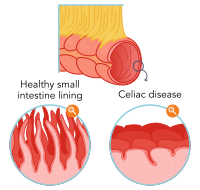
CELIAC DISEASE
A nurse is caring for a client who has celiac disease. Which of the following should the nurse recognize as characteristics of celiac disease?
Select all that apply.
A
It is an autoimmune disorder.
B
It is caused by a reaction to gluten.
C
It can damage the lining of the small intestine.
D
It can cause inflammation throughout the GI tract.
E
It causes ulcers in the mucosa of the large intestine.
Etiology and Risk Factors
Risk factors and etiology will vary depending on the specific intestinal condition and how it manifests. Females are more likely to have IBS than males. IBS occurs more frequently in individuals who are 50 years or younger and in those who have a family history of IBS. Emotional stress, food sensitivities, and certain medications, such as antidepressants, antibiotics, and those manufactured with sorbitol, are also believed to increase risk for IBS. Because IBS is a non-specific diagnosis, it is difficult to estimate an incidence; however, it is believed to impact around 12% of individuals in the United States.
The underlying risk factors for IBD are evolving and even debatable among experts. However, one of the more accepted, strong risk factors for Crohn’s disease, especially in Western cultures, is cigarette smoking and passive cigarette smoke contact. Additionally, the exposure to antibiotic use, especially when first introduced in childhood or perhaps as early as the prenatal period of development, is also beginning to gain more favor as a potential risk for Crohn’s disease. There are even some studies suggesting a relationship between having had an appendectomy or tonsillectomy performed in one’s early life to support an increased risk for developing Crohn’s disease. Furthermore, there is research that indicates that there is likely a strong correlation to a past virus or bacterial infection increasing one’s risk for developing ulcerative colitis, and interestingly enough, some evidence suggests an active history of smoking reduces an individual’s risk for acquiring ulcerative colitis.
The global prevalence of IBD is increasing, especially in industrialized countries. In the U.S., the CDC reports that close to 3 million adults have a diagnosis of either Crohn’s disease or ulcerative colitis. IBD occurs most often in individuals between 20 and 30 years old. However, there is a second peak that appears to also demonstrate increased incidence for developing ulcerative colitis between the ages of 60 and 79 years old.
Small bowel obstruction is one of the most frequent surgical emergencies encountered in developed countries. Most clients who are admitted into an acute care setting with a bowel obstruction have a small bowel obstruction, most often due to intra-abdominal adhesions. Apart from prior abdominal or pelvic surgery as a risk factor, other causes are inflammatory bowel disease and cancer. In general, obstruction occurs because of constriction created by the bands of the adhesions (or scarring), blockages derived from tumors or masses, impacted feces, hernias, or strictures caused by inflamed tissues associated with the effects of Crohn’s disease, ulcerative colitis, or diverticulitis.
Diverticulitis is known to occur more frequently with increased age, obesity, smoking, lack of exercise, low fiber diet, and certain medications such as steroids, opioids, and NSAIDs.
The risk factors for celiac disease include a family member who has celiac disease or dermatitis herpetiformis, type 1 diabetes, Down syndrome or Turner syndrome, autoimmune thyroid disease, microscopic colitis, and Addison’s disease. Although the cause of celiac is unknown, researchers are working to identify genes that may increase the chance an individual will have this disorder, and at least two known gene variants have been identified that are closely linked to celiac disease. While these genetic markers do not mean the individual will have celiac disease, research indicates that they are found almost universally in those who have the diagnosis. Essentially, individuals who have these known gene variants, known as HLA-DQ2 and HLA-DQ8, are likely to develop an auto-immune response to a gluten-containing diet.
Impact on Overall Health
Physiological
Regardless of the underlying diagnosis, clients experiencing intestinal disorders can suffer from a variety of challenging abdominal, rectal, or anal manifestations that can greatly impact their quality of life. For instance, these individuals may lose their appetite and have issues with weight loss, have problems with abdominal bloating and cramping, experience the urgent need to have a bowel movement, feel chronically tired and fatigued, or have frequent bouts of constipation or diarrhea. Many intestinal conditions have co-occuring systemic manifestations, including mouth sores, dermatitis, and joint pain. Intestinal conditions can lead to chronic systemic health issues such as malnutrition, osteoporosis, anal fissures or fistulas, or even problems with fertility. Celiac disease also increases the risk for central nervous system problems such as headaches, peripheral neuropathy, and seizures.
Psychosocial
Disorders of the intestines can negatively impact a client’s quality of life. For instance, abdominal pain and diarrhea may interrupt work, social schedules, and events. Missed work and frequent doctor’s appointments can be draining and interfere with individual plans and routines. That can also lead to increased stress and economic strain. Mental health concerns such as anxiety and depression are common in those who have chronic intestinal conditions.
Considerations of the Aging Adult
An older adult could experience some of the manifestations of these intestinal disorders in a more pronounced fashion (increased difficulties with constipation) related to their natural, age-related physiological state due to increased comorbidities. Older adults may also experience more difficulties with activities of daily living (ADL) involving cooking, shopping, and preparing their own meals. Therefore, there may be an increased risk for malnutrition, dehydration, or bowel obstruction in this population.
Clinical Presentation
Many intestinal conditions will have similar clinical presentations, so it is important to carefully track manifestations and pursue diagnostic studies to more accurately determine a diagnosis and develop a treatment plan. Classic manifestations of IBS include changes in bowel habits such as experiencing constipation and diarrhea that can be described as “uncontrollable” or “violent” or alternating between both. Additional manifestations are abdominal pain or cramping, abdominal bloating, flatulence, and mucous or bloody stools, without any indication of damage or disease in the intestine. For a diagnosis to be confirmed, IBS manifestations must occur weekly for three months or less often for at least six months. When a client has this presentation, other intestinal conditions that may have similar manifestations will often be explored before a clear diagnosis of IBS is made.
Manifestations of Crohn’s disease include diarrhea, rectal bleeding, abdominal pain, decreased appetite, and fatigue. As the condition progresses, abscess formation, or fistulas around the anus, may develop. Some individuals may experience skin lesions and joint pain.
Ulcerative colitis displays manifestations such as stool urgency, fatigue, increased bowel movements, mucous in the stool, nocturnal bowel movements, and abdominal pain.
A bowel obstruction will often cause sharp or cramping pain, bloating, and distention of the abdomen. Clients may experience diarrhea or, conversely, the inability to pass gas or stool along with a loss of appetite, nausea, and vomiting. In some cases, diarrhea can be an early sign of an impending bowel obstruction; however, because the intestines continuously secrete mucous from their interior lining as a lubricating mechanism, the individual with a partial bowel obstruction can continue to produce watery diarrhea. This condition requires urgent medical attention. If it is not immediately addressed, bowel obstruction can cause serious and life-threatening complications.
Diverticulitis can present with persistent abdominal pain, nausea or vomiting, elevated temperature, abdominal tenderness, and constipation or diarrhea. Complications may include abscess formation, bowel blockage, fistula development, or peritonitis.
Celiac disease can manifest with diarrhea, fatigue, weight loss, bloating, increased flatulence, or anemia. Many individuals who have celiac disease also develop lactose intolerance and malabsorption of nutrients due to damage to the intestinal lining. The inability to absorb nutrients can lead to loss of bone density, mouth ulcers, neuropathy, joint pain, or reduced function of the spleen.
Clients who have intestinal disorders may present with abnormal bowel movements. The Bristol Stool Chart is an assessment tool about the seven types of bowel movements (stools). The chart contains descriptions of the shape and types of stools. It can be used to diagnose conditions such as IBS, diarrhea, and constipation and can help evaluate the effectiveness of treatment for the different bowel diseases.
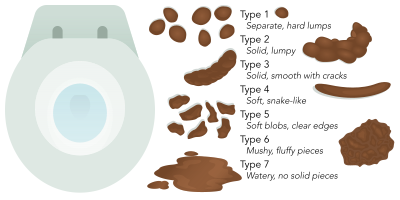
Seven types of brown stools. Type 1 shows separate, hard lumps. Type 2 shows solid and lumpy stool. Type 3 shows solid, smooth with cracks stool. Type 4 shows soft, snake-like stool. Type 5 shows soft blobs, clear edges stool. Type 6 shows mushy, fluffy pieces of stool. Type 7 shows watery, no solid pieces of stool.
SEVEN TYPES OF BROWN STOOLS
A nurse is providing teaching to a group of clients regarding manifestations of common intestinal disorders. Match the manifestations to the correct disorder.
Drag the options on the left to the corresponding category on the right (or select the option on the left and then the corresponding category on the right).
Abscess formation
Inability to pass stool
Uncontrollable diarrhea
Nocturnal bowel movements
Decreased function of the spleen
IBS
Crohn’s
Celiac disease
Ulcerative colitis
Bowel obstruction
Lab Testing and Diagnostic Studies
Lab testing and diagnostic studies can overlap in any of the intestinal conditions discussed.
For IBS, there is no specific test to diagnose it. The health care provider will complete a thorough history and physical and order tests to rule out other intestinal problems. Once all other conditions have been ruled out, the health care provider will use a set of diagnostic criteria to assist with diagnosing IBS. The criteria include the Rome criteria, and for treatment purposes, the type of IBS. The Rome criteria for IBS include a history of experiencing abdominal pain at least 1 day a week for the past 3 months. Pain also must occur with two of the following manifestations: pain with having a bowel movement, a change in the frequency of bowel movements, or a change in the consistency of the stool. Other tests that can be ordered to rule out other intestinal problems include stool specimens to evaluate the presence of infection or the ability of the intestine to take in adequate nutrients, a colonoscopy in which the health care provider inserts a flexible tube in the rectum and advances it to examine the entire colon, an EGD to examine the upper digestive tract, and a CT of the abdomen.
Rome criteria
Laboratory tests, such as a lactose tolerance test to check whether the client is able to produce lactase, a breath test to check for bacterial overgrowth, and stool specimens to look for bacteria, parasites, or bile acid, may also be ordered. Again, these are used to rule out other conditions.
The diagnosis of IBD, including ulcerative colitis and Crohn’s disease, begins with a thorough history and physical of the client. Basic laboratory studies, such as a CBC, will complement the history and physical by helping to detect anemia from possible blood loss or an infection that could rule out other causes of the manifestations the client presented with.
Endoscopic procedures, such as a colonoscopy to assess the entire colon and take biopsies, an EGD to assess the upper gastrointestinal system (esophagus, stomach and the duodenum), a flexible sigmoidoscopy to examine the rectum and sigmoid colon (used if there is severe inflammation in the colon), a capsule endoscopy in which the client swallows a pill that has a camera in it, and a balloon enteroscopy to examine into the small bowel further if the capsule endoscopy shows an abnormality are all diagnostic procedures that allow the health care provider to make a diagnosis of IBD or other disorders.
Imaging procedures such as x-ray, CT scans, and MRIs may also be ordered when diagnosing IBD. These procedures allow the health care provider to not only look at the colon but also the area around the colon to detect any abnormalities or complications, like a perforation.
Several diagnostic tests may be ordered if the health care provider suspects an intestinal obstruction following completing a history and physical on the client. A standard abdominal x-ray may be ordered but not all obstructions can be visualized using this diagnostic tool, so further tests may be needed. CT scans produce more detailed images that are taken at different angles allowing images that are cross-sectional and can detect an obstruction better than a traditional abdominal x-ray. Another diagnostic test is an air or barium enema in which air or barium is inserted into the colon via the rectum.
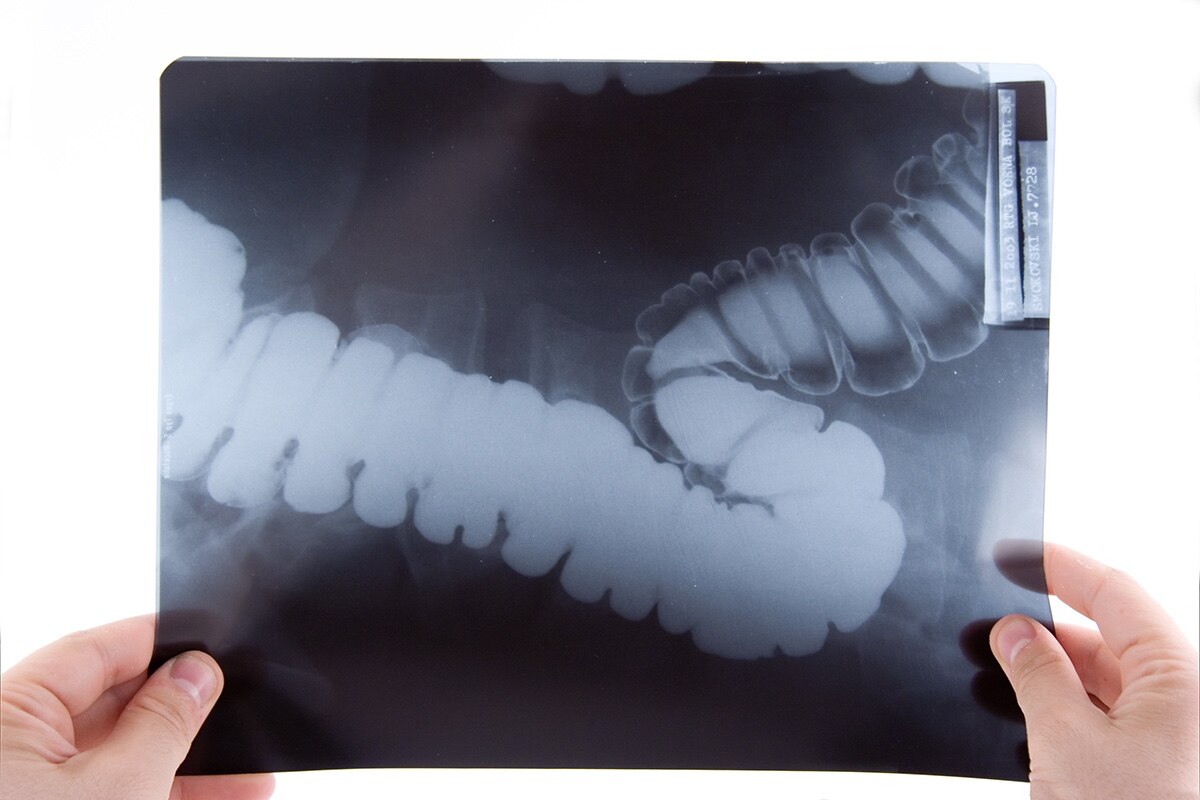
ABDOMINAL X-RAY
When diagnosing diverticulitis, the health care provider will first rule out other causes of the abdominal pain that the client presents with. Blood (CBC), urine, and stool tests will be obtained to rule out infection. Liver panel and pregnancy tests will be obtained to rule out liver problems or pregnancy that could be causing the pain. To confirm a diagnosis and the severity of diverticulitis, a CT scan will be completed.
A blood test called tissue transglutaminase IgA antibody (tTG-IgA) is part of the diagnostic workup for celiac disease. This test may detect higher than normal antibodies in the blood if the client has celiac disease. Other blood tests may include basic laboratory panels to check for metabolic concerns commonly associated with celiac, such as anemia or malabsorption. Genetic testing may be performed to look for the known variants that are linked to celiac disease. The health care provider may order an endoscopy to visualize the small intestine and take a biopsy of tissue or a video capsule endoscopy that allows the health care provider to view the digestive tract from the pictures the camera takes. Since celiac disease may cause a skin rash, skin biopsies may be considered to determine if the rash is consistent with dermatitis herpetiformis. Confirmation of a suspected diagnosis of celiac is most often made through a tissue biopsy from the small intestine. Findings usually include atrophy of the intestinal villi, hyperplasia of crypts, which are the grooves between the intestinal villi, and alterations in the duodenal mucosa.
A nurse is planning care for a client who has manifestations of inflammatory bowel disease (IBD). For which of the following tests should the nurse plan to prepare the client that will confirm the diagnosis of IBD?
Select all that apply.
A
Tissue transglutaminase IgA antibody
B
CBC
C
Colonoscopy
D
Esophagogastroduodenoscopy (EGD)
E
Lactose tolerance test
Connections
Nutrition and Fluid and Electrolytes
Individuals who have intestinal disorders may experience electrolyte imbalances, dehydration, vitamin and mineral deficiencies, malabsorption, and even malnutrition due to increased intestinal and rectal inflammation and diarrhea issues. In addition, these clients can lose blood in their stools and potentially become anemic. They may also develop electrolyte disturbances from the medications that they take to treat their intestinal issues, such as corticosteroids.
Role of the Nurse
Environmental
Obtain a thorough history from the client to determine the presence of environmental factors that may precipitate the development of intestinal disorders. Environmental factors that may affect intestinal disorders include a high-fat diet, smoking, sedentary lifestyle, frequent use of antibiotics or NSAIDs, and emotional or physical stressors.
Safety Considerations
Teach the client and their family about potential risks for dehydration or electrolyte imbalances and monitor for possible signs or symptoms of these conditions that may include increased thirst, dark yellow urine, dizziness, lightheadedness, dry mouth, dry and cracked lips, decreased moisture or tearing of the eyes, headache, tachycardia, delirium, and confusion.
Individual Factors
The development of intestinal conditions such as irritable bowel syndrome (IBS), Crohn’s disease, and celiac disease is influenced by a combination of genetic predisposition, environmental exposures, lifestyle choices, and psychosocial factors, including chronic stress and anxiety. Nurses play an important role in assessing these factors and providing client-centered, trauma-informed care.
Nurses contribute significantly by identifying potential triggers, promoting effective coping strategies, and reinforcing adherence to care plans. Cognitive load management, or the ability to prioritize clinical tasks and decision-making, is critical in coordinating care for clients with complex intestinal conditions. Nurses also monitor for complications, such as fistulas, strictures, or malabsorption, and support early intervention by collaborating with interprofessional teams.
Client Education
Clients with intestinal disorders benefit from education that emphasizes self-management and early recognition of concerning symptoms. Nurses should instruct clients to avoid tobacco, caffeine, and alcohol, increase water intake, and maintain a nutritious, balanced diet tailored to their condition.
Clients should track symptoms using a food and symptom diary and report bowel pattern changes, such as persistent diarrhea, constipation, changes in stool color or consistency, blood in stool, vomiting blood, or unexplained weight loss. Early symptom reporting can help identify complications such as gastrointestinal bleeding or obstruction.
For clients who undergo a colostomy, education should begin preoperatively when possible. Nurses should teach that the pouch should be emptied when one-third full to prevent leaks. The appliance should be changed every 5–7 days or sooner if leakage or skin irritation occurs. Clients should monitor the peristomal skin for redness, irritation, or breakdown and use protective barriers as needed. Proper hand hygiene and safe disposal of soiled materials must also be emphasized.
stoma
Clients with celiac disease must follow a lifelong gluten-free diet, avoiding wheat, barley, and rye. Nurses should help clients understand food labels and advise consultation with a dietitian. Common foods to avoid include breads, pastas, cereals, and processed products containing gluten .
A low-residue diet may be recommended during flares or as preparation for diagnostic procedures such as colonoscopy. This diet limits high-fiber foods to reduce stool bulk and frequency. Acceptable foods include eggs, white rice, lean poultry, and refined grains. Nurses should counsel clients to avoid gas-producing foods such as beans, broccoli, cabbage, and carbonated beverages, which may worsen bloating or stoma gas.
Body image and adaptation concerns are common after colostomy surgery. Nurses should provide emotional support, normalize adaptation challenges, and refer clients to wound, ostomy, and continence nurses (WOCNs) or support groups. Providing individualized instruction in pouching systems, odor control strategies, and gas management techniques is essential to helping clients regain confidence and improve quality of life.
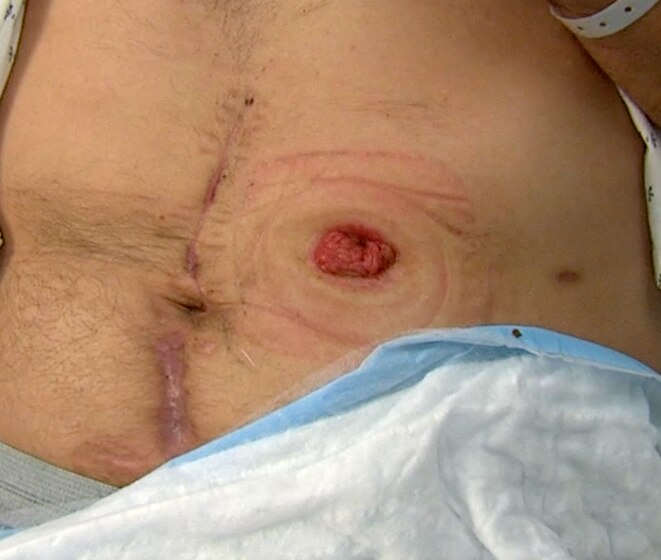
COLOSTOMY STOMA
Nursing Process
Recognize Cues (Assessment)
When caring for any client with an intestinal problem, obtain or review the individual's medical and surgical history, medication allergies, use of any ASA or NSAIDs, social history for alcohol and tobacco use, bowel habits, appearance of emesis or stools. All clients who have intestinal disorders should have a thorough assessment of their abdomen that includes inspection, auscultation, percussion, and palpation.
In addition to gathering the above information when assessing a client who has IBS, ask the client about their current illness and the manifestations they are experiencing, such as any abdominal pain, bloating or cramping when having a bowel movement, any changes in frequency of bowel movement and the appearance of their bowel movements (change in color, blood or mucus present), any increase in flatulence, or unintentional weight loss. Examine any stool or emesis that the client has for blood.
When assessing a client who has IBD, again question the client regarding present manifestations such as abdominal pain, diarrhea, blood in the stool, fatigue, and unintended weight loss. All stools should be monitored and examined for any blood. If a client has Crohn’s disease, assess the client’s rectal area for any signs of skin breakdown due to increased diarrhea stools and bleeding or abscess formation or fistulas around the anus. When assessing a client who has ulcerative colitis, assess the presence of stool urgency or nocturnal bowel movement.
Clients presenting with a possible intestinal obstruction should be questioned about the quality and duration of any abdominal pain. With an obstruction, the client often states that the abdominal pain feels crampy and comes and goes. Ask when the client had their last bowel movement as constipation accompanies an obstruction. In addition, the client should be asked about a decrease in appetite and any vomiting. When assessing the abdomen, it may look distended and feel firm with absent bowel sounds below the obstruction.
In assessing a client who has diverticulitis, ask the client to describe their pain and the intensity and duration. When assessing their abdomen, a client who has diverticulitis will typically have constant tenderness in the lower left abdomen. Further question the client regarding their bowel movements. Constipation is common, but diarrhea can occur. Assess the client for any fever, nausea, or vomiting.
Clients who have celiac disease will need to have similar assessments as all the above clients as their manifestations are similar. However, they also may present with other manifestations that do not relate to the digestive system. Ask the client if they have had a history of anemia or osteoporosis. The skin should be assessed for any blistery type of skin rash and ask the client if they have had any itching with the rash. The inside of the client’s mouth should be assessed for any open areas. Since clients can have nervous system injury, assess the client for any numbness or tingling in the hands and feet and assess their gait and balance. Clients who have celiac disease also can experience decreased functioning of the spleen. Question the client regarding any recent or frequent infections as that could indicate a decreased immune system.
When caring for clients who have had a colostomy placed, assess the stoma and surrounding skin to observe for potential complications such as discoloration or development of gangrene. Monitor for the return of production of stool, which will typically occur around postoperative day two to four.
A nurse is caring for clients who have abdominal pain. Describe in your own words the differences in pain descriptions between a client who has diverticulitis and a client who has a bowel obstruction.
Enter your response and submit to compare to an expert response.
Analyze Cues (Analysis)
Compare current findings and manifestations to evidence-based resources. The analysis of risk factors, assessment findings, and diagnostic testing results will allow nurses to identify any potential complications as well as assist them in organizing and prioritizing nursing care. Is the client experiencing pain? Do they have bloody stools or emesis? Analyze the determined risks for intestinal problems and review laboratory and diagnostic test findings.
Prioritize Hypothesis (Analysis)
The priority for the client with any intestinal disorder is fluid and electrolyte balance and prevention of complications such as perforation.
Generate Solutions (Planning)
Next, use all the above information to formulate a plan of care. Include the client and their family in this plan as well as their interprofessional health care team (dietitian, gastroenterologist). The goal is to prioritize interventions, identify outcomes, and modify and make changes as needed. The plan of care for a client with intestinal disorders should include fluid and electrolyte replacement as needed and pain control.
Take Actions (Implementation)
Implement the plan and proceed with designated interventions. Continue to collaborate with members of the interprofessional health care team as needed and continuously involve and provide education to the client and their family. Specific actions that the nurse will implement include managing any presenting manifestations, such as providing pain relief, providing antidiarrheal medications and fluids and electrolytes as indicated and ordered, and maintaining skin integrity around the perineal and perianal area. Intake and output should be monitored as well as daily weights. Provide education to the client regarding control of manifestations, diet restrictions, activity, and follow-up appointments.
Evaluate Outcomes (Evaluation)
Evaluate the effectiveness of the implemented plan at this time and modify, update, and continue to review nursing actions based on the client’s response and clinical findings as needed.
Evaluate whether manifestations were controlled or relieved, such as pain, diarrhea, constipation, bleeding, and vomiting.
Treatments and Therapies
Noninvasive and invasive treatment options for intestinal disorders are focused on improving GI motility by reducing inflammation or infection and removing any obstructions.
Medications to Treat Intestinal Conditions
Class
| Action | Therapeutic Use | Adverse Effects | Client Teaching |
|---|---|---|---|---|
Fiber Supplement
| Stool bulking agent that absorbs liquid from intestines and causes stools to be bulkier | Helps resolve diarrhea and constipation | Diarrhea, abdominal pain, nausea or vomiting, skin rash, itching | Dissolve powder in 8 oz of fluid. May take a couple days to see bowel movement results. Eat high-fiber foods. Drink extra fluids. |
Laxatives
| Increase the bulk of bowel movements and help retain fluid | Help resolve constipation | Diarrhea, abdominal bloating, skin rash | Dissolve powder in 8 oz of fluid. May take a couple days to see bowel movement results. Eat high-fiber foods. Drink extra fluids. |
Anti-inflammatories
| Reduces inflammation in the intestinal lining | Used to prevent flare-ups of IBD | Headache, easy bruising, increased facial hair, leg edema, fatigue, changes in appetite, lightheadedness, nausea or vomiting, changes in menstruation | Take in the morning. Take with a full glass of water. Monitor for manifestations of infection, including fever, chills, fatigue, joint pain. Avoid taking with grapefruit. |
Immunosuppressants
| Suppress immune response that produces chemicals causing inflammation | Used to decrease inflammatory bowel processes | Headache, tiredness, changes in appetite, lightheadedness, reddened eyes, hair loss | Monitor CBC and liver function labs. Do not double up for any missed doses. Monitor for manifestations of infection, including fever,chills, fatigue, and joint pain. Do not breastfeed. |
Biologics
| Reduces the effects of inflammation-producing proteins in the body | Used to decrease inflammatory bowel processes | Headache, nausea or indigestion, runny nose, yeast infection, facial flushing | Administered every 2 to 8 weeks. Monitor CBC and liver function labs. Do not double up for any missed doses. Monitor for manifestations of infection including fever, chills, fatigue, joint pain. |
Match the medication in the right column with the correct description in the left column.
Drag the options on the left to the corresponding category on the right (or click the option on the left and then the corresponding category on the right).
Psyllium
Polyethylene glycol
Olsalazine
Tofacitinib
Infliximab
Immunosuppressant that suppresses the immune response
Aminosalicylate that reduces inflammation in the intestinal lining
Laxative that increases the bulk of bowel movements
Biologic that reduces the effects of proteins that produce inflammation
Fiber supplement that causes stool to be bulkier
Anti-inflammatories, immunosuppressants, or biologic medications may be used to treat IBD conditions, including ulcerative colitis and Crohn’s disease. (See the “Medications to Treat Intestinal Conditions” table for more information.) Antibiotics such as ciprofloxacin (Cipro) and metronidazole (Flagyl) may also be used to address infections that may arise due to microbial complications. Vitamin and mineral supplements may also be used to treat nutritional deficiencies. Smoking and increased stress can precipitate a flareup of IBD, so it is recommended that clients avoid smoking and perform stress-reducing activities such as meditation, breathing, or exercise.
IBS treatment includes lifestyle and dietary modifications such as reducing stress, identifying foods that trigger manifestations, preventing dehydration by monitoring fluid intake, and getting adequate exercise and sleep. If the manifestations do not resolve or become more severe, medications for bowel spasms, constipation, or diarrhea may be prescribed. See the “Medications to Treat Intestinal Conditions” table for specific information on medications.
Treatment for bowel obstructions is dependent upon whether the blockage is partial or complete. Partial bowel obstructions may be treated with laxatives to promote GI motility and dietary changes to reduce the bulk of food traveling through the intestines. Complete bowel obstructions need to be treated urgently. Most client will be hospitalized to receive IV fluid replacement, nasogastric tube placement to remove excess fluids, medications to decrease nausea and pain, and potential surgery to remove adhesions or scar tissue that may be causing the obstruction.
Recommendations for the prevention of complications related to diverticulosis include smoking cessation, regularly exercising, avoiding dehydration, and consuming a high-fiber diet. Diverticulitis is often treated by increasing dietary fiber intake, antibiotics if infection occurs, and possible surgical intervention such as a colon resection or colectomy, for complications related to intestinal obstruction or perforation.
The only treatment option for celiac disease is to follow a strict gluten-free diet.
Surgical interventions may be indicated for complications with fistulas or to remove some portions of the intestine or rectum in clients who have intestinal disorders in order to manage unresponsive or worsening disease. In some instances, that may mean that the client will have either a temporary or permanent stoma, such as an ileostomy or colostomy, to redirect the stool. Depending on where the diseased part of the bowel is located will determine if the surgeon creates an ileostomy or colostomy. An ostomy is an opening between the bowel and the skin. If the ostomy is in the small bowel, it is referred to as an ileostomy or a jejunostomy. If the ostomy is in the colon, it is called a colostomy, and depending on where in the colon it is located, it is referred to as a transverse, right or left colostomy.
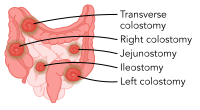
TYPES OF STOMAS
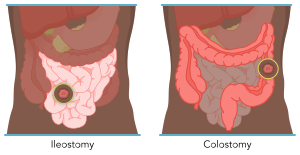
Side-by-side comparison of the ileostomy and colostomy
ILEOSTOMY VS. COLOSTOMY
The Stoma Stigma
00:00
08:04
Examine what it's like to live with a stoma and how clients adapt.
Podcast TranscriptLiver Conditions
Page 1
Pathophysiology
In the United States, chronic liver disease (CLD) is now the fourth leading cause of death in individuals between the ages of 45 and 64 years old. The most common disorders that affect the liver are hepatitis, steatotic liver disease, cirrhosis, carcinoma, and liver failure. Steatotic liver disease (SLD) has multiple categories, including alcohol-associated liver disease (ALD), metabolic dysfunction-associated steatotic liver disease (MASLD), and MetALD (a combination of MASLD and ALD).
In general terms, hepatitis is inflammation of the liver. Hepatitis can occur because of injury sustained via acute or chronic infection from exposure to a specific hepatitis viral strain, from cellular insult attributed to large or excessive alcohol consumption, or through the accumulation of fat in the liver. With repetitive exposure to pathogens, fat deposits, or chemical compound irritants such as ethanol, this inflammatory state can become chronic and promote cellular damage, necrosis, and eventual hepatic fibrosis or scar tissue formation leading to cirrhosis.
The definition of cirrhosis is changing and is now considered to be a more dynamic, late-stage condition that presents with advanced fibrosis or scarring of the liver. In recent years, experts are reclassifying cirrhosis as either a compensated or decompensated stage as some individuals may have a diagnosis of cirrhosis but exhibit no physical manifestations of the disease, meaning the liver has compensated and continues to make corrections accordingly with no external indications of the disorder. However, once the development of clinical complications such as ascites, hepatic encephalopathy, gastrointestinal bleeding, and jaundice arise, cirrhosis is in a decompensated state. Unfortunately, if not adequately addressed, treated, and maintained, viral hepatitis, ALD, MASLD, or other liver diseases can deteriorate and lead to a decompensated cirrhosis terminal phase with eventual liver failure or loss of liver function. During this period, transplantation of the damaged organ becomes the only option, and without this possibility, the condition is fatal.
ascites
hepatic encephalopathy
jaundice
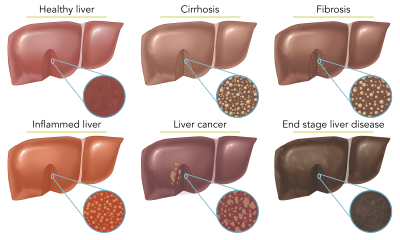
Six comparisons with enlarged details of liver liver, cirrhosis, fibrosis, inflamed liver, liver cancer, and end-stage liver disease
DIFFERENT CAUSES OF LIVER DISEASE
Etiology and Risk Factors
Viral hepatitis is the most common type of hepatitis and is caused by hepatitis viruses A, B, C, D, and E. Globally, it has been reported that approximately two billion people have been infected with the hepatitis B virus, and 130 to 170 million people have a chronic hepatitis C infection.
Depending on the type of hepatitis, risk factors may include unprotected sex, AUD, and sharing of dirty needles. Hepatitis A, B, and C are the most frequent types that occur in the United States. Hepatitis A and E spread via contact with food or water that was contaminated by an infected person’s feces. Hepatitis B (HBV) and D are spread through contact with an infected individual’s blood or other bodily fluid. Hepatitis C (HCV) only spreads by contact with infected blood. Both HBV and HCV can lead to severe liver disease and continue to be major health problems around the world. Hepatitis can also be caused by heavy alcohol consumption and is called alcohol-induced hepatitis. Too much alcohol overloads the liver with contaminants that injure the tissues. Another type called toxic hepatitis inflames the liver and can occur if it becomes saturated with toxins such as poisons, chemicals, medicines, or supplements. Autoimmune hepatitis is a disorder in which the liver becomes chronically inflamed due to the body’s own immune system attacking and turning against the normal liver cells. The cause is unknown, but genetics and the environment may have a role.
ALD is one of the principal contributors to chronic liver disease worldwide. In fact, in the U.S. alone, approximately 48% of cirrhosis-related deaths are traced to ALD. Alcohol-use disorder (AUD) is the leading cause of ALD, and it is estimated that 1 in 12 adults meet the criteria for overuse of alcohol. Comorbidities that can worsen the course of liver disease in an individual with AUD are genetic propensities to alcohol use disorder, obesity, hepatitis, and cigarette smoking. Abstaining from alcohol can assist in reducing the progression of further liver damage.
MASLD is becoming increasingly prominent in Westernized cultures in recent years and accounts for progressively more end-stage liver disease requiring liver transplantation. It is linked to metabolic disorders, including central obesity, dyslipidemia, elevated blood pressure, type 2 diabetes, and elevated blood glucose levels. In MASLD, liver damage is caused by an excessive quantity of fat in the liver. This can lead to metabolic dysfunction-associated steatohepatitis (MASH), which triggers inflammation and apoptosis of the cells that can advance to cirrhosis.
apoptosis
Cirrhosis of the liver affects approximately one in every 400 adults in the United States and occurs when the liver becomes increasingly scarred from the effects of chronic liver diseases, such as hepatitis or AUD. Risk factors include excessive alcohol consumption, obesity, IV drug use and sharing needles, unprotected sexual activity, history of diabetes, and a history of hepatitis. There is no cure, and cirrhosis can advance to liver failure.
Cancer of the liver or hepatocellular carcinoma (HCC) is an aggressive cancer with a high mortality rate. The long-term effects of chronic inflammation in the liver can increase its risk. For instance, chronic infection with HBV and HCV or ALD and MASLD can put an individual at a higher possibility of developing primary liver cancer. HCC affects males more than females and has a higher incidence in clients who are 45 to 65 years old. HCC is often diagnosed in the later stage of chronic liver disease and cirrhosis due to the progressive and ongoing inflammation that causes abnormal changes of the cells, which transition from a precancerous to a cancerous state.
Left untreated, liver disease and liver cancer can lead to liver failure. Liver failure is the loss of the functioning of the liver .
Sort the type of hepatitis to the contamination contact that causes it.
Drag the options on the left to the corresponding category on the right (or select the option on the left and then the corresponding category on the right).
Hepatitis A
Hepatitis B
Hepatitis C
Hepatitis D
Hepatitis E
Infected blood or other bodily fluid
Infected blood only
Contaminated food or water
Impact on Overall Health
Physiological
In individuals who have liver disease, physical activity, including ADLs, may be limited due to fatigue, discomfort, fluid retention, edema, and frailty. As it relates to disturbances and treatment with the client’s liver function, reduced skeletal muscle mass in these individuals can be attributed to factors associated with malnutrition, decreased protein stores, restricted diets, early satiety from ascites, and metabolic disturbances. In addition, physical stamina is impacted by alterations in cardiorespiratory compensation that may overlap with comorbidities, such as hypertension and pulmonary disease, or hemodynamic instability related to blood volume imbalances (anemia), which can contribute to reduced oxygen delivery. Thrombocytopenia is a typical lab finding in individuals who have chronic liver disease and up to 70% of clients who have cirrhosis acquire this condition. Hepatic encephalopathy can cause alterations in level of consciousness that may progress to a coma. The levels of confusion can make it difficult for the client to complete ADLs. Caregivers may become fatigued when providing home care for these individuals who require close observation.
Psychosocial
Clients who have severe and chronic liver disease spend a lot of time in acute and outpatient health care settings. Repeated hospitalizations with possibly poor outcomes, the reality of health complications, and a potentially decreased life expectancy increase the risk for mental health disorders, especially anxiety and depression. Additionally, SDOH, such as individuals with limited education, have been found to have a higher prevalence of HBV and HCV infection, which places this population group at a greater risk for developing mental health issues. Facing chronic health care problems, as is likely the case for individuals who suffer from liver disease, can place considerable stress on both the client and their significant other and family. Everyday life can be interrupted by ongoing illness and affect an individual’s work, livelihood, social life, relationships, and even their sleep.
Considerations of the Aging Adult
The aging adult is at a higher risk for falls due to liver disease and its accompanying manifestations of lowered physical strength, increased weakness, and gait imbalances related to the accumulation of ascites to the central abdominal area. In addition, increased incidences of thrombocytopenia can place an older adult at a greater risk for significant injuries that can occur with an accident from a fall, such as head trauma.
Thrombopoietin, a glycoprotein hormone that regulates the production of platelets, is largely synthesized in the liver, and its decreased generation and output positively corresponds to increasing fibrosis in the liver, making the client who has worsening liver disease more vulnerable to bleeding episodes. In fact, because aging adults may be more prone to constipation, an outwardly mild case of bleeding from what may appear to be a rectal hemorrhoid can be mistaken for an actual lower gastrointestinal bleed caused by rectal varices.
rectal varices
In addition, nurses and other health care providers may confuse the onset of dementia or delirium with that of hepatic encephalopathy in adults who have liver dysfunction who are 65 years or older as increased risks for hypoxemia, interruptions in blood chemistry levels (high serum ammonia), and metabolic instability upset normal brain function, with liver decompensation resulting in confusion and incoherence.
hypoxemia
Clinical Presentation
Health conditions affecting or caused by the liver might produce manifestations such as abdominal pain, swelling, nausea or vomiting, or jaundice of the eyes and skin. Moreover, hepatitis can present with fever, fatigue, loss of appetite, dark urine, clay-colored bowel movements (white or light gray), and joint pain. Cirrhosis and liver failure may demonstrate inreased bruising, lower extremity edema, spiderlike veins on the skin, weight loss, pruritus (itchy skin), ascites, and hepatic encephalopathy. Pruritus is a frequent finding in clients who have chronic liver disease and is caused from a buildup of bile salts produced from the liver. Pruritis in liver disease is described as generalized and unrelieved by scratching, which can negatively affect a client’s quality of life.
The development of jaundice with liver disease is directly related to elevated levels of serum bilirubin caused by dysfunction and congestion of the diseased liver). Bilirubin is an orange-yellow pigment that is formed by the heme portion of red blood cell degradation. After it is conjugated or chemically converted to a water-soluble component in the normal-functioning liver, it is either excreted in bile for digestion in the small intestine or eliminated in a small portion through the urine and stool, giving these waste products their characteristic colors of yellow for urine and brown for stool.
With liver disease, hyperbilirubinemia (high serum bilirubin) builds up in the body. The higher the level of serum bilirubin, the more pronounced the yellow discoloration will be as it accumulates and deposits in the skin and not only stains the skin, but also the sclera of the eyes, and other mucous membranes to a yellow hue.
Dark urine, such as amber or even a cola-colored or brown color, is a sign of excess excretion of conjugated bilirubin, signifying a problem with the liver. On the other hand, light- or clay-colored stools would also indicate that there is an issue with liver function, signaling impaired excretion of the bilirubin into bile and, thus, not transforming the pigment of the stool.
The development of ascites marks a deteriorating state of liver function. Ascites arises because of the congestion and rigidity of the scarred liver causing the portal vein circulation to back up and contribute to portal hypertension or elevated pressures in the venous blood flow to the liver. This increased pressure causes the circulation to reroute itself by developing collateral channels and causing esophageal and stomach veins to swell and develop varices to find other routes to bypass the obstructed organ. These varices are fragile and can bleed easily. Once ascites occurs, the client’s survival declines, and the prognosis in 50% of clients with cirrhosis is 2 to 5 years.
Straw-colored serous fluid collects in the peritoneal cavity causing the abdomen to markedly protrude and predisposes the individual to complications with pulmonary capacity, hernias, renal circulation, and the potential for spontaneous bacterial peritonitis with the possibility for concomitant sepsis. Ascites is classified via three grading criteria: grades one and two are managed medically using diuretic prescription medications and dietary restrictions, and grade three, the most severe, is noted as a refractory ascites that requires paracentesis to drain the fluid with needle aspiration.
Spider nevi, commonly known as spider veins, are vascular lesions that develop on the skin more notably with cirrhosis of the liver. They are small, dilated blood vessels and are characteristically shaped in the form of a spider and frequently occur on the face, neck, upper chest, arms, and fingers.
A nurse is caring for a client who has liver disease. Which of the following findings indicates to the nurse that the client has hyperbilirubinemia?
Select all that apply.
A
Jaundice
B
Ascites
C
Dark-colored urine
D
Spider nevi
E
Light-colored stools
Lab Testing and Diagnostic Studies
In the early stages of nonacute liver disease, when the individual is asymptomatic, it may be difficult to make an accurate diagnosis as the client will not likely seek out medical attention until the manifestations of the disease begin to appear. The diagnosis of liver disease is confirmed by blood tests, sonograms, CT scans, or a liver biopsy. There are many laboratory and radiological tests that are often used at some point in the client’s work-up as well as in their ongoing treatment and evaluation; traditionally, a liver biopsy is considered the gold standard with the staging of liver fibrosis.
Liver function tests (LFTs) are one set of blood tests that are obtained. These tests measure different proteins, enzymes, and other substances produced by the liver and provide a snapshot of the overall health of the liver. These tests include albumin, aspartate aminotransferase (AST), alanine transaminase (ALT), alkaline phosphatase (ALP), total protein, total bilirubin, lactate dehydrogenase (LP), and prothrombin time (PT). If one or more of these tests are elevated, that could indicate liver disease.
Another set of blood tests that can be ordered is a hepatitis panel. Hepatitis is caused by a virus, and this set of tests can determine if the client has had a hepatitis infection in the past, currently has a hepatitis infection, or has been vaccinated for hepatitis. Both hepatitis antigens and antibodies can be detected with this test. Substances found in the blood that activate the immune system to fight a virus, in this case hepatitis, are called antigens. The body’s immune system makes antibodies, in this case hepatitis antibodies, to fight infection.
If cirrhosis is suspected, the health care provider may order a CBC to detect the presence of an infection or anemia that could be caused by internal bleeding. They may also order a test to determine if the client has any autoimmune liver disorders. These tests include the antinuclear antibody (ANA) test, the antimitochondrial antibody (AMA) test, and the antismooth muscle antibody (SAM) test.
Ammonia levels (NH3) may also be ordered. Ammonia is normally broken down in the liver and converted to urea, which is excreted in the urine. Elevated ammonia levels can be indicative of liver disease.
Radiological tests can include MRI, ultrasound, and CT. These exams create images to look at the structure and function of the liver.
Noninvasive liver scan using a device such as a FibroScan® and FibroTouch® can also be ordered. These brand devices are also known as vibration-controlled transient elastography (VCTE) devices; they allow the health care provider to stage liver fibrosis by assessing the liver stiffness measurement.
Magnetic resonance elastography (MRE) is another radiological test that stages liver fibrosis by assessing the liver stiffness measurement and is reported to have a higher diagnostic accuracy than VCTE.
Nutrition
A typical presentation in individuals who have chronic liver failure is poor nutrition. These clients are at risk for sarcopenia, the loss of muscle mass and function related to low protein intake. Individuals who have liver failure require ongoing assessment and monitoring for nutritional risk and should be followed in an inpatient and outpatient health care setting by an expert in nutritional management.
Oftentimes, nutritional supplements and snacks offered between mealtimes and before bedtime are encouraged to facilitate adequate dietary intake. Incidentally, it may be more advantageous to encourage the client to eat smaller meals spread out throughout the day rather than three large meals that can potentially induce an upset stomach, causing nausea and possible vomiting. Furthermore, in individuals who have ascites, energy supply caloric intake calculations should be computed using the client’s ideal body weight as the value for body mass instead of including the additional ascites weight within the equation.
Most experts agree that compensated cirrhosis with ascites is ideally managed by dietary sodium intake restriction coupled with prescribed diuretics. However, controversy and debate in the medical community remain as it pertains to the exact amount of dietary salt that should be restricted, although moderate salt restriction of 5 to 6.5 g/day is likely to be a favorable compromise because it can enhance a more palatable meal that will encourage better nutritional adherence.
Fluid and Electrolytes
Individuals who have chronic liver disease and cirrhosis can experience considerable fluctuations and variations in electrolyte concentrations. Clients often demonstrate disturbances in serum sodium levels, especially hyponatremia, which is thought to be attributed to the interrelationship with the compromised renal functioning mechanisms that contribute to increased retention of water. In the general population, hyponatremia is usually delineated once the serum sodium levels fall below 135 mEq/L; however, it is adjusted and redefined at a value of less than 130 mEq/L in clients who have cirrhosis. Thus, the frequency of hyponatremia in clients who have severe liver disease is very common and, although complex, is fundamentally associated with a disproportional increase in water retention as compared to sodium levels due to a cascade of events that are influenced by the effect of portal hypertension on renal vasoconstriction. Hyponatremia is dangerous and, severely low sodium levels (less than 125 mEq/L) can lead to cerebral edema, altered level of consciousness, and potentially irreversible brain damage.
The mainstay and first-line treatment for hyponatremia with cirrhosis is a fluid restriction diet (1 to 1.5 L/day) in hope of initiating a negative water balance. Additionally, diuretics are placed on hold and potassium levels are closely monitored and corrected due to potassium’s inverse relationship with sodium. In clients who have cirrhosis, hyponatremia and accompanying hyperkalemia should be carefully adjusted to prevent rapid overcorrection that could cause detrimental effects and can possibly be fatal.
A nurse is caring for a client who has cirrhosis of the liver whose morning lab results showed a serum sodium level of 127 mEq/L. Which of the following interventions should the nurse include in the plan of care?
A
Hold diuretics.
B
Increase fluid intake.
C
Monitor albumin levels.
D
Encourage foods high in potassium.
Role of the Nurse
Environmental Factors
Nurses play a pivotal role in assessing the client’s needs and improving positive health outcomes when applying a holistic health approach to their clinical practice regardless of the health care setting. An important focus of this fundamental holistic principle is addressing health concerns related to the individual’s environment. For clients who have significant liver disease, as well as the related complications, this environment can include not only the traditional acute care hospital setting but long-term acute care hospitals, skilled nursing facilities, nursing homes, urgent care clinics, addiction treatment centers, and the client’s private residence.
For clients who have chronic liver disease, there are ADLs that may need to be considered and adjusted to keep the person safe and comfortable. When evaluating and implementing recommendations to the client’s environment, use both the nursing process and Maslow’s Hierarchy of Needs to assist with decision making.
Stacked pyramid of Maslow's hierarchy of needs starting with the top as self-actualization, self-esteem, love and belonging, safety and security, and ending with physiological needs at the bottom.
MASLOW’S HIERARCHY OF NEEDS
Clients experiencing disorders with their liver functioning, in particular a diagnosis of cirrhosis, may have comfort, rest, and sleep disturbances due to increased abdominal girth related to ascites or suffer from distressing sensations of heaviness and unsteadiness in their legs due to swelling from fluid retention. Therefore, ensure that the client is comfortable in bed or in a recliner chair to allow them to lie in positions that facilitate maximal respiratory efficiency (elevating head of bed or raising their legs).
Ensure that the client is getting adequate rest. Encourage rest periods throughout the day since the client likely experiences interruptions to their sleep quality during the night due to discomfort, toileting demands, repositioning needs, breathing difficulties, or medication regimens.
Safety Considerations
Consistently exercise standard precautions and educate both the client and their family members or other visitors regarding the high infectability of the virus, even when the infected individual is not feeling ill.
Due to the injury and congestion in the liver as its function declines and given the vital part that it plays in systemic metabolic regulation, frequent fluctuations and shifts in the balance of the body’s serum chemistry and blood cell values are often observed. As previously discussed, thrombocytopenia, high ammonia levels, and hyponatremia are a few of the most significant safety concerns encountered in clients who have liver disease or cirrhosis. Because the client is at risk for bleeding due to potential thrombocytopenia, bleeding precautions should be implemented, including using an electric razor, using a soft bristled toothbrush and avoiding flossing of the teeth, avoiding any aspirin or NSAID for pain relief, and ensuring that pressure is applied and held to any broken skin, including venipuncture sites, to minimize bleeding. If mobility and secondary safety concerns with ambulation are issues that could increase the risk for falls and injuries, it may be necessary to obtain a bedside commode and walker or wheelchair for the client, as well.
Because of the individualized presentation of potential abdominal and lower extremity swelling that is common in clients who have liver disease, including any edema to the groin and perineal areas, ensure that the skin folds remain clean and dry and monitor for any manifestations of skin issues such as intertriginous dermatitis or fungal infections.
Finally, for concerns related to hyponatremia and the potential effects it can have on the brain, it is important to instruct visitors about any changes and manifestations in the client’s neurological status, such as new onset lethargy, confusion, delirium, aphasia, nausea or vomiting, or any other concerning or unusual changes in brain function.
Individual Factors
Caring for chronically ill clients who have liver disease can be challenging for nurses, but it is important that an objective, holistic, and client-centered treatment plan and supportive approach to care remain the fundamental focus of nurses' overall practice strategy. It will be beneficial for the nurse to recognize and reflect upon potential personal biases, prejudices, and existing opinions and possible stigma of clients who have liver disease, especially those disorders that are caused by the hepatitis virus or those that involve damage from the overuse of alcohol or poor dietary choices. It is crucial that nurses lead the way as role models and advocates to decrease these barriers and provide education, awareness, and compassion to enhance the quality of care in this population group.
Client Education
Educate the client and other involved caregivers about diet modifications (well-balanced, low-fat) and teach them to monitor their sodium and fluid intake and their weight daily. The diet should include a balance of fresh vegetables and fruits and lean proteins, such as chicken, fish, or legumes. The client should be taught and reminded not to add table salt and how to read labels to monitor and avoid foods that have hidden sodium, such as canned soups and vegetables, bread, potato chips, condiments, breakfast cereals, processed deli meats and cheeses, and prepackaged frozen dinners. Instruct clients who are experiencing decreased appetite or anorexia to eat several small meals each day to increase caloric and nutrient intake.

margouillatphotos/Getty Image
BALANCED DIET FOR LIVER DISEASEClient's who have liver disease should eat a balanced diet and monitor their sodium and fluid intake.
Discharge planning should include teaching the client and their family about the necessity to keep home environment clean and to ensure that food is properly prepared, dispensed, and stored since the client is at an increased risk for infections due to their compromised immunity related to liver disease.
For clients who have pruritus, instruct them to keep their fingernails trimmed and to apply moisturizing lotion to dry areas of their skin to decrease the possibility of injury to the skin from excessive scratching.
To prevent contracting or spreading hepatitis A, individuals should be taught the importance of performing frequent hand washing. Clients who have hepatitis B or C should be taught how to prevent spreading the virus to others, including covering cuts; properly disposing of used tissues or tampons; not sharing sharp razors, toothbrushes, or needles; cleaning blood droplets with bleach and water; and using condoms.
Additionally, provide instruction on the importance of abstaining from alcohol and any hepatotoxic substance, such as acetaminophen or NSAIDs. If their liver disease or cirrhosis is related to an alcohol use disorder, provide information on treatment or rehabilitation options.
A nurse is providing information about diet with a client who has liver disease. Which of the following statements from the client indicates understanding of the teaching?
A
“I should eat more canned fruits and vegetables.”
B
“I can have potato chips with my ham sandwich.”
C
“I can eat chicken and rice casserole.”
D
“I should add cheese to my burger to add more protein.”
Nursing Process
Recognize Cues (Assessment)
When assessing any client who has suspected liver disease, complete a thorough history and physical. Obtain, address, identify, or review the individual’s history of current illness and any past medical and surgical history. This should include vaccination history, medication allergies, and social history for alcohol and drug use, as well as the last time the client had a bowel movement and its characteristics, as this is important information for an individual presenting with liver-related concerns. Question the client regarding abdominal pain, fatigue, fever, loss of appetite, and joint pain.
In addition, carefully inspect and assess the skin and eyes (sclera) for any yellowish discoloration and any bruising and the palms of the hands for redness (palmar erythema). Further assessment would include assessing the abdomen while the client is supine and noting the presence of ascites. Inspect the face, neck, upper chest, arms, and fingers for any spider nevi or spider angiomas.
Once a complete assessment has been completed, all lab and diagnostic test results should be gathered.
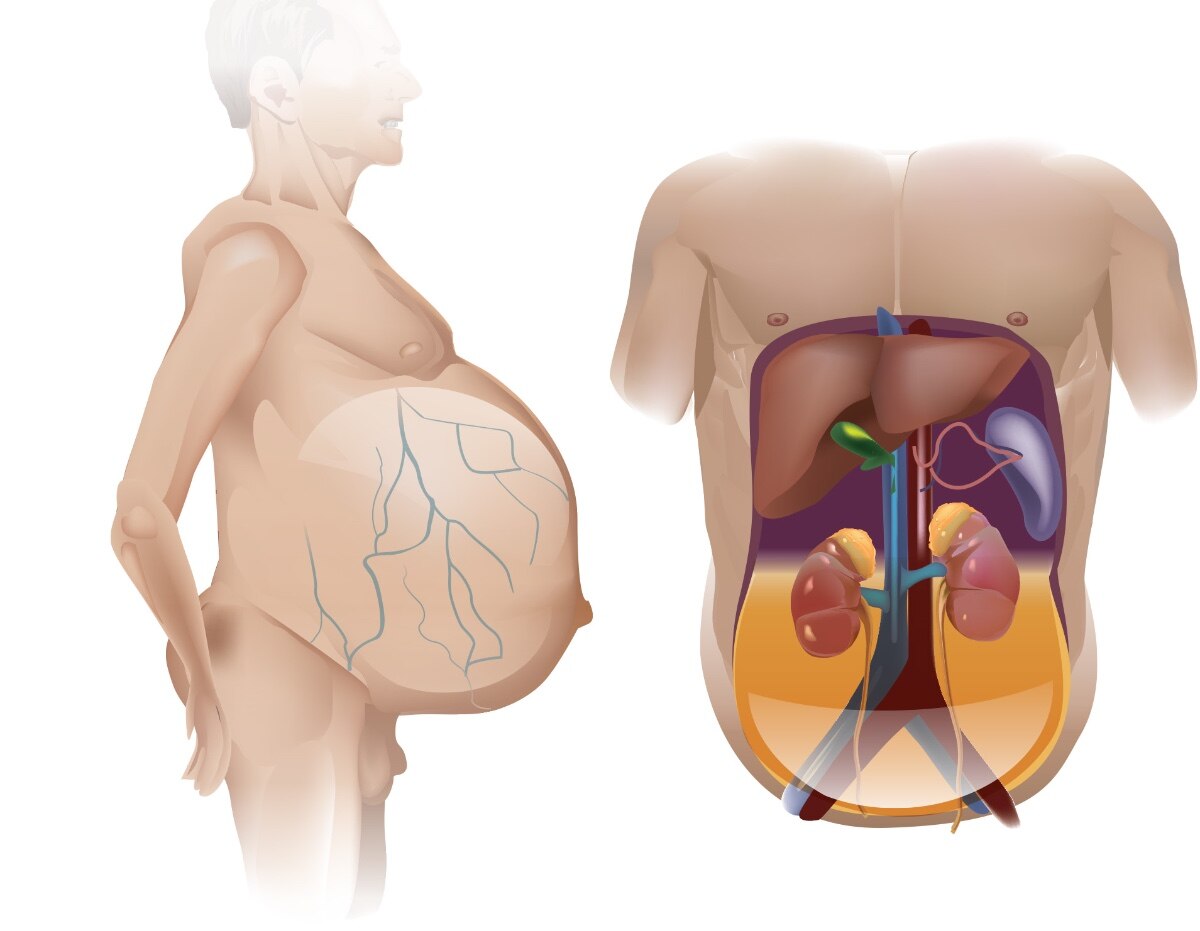
ASCITES
Analyze Cues (Analysis)
Analyze all data collected from the history and physical, laboratory, and diagnostic findings that were gathered from the initial assessment. With clients presenting with liver failure and decompensated cirrhosis, the overall goal is also to prevent deterioration of the current state; however, more frequent follow-up, monitoring, and specialty consultations will need to be planned, including discussions regarding potential transplantation, with significant emphasis placed on addressing the client’s quality of life.
Prioritize Hypotheses (Analysis)
Priority care for clients who have liver disease is to identify potential complications, including bleeding from thrombocytopenia, fluid overload from development of abdominal ascites, and hepatic encephalopathy from elevated ammonia levels.
Generate Solutions (Planning)
At this time, develop the plan of care for the client. Collaborate with the clients and their family and members of the interprofessional health care team as needed. Establish a plan that includes regularly scheduled neurological assessments, initiating fall risk and seizure precautions (as ordered), and obtaining a bed alarm to protect the client from injury. Administer prescribed medications to treat the various manifestations associated with liver diseases.
A registered dietitian is an important health care team member that nurses will collaborate with regarding the client’s nutritional management.
Take Actions (Implementation)
At this stage, implement the plan. Perform specific interventions and procedures as ordered, such as administering medication, initiating intravenous therapy, or placing the fall-risk alert band on the client’s wrist. Collaborate with members of the interprofessional health care team as needed, and continuously involve and provide education to the client and significant others. Then monitor the client’s response and document findings, data, and information in the electronic medical record.
Evaluate Outcomes (Evaluation)
Finally, reassess the client’s condition and determine the achievement of expected outcomes. Evaluate the efficacy of the implemented plan and modify, update, and continue to review nursing actions based on the client’s response and clinical findings when indicated.
In the following video, the nurse is part of an interprofessional team caring for a client who has liver failure.
Providing Interprofessional Care to a Client Who Has Liver Failure
A nurse is assessing a client who has liver disease. Which of the following manifestations would the nurse expect to find?
Select all that apply.
A
Yellow eye sclera
B
Rectal abscess
C
Palmar erythema
D
Spider angiomas
E
Bloody bowel movements
Treatments and Therapies
Clients who experience acute liver failure will be hospitalized and may receive IV fluid replacement to maintain blood pressure, laxatives or enemas to remove toxins such as from an overdose of acetaminophen (Tylenol), or blood transfusion for excessive blood loss.
Treatment of hepatitis varies by type and may include rest and hydration, antiviral medication, corticosteroids, and avoidance of alcohol and acetaminophen (Tylenol). To reduce the risk of contracting hepatitis A and B, it is highly recommended that all individuals receive vaccinations. There are no specific medications or treatments for hepatitis A. Clients are encouraged to rest and increase oral fluids. Hepatitis B treatment includes a weekly injection of an interferon medication that is taken for 6 months and can demonstrate an undetectable virus after therapy. Medication treatment for hepatitis C consists of DAAs that will be taken over a course of 24 to 48 weeks (depending on the genotype of the virus) and can improve the chances of a cure for hepatitis C.
Chronic, end-stage liver failure and decompensated cirrhosis can be medically managed to provide the client with an improved quality of life; however, these specific liver disorders cannot be cured, and the only treatment at this level of the disease is a liver transplant.
MARIOS07/Getty Images
PACKED RED BLOOD CELLSClients with acute liver failure may need a blood transfusion.
Medications to Treat Liver Hepatitis B and C
Class
| Action | Therapeutic Use | Adverse Effects | Client Teaching |
|---|---|---|---|---|
Direct-acting antivirals (DAAs)
| Blocks the production of the proteins that create hepatitis virus | Destroys the virus causing hepatitis C | Diarrhea, tiredness, headaches, nausea and vomiting, bradycardia | Do not shake the vial. Keep medication refrigerated. Drink extra fluids. Monitor liver function blood tests. |
A nurse is planning care for clients who have liver disease. For which of the following clients should the nurse anticipate a prescription for interferon?
Select all that apply.
A
A client who has alcohol-associated liver disease (ALD)
B
A client who has metabolic dysfunction-associated steatotic liver disease (MASLD)
C
A client who has hepatitis A
D
A client who has hepatitis B
E
A client who has hepatitis Cholecystitis
Page 1
Pathophysiology
The gallbladder is responsible for storing bile that is necessary for fat digestion. Bile is released following the ingestion of food. Cholecystitis can present as either an acute or chronic inflammation of the gallbladder. In some cases, cholecystitis may be due to a buildup of gallstones (calculi) also called cholelithiasis, blocking the common bile duct. Other causes include gallbladder sludge (thick bile buildup), bile duct issues, tumors, abdominal injury, infection, or blood supply issues to the gallbladder.
Cholecystitis can be divided into two categories: calculous and acalculous. With calculous cholecystitis, the gallbladder becomes inflamed due to an obstruction caused by a gallstone that may prevent the bile from being expelled. This presentation accounts for most cholecystitis’ cases.
The lesser occurring acalculous cholecystitis is a sudden inflammation of the gallbladder without the presence of gallstones. Acalculous cholecystitis is a life-threatening disorder due to a risk of perforation and necrosis that occurs more often in critically ill clients due to dysfunction of the gallbladder emptying mechanism related to prolonged periods without oral feeding and is attributed to severe trauma or burns, systemic infection (sepsis), or other major medical complications, such as with individuals recovering from a significant medical illness such as from a stroke. Oftentimes, severely ill clients who have been on total parenteral nutrition (TPN) therapy for long periods of time are at risk for this type of cholecystitis due to decreased stimulation and contraction of the organ.
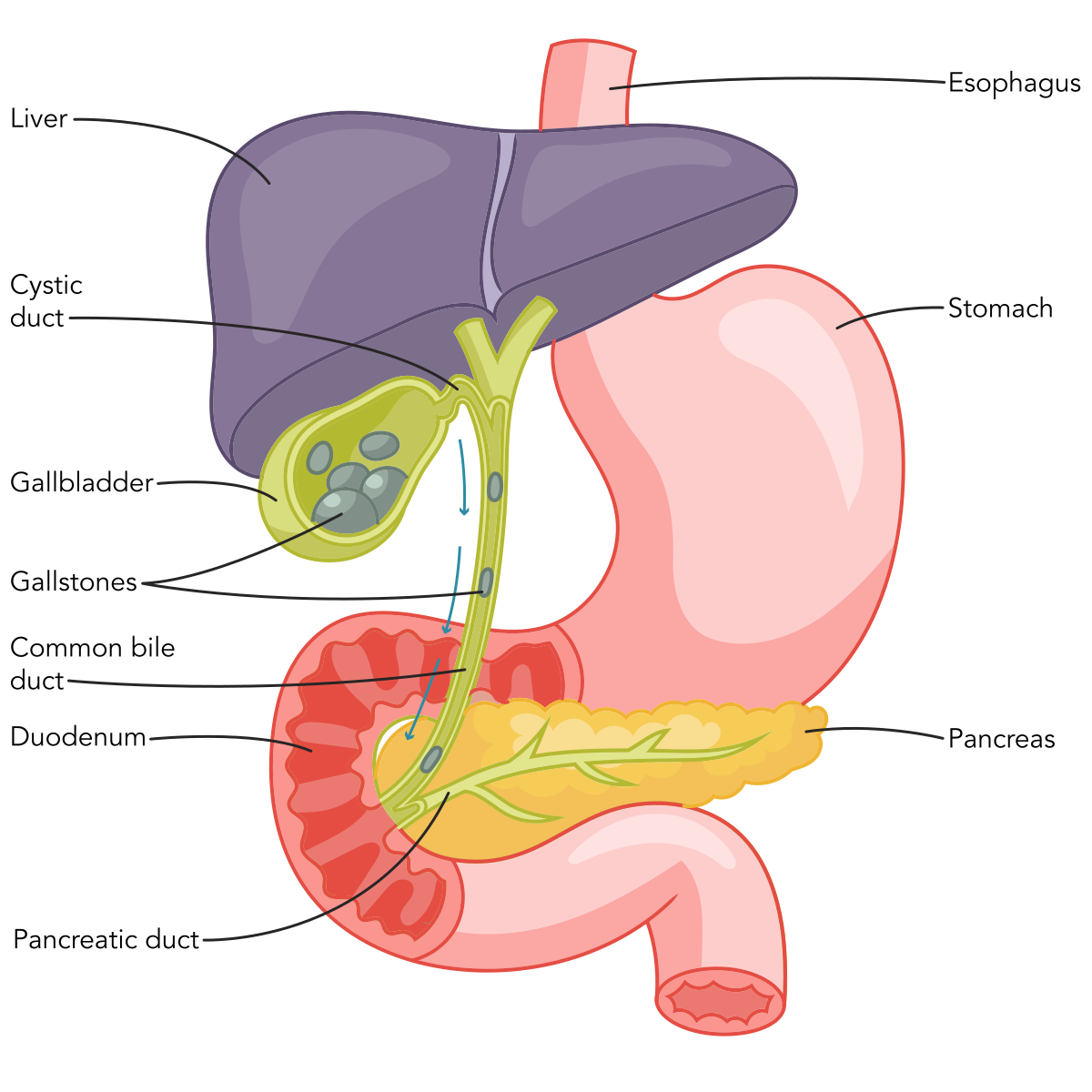
GALLSTONES
Etiology and Risk Factors
Millions of adults in the U.S. are affected by gallbladder disease. In Westernized societies, approximately 75% of gallstones are made up of cholesterol. The majority of clients who have gallstones remain asymptomatic. Gallstones can cause cholecystitis if they block the cystic duct and trigger pain, inflammation, infection, or even ischemia. Although the exact incidence and prevalence vary by source, 1.2 million individuals undergo cholecystectomy annually, making it among the most common surgical procedures done in the U.S..
cholecystectomy
Females under 50 years old are three times more likely than males to develop cholecystitis. Using hormonal therapy such as oral contraceptives (estrogen and progesterone) is one contributing factor. Pregnancy also increases one’s risk for gallstones; they are detected in 1% to 3% of pregnancies. Gallstones develop in pregnancy due to estrogen and progesterone’s effects on the gland as they cause an increase in the ratio of cholesterol to bile salts. Estrogen and progesterone also suppress some of the normal functioning of the gallbladder, making it more sluggish and leading to less movement of the bile in its sac and increasing the capability for the bile to clump and stick together. Other risk factors include family history, type 2 diabetes, obesity, losing and gaining weight rapidly, and adults aged greater than or equal to 65 years old. Additionally, low levels of physical activity, a low-fiber diet, prolonged fasting, liver cirrhosis, hepatitis C, metabolic syndrome, and insulin resistance are also known to be risk factors for gallstone formation.
Impact on Overall Health
Physiological
The most frequent manifestation of cholecystitis and cholelithiasis is acute abdominal pain that can be debilitating. The pain can be so excruciating that an individual may not be able to complete ADLs, go to work, or care for others. If left untreated, complications, such as developing gangrenous cholecystitis or gallbladder perforation that can lead to potential abscess formation and sepsis can occur.
Psychosocial
Biliary colic is a severe pain that occurs when a gallstone blocks a bile duct and causes the client pain and anxiety that may lead to the individual restricting their diet and limiting social activity. In addition, there is research that supports a connection between increased stress, migraines, depression, and anxiety in individuals with confirmed gallstone formation.
Considerations of the Aging Adult
Older adults who are 65 years old or older are at an increased risk of developing acute cholecystitis. Because of more comorbidities with advancing age and potentially a poor surgical candidate profile, there may be complications associated with surgical intervention in this population group and medical management tends to be the first treatment approach. Oftentimes an older adult will not demonstrate the classic manifestations of the disease, and thus, it is important to ensure that a thorough history and physical examination are obtained.
Clinical Presentation
A client presenting with cholecystitis usually will be experiencing pain in the upper right quadrant of the abdomen that may radiate to the right shoulder or neck (commonly after a high-fat meal), loss of appetite, nausea, vomiting, sweating, fever, and, rarely, jaundice.
Lab Testing and Diagnostic Studies
Diagnosing cholecystitis entails a combination approach of reviewing and analyzing the client’s history and manifestations of the illness, physical exam, evaluation of laboratory tests, and radiology imaging evaluation. Sometimes, cholecystitis can mimic its presenting manifestations like a cardiac issue; therefore, ensure that a thorough history and physical is obtained to assist with the underlying cause of the client’s complaints. The key elements of these factors that typically determine the diagnosis are the following.
Local signs of inflammation, such as a right upper quadrant (RUQ) abdominal mass with pain or tenderness, RUQ pain, or Murphy’s sign
Systemic signs of illness such as fever, elevated C-reactive protein (CRP), and an increased white blood cell (WBC) count lab result
Diagnostic imaging findings
Murphy’s sign
C-reactive protein (CRP)
As is the case with many clients who present with new-onset medical complaints, especially if the individual is showing manifestations of an infection such as a fever, a provider will usually start by ordering a CBC laboratory panel. Oftentimes, the client will have an elevation in their white blood cell count value indicating infection in the body, although this can vary between individuals. Additionally, the provider will likely order another laboratory test to support the indication of inflammation, which can assist in formulating a diagnosis, such as the CRP laboratory (inflammatory marker) test. If the CRP is elevated, that tells the provider that there is inflammation somewhere within the body since it is only a generalized measurement.
It will be important for the provider to gauge the client’s overall health condition with some baseline data. Therefore, a comprehensive metabolic panel (CMP) will assist the clinician in determining how well the individual’s liver and kidneys are performing and assist the provider with eliminating other potential issues that may be causing the client’s new reports. In addition, serum amylase and lipase laboratory values will be beneficial as they may be elevated with acute cholecystitis, but usually in more severe cases.
Abdominal ultrasound is the preferred and typically the first imaging exam to obtain if a client is suspected of having acute cholecystitis. Additionally, a hepatobiliary iminodiacetic acid (HIDA) scan is also a beneficial imaging exam a provider might order in arriving at this diagnosis. A HIDA scan, also known as a cholescintigraphy or hepatobiliary scintigraphy, uses radioactive tracers that are injected into a vein in the client’s arm to take images (via what is known as a “gamma camera”) to determine how effectively this radioactive contrast moves through the bile duct and into the small intestine in order to evaluate how the gallbladder is functioning as well as assess the rate at which the bile is released.
A CT scan can also be used to evaluate this gallbladder disorder, especially if there are suspected complications. Magnetic resonance cholangiopancreatography (MRCP) is another imaging procedure that can be ordered to assist in a diagnosis. An MRCP is a subspecialized type of a magnetic resonance imaging (MRI) exam that can provide very intricate images of the organs that orchestrate and participate in the biliary system, including the key components integral to this function involving the pancreas, liver, gallbladder, and bile duct.
Finally, an endoscopic retrograde cholangiopancreatography (ERCP) is another imaging procedure that the provider may order, which uses endoscopy combined with radiographic images or x-ray to examine the bile and pancreatic ducts. An endoscope is placed into the client’s mouth and progressed down into the duodenum and a contrast dye is injected into the ducts.
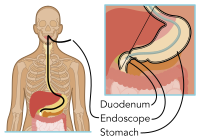
Anatomy of upper body of human showing the direction of the ERCP next to enlarged anatomy of duodenum, endoscope, and stomach.
ILLUSTRATION OF ERCP
A nurse is educating a client who has suspected acute cholecystitis regarding an endoscopic retrograde cholangiopancreatography (ERCP). Which of the following information will the nurse include in the teaching?
A
Intricate images of the organs are obtained.
B
A contrast dye will be injected into the duct.
C
It allows visualization of the small intestines.
D
A radioactive tracer is injected into a vein in the arm.
Connections
Fluid and Electrolytes
Because the client can have a decreased appetite due to pain or nausea and vomiting, often the client will present with deficits in their fluid volume and are dehydrated with possible electrolyte imbalances. One of the initial medical management treatments for uncomplicated acute cholecystitis is intravenous (IV) rehydration and electrolyte correction as well as planning for medically restricted intake (nothing by mouth or NPO status). Monitor intake and output (I & O) while the client is on IV therapy.
Role of the Nurse
Environmental Factors
Because the individual experiences significant pain with cholecystitis, keep the environment quiet to allow the client to rest. If the individual is NPO, ensure that the client is provided frequent oral and mouth care and that an oral care swab and lip balm are within reach. Allow the client to arrange themselves in the best and safest position that permits comfort and relieves pain.
Safety Considerations
Instruct the client to not get up unassisted out of bed, especially if they are experiencing dizziness and lightheadedness, and keep the immediate area of the client’s environment free from clutter to ensure that the individual has a clear pathway. Screen the client for fall risk and initiate fall-risk precautions if indicated.
Individual Factors
Obtain a thorough health history to determine the client’s exercise routines and type of diet being consumed. A sedentary lifestyle and high-fat diet can lead to gallbladder disease.
Client Education
Client education focuses on helping individuals understand the causes, manifestations, and treatment options for cholecystitis, including both surgical and non-surgical management. Nurses should teach clients to decrease intake of fried and fatty foods, replacing them with lean proteins like poultry or fish, and increase high-fiber foods such as fruits, vegetables, and whole grains. Initiating a regular exercise routine can help lower cholesterol levels and promote a healthy weight.
Clients should also be informed about the importance of avoiding crash diets or prolonged fasting, which can contribute to gallstone formation. Education should include recognition of warning signs, such as worsening abdominal pain, fever, jaundice, or vomiting, that warrant immediate medical attention. For clients recovering from a cholecystectomy, nurses should provide postoperative instructions, including signs of infection, pain control, and guidelines for diet advancement.
Nursing Process
Recognize Cues (Assessment)
Assess for manifestations of pain of the right upper quadrant (RUQ) and accompanying gastrointestinal manifestations. Make sure to assess the appearance of the abdomen while the client is in the supine position. Monitor vital signs and check for elevated temperature.
Ask the client the following questions.
When did the pain start?
How long have you had the pain? How would you describe the pain?
Did it begin after eating a meal?
If it started after eating, what type of food did you have?
Does the pain radiate to the right shoulder and/or back?
What relieves the pain?
What makes it worse?
Also determine when the client’s last bowel movement was and ask about the characteristics. Perform an assessment of the client’s skin and sclera of the eyes to inspect for jaundice.
Analyze Cues (Analysis)
Analyze the identified risk factors for cholecystitis and the key manifestations of the disease as the data is reviewed from the client's current complaints, physical exam, laboratory, and diagnostic findings. Identify the location of pain and duration. Determine if there is a correlation between eating high-fat foods and the onset of pain. Review the laboratory and diagnostic findings to verify the presence of cholecystitis or cholelithiasis.
Prioritize Hypotheses (Analysis)
The priority of care for clients who have cholecystitis or cholelithiasis is controlling the excruciating pain and monitoring for indications of infection that will require immediate intervention.
Generate Solutions (Planning)
Next, formulate a plan of care. Include the client and their family in this plan, as well as their interprofessional health care team. The goal is to prioritize interventions, identify outcomes, and modify and make changes as needed. The plan of care will include interventions to manage pain and monitoring for infection.
Take Actions (Implementation)
Now implement the plan and proceed with designated interventions. Continue to collaborate with members of the interprofessional health care team as needed, and continuously involve as well as provide education to the client and family. As always, document accurate and timely findings, data, and information in the medical record.
During the preoperative phase, obtain vital signs, including temperature and note any abnormalities. Initiate IV fluids and administer pain medications as ordered by the provider. Identify when the client last ate and drank and ensure that the client is placed on NPO status.
Provide postoperative care to clients who require surgical removal of their gallbladder. Typically, clients will be monitored for 12 to 24 hr following the surgical procedure. Clients may experience shoulder pain following the cholecystectomy due to the use of CO2. This typically resolves in about 3 days.
If the client undergoes cholecystectomy surgery, provide the client with postoperative instructions regarding dietary considerations. Laparoscopic cholecystectomy is the gold standard procedure for removing the gallbladder. There are no dietary restrictions following this surgery; however, it is recommended that the individual avoid high-fat, fried, and greasy foods in the early postoperative period and follow a low-fat diet as this is easier to digest and may limit gas, bloating, and diarrhea.
A nurse is providing discharge teaching to a client following a cholecystectomy. Which of the following diets should the nurse discuss with the client?
A
Low-fat diet
B
Gluten-free diet
C
Sugar-free diet
D
Low-sodium diet
Evaluate Outcomes (Evaluation)
Finally, reassess the client’s condition and determine the results of the individual’s outcomes. For example, did the client obtain relief of pain from the prior administered pain-relief medication? Is the client exhibiting any new manifestations such as nausea or vomiting? Evaluate the effectiveness of the implemented plan at this time and modify, update, and continue to review nursing actions based on the client’s response and clinical findings as needed. In many cases of cholecystitis, it may be necessary for the client to undergo cholecystectomy. Thus, determine if this is a future consideration with the medical and surgical provider interprofessional team and prepare the client accordingly.
A follow-up postoperative visit will be scheduled about 2 weeks after the surgical procedure. Clients should have resolution of abdominal pain during this time.
Treatments and Therapies
With a diagnosis of acute cholecystitis, the client is hospitalized. The provider will traditionally keep the client NPO to temporarily rest the gallbladder. Because the client will not be able to eat or drink, they will need to have continuous intravenous fluids delivered to prevent dehydration. Additionally, intravenous antibiotics will be ordered and administered to treat the infection. In most cases, the standard treatment is to perform a cholecystectomy via a laparoscopic approach as the usual treatment of choice for individuals who are surgical candidates. Removing gallstones by endoscopic retrograde cholangiopancreatography (ERCP) technique can also be consideredPancreatitis
Page 1
Pathophysiology
Pancreatitis is inflammation of the pancreas. It can be acute or chronic. Most individuals who become ill with pancreatitis will experience a mild case of the disorder. However, approximately 20% to 30% of people will have the more severe form that can require intensive nursing care and present many health care challenges for the individual. Acute pancreatitis comes on suddenly, and once activated, there is a release of trypsin that causes pancreatic acinar cell death with a resultant inflammatory response. Acute pancreatitis is usually short-lived in its mild form, and clients can be managed with conservative treatment. In these cases, the inflammation resolves with no complications. Some individuals develop a chronic version of pancreatitis that demonstrates as ongoing and progressive inflammation, causing irreversible damage in the organ by leaving behind fibrosis and scarring.
Etiology and Risk Factors
Risk Factors
The incidence of acute pancreatitis is increasing worldwide and is likely related to lifestyle, diet, and increased incidences of diabetes and obesity. In the last 50 years, the increase in pancreatitis has been demonstrated in both the adult and pediatric populations. Among clients who were hospitalized with pancreatitis and organ failure or pancreatic necrosis, there was a 30% to 40% mortality rate. Gallstones and alcohol consumption account for the most frequent causes of acute pancreatitis.
An array of other internal and external factors can contribute to or are risk factors for developing pancreatitis. The most common risk factors include cigarette smoking, overuse of alcohol, increased age, family history of pancreatitis, postendoscopic retrograde cholangiopancreatography, abdominal surgery, trauma, infection, and an injury to the abdomen. Pancreatitis can also have no known origin or cause (idiopathic).
Comorbidities
Comorbidities related to pancreatitis are obesity, diabetes, hypertriglyceridemia (high triglyceride levels in the blood), hypercalcemia (high calcium levels in the blood), pancreatic cancer, and cystic fibrosis.
A nurse is providing education to clients about pancreatitis. Which of the following should the nurse describe as the most frequent causes of acute pancreatitis?
Select all that apply.
A
Family history
B
Gallstones
C
Overuse of alcohol
D
Abdominal injury
E
Aging
Impact on Overall Health
Physiological
Pancreatitis requires intensive nursing care and treatment. Complications of pancreatitis include kidney failure, breathing problems, sepsis, malnutrition, type 2 diabetes, and pancreatic cancer. Internal bleeding can also occur if a cyst-like pocket in the pancreas ruptures. If this results, the blood loss along with the severe infection can quickly progress to hypovolemia and sepsis and the client will need to be closely monitored.
In clients with acute pancreatitis, continuous and unresolved organ failure after 48 hours poses the greatest risk for morbidity and is considered the severe form of the disease. This profile occurs due to the pancreatic enzymes leaking into the pancreatic tissues triggering systemic inflammation and “autodigestion.” This inflammation can lead to multiorgan failure, abdominal abscesses, pseudocysts, pockets of collected pancreatic fluid, and necrosis.
Clients who become unstable will be transferred to the intensive care unit. In addition, once a client has had acute pancreatitis, they are at increased risk for recurrent episodes of pancreatitis, namely related to a continued unhealthy lifestyle. When a client has acute pancreatitis, they have a greater risk of developing concurrent organ dysfunction, including renal failure, which may add to the concerning high mortality rate of severe disease. Additionally, the risk for pancreatic cancer rises in individuals who have chronic pancreatitis. Many individuals who have chronic pancreatitis also suffer from osteoporosis, malabsorption, and steatorrhea.
Psychosocial
People who have pancreatitis, especially in the acute stage, are very ill and experience significant pain. A high level of pain is the most emotionally debilitating manifestation of the disease. Many times, clients with pancreatitis develop fear and anxiety and choose to not eat for fear of a recurrence of the pain. Recurrent challenges with pain management can profoundly affect the client’s quality of life and contribute to increased disability, absences from work and social functions, cognitive disruptions, anxiety, and depression.
Considerations of the Aging Adult
In older adults, especially those 60 years and older, there is evidence that demonstrates an increased severity of acute pancreatitis and a larger mortality rate due to a greater number of comorbidities associated with aging. There is inherently an increased incidence of developing acute pancreatitis starting at age 60. In older clients, clinical manifestations of acute pancreatitis differ in presentation from the classic cues that may appear in a younger person, making this population group even more vulnerable to missed or delayed treatment. For instance, in the older adult, the first indication of the illness may reveal itself later, and the reports may be less specific, including a lower pain intensity. Their labs could also elude the health care professional as a possible alert for pancreatitis as the serum amylase might only show a mild elevation. Typically, gallstones are the reason for acute pancreatitis in an older client.
How would a nurse prioritize the care provided for a client who is experiencing acute pancreatitis?
Enter and submit your response to compare it to an expert response.
Clinical Presentation
Individuals who have pancreatitis experience an abrupt onset of illness. The client can present with fever, chills, tachycardia, diaphoresis, tachypnea, jaundice, nausea, and vomiting. Intense pain is a major presenting manifestation, and many times it is described as the worst they have ever experienced. Most clients will state that the pain is located in the abdominal area and radiates to the back. Clients may be reluctant for the nurse to touch their abdomen due to pain. As a result of an acute pancreatitis episode, nausea and vomiting may also be present and cause considerable gastrointestinal upset and potential dehydration. The client may also present with agitation and confusion.
Lab Testing and Diagnostic Studies
Diagnose acute pancreatitis as soon as possible to prevent complications. Lab testing that may be used in investigating and confirming the etiology of the client’s presenting manifestations include amylase and lipase levels, triglyceride levels, blood glucose, CBC, and a metabolic panel. CRP is also drawn to assess the severity of the inflammation and its progression. In addition, arterial blood gases are ordered to assess oxygenation and acid-base balance.
Various radiological tests can be ordered but are not used for diagnosing pancreatitis. They are used to rule out other conditions and help evaluate the etiology of pancreatitis. These tests include a chest x-ray to detect any atelectasis or pleural effusion and an abdominal x-ray to look at abnormalities within the abdomen to indicate calcified gallstone or pancreas. The preferred test initially for suspected gallstones is a transabdominal ultrasound. This exam can be done at the bedside and examines the gallbladder and the biliary tree. A CT scan is beneficial in staging acute pancreatitis but is not recommended in the first 48 hr of admission unless it is necessary for definitive diagnosing. Finally, MRCP is ordered as serial images can be obtained to evaluate and exclude any etiological factor for pancreatitis.
Connections
Fluid and Electrolytes
It is typical for clients to report that they have not had anything to eat or drink since the pain began, as food usually increases the pain. Furthermore, individuals who have pancreatitis experience nausea and vomiting. These clients will likely be dehydrated on admission and will require treatment with intravenous therapy to correct their fluid loss. They will be restricted from oral intake (NPO). Because the client is on IV therapy and NPO, their fluid intake and output (I&O) will need to be recorded and monitored. It is suggested to run IV fluids at a rate of 250 to 500 mL/hr as a baseline, but that can vary depending on the facility, provider, or the client’s condition.
With complicated and serious acute pancreatitis and if resuming a normal diet cannot occur within 5 to 7 days, the client may need nutritional therapy support with enteral nutrition. Most often, enteral nutrition for this disorder is delivered through a nasogastric route. Total parental nutrition (TPN) is usually given to clients who are more complex, such as those with an ileus or complex enteric fistula.
Role of the Nurse
Caring for clients who have pancreatitis can be challenging. The goal for overall management is to rest the pancreas and prevent complications. Some of these clients are critically ill, and severe cases can advance to multiorgan failure. The role of the nurse in the intensive care unit requires skillful clinical competency as the seriously ill client may require mechanical ventilation, hemodynamic support, enteral or total parental nutrition therapy, and possibly postoperative management. In addition, nurses will likely be working with an interdisciplinary health care team, and collaboration together with coordination of care will be a pivotal part of the nurse’s function and responsibility.
Environmental Factors
Obtain a thorough history from the client to determine environmental risk factors, such as a family history of pancreatitis, overuse of alcohol, tobacco use, and consuming a diet high in fats, are readily identifiable.
Clients who have pancreatitis require significant rest as their pain can easily exhaust them and contribute to anxiety and restlessness. Therefore, the environment should be kept quiet, and if the client agrees, encourage them to use other alternative pain management techniques such as distraction from the television, music, or games or the use of guided imagery and relaxation modalities, such as progressive muscle relaxation practices. Allow the client to assume a position that is most comfortable for them, which may mean that the client will want to lie on their side with their knees bent to their chest or sit in a position that allows them to lean forward.
Safety Considerations
Ensuring client safety is a priority in nursing care due to the risk of organ failure, sepsis, and mortality in moderate to severe cases. Monitor for signs of alcohol withdrawal such as tremors, hallucinations, and seizures in clients who have a history of alcohol use disorder. Implement fall precautions, assess for disorientation due to electrolyte shifts or withdrawal, and avoid restraint practices unless clinically indicated. For hospitalized clients, turn and reposition every 2 hr to reduce the risk of pressure injuries, especially when immobility is due to pain or sedation.
Individual Factors
Gallstones and alcohol use are the two most common causes of acute pancreatitis, accounting for the majority of cases. These etiologies are also associated with more severe disease and increased recurrence risk. Once the client is stabilized, initiate discharge planning with a focus on prevention. This may involve referrals to a dietitian for nutritional guidance, an RN diabetes educator if blood glucose control is needed, and home health nursing for follow-up care. Collaborate with case management or social services to coordinate resources for durable medical equipment (DME), alcohol cessation support, or coverage-related needs.
Client Education
Client education should begin upon admission and continue throughout the hospitalization. Assess the client’s readiness to learn and provide education regarding the cause of their pancreatitis, symptom recognition, and individualized pain management strategies. Encourage lifestyle modifications including elimination of alcohol, smoking cessation, adequate hydration, and a low-fat, high-fiber diet rich in fruits, vegetables, and whole grains. In some cases, clients may need to monitor blood glucose levels due to transient or permanent endocrine dysfunction. Nurses should verify the client’s ability to use the glucometer and ensure they have appropriate supplies available for use at home.
Nursing Process
When caring for a client with acute pancreatitis, it will be necessary to perform the steps of the nursing process in a swift and expeditious manner. Time is of the essence when caring for the client who has pancreatitis, and the nurse will be assessing, planning, implementing interventions, and evaluating outcomes for the client simultaneously.
Recognize Cues (Assessment)
Ensure that the client is asked about the timing and characteristics of their pain as many times this can serve as a potential signal that a diagnosis of pancreatitis should be explored. The pain is typically in the epigastric or left upper abdominal region and is acute, severe, disabling, and persistent. The pain worsens with eating, and the individual often will feel some relief if they lean forward or bend forward. The abdomen will be tender to touch. Observe for any guarding of the abdomen, which would be a positive sign if the client voluntarily or involuntarily tenses the abdominal muscles when light palpation pressure is applied. The client who has pancreatitis may be reluctant for the nurse to touch the abdomen due to pain. Bowel sounds will be reduced during auscultation.
Inspect the sclera of the eyes and the skin for yellowish discoloration that may also indicate jaundice. Assess the appearance of the client’s urine and feces. Dark urine and/or clay-colored (light-colored) stool may be an indication of jaundice. Another potential sign of pancreatitis could be that of steatorrhea, a term used for the appearance of too much fat in the stool; these stools can be loose and contain mucus or foam which may be a sign of an increase in fat expulsion due to malabsorption.
When assessing the abdomen, flank, and inguinal skin, monitor for abnormal skin colorations. If hemorrhagic pancreatitis, which is a rare and very dangerous condition, has occurred, there will be bleeding from within or around the pancreas, and the nurse will be able to see ecchymosis. Ecchymosis of the periumbilical skin is called Cullen’s sign, and if it is seen in the flanks, it is called Grey-Turner’s sign. If the ecchymosis is visualized over the inguinal ligament, it is called Fox's sign.
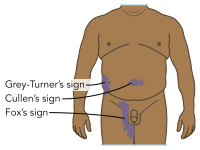
Male client's body showing Grey-Turner's sign on the side of stomach, Cullen's sign on the stomach above belly button, and Fox's sign on the groin and inner thigh
CULLEN’S, GREY-TURNER’S, AND FOX’S SIGNS
Analyze Cues (Analysis)
Next, analyze the data and information collected during the history and assessment. Compare the client’s presenting manifestations to evidence-based resources: Does the origin, location, characteristics, and intensity of pain match typical features of pancreatitis? Analyze the client’s risk factors and match them to evidence found in the literature regarding typical causative characteristics of pancreatitis, such as a history of gallstones or AUD. In addition, review the lab values since serum lipase is one laboratory test that is the preferred indicator if elevated, although a high reading for serum amylase is also contributing evidence. However, it should be noted that there is not one clear laboratory biomarker for diagnosing the disease at this time, and there could be other reasons why the lipase and amylase are elevated. Therefore, it is important for the nurse to obtain a thorough history of the client’s presenting physical manifestations, coupled with laboratory and imaging findings, that will help guide a plan of care.
Prioritize Hypotheses (Analysis)
Managing the client’s pain is priority and should be addressed with a narcotic pain-relief medication (usually morphine, fentanyl, or hydromorphone) as soon as possible in the admission process as the client will likely have a high level of pain that may interfere with the continuation of necessary interventions, diagnostic procedures, and treatments. Proceed with organizing the collected data to plan priorities in the individual’s care, including the implementation of intravenous hydration therapy as soon as possible.
Generate Solutions (Planning)
Actively collaborate with an acute care interprofessional health care team when caring for a client who has pancreatitis. The needs of clients who have severe pancreatitis are complex, and the prevention of complications will require rapid prioritization of diagnostic tests, treatment interventions, analysis of data and outcomes, and modification of care, as needed. The plan of care will include interventions to address pain, fluid deficits, and electrolytes imbalances.
Take Actions (Implementation)
The client may be NPO for a couple days while treatment is initiated to help reduce the inflammation in the pancreas. Provide frequent oral care to clients who are NPO. It is important to begin feeding the client again as soon as possible to promote healing and return of function to the pancreas. When eating is resumed, the diet should start with clear liquids and then advance to a normal, low-fat diet as the client tolerates. If the client is unable to tolerate eating, a nasogastric tube may be inserted to provide nutrition with enteral tube feedings. To ensure adequate pain control, regularly scheduled pain medications will be administered. To prevent dehydration and to replace electrolytes, IV fluids are given. Monitor intake and output to determine hydration status.
Evaluate Outcomes (Evaluation)
Reassess and evaluate the client’s outcomes concerning pain management, nutritional and fluid status, and metabolic needs (blood glucose levels) and make modifications as needed.
Treatments and Therapies
The focus for treatment of pancreatitis is supportive and primarily includes pain management, and fluid and electrolyte replacement.
An isotonic, crystalloid IV fluid, such as lactated Ringer's (LR), will be ordered for fluid resuscitation and electrolyte replacement. Pain will be managed with an opiate in addition to an antiemetic. Initially, the client may be ordered to be NPO to allow the pancreas time to rest and for the inflammation to begin to resolve. The pancreas rest will continue for a couple of days or until the nausea, vomiting, and abdominal pain have diminished enough for the client to attempt to eat. Once those manifestations are under control, the client is started on a clear liquid and bland diet that will be advanced as tolerated to a full, low-fat diet. A nasogastric tube may be inserted to provide nutrients if the client is unable to tolerate eating for a longer period of time.

Gorodenkoff/Shutterstock
IV FLUID REPLACEMENTTreatment of pancreatitis includes intravenous (IV) fluid and electrolyte replacement.
Once the acute inflammation of the pancreas has resolved, the health care provider will then assess and treat the etiology for the pancreatitis.
If pancreatitis is caused by a blockage or narrowing in the bile duct, ERCP will be performed.
Another treatment option is a cholecystectomy. If the cause of the pancreatitis is gallstones, the health care provider may decide that the removal of the gallbladder is needed.
If fluid has collected in the pancreas, the health care provider may drain the fluid via an endoscopic or radiological approach.
Clients who have chronic pancreatitis may require other treatments in addition to those discussed above. If the client has continued pain, the health care provider can prescribe medications to control the pain and refer the client to a pain specialist. If the pain is severe, an injection to block the nerves that send signals from the pancreas to the brain via an endoscopic ultrasound may be performed.
For clients who have chronic pancreatitis who have diarrhea and weight loss, the health care provider may prescribe pancreatic enzyme supplements, such as pancrelipase. These supplements assist the body in breaking down and processing nutrients in the food that is eaten.
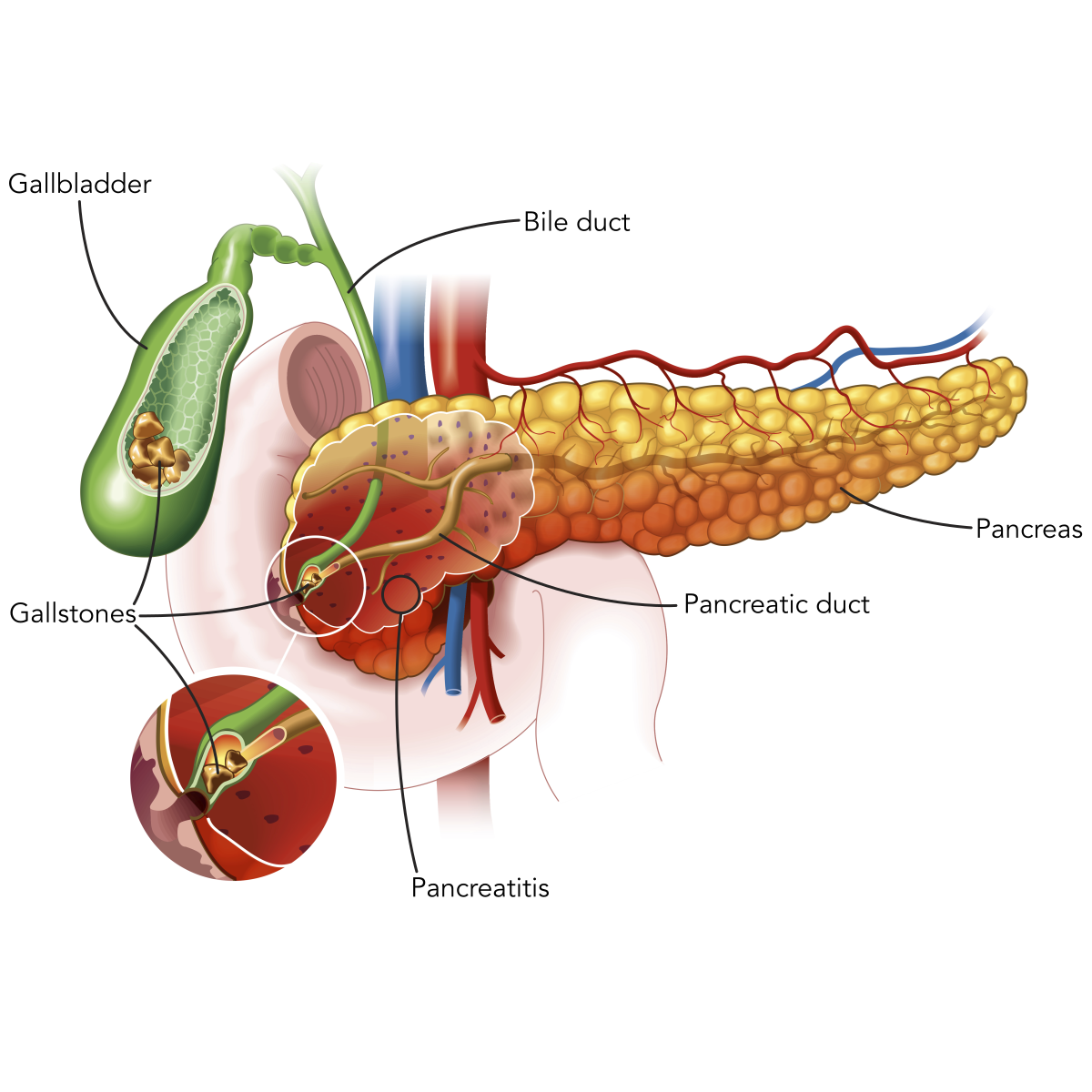
Axel_Kock/Shutterstock/Graphic World
PANCREATITIS
Pancreatic Enzyme Supplement
CLASS With Prototype: Digestive agent (pancrelipase)
Action: Contains lipolytic, amylolytic, and proteolytic activity
Therapeutic Effects: Aids in the digestion of fats, carbohydrates, and proteins in the GI tract
Adverse Effects: Nasal stuffiness, dyspnea, stomach cramps, abdominal pain, oral irritation, hematuria
Client Teaching: Do not chew tablets, swallow the medication quickly with plenty of water, and notify health care provider of abdominal pain, distention, and vomiting.
A nurse is caring for a client who is taking a pancreatic enzyme supplement (pancrealipase). Describe in your own words the expected therapeutic effects of this medication.
Enter your response and submit to compare to an expert response.