Chapter 5: Unicellular Eukaryotes
{{Unicellular Eukaryotes{{
- Diverse and abundant
- Over 64,000 species have been named
- Highly adaptable
- Require moist environments
- Marine or freshwater
- Soil
- Decaying organic matter
- inside plants and animals
- May be sessile or free-swimming
- Form a large part of the floating plankton
- Many impact humans:
- Feed on corneas or brain tissue
- Cause diseases (e.g., malaria, dysentery)
- Infect livestock
- The organisms formerly known as protists
- Now recognize that they belong to many different taxonomic groups
- Correct classification is important
- Otherwise, we can’t treat these disease agents
- Susceptibility to particular drugs is often lineage-dependent
Ciliates
- Numerous cilia cover plasma membrane
Flagellates
- Have 1+ flagella used to propel cell
Amebas
Have irregular shapes
- Caused by the flowing cytoplasm inside cell
May have tests (shells) or be “naked”
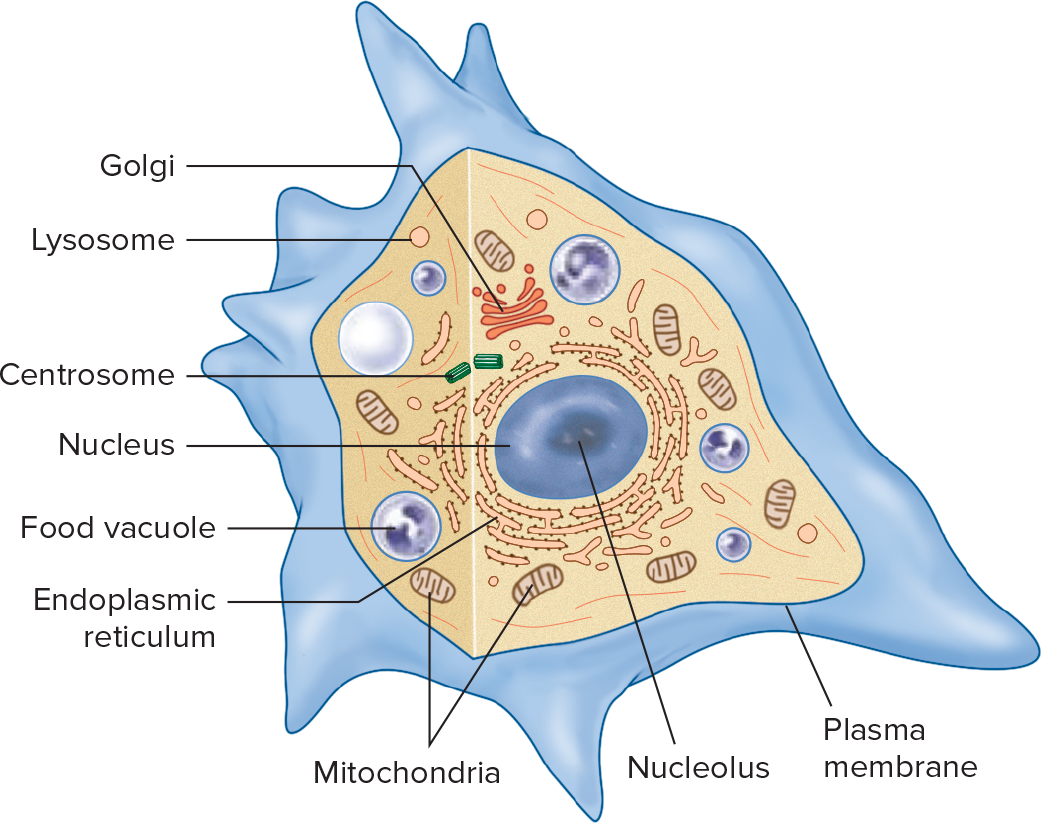
{{Form and Function{{
Plasma Membrane
- Separates unicellular eukaryote from the surrounding environment
- Composition: Selectively permeable phospholipid bilayer
Cell Cortex with associated actin-binding proteins
- Beneath PM and bound to it
- Function: influences shape and other PM properties
Cytoplasm
- Composition:
- Cytosol (fluid portion)
- Organelles and membranes
- * nucleus is not part of the cytoplasm
Cytoskeleton
Fibers cross through cytoplasm
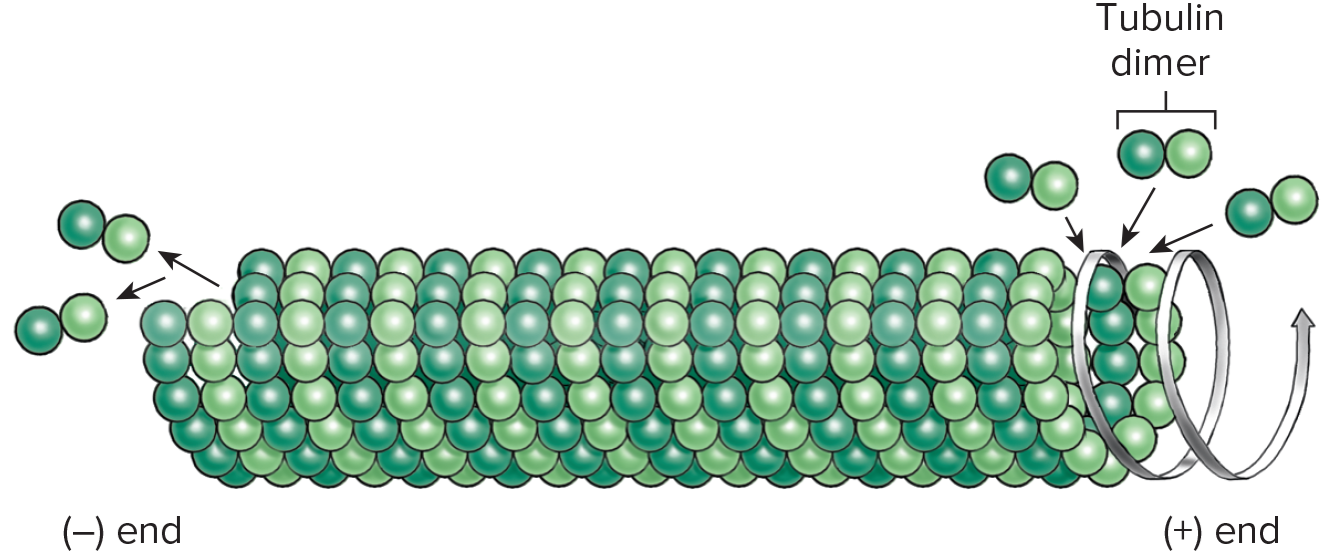
3 types of cytoskeletal fibers:
Microtubules
- Transport within cell
- Internal structure to cilia and flagella
- Stiffen PM and cell extensions
Intermediate Filaments
- Intermediate in size between other fibers
- Functions largely structural
Microfilaments
- A.k.a. actin filaments
- Form the cell cortex, which affects PM properties
- Very important in cell movement and shape change, particularly in ameboid cells
{{Cell Extensions in Representative Unicellular Eukaryotes{{
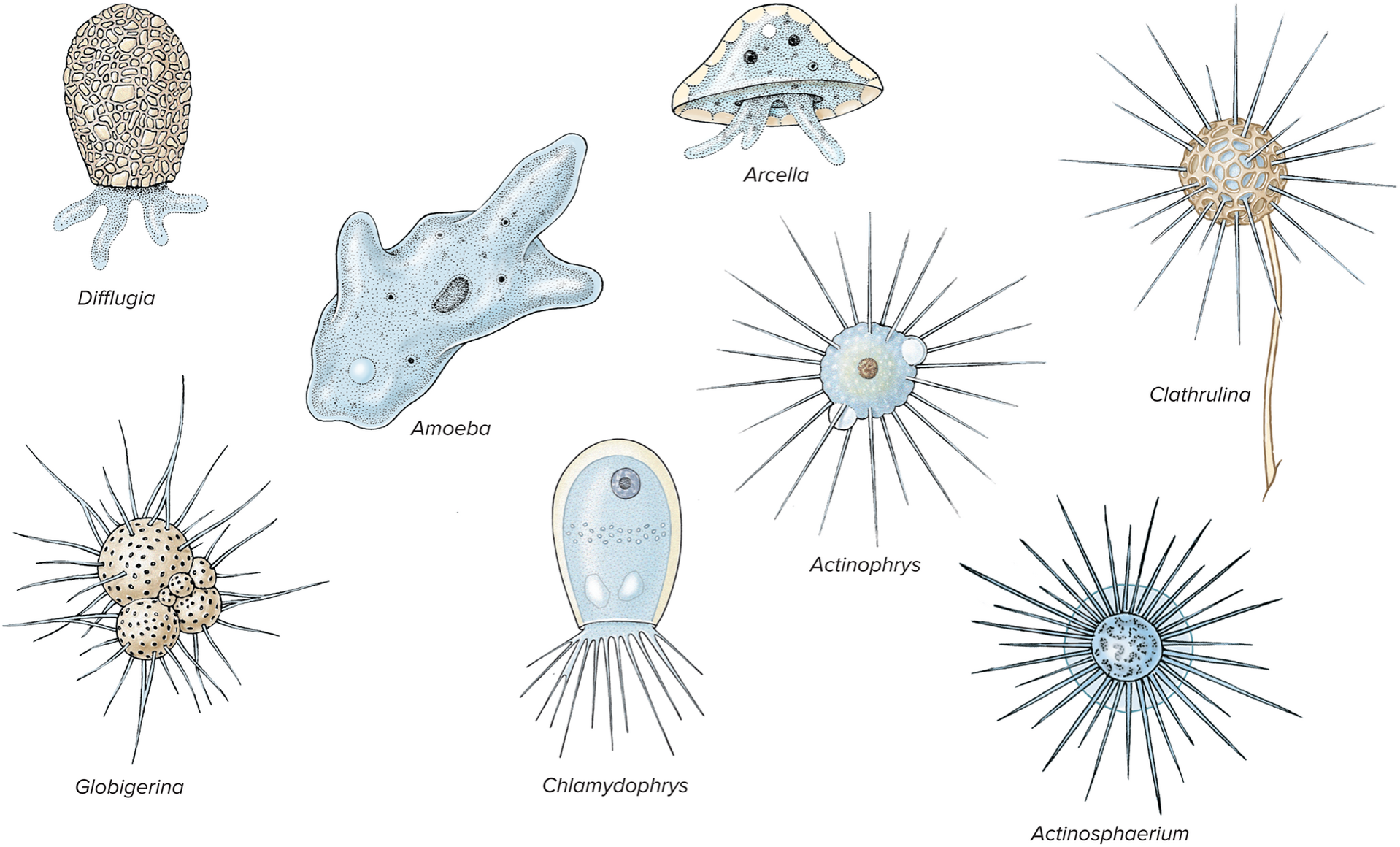
Ameboid cells assume a wide variety of shapes and forms.
Flexible Plasma Membrane
Responds to changes in dynamic cytoskeleton
Movement
Pseudopodia (fake feet)
- General cell extensions
Feeding
Phagocytosis: Engulfing food using plasma membrane extensions
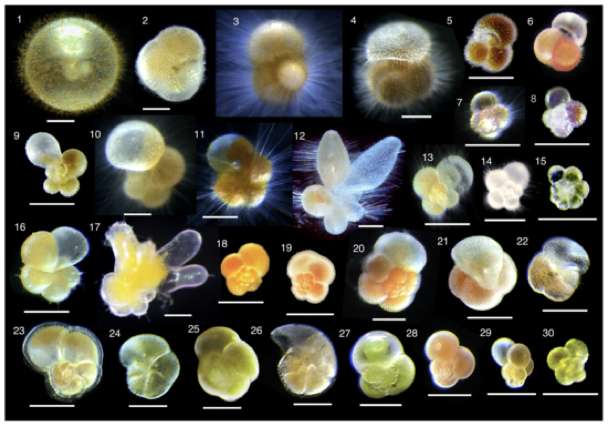
Reticulopodia
- Pseudopodia that branch and rejoin extensively
- Develop a branched net-like mesh
- Reticulum
- Uses:
- Prey capture
- Cytoskeleton formation
- Cell attachment
- Cell movement
{{Nutrition and Digestion{{
Two broad feeding modes in unicellular eukaryotes
Autotrophs
Heterotrophs
Mixotrophs
- Make some of their nutrients, but also eat other organisms
Newly discovered feeding process: trogocytosis
- Feeding mode for certain parasites
- Parasite bites and consumes sections of the host cell membrane, cytoplasm, and organelles
- Examples:
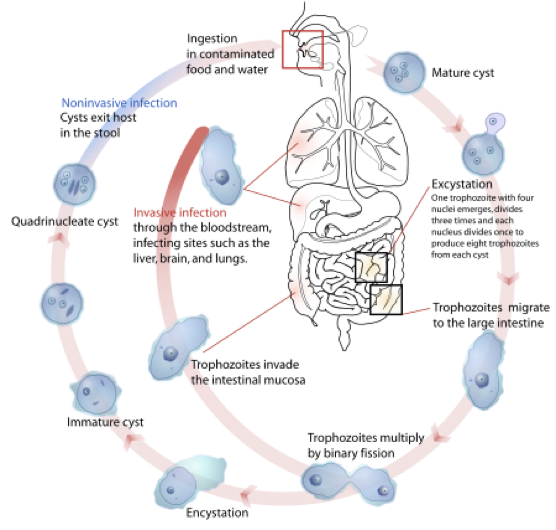
- Entamoeba histolytica
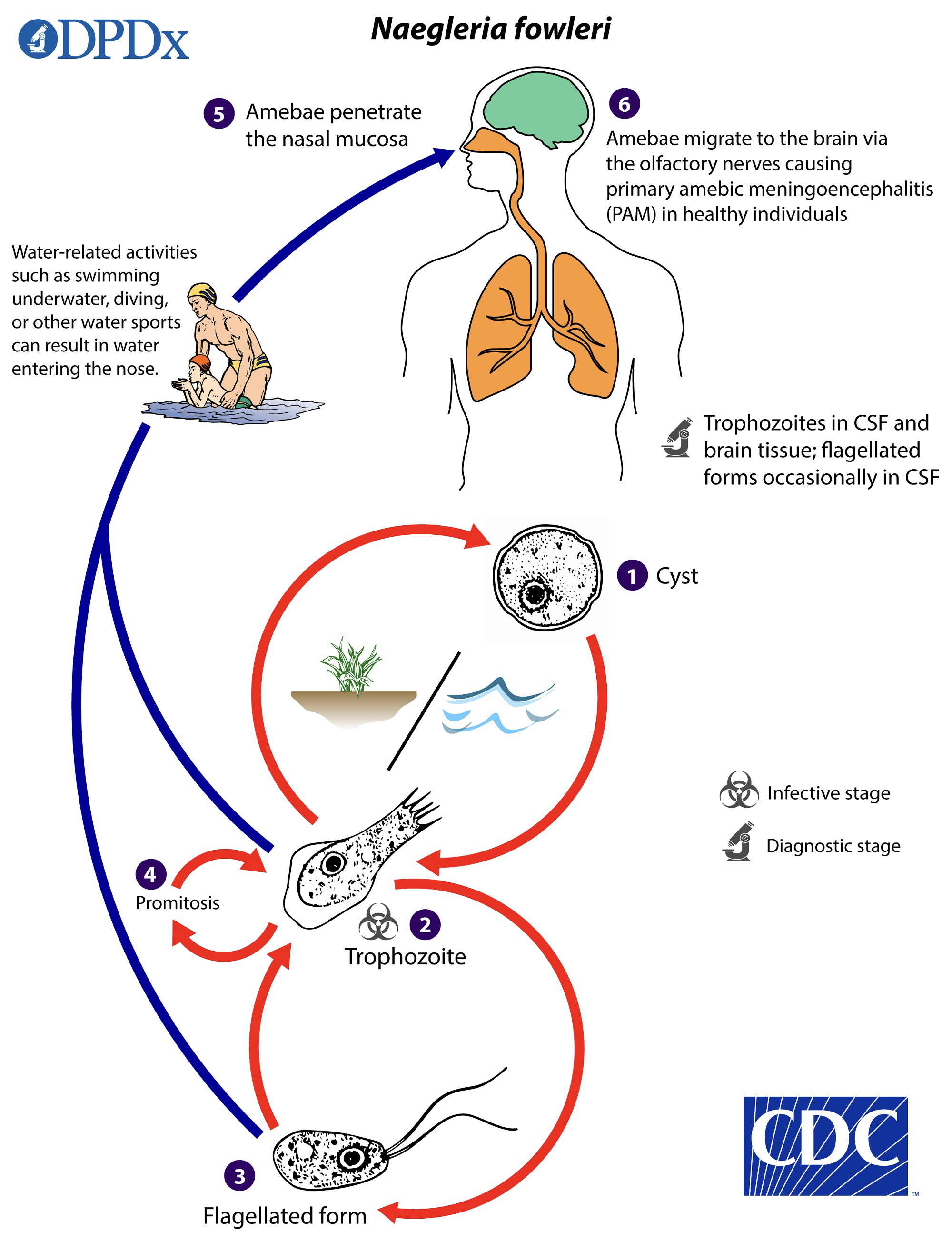
- Naegleria fowleri “brain-eating amoeba”
- Causes sudden, severe, and usually fatal brain infection
- Enters through nose
- Found in warm and hot freshwater
- Rivers, lakes, hot springs (very rare)
{{Reproduction and Life Cycles{{
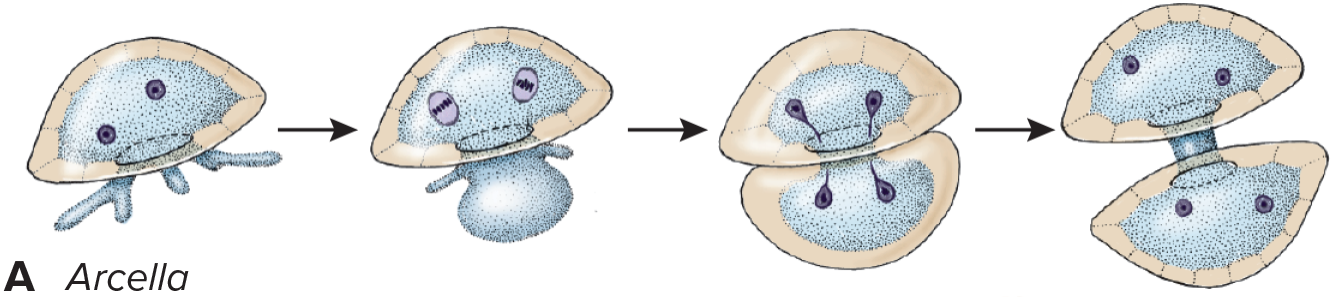
Fission
- Cell-multiplication process that produces genetically identical individuals in unicellular eukaryotes
- Binary Fission
- Most common type
- Budding
- Progeny cell considerably smaller than the parent and then grows to adult size
- Multiple Fission
- Several nuclear divisions precede division of the cytoplasm
- Numerous individuals produced almost simultaneously
- Common among apicomplexans and certain amebas
- When it leads to spore formation: sporogony
- All unicellular eukaryotes reproduce asexually
- Some exclusively
- Sexual reproduction also widespread
- Value of genetic diversity and recombination
- Gametic Meiosis
- Occurs during or just before gamete formation
- Occurs in Ciliophora and some flagellated and ameboid groups
- Intermediary Meiosis
- Haploid and diploid generations alternate
- Widespread among plants
- Occurs in foraminiferans
- Unicellular eukaryotes are extremely tolerant to extreme environmental conditions
- One reason: Cyst Formation (Encystment)
- Dormant forms
- Resistant external coverings
- Undergo complete shutdown of metabolic machinery
- Also important for many parasitic forms
- Must survive harsh environment between hosts
- Does not occur in Paramecium, rare or absent in marine forms
- Excystment
- Escape from cysts
- Exact stimulus is usually unknown
- In general: return to favorable conditions