Ampere's Law and Electromagnetism Notes
Ampere's Law and Electromagnetism
Ampere's Law:
Describes the relationship between electric current and magnetic fields.
States that a current flowing through a circuit produces a magnetic field around the circuit.
The magnetic field can be analyzed through an arbitrary closed surface known as a Gaussian surface.
This surface can be drawn with emphasis on symmetry to simplify calculations.
Changing Fields:
Key Concept: Changing electric fields generate magnetic fields, and vice versa.
These changes exhibit sinusoidal behavior, allowing them to be modeled with sinusoidal functions.
Electromagnetic Waves:
Example with an antenna connected to an AC generator:
As the current alternates, it creates electric charges that lead to oscillating electric and magnetic fields.
The electric and magnetic fields propagate outward in the form of waves.
The direction of these waves is characterized by a constant oscillation where electric and magnetic fields are in phase with each other.
Wave Dynamics:
When current changes direction, it creates loops of electric and magnetic fields that propagate away from the source.
Patterns formed by these loops can be influenced by the setup of the electromagnetic system.
Wavefronts remain perpendicular to each other as they travel through space.
Electromagnetic Spectrum:
Different frequencies correspond to different parts of the spectrum (e.g., radio waves at 10^8 Hz).
The study of the electromagnetic spectrum aids in understanding various types of electromagnetic waves, including visible light.
Energy Density:
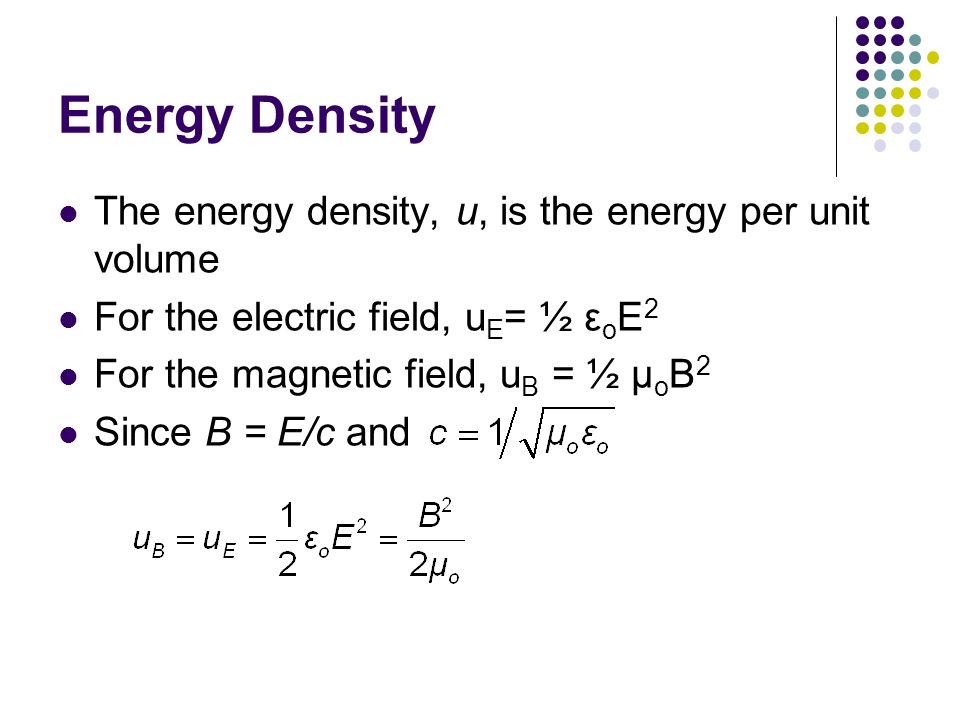
Intensity of a wave can be defined as the energy per unit time per unit area.
Signal Processing:
When a signal encounters an object, the change in momentum can result in an exerted force on that object.
This can modulate the received signal, influencing how the energy is distributed over the wave.
Key point: Understanding these principles guides the analysis of electromagnetic interactions in technology and theoretical physics.