Bus 020
day 2
In accoutning many people belive its black and white, right and wrong
Hans Hoogervist refers to accounting as a bunch of be counters
They have there yes no, but they have a lot more, such as a gray area, a room were people have to decide and will impact the end result
Overvuew for today - Business, accounting systems, intro to four financial statements, account and rule setting, managament and auditors, ownership structure
understaninf business
The players, investors, creditors, managers
Business operations are seperates into 1. purchasing parts and labor, 2. manufacture product 3. sell procuts to customers 4. collect cash from customers and pay creditors
The accounting systems - there are financial accounting reports (external descision makers), managerial accounting reports (internal decision making).
Financial accounting - accounting informaton provided to external users is refered to as financial accounting - the two functions of financial accounting are
to measure business activities of a company
to communicate those measurements toexternal parties for decision making process
Particularly for debtors and creditors
Who needs Accounting Info?
managament
need to know if they can make moves
equity investors
use it for making decisions on stocks to purchase or sell
creditors
need to know if business can be trusuted with that loan or credit
tax authorities
they want to get there cut
Laor unii\ons
want pbulishes financials to know how much they make to make sure there employess ghet paid better
financial advisors, employess and industry grous also check and should check
Business activities
Financing activities
transactions the company has with investors and creditors
invesitng activities
transactiuons involiving purchase and sale of resources that are expects to benefit the company for several yeats
operating activities
transactions that relayes to the primary operations of the company
The accounting equation
Assets = Liabilities + Stockholders equity
(resources) = (claims to resources)
assets = total resources of the companu
liabilties = ammounts pwed to creditors
stockholders equity = owners clains to reosurces
Assets go up or goes don another thing hoes up or down
Revenues expenses and dividens
revunes are the amounts recohnised when the companuy sells products or provides servies to customers
expenses are the costs of provifing products and serbices and other busiess activities during the current period
net income is the differne beween revenues and expenses other common names are something and something
dividends cash payements to stock holders (not expenses)
financial statement
reports the companys revenues and expenses over time
revenue the ammount reohnizes when the company sells or provides products or services
expenses are costs of procinf ais product or service and toher activites in the period
net income is the differnce between revenue and expenses showing profit or lost
Statement of stock holders equity
suammarizes the changes in stocjholders equity over an interval of times
stock holders equity - common sotck + retained earning
(contributual capital:external source) + (earned capital: Internal source)
Change in equity
Balance sheet
It presents the financial psotion foc ompanys on a particular date
Finacial positons: Resources = claims to resources
Assests = liabilities + stockholders equity
Dates matter and will ruins equation
changes reflected here up to a certain pount of time
PNL is a period and range of dates
statement of cash flows
measures activites involving cash receipts and cash payments over an interval of time
Operating cash flows
Cash transction involving revenue and expense activities
Investin cash flows
cash transaction for th epurchase and sale of investments nd long term assets
Financing cash flows
Xash transaction with lendors and stockholders
Statement of comprehensive income
Measure of changes in euity that arise from non owner sources
Gains and lossses asscoiaed with invests in secertain types of debt securities
certain types of derriciatives
pensuons
foreign currenucy translation
a payable is always aliability
Profesonslal user oerceptions of finanfial statment us
notes to financial steatements
Integral part of the financial statements
Statements cannot be adequately interpreted without reading the information in the notes
Three basic types of notes
Descriptions of accounting rules applied
Details about line items in the statements
Disclosures about items not listed in the statements
Account set rules
The SEC has worked with the acocunting profestion to worj ouit detiled rules known as GAAP
Currently the finanaical accounting standards board FASB is recognized as the body to formulate GAAP
GAAP rules
Rules most companies must follow
Not exact tules - profesional judghemnt is needed
not rules for tex returns
Effects of GAAP
Companies incur the cost of preparing the fincnaicl statements and bear the follwoing economics cosequences
effects on the selling price of stock
effect son the amount of bonuses
Recived by managers and other employees
Lost of competitive infomation to other companies
(they be snitches in there and reveal moves)
Management responsatbilities and the demand for auditiong
CEO and CFO must sign off on 10k and pe ersoanlly responisble for fraud
Day 3
management responsibilites and the demand for auditing
making sure the accuracy of companys financial infoamruon
Management
maintains a system of controlls
hires outside independent auditors
forms a commitee of the board of directors to review these two safeguards
Independent auditors
must express an opionaon as to the fairness of financial statements
responsibbilities extend to the general public
follow pcaob detailed rule book for auditors
ethics, reputation and legal liability
public company accountinf oversight board PCAOB - auditing standards
american instituite of Certificate Public Accoutant ALCPA - professional code of ethics
A CPAs reputation is their most important assest
CPAs have liability for malpractice
Conceptual frameworks
provudes standard setters with a benchmark for creatinf a consistent set of financial reporting rules now and in the future
provides others with a written fraewrk so that everyone understands the underlying concepts that accountants are to consider in preparing and interpreting dinancial accounting indormaoton
key point
to be useful for decision making, accounting informatuon should have relevance and faithful representations
assets = liabilitys + equity
Four characteristics of financial reporting enhance its
usefulness. These characteristics include
– Comparability
– Verifiability
– Timeliness
– Understandability
ownership structure
Sole proprietorship
Unincorporated by single owner
Not a separate legal entity
Partnership
Unincorporated by two or more owners
Not a separate legal entity
Corporation
Incorporated under laws
Typically multiple owners (i.e. shareholders or stockholders)
Separate legal entity
Chapter Summary
What is Accounting?
Measure + communicate business activity (requires judgment)
Who Uses It?
Investors, creditors, managers → decision-making
Core Model
Operating | Investing | Financing
Foundation
Assets = Liabilities + Equity
Financial Statements
Income (performance) | Balance Sheet (position)
Equity (changes) | Cash Flow (cash)
Key Takeaway
Accounting = decision-useful information; everything is connected
Chapeter 2
Accounting
the main objective is provide infomraiton that can be used in making economic decisions
the financial statments are the primpary outputs of financial accountents
assets - ecoomic resourced owned or controlled by company as a results of past events or transactions
liabilities - expected oligation of a company to transfer assets to other entities as a result of past transactions or events
equity - residual interest in the assets of a busioness after liabilities have been deducted
Balacne sheet
mirrors the accounting equation
assests = liabilties + equity
balance sheet composition
current assest
current liabilties
noncurrent liabilities
non-current assets capital / contributued
retianed earning
Assets
cash = cash
cash equivalents = highly lighuid securities that can be converted to cash in the very short term
Cash equivalents can be treated like cash since they are quickly convertged
investments in treasury bills Tbills, Commercial paper (short twrm loans to corporations not banks) bank CDs maturing in 90 days or less and money market funds (mutual funds made to invest in the other examples)
recibables - amounts owed by customers for purchases on an account (credit) (A/R)
Net - estinated amount of unrealizbale recibles (customers sometimes break promises
Net A/R = Gross A/R less allowance for bad debt
investories - assets brought or manufactured by the company and held for sale to others,
for manufactorers this ammount includes all stuff needed to create finished goods
Why net - net of invemtory reserbes, which are estimatyed potential inventory losses
Prepaid expenses - expenses paid for in advance (these are assets not expenses
Prepaid expenses
adncave payments for goods or services that ill be used in the future
rent
issurance
software or an\ohner subscrption services
advanced payments for other serf
property and equipement
long term tangible assets that support operations
Net
gross PPE is netted against an estimate of the accumulated depreciation of the assets
intangible assets
non physical assets
net
sometimes they are amortized
tangible bs intangible assetys
tangible assets are physical
buildings
land
equiment
etc.
intangible assets arent physical
patents
trademarks
goodwill (fairness)
etc.
Goodwill - arises fro corprate acquisitions, (can be “impaired” if loses value)
assets in a balce sheey are reported at
historical cost
amortized cost
not realizable balue
fair value
market value
liabilties
listed in order of maturity
current liabilties - will be paid within a year
accounts payable
_____ payable ( or accured ______ expense)
Notes payable - short term
unearned revenues
current portion of long term debt
Accounts payable
short term obligations that arise from credit extended by suppliers for the purchase of goods and sevices
A/P
Acured expenses
Liabilites that arise prior to cash payments
eg accured payroll represents payroll costs the company has incurred but hasent yet paid in cash
Never an expense always a liability
short term debt
debt with origional maturity of less than one year
line of credit
revolver
commericial paper
many copanies also report “current portion of long term debt” that is due within the next 12 months
Leases
this is a lease so why is it a liability?
Lease contracts for property, equipemnts, etc are ofthen treated as debt because they contractually obligate the copany to make cash payments for more than a year
long term debt
investing-bearinf obligations with maturities beyond one year including
long term debt
borrowings
mortages
bonds and debentures
loans
convertible debt
Bus 20 Discusion
There are, stock holders equity, income statements, comprehensive income, cash flows, calance sheet
there are assets, retained earning, revenue, liabilities,
theres asset, liability, equity, revenue, expense and dividends
revenues - exenses = net income
equity = stock + Net income - dividend
assets = liabilities + equity
objective of financia accounting
provide useful info for ivestors and creditors
blance sheet is A = L + E
Income statement Rev - Exp =NI
Stockholders equity SE = change in stock + NI - Div
Topic 3
focus on balance sheets and income statements, debits and credits arent necceaary
Transacitons
accounting is all about tracking transactions
a transation is an exhange between a business and one or more external perties or measurable internal event such as using up assets during operations
a transation with external parties is usually an exchange a vbalue the business entity gives something up to recive something in return
external transations
reosurces - things ecchanged in transations both tangible and intangible
events - the actual transation (giving or getting of a resource)
agents - people involved in the transtion
Principles for transaction analysys
every transation effects atleast 2 accounts
blacing equation must remain blacned afer the transaction
Assets = Liabilities + Stockholders equity
Terms to know
General ledger
a big book of accounting records where each page is an account
Accounts
a page in the general ledger devoted to tracking an individual asset, liability or type of owner equty
account are organized format used buy companies to accumulate the dollor effects of transation
a fitm can have as many accounts as it needs to keep track of its finanacial records
How t balnce the accounting equation
identify and classify account and effects
identify the accounts (by title) affeced and make sure at least 2 accounts change
clasiffy them by type account, e.d. was each account an asset, liability or stockholders equity
determine the direction of the effect, did the account increase or decrease
verify the account equation is in balcnce
verify the accounting equations A = L + SE is in balance
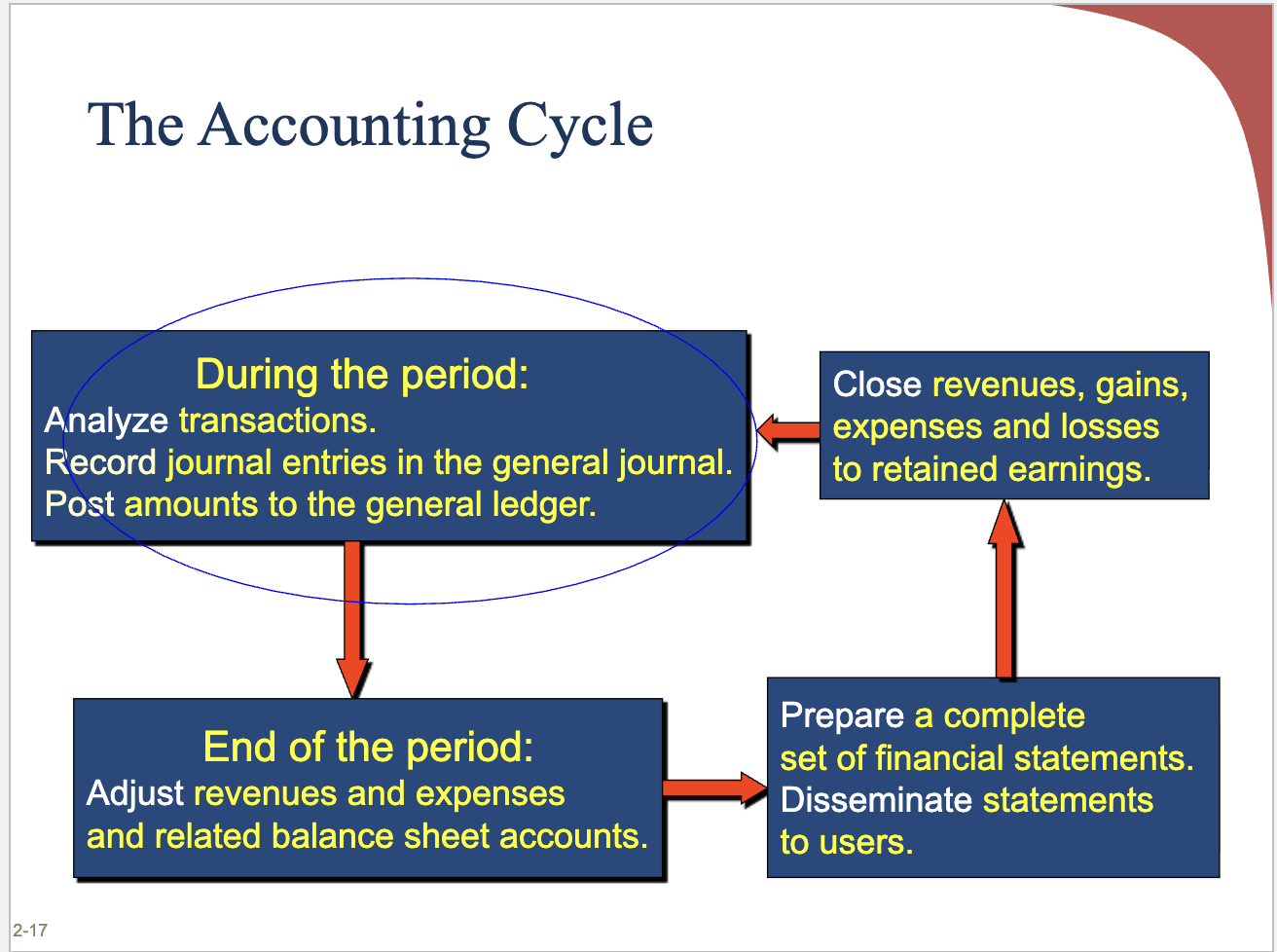
Tghe accounting cyclke
During the period
analyze
Next class
Accural vs cash basis
Why accural?
Asverse incentives can arise under cash accounting
under investment
delay payent of accounts
accural account provides a more accurate picture of a companies financial position and operatinf results than does cash-basis accounting
Axcurals and deferrals
transacrions where the exchange of cash does not coincide with the economic substance
accrual - recognition (revenues or expense) before the exchange of cash
deferral - recognition after the exchange of cash

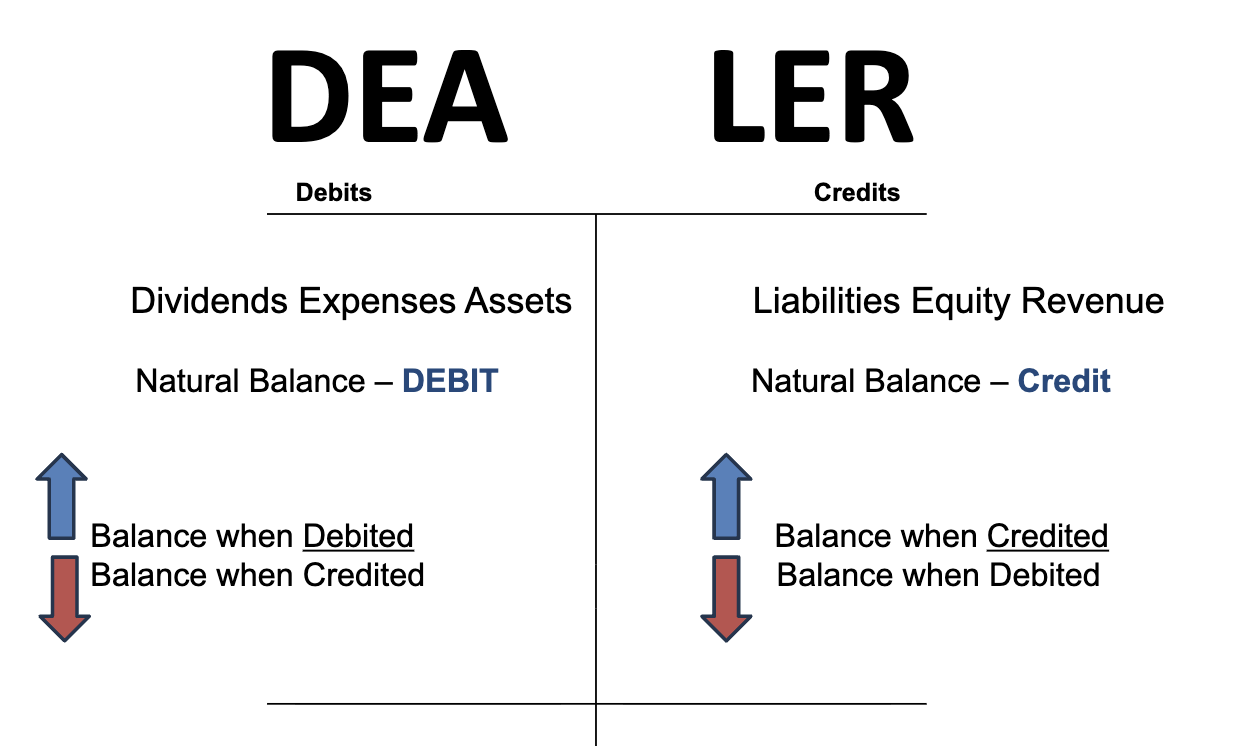
Accoutnign cycle and adjustments
Learining the accounting cycl, adjusting entries, closing process
Record transations
a financial transaction occurs, and th effec is recordned
a croonological record of every transaction throughout an accou
give amounts and acconts affected by eah transaction
adjusting entries
why need adjdusn before financial statement
make sure all accounts are properl states and noting has beem omitted.
a. many operating activities take place over one ( or several) periods of time, such as thorugh interest revenue interest expend, rent, wages, insurance
b. Recording these activites daily is costly
How to make adjustments
accurals and deferrals
2 tyoes oif adjusting entri
accruals
revnues earned or expenses incured that have not been previouly recoirded
deferrals
reciepts of assets or payments of cash in advance or revenur or expense recognition
accurals recognition of revnue or expense before recipt or payment o cash
e.g. interest earned during the period (accured revenue) or wages earned by employess buyt not yet paid (accured expense)
Commen end of period accurals
revenues earned but not recorded
interest revnue earned on loans or investments
Any epxense incurred but not recorded
salries and wages expense
interest expense
Review of deferrals - Reciept or payment of cash prior to recognition of revenue or expense
reciept of payment of cash prior to recogitio of revnue or expense
Cash first, recognition later
require adjusting enteries
must update revenue and expenses for deferrals prior to completing the financial statements
commen end of period deferrals
deferred revenue
unearned revenue
deferred expenses
insurance
rent
supplies
depreciation
Accounting estimates
certain circumstances requireadjusting entries to record accoutning estimates
examples include
deprciation
bad debts
income taces
depreciation expense
depreciation expense is the portion of an asset allocated to any one accounting period
deprication is an allocation process thats systenatuc and rational allocatio is at the cost of a long lived asset over its useful life.
this is known as the cost allocation concept, not a valuation concept
depreciation example
buying a satelite TV system for a bar. The system will cost 7000, expecting ot to ;ast seven years, and have no salvage valkue at all once its reached the end of its usedul lide
how does this purchase affect finacial statements
Depreciation expense (annual) = (acquisition cost - salvage calue)/useful life in years
Depreciations
According to GAAP when we buyt an asset for use in the business AND its been used for more than one year, the expense must be spread over the accounting periods during its useful life of the asset
prepare the financial statements
Financial statements that reflect the financial condition and transaction of the company
income statement
statement of changes of owners equity
balance sheet
statement of cash flows
Financial statement formats - classified balance sheet
assets
current assets
non-current assets
liabilities
current liabilties
non-current liabilities
shareholders equity
contributed capital (common stock, additional paid-in capital)
retained earnings
Earning from continuing operations
revenues, gains, expenses and losses from continuing areas of business
firm expects these sources of earnings to continue
earnings from a firms primary business activities
Financial staement formats - classified income statement
general format for a classsified income statement - continuing operations
Net sales - cost of goods sold = gross profit
gross profit - operating expenses = incoe from operations
income from operations ± nonoperationg revnues / expenses and gains / losses = income before income taxes - income tax expense = net income
Nonrecurring items
income statements may contain tree sections
continuing operations
nonrecurring items
discontinued operations
earnings per share
Earnings per share
basic or fullly diluted
fully diluted EPS includes all securites that could be coverted into common stock, i.e. convertible bonds
EPS = Net income available to comon shareholders / weighted average number of shares outstanding during the reporting period
Accounting estimates
certain circumstances require adjusting entries to recors accoutning estimates
examples can inclue
depreciation
bad debts
income taxes
Depreciation expense
Depreciation expense
te portion of an asset allocated to any one accounting period
depreciation is an allocation process
systematic and rational allocation of the cost of a long lived asset over its useful life
This is a “cost allocation” concept, not a “valuation” concept.
Depreciation
according to GAAP
When we buy an asset for use in our business AND
its used for more than one year
the expense muyst be spread over the accounting periods during the useful life of the asset
Prepare the financial statements
financial statements that reflect the financial condition and transactions of the company
income statement
statement of changes of owners equity
balance sheet
statement of cash flows
Financial statement formats - classified balance sheet
assets
current assets
non-current assets
liabilities
current liabilities
non-current liabilities
shareholders equity
contributed capital (common stock, additional paid-in capital)
retained earnings
earnings from continuing operations
revenues, gains, expenses and losses from cintinuing areas of business
firm expects these sources of earnings to continue
earnings from a firms primary business activities
Financial statement forats - classifiwd income statement
general format for a classified incoe statement
contiues operations
nonrecurring items
income statements may contain three sections
continuing operations
nonrecurring items
discontinued operations
earnings per share
earnings per share
basic or fully diluted
fully diluted EPS includes all securities that could be converted into common stock, i.e. convertible bonds
EPS = Net income available to common shareholders / Weighted average numbers of shares outstanding during the reporting period
Financial statement relationships
net income increases retained earnings, while a net loss will decrease retained earnings. Dividends decrease retained earnings
Net Income = Revenues - Expenses
Contributed Capital and R/E make up stockholders equity
Increase in contributed capital increases stockholder equity / retained earnings
Assets = liabilities + stockholders euity
The closing process
Assets, liabilties, and stockholders’ euity are permanent, or real accounts, and are never closed
assets
liabilties
stockholders’equity
The following accounts are called temporary or nominal accounts and are closed at the end of the period
revenues
expenses
gains
losses
The ending balance for period t is the beginning balance for period t+1
The ending balance is closed to 0, and hence the begining balance is 0
All temporary accounts (revnues and expense accounts) are closed at the end of the accounting period
Balacnes in these accounts are transferred to owners. equity (retained earning)
These accounts begi each new period with a zero balance to start the accumulation in the next accoutning period
Net profit margin ratio
net profit margin gives an idication of how effective managament is at a generating profit on every dollar of sales
Net profit margin = net income / net sales
Chapter summary
Accounting Cycle
Analyze transactions → Record JEs → Post to GL → Adjusting JEs → Prepare Statements
→ Close accounts
Adjusting Entries
Ensure accounts are complete and properly stated before issuing financials
Accruals
Revenue/expense recognized before cash
Examples: Interest Receivable, Wages Payable, Interest Payable
Deferrals
Revenue/expense recognized after cash
Examples: Unearned Revenue, Prepaid Insurance, Supplies, Depreciation
Depreciation
Allocates the cost of a long-lived asset over its useful life
(Cost - Salvage Value)/Useful Life
Key Takeaway
The accounting cycle ensures revenues, expenses, assets, and liabilities are properly recorded
before financial statements are prepared