Urinary Alterations
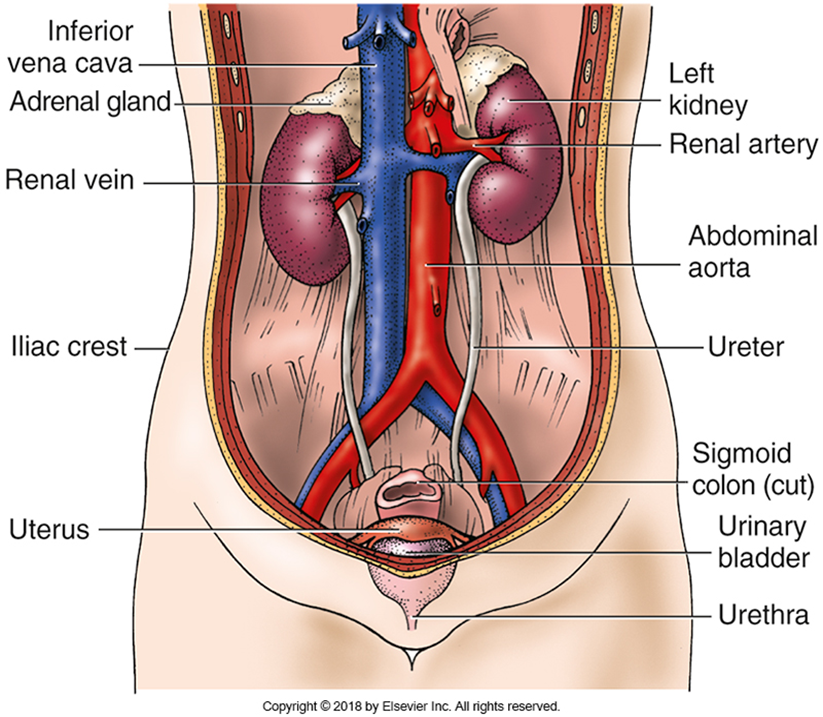
Costovertebral Angle: The angle formed by attachment of 12th rib to spinal column. This is there you have pain and discomfort with kidney conditions.
Kidneys maintain health via homeostasis
Form urine, regulate body water volume, composition of extracellular fluid and blood pressure.
Eliminates wastes from blood, regulates electrolytes, and acid base balance (blood pH)
Maintain fluid balance by regulating amount and makeup of intracellular and extracellular fluids
Continuously exchanging water and electrolytes.
Regulates RBC production and secretion of erythropoietin
Regulates red blood cell production through the creation of erythropoietin which is released in response to hypoxia (low oxygen level) and reduced renal blood flow.
Synthesis of vitamin D to active form, which is important in absorbing calcium and promoting bone growth.
Help regulate blood pressure - Renin-Angiotensin System and aldosterone.
Renin acts on angiotensin I and converts it to angiotensin II, which is a powerful vasoconstrictor. Peripheral resistance is increased and blood pressure is increased.
Aldosterone production is stimulated by the increase in angiotensin I; therefore sodium and water are retained to increase circulating volume and increase blood pressure.
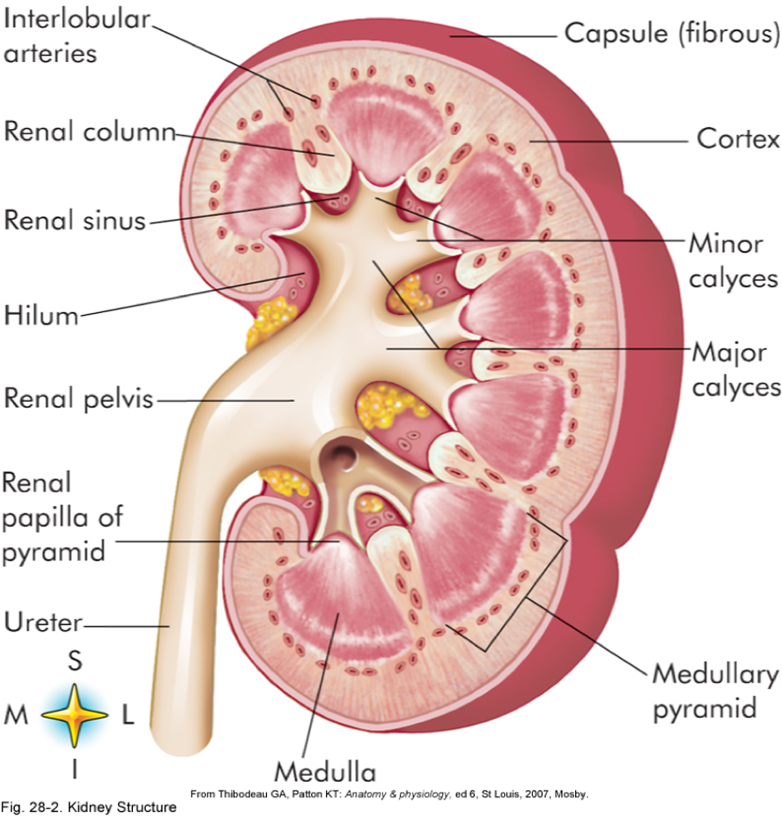
Renal capsule: the fibrous connective tissue, blood vessels and lymphatics surround each kidney membrane
Hilum: serves as the entry site for the renal artery and nerves and the exit site for the renal vein and ureter. The hilum opens to a cavity called the renal sinus.
Parenchyma: actual tissue of the kidneys, two layers
Cortex- the outer layer of the parenchyma located beneath the renal capsule
Medulla- the inner layer of the kidneys, contains the loops of Henle, vasa recta, and the collecting ducts of the juxtamedullary nephrons.
Urine travels via the collecting ducts of the cortex & medulla then connect to the papillae (top) of the pyramids. Urine passes to enter the minor calyces which widen and form the major calyces which drains urine into to the renal pelvis. The renal pelvis drains urine into the ureter and can store 3 to 5 mL of urine (~teaspoonful)
Renal Excretion - Kidneys
Kidneys excrete substances from body into urinary track to get rid of things we have too much of.
Primary route of potassium elimination
Major route of elimination of medications and their metabolites
Remove excess nitrogen from body
Kidneys and Metabolic Waste
Nitrogen waste products
Ammonia (NH3) quickly converted to Urea in healthy person
Urea - measured by blood urea nitrogen test (BUN)
Uric acid
Creatinine
Renal Reabsorption - Kidneys
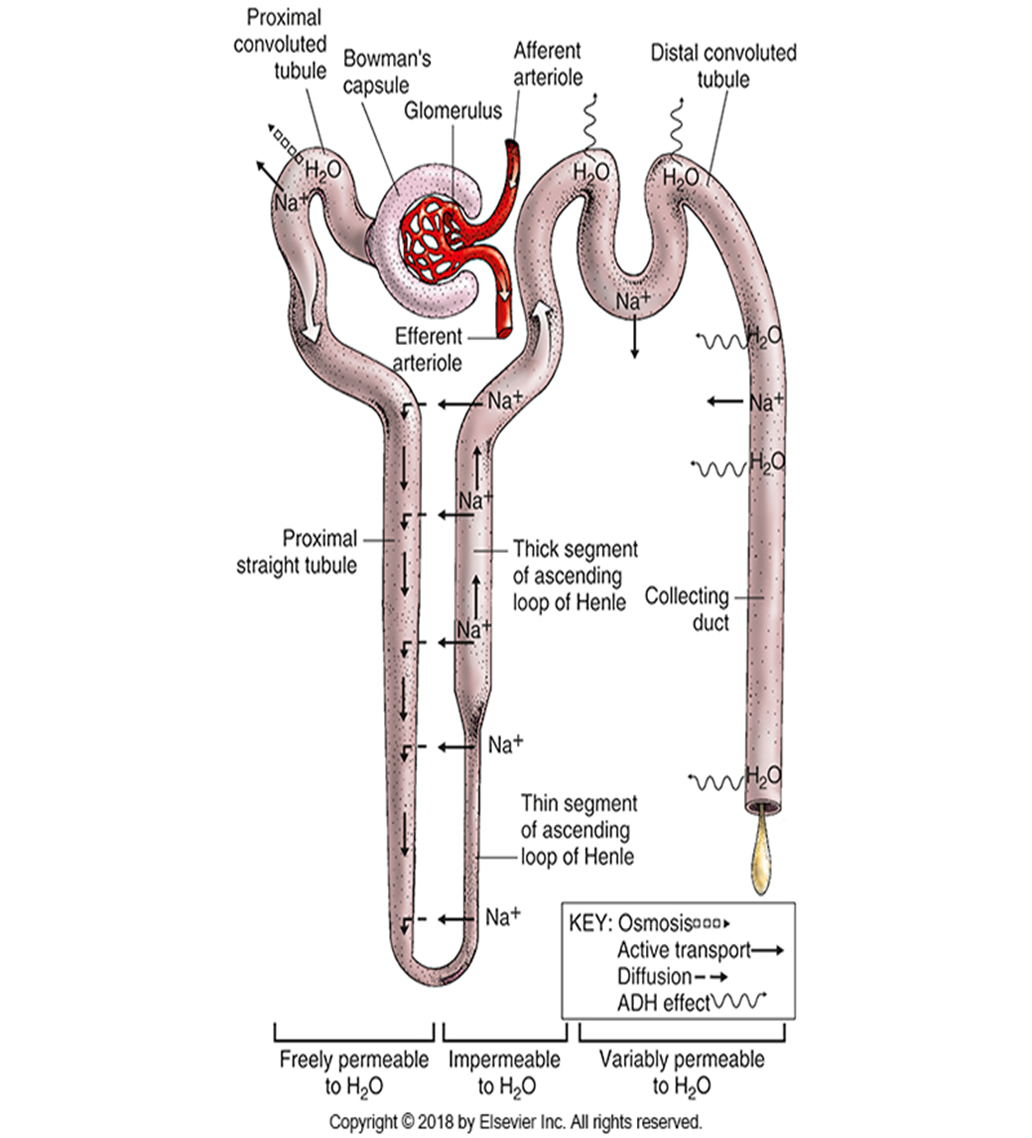
Re-absorb fluid and electrolytes that we need from tubular fluid or pre urine.
Fluid and electrolytes were filtered out of bloodstream, but kidney can reabsorb them to maintain homeostasis
Process allows glucose and amino acids, salts, and water that has passed through Bowman’s capsule to return to body or be excreted into urinary track for disposal.
Functions of the kidney
Removes nitrogenous wastes
Urea
Uric acid
Creatinine
Ammonia
Maintains homeostasis
Fluid balance
Electrolyte balance
Acid-base balance
Excretory Organ
Via blood filtration & formation of urine
Regulation of Blood Pressure
Juxtaglomerular apparatus
RAA system
Renin
Angiotensin
Aldosterone
Urine formation
Filtration
Occurs in renal corpuscle
Reabsorption
Occurs in proximal convoluted tubule
Also occurs in distal convoluted tubule
It takes things back into blood
Secretion
Occurs in distal convoluted tubule
Blood gives things up to the urine
Concentration
Occurs in collecting tubules
Blood Flow to Kidneys