Freud's Psychological view of Conscience
Key Terms:
Ego: Our conscience self that mediates between the id and the demands of social interaction
Id: The instinctive impulses that seek satisfaction in pleasure
Superego: The internalised ideals from parents and society that try to make the ego behave morally
Key Quotes:
‘The ego idea (superego) therefore, is the heir of the Oedipus complex and thus it is also the expression of the most powerful impulses…experienced by libido in the Id’ - Freud, The Ego and the Id
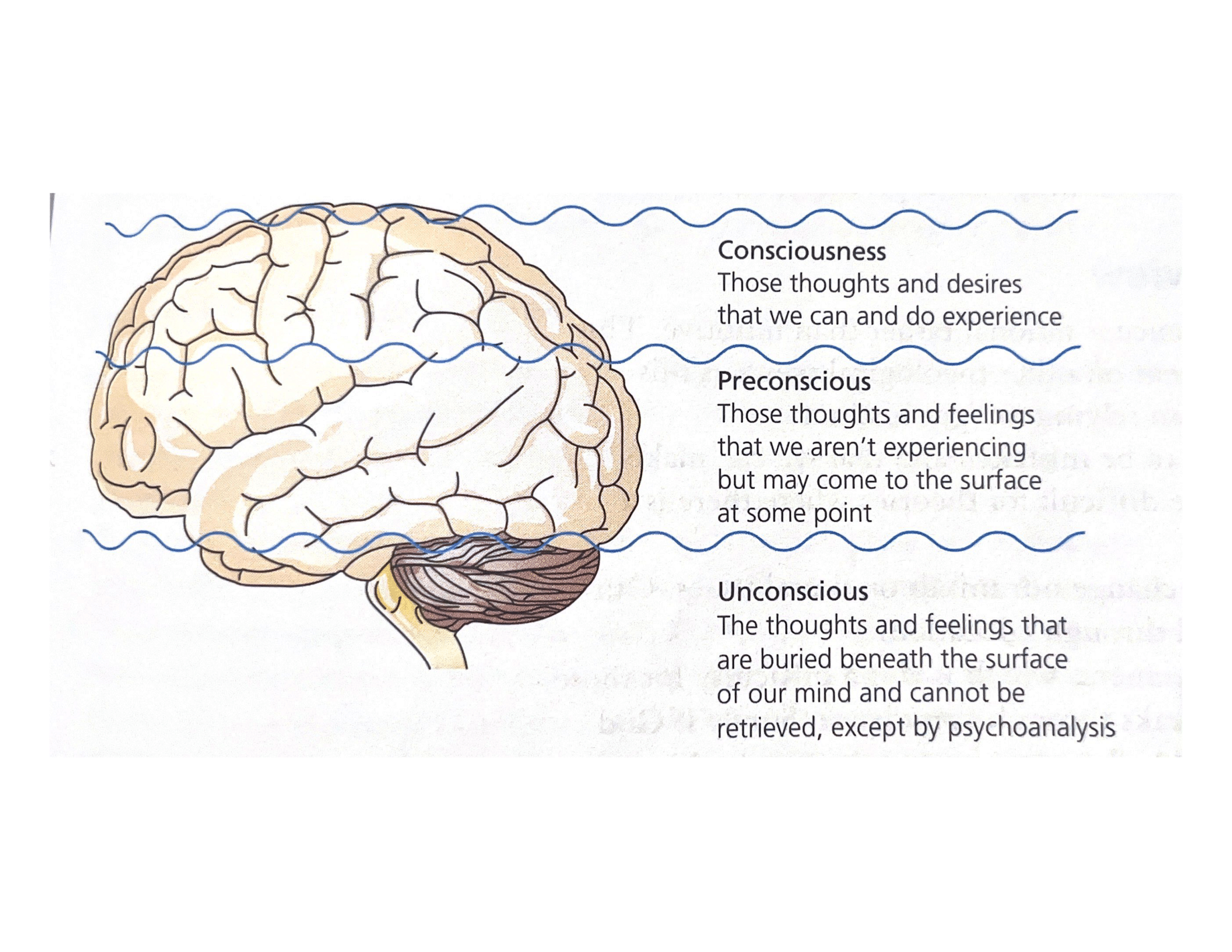
Sigmund Freud (1856-1939) rejects the idea of God and the soul. The mind is like a machine and psychology is the process of scientifically studying and unpacking the layers of this complicated machine. For Freud the mind has three layers.
Freud on personality
Human personality is made up of three aspects.
The ego is the conscious self, the part seen by the outside world and the thinking that we are most conscious of.
The id is the unconscious self which contains basic desires and drives
two key ones being sex and death! The ego is our reasoning but the id is our basic drives and passions. Superego is something that is within the ego - it is a reaction to the id
The superego is a set of moral controls and ideas given by authority and often opposed by the id. Freud is particularly interested in the superego (which he calls ego-ideal in his earlier books).
Forming the superego and guilt
For Freud, conscience is superego and can be explained psychologically.
It is formed by society, particularly parents. It is a reaction to all the demands that are placed upon a person that they cannot live up to. We start to internalise the voice of our parents but this continues with every Interaction with authority figures. A gap emerges between the ego (who we actually are) and the demands of the superego our idea of an ideal person formed by all these early interactions).
Guilt occurs when we go against our conscience/superego.
The superego 'retains the character of the father' but as we get older other masters and authority figures are also significant.
Psychosexual development: The Oedipus Complex
For Freud, all psychological problems are caused by sexuality, specifically early childhood awareness of libido. Freud argues that one further source of guilt is the Oedipus complex. A male child in its presexual development develops a fixation for his mother and perceives the father as an obstacle to the fulfilment of these sexual desires. The child has an ambivalent relationship to the father - he is fearful and jealous of the father, but eventually comes to identify with him and admire him. These feelings, which are repressed, cause guilt and shame. He speculates that female children develop the Electra complex, which is similar but involves female attraction to the father.