Science - 3rd Quarter Reviewer
| Table of Contents |
|---|
| 1. Nervous System \n 2. Diseases of the Nervous System \n 3. Endocrine System \n 4. Diseases of the Endocrine System \n 5. Human Reproductive Organs |
| Human Reproductive Organs |
|---|
| I. Male Reproductive System \n A. External \n 1. Testes \n 2. Scrotum \n 3. Epididymis \n 4. Penis \n B. Internal \n 1. Vas deferens \n 2. Urethra \n 3. Seminal vesicle \n 4. Prostate gland \n 5. Bulbourethral gland \n II. Female Reproductive System \n A. Internal \n 1. Ovaries \n 2. Fallopian tubes \n 3. Uterus \n 4. Cervix \n 5. Vagina \n B. Accessory \n 1. Breasts \n a. Nipple \n b. Areola |
| Male Reproductive System |
|---|
- The male reproductive organs are the two TESTES, which are oval bodies consisting of fine tubules enclosed in a tough fibrous sheath.
- Testes are hung in a body or pouch called the SCROTUM.
- These tubules, in the testes, are called seminiferous tubules that can produce sperm.
- The tubules empty into a mass of tubes along the sides of the testes called EPIDIDYMIS, a temporary storage place for sperm.
- The minute spaces between the seminiferous tubules are filled with cells that produce the testosterone.
- Spermatogenesis is the production of sperm from the primordial germ cells in the seminiferous tubules.
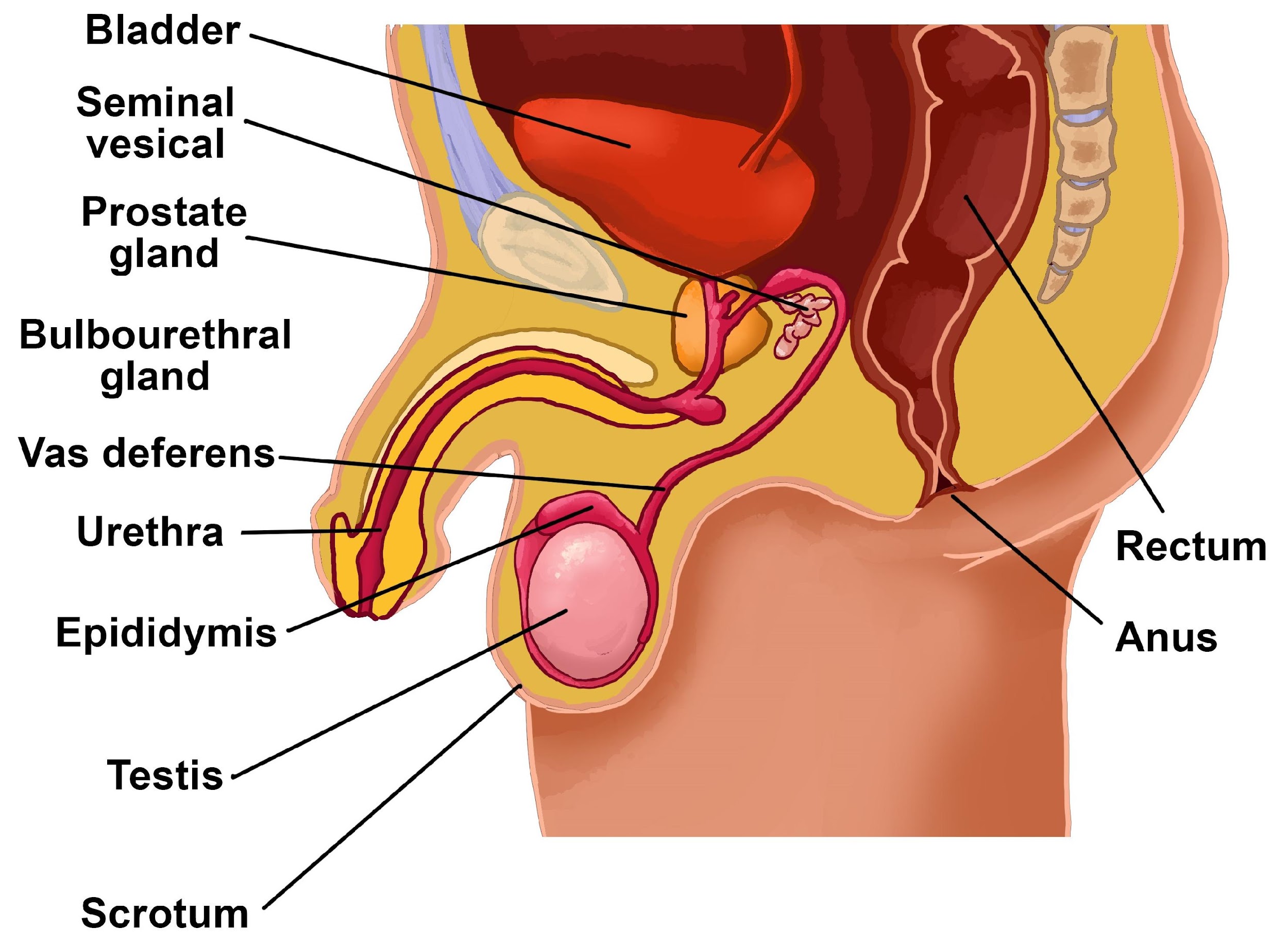
- From the epididymis, sperm travel through another tube, called the VAS DEFERENS, which receives them, carries them up and delivers them into the urethra.
- Vasectomy is an elective surgical procedure for male sterilization or permanent contraception.
- Near the urethra is a side pouch, the SEMINAL VESICLE, secretes a fluid that makes up most of the components of the semen.
- The PROSTATE GLAND produces a thin, watery alkaline secretion that mixes with the sperm and other secretions to form the semen.
- During sexual excitement or orgasm, semen pumps out through the urethra wherein there is a sphincter (muscle) that blocks the urine.
- BULBOURETHRAL GLAND OR COWPER’S GLAND can secrete a thick and clear mucus that lubricates and neutralizes any traces of acidic urine in the urethra.
- The URETHRA carries sperm and urine out of the body.
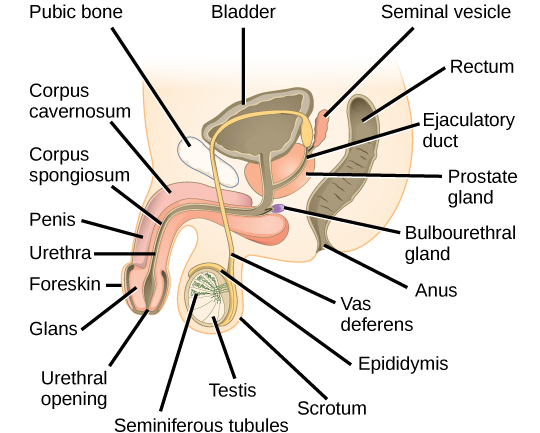
- PENIS is a mass of erectile tissue (blood spaces surrounded a fibrous case) arranged in three columns.
- During sexual excitement, much blood is pumped into the erectile tissue at the same time that the outflow through the veins is partially blocked. Thus, the penis becomes firm and erect and becomes bigger in size.
- The skin of the penis is loose and freely movable to make intercourse easier, the foreskin or prepuce, w/c covers the sensitive head of the penis.
| The Human Sperm Cell or Spermatozoa |
|---|
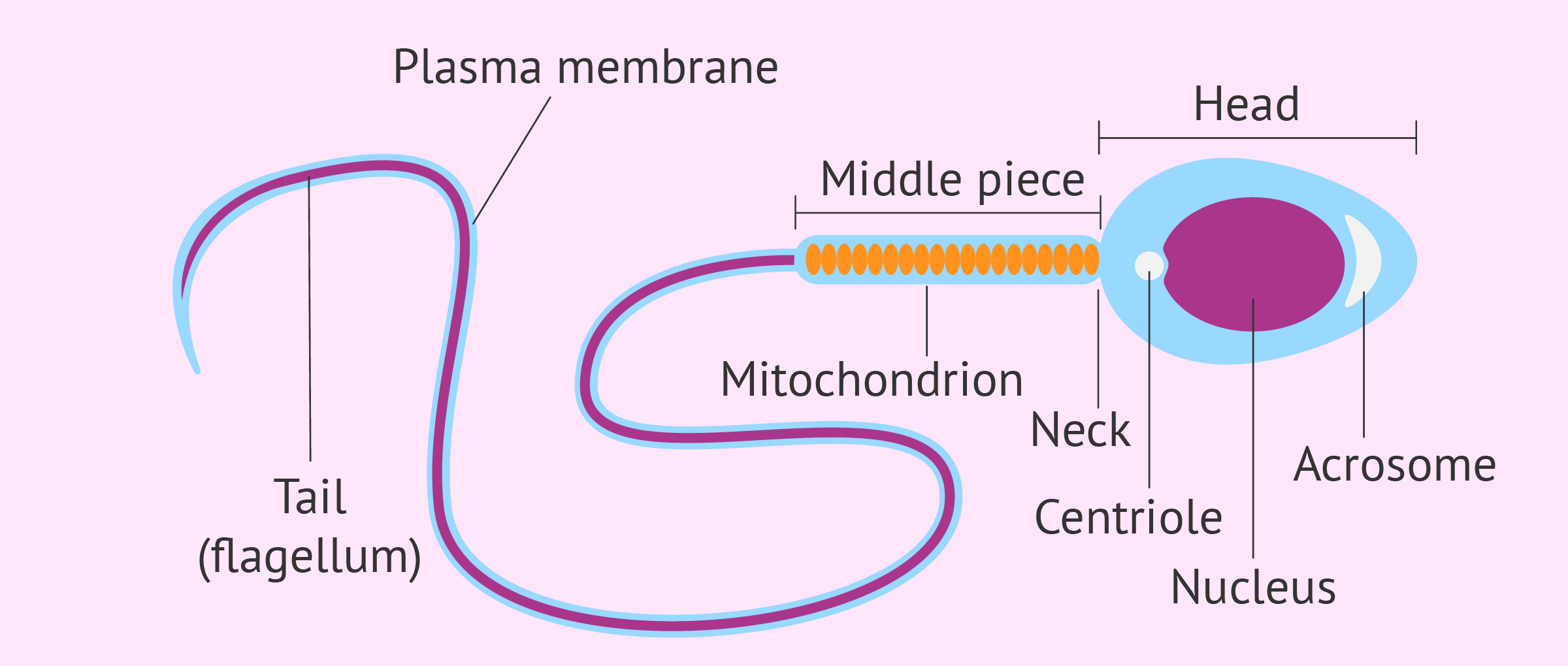
- The HEAD is a flattened, oval-shaped part that is propelled by the lashing motion of the tail.
- When the sperm penetrates an ovum during fertilization, the TAIL separates from the rest of the sperm.
- The head, neck and the connecting piece enter the ovum and the zygote is formed.
- Acrosome contains enzymes that break down the outer membrane of an egg cell, allowing the sperm to fertilize the egg.
| Female Reproductive System |
|---|
- PRODUCE EGG CELLS through oogenesis.
- RECEIVE THE SPERM CELLS and provide a place where fertilization of the egg can take place.
- PROVIDE NUTRIENTS for the development of the embryo.
- Produce hormones that PROMOTE THE DEVELOPMENT OF SECONDARY SEX CHARACTERISTICS such as growth of pubic hair, development of the breasts and the feminine form, w/c include wider hips for childbirth and fat deposition in areas like the thighs and arms.
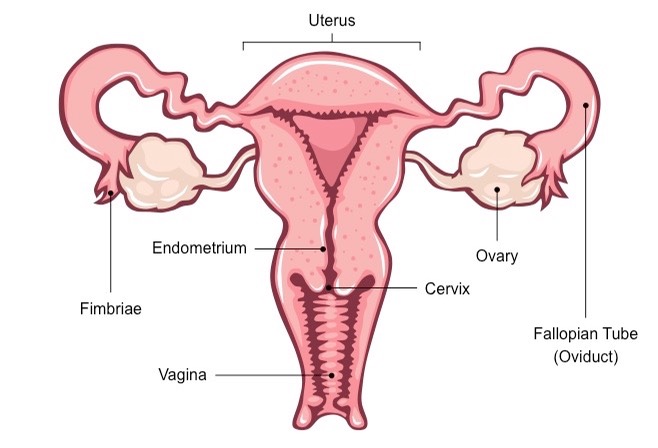
- A pair of gonads called OVARIES. Almond shaped and located on each side of the pelvic cavity. Ovaries can develop egg or ova and producing female hormones.
- Estrogen is responsible for high-pitched voice, the absence of beard, development of breasts, widening of pelvis and ripening of egg.
- FALLOPIAN TUBES are paired, tubular and muscular organs that run from the uterus towards the ovary. It serves as a passageway of eggs from the ovary to the uterus. “Site of fertilization”.
- Ectopic pregnancy occurs when a fertilized egg implants and grows in a fallopian tube.
- Tubal ligation is a surgical procedure for female sterilization in which the fallopian tubes are permanently blocked, clipped or removed.
- The UTERUS is a pear-shaped mass of solid muscles w/ a small, flat, central cavity. It is where the fertilized ovum is implanted, after passing through the fallopian tubes where it is likely fertilized. Where zygote develops. “Site of implantation”.
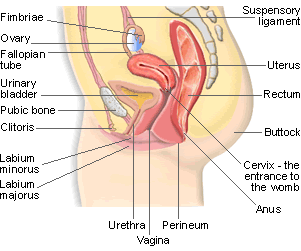
- CERVIX, small end structure of the uterus and dips downward onto the top of the vagina. Also, it is the opening to the uterus.
- The VAGINA is the birth canal leading from the uterus to the external opening of the reproductive tract. It receives the penis of male during mating.
| Accessory Organs of the Female Reproductive System |
|---|
- The BREASTS are essentially mixing factories that absorb water, sugar and other substances from the blood and mix them together to make milk.
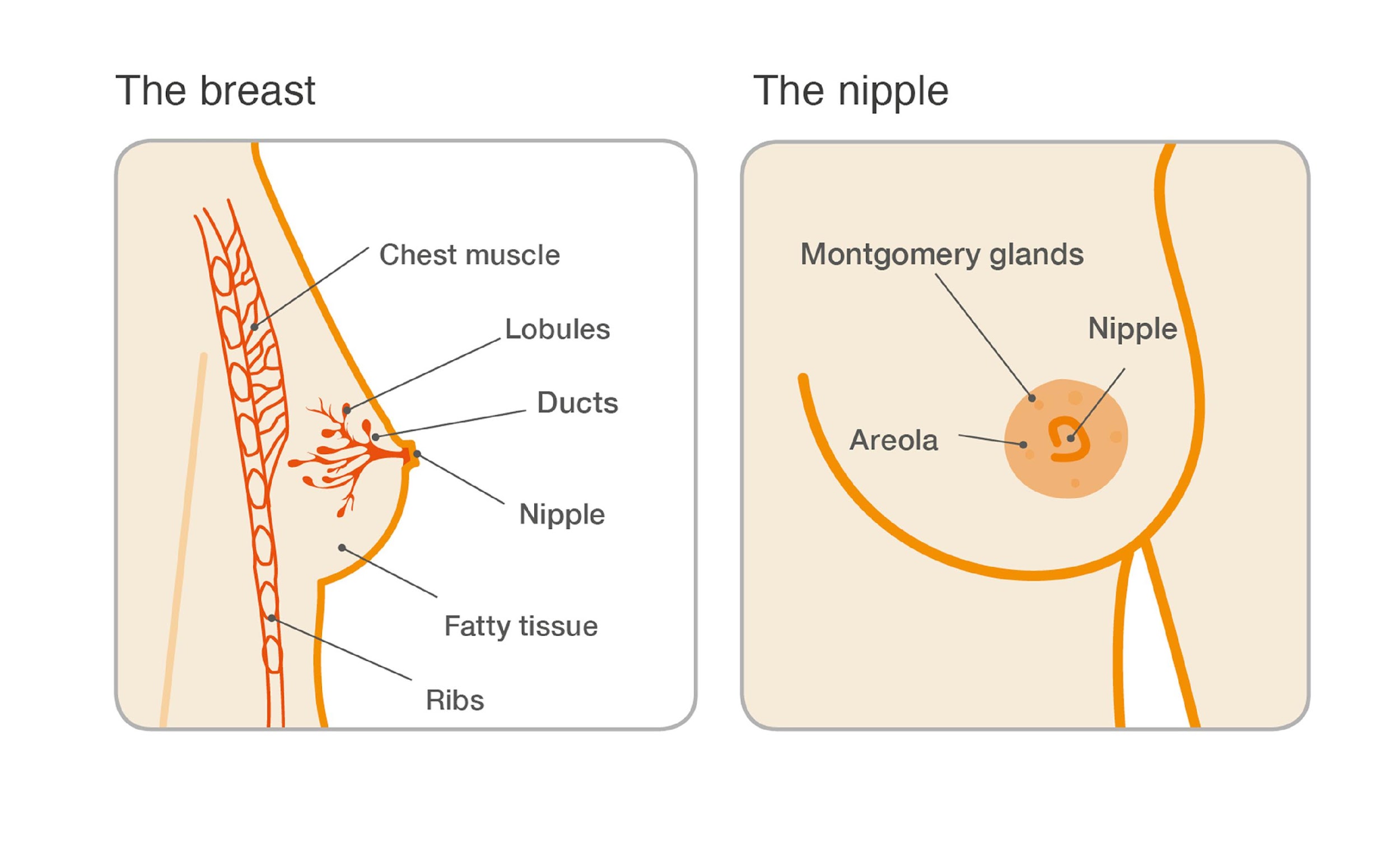
- The NIPPLE is an erectile structure having 25 or more small openings and surrounded by a darkened area, the AREOLA.