naming organic substances
displayed formula (all atoms and bonds), structual formula (not all bonds shown eg. hydrogen), skeletal (most carbon and hydrogen excluded)
Basic IUPAC Naming
| substituent locants | substituent prefixes | substituent names | stem name | functional group locant | functional group suffix |
|---|---|---|---|---|---|
| eg. 3,4 | di | pentan | -2 | ol |
single bonds: -ane
double bonds: -ene
triple bonds: -yne
list substituents in alphabetical order
when double or triple bond, number locants in smallest sum
priority of numbering: functional groups, double/triple bonding, substituent
| number | prefix |
|---|---|
| 1 | meth |
| 2 | eth |
| 3 | prop |
| 4 | but |
| 5 | pent |
| 6 | hex |
| 7 | hept |
| 8 | oct |
Alkanes
saturated hydrocarbons: only single bonds between carbon atoms (every carbon has max amount of hydrogens attached)
CnH2n+2/add CH2 to formula of previous
- always end in -ane
- if branched, take longest continuous chain
Properties: low melting and boiling points (only have dispersion), larger molecules higher boiling point. don’t conduct (no free charges), insoluble (can’t bond w other non-polar molecules)
Alkenes
hydrocarbon where one pair has a double bond and all others are single (unsaturated)
CnH2n
- take longest stem, end in -ene
- locant of double bond (lowest number)
- put number before name eg. 2-butene
- name longest chain containing double bond, not necessarily longest
- alkyl substituents named according to carbon atoms and location. add to front eg. 2,2-dimethylbutane
Alkynes
contain at least one triple bod
CnH2n-2
- add -yne
- locant of triple bond
- place in front of name (not for ethyne and propyne)
Haloalkanes/Halogenated organic compouds
any organic compound that contains one or more halogen atoms (bromine, chlorine, fluorine or iodine) attached to a carbon chain
- name parent chain include. double/triple bonds
- alkyl side chains
- halogen atoms named with locant attached to (fluro, chloro, bromo, iodo) eg. 2,3-dibromo
- halogen branches placed in alphabetical order (ignore prefixes eg. di)
Isomers
compounds that have the same molecular formulas but different structural formulas (eg. changing position of double bonds)
Benzene
ring/s of carbons linked in a way that have delocalised electrons. bonds somewhere in length between single and double. can occur through diff positions of double/triple bonds or substituents
Functional Groups
‘families’ of compounds, share key properties. note: R or R’ often used to represent different alkyl groups
Alcohols
R-OH
CnH2n+1
- longest carbon chain
- write alkane name but replace ‘e’ with ‘ol’ eg ethane becomes ethanol
- locant identified using number at the front of name eg. if on second carbon, 2-butanol
Can be primary, secondary or tertiary depending on how many carbons also attached to the R-OH
Properties: higher boiling point as -OH can form hydrogen bonds. Larger alcohols insoluble, smaller always soluble
Aldehydes
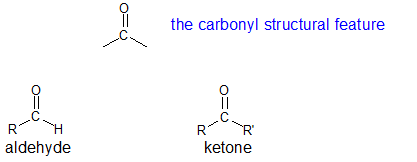 Aldehydes and Keytones are functional group isomers
R double bond O is a carbonyl compounds
Aldehyde: double bond with oxygen located at end of carbon chain
- longest carbon chain
- replace ‘e’ of parent with ‘al’ eg. ethane becomes ethanal
- no number needed as always 1
- name branched alkyl groups
Ketones
Ketone: double bond with oxygen anywhere except the ends
- longest chain w carbonyl
- replace ‘e’ with ‘one’ eg. ethane become ethanone
- number atoms so carbonyl structure lowest number
- add prefix for locat of structure eg. 2-pentanone
- name branched alkyl groups
Properties: higher boiling point (dipole-dipole due to electronegative oxygen) than hydrocarbons but lower than alcohols. High polarity = more soluble than hydrocarbons, less than alcohols. As chain length increases, solubility decreases
Carboxylic Acids
carboxyl group: double bond to oxygen, bond to hydroxyl
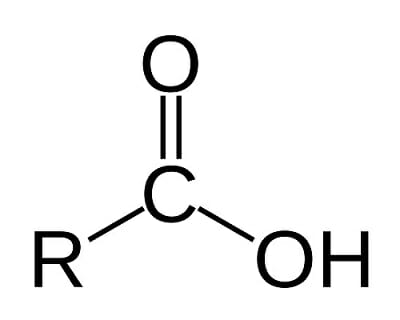
CnH2n+1COOH
note: many have common names eg. acetic acid
- name longest chain with -COOH groups
- replace ‘e’ with ‘oic acid’ eg ethane to ethanoic acid
- no number needed as always 1
- add alkyl groups
Properties: carboxyl groups means polar. hydrocarbon will form dispersion, C=O will form diploe-dipole (due to high polarity) and -OH will form hydrogen bonds
higher boiling point than previous discussed. can form dimer
Smaller molecule soluble (polar carboxyl counteract hydrogen chain), weak acids
Amines
key part of amino acids
-NH2
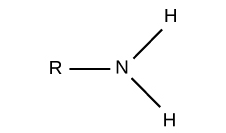 primary, secondary, tertiary: depends on number of alkyl groups attached to nitrogen
- identify carbon chains attached to N, put in alphabetical order using alkyl name with no spaces
- delete ‘e’ replace with ‘amine’ eg. ethane with ethyl and methyl becomes ethylmethanamine
- add di- or tri- if two or three of alkyl groups are the same
- add carbons on main chain from end nearest amine group (if amine group not on end, locant of carbon is stated before the name eg. 2-propanamine
- add alkyl groups
Properties: Nitrogen very electronegative therefore amines very polar. can form hydrogen bonds (primary and secondary only), although weaker than those formed by alcohols. primary and secondary are soluble, higher boiling point, tertiary aren’t
Amides
ethyl group: CH3CH2 methyl group: CH3
formed when amine reacts with carboxylic acid and -OH replaced by an amine (NH2). all contain structural unit -CO-NH-. classed as primary, secondary or tertiary depending on number of alkyl chains attached to nitrogen
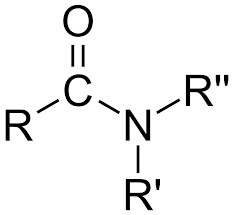
z
- name carboxylic acid
- change end of acid from ‘-oic acid’ to ‘amide’ eg. ethanoic acid becomes ethamide
- name any alkyl groups bonded to the nitrogen as N-alkyl in front of amide name eg. ethyl group bonded to second molecule so N-ethyl
- a tertiary amide with three alkyl groups would be named accordingly: an amide with 2 methyl and 1 ethyl group would be N-ethyl-N-methylmethanamide. an amide with three methyl groups would be N,N-dimethylmethanamide
Properties: primary and secondary have two very polar bonds (N-H and C=O). Tertiary only have c=o as nitrogen bonded to three other groups. therefore primary and secondary can form hydrogen bonds (higher melting/boiling points). As size increases, so does solubility
Esters
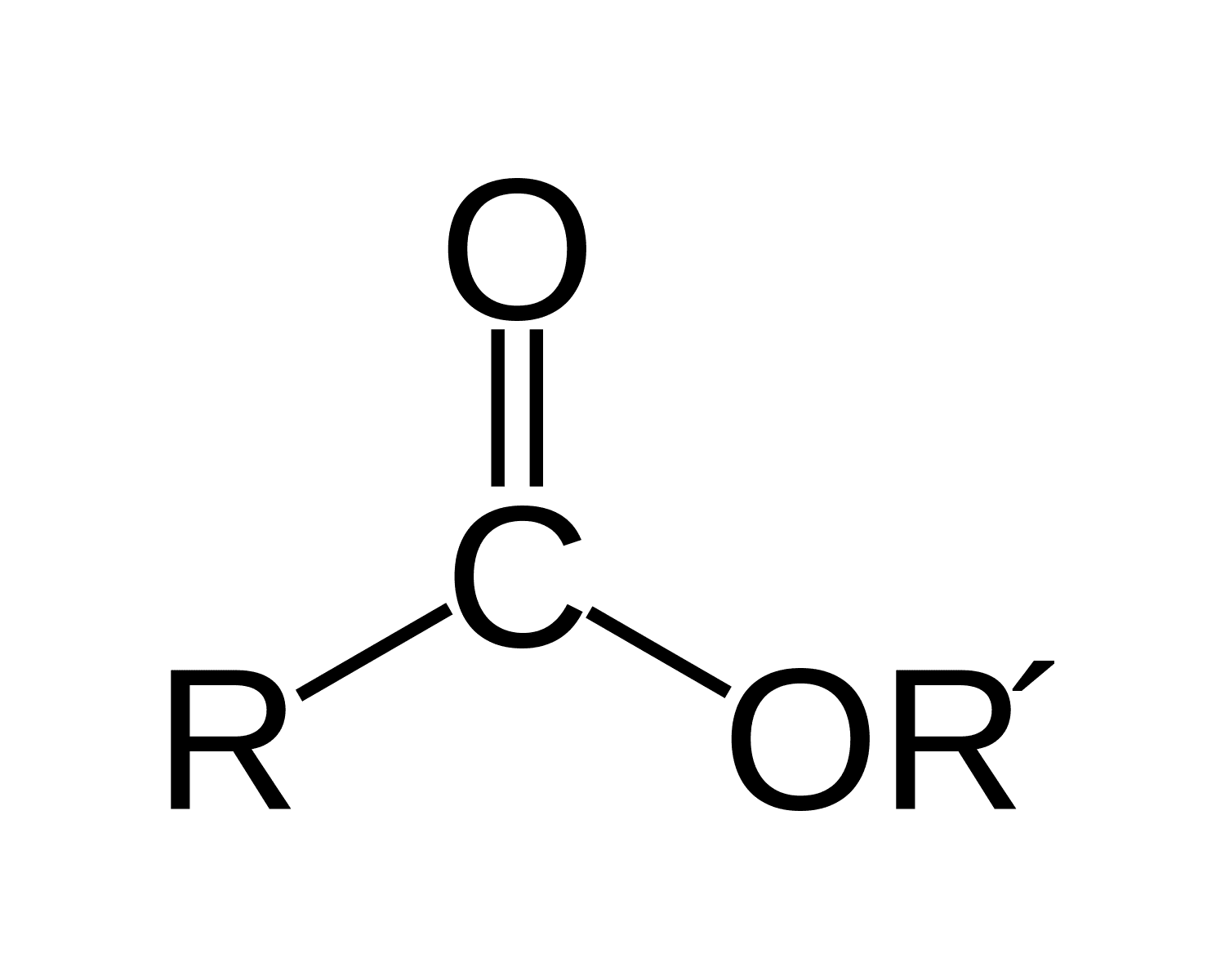
organic acid (carbon single bondedto one oxygen, double bonded to another) and hydrocarbon (normal chain5
- start with hydrocarbon chain, change -e to -yl
- name acid. change -e to -oate eg. methyl ethanoate
Cycloalkane
carbon chain (alkane) but arranged in a circle.
- substituents
- name parent chain, add cyclo- in front