Notes 1/4-1/5
Pigaets Stages
Sensorimotor: 0-2,
Senses
Motor activity increases
Object Permanence
Stranger Anxiety
Preoperational: 2-7,
Logical reasoning
Pretend Play
Egocentrism
Representing items with words
Parallel Play (2-5)
Concrete Operational: 7-11/12,
Conservation
Math
Create events
Grasp analogies
Formal Operational: 11-adult,
Abstract thought and morals
Can Create Hypotheticals
Vygotsky
States that by Age 7 individuals think in words and use words to solve problems.
Child’s zone of proximal development: What a child can and can’t do - what can they do with help.
Erik Erikson
Believes that at each stage of development we have developmental crisis based on relationship with peers and adults. Many will put him in social development but I like to think of him in both Cognitive and Social
Stages
Infant (0-1) = Trust vs. Mistrust
Toddler (1-3) = Autonomy vs. Shame and Doubt
Preschool (3-5) = Initiative vs. Guilt
Elementary (5-12) = Industry vs. Inferiority
Adolescence (13- early 20s) = Identity vs. Role Confusion
Early Adulthood (20s & 30s) = Intimacy vs. Isolation
Middle Adulthood (40s & 50s) = Generativity vs. Stagnation
Late Adulthood (60s & on) = Ego Integrity vs. Despair
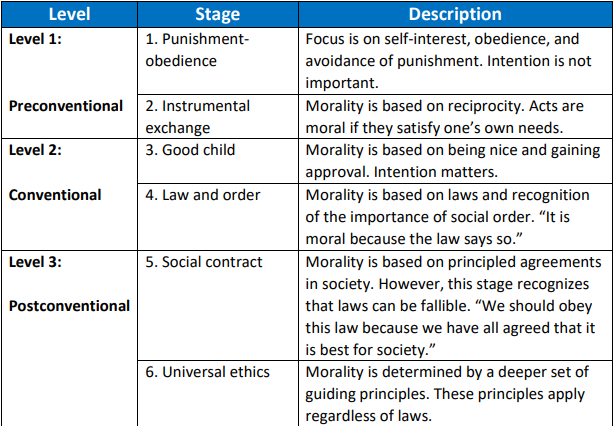
Kohlbergs Theory