ICT revision
<<What I need to know:<<
-What the Internet and World Wide Web are .
-How web adresses are constructed .
-What a protocol is and why one is needed for data communication .
-How packet switching works .
-What the Domain Name System Server does (DNS) .
-The meaning and significane of Bandwidth .
-Compare different types of cable, and the relative speeds of data transmission .
-The difference between LANs and WANs .
-Give an example of each type of network .
-Identify three different network topologies - bus, ring and star .
-Identify some types of data that need to be kept secure
-Ways that data is kept secure
<<What is the internet?<<
The Internet is a group of interconnected networks.
<<What is a network?<<
A network is a group of devices that are usually connected to the internet. For example, a phone, laptop and printer would all be connected to the same network.
WWW - World Wide Web
-A collection of web pages
-Stored on computers all over the world
-Accessed via the internet
-No central storage
-No owner
What is the difference between the WWW and the internet? (4 marks)
\n The internet is a group of interconnected networks. A network is a group of devices that are connected to the internet e.g a phone, computer and a printer. Whereas the World Wide Web is a collection of web pages that are accessed VIA the internet. Overall, the WWW uses the internet to be able to display their web pages that can be viewed from all over the world using different devices.
Parts of a web address
\n ==www.abc.co.uk/images/logo.jpg==
-Hosted on the WWW
-Name of the organisation
-A Company
-UK based
-Folder location and filename on the site
<<What are the types of cables?<<
Fibre optic cables are used in modern cables. Broadband uses fibre optic cables. There are mirrors which light reflects off and it can travel a far distance at very fast speeds.
Copper cables are called Coaxial. Coaxial is slower than fibre optic. The energy takes a long time to reach another destination.
Ethernet cables give you super fast connection when you plug it into a computer.
==Domain names==
Top level domains (TLDs):
.uk .fr .es .de .cz
.com .org .gov .edu
A domain name is used to access a website and identify internet resources.
%%DNS Server (Domain Name System Server)%%
- A DNS converts a web address or URL into the correct IP address for the computer that the web site sits on.
- Remembering www.google.co.uk is easier than remembering 173.194.34.95
- Try entering 173.194.34.95 into a web browser instead of Google’s web address
<<HTTP<<
What does it stand for?
-HyperText Transfer ==protocol==
- A protocol is a set of rules to exchange information/data. (1 mark)
- HTTP defines the rules used by web browsers and servers to exchange information. (2 mark)
- If everyone follows the same set of rules, everything works
<<Data Packets/packet switching (5 marks)<<
- Data transmitted over the Internet is broken down into smaller equal sized chunks or small packets in order to be sent when sending or receiving data to avoid traffic and interceptions (hacker).
- The destination and sender’s addresses are added.
- Each packet is numbered, sent separately, then put in the right order again at the other end at its destination.
}}Bandwidth}}
What is Bandwidth?
•The amount of data that can be carried at a time.
It is measured in Megabits per second.
]]The differences between LANs and WANs]]
Wide Area Networks (WAN)
•Cover a large geographical area
•Use cables, telephone lines, satellites and radio waves to connect
•Examples include:
•International banking systems and ATM machines
•The Internet
Local Area Networks (LAN)
•Cover a small geographical area
•Usually operate on a single site or within a single institution
•Use cables and radio waves to connect
•Examples include:
•Your school network
•A home or small business network
<<Network Toplologies<<
Bus Network
•Advantages:
•The simplest and cheapest to install and extend
•Failure of one node does not affect the rest of the bus network
•Disadvantages:
•If the main bus cable fails then the whole network will fail
•Performance of the network slows down rapidly with more nodes or heavy network traffic
Ring network
•Advantages:
•One-way system so not affected by heavy traffic
•Disadvantages:
•Cable failure anywhere will affect the whole network
•Need to ‘break’ the ring in order to add a new node
•All nodes must be switched on
Star Network
•Advantages:
•Fastest performance
•Easy to install and to expand with extra nodes
•A failure in the minor cables will only affect one node
•Disadvantages:
•Uses the most cable which makes it more expensive
•An extra hub or switch further increases the cost
Routers, Hubs and Switches
%%Encryption%%:
Encryption is plain text which is the original text which then is converted into ciphertext which is a secret message.
\n ^^Decryption:^^
Decryption is the reverse of encryption, when a secret message (ciphertext) is converted into plain text (original message).
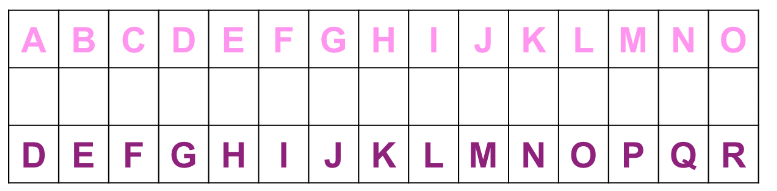
- DATA ENCRYPTION
- DATA BACKUP TO THE CLOUD
- PASSWORD PROTECTION
@@Ways that data is kept secure@@
Encryption.