wk 11 emotional, social and communicative brain III
Self-Referential Processing
Definition of self-referential processing: The cognitive process of evaluating traits that relate to oneself.
Findings: Participants show superior recall of self-related traits, termed the "self-referential effect."
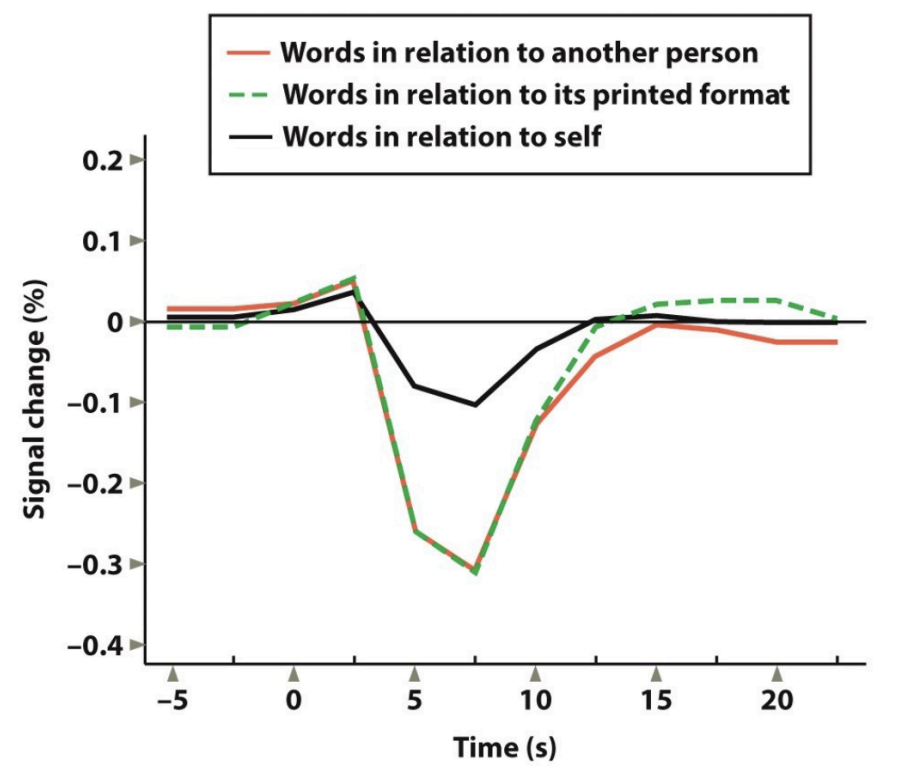
fMRI shows activation (increased BOLD signal) in the medial prefrontal cortex, indicating self-referential processing.
Medial prefrontal cortex: Increased signal during self-referential tasks compared to third-person judgments and control tasks.
Core Self and Egocentric Reference Frame
Theory by Antonio DiMarzio: Core self is a stable, self-aware sense of identity compared to the environment. (Conceptualisation of the self in comparison to the environment is the “core self”
Medial regions: such as the right inferior parietal cortex, contribute to an egocentric reference frame representing the body in space.
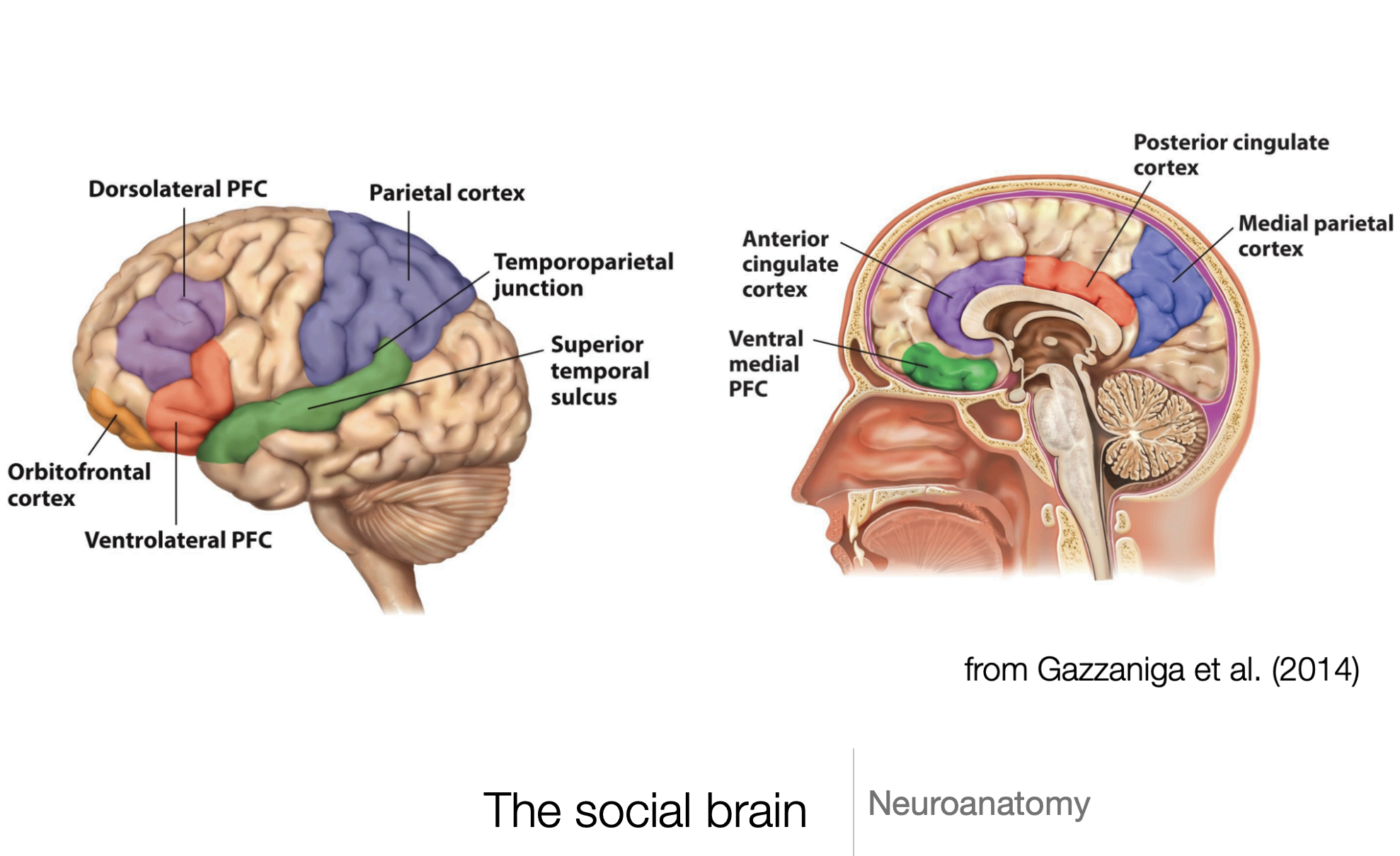
Neuroanatomy of the Social Brain
Medial prefrontal cortex.
Cingulate cortex: Discussed in relation to emotions.
Medial and lateral aspects of parietal cortex.
Orbitofrontal cortex and ventrolateral prefrontal cortex included.
Newer regions: Temporoparietal junction (TPJ) and superior temporal sulcus relevant for social cognition.
Default Mode Network (DMN)
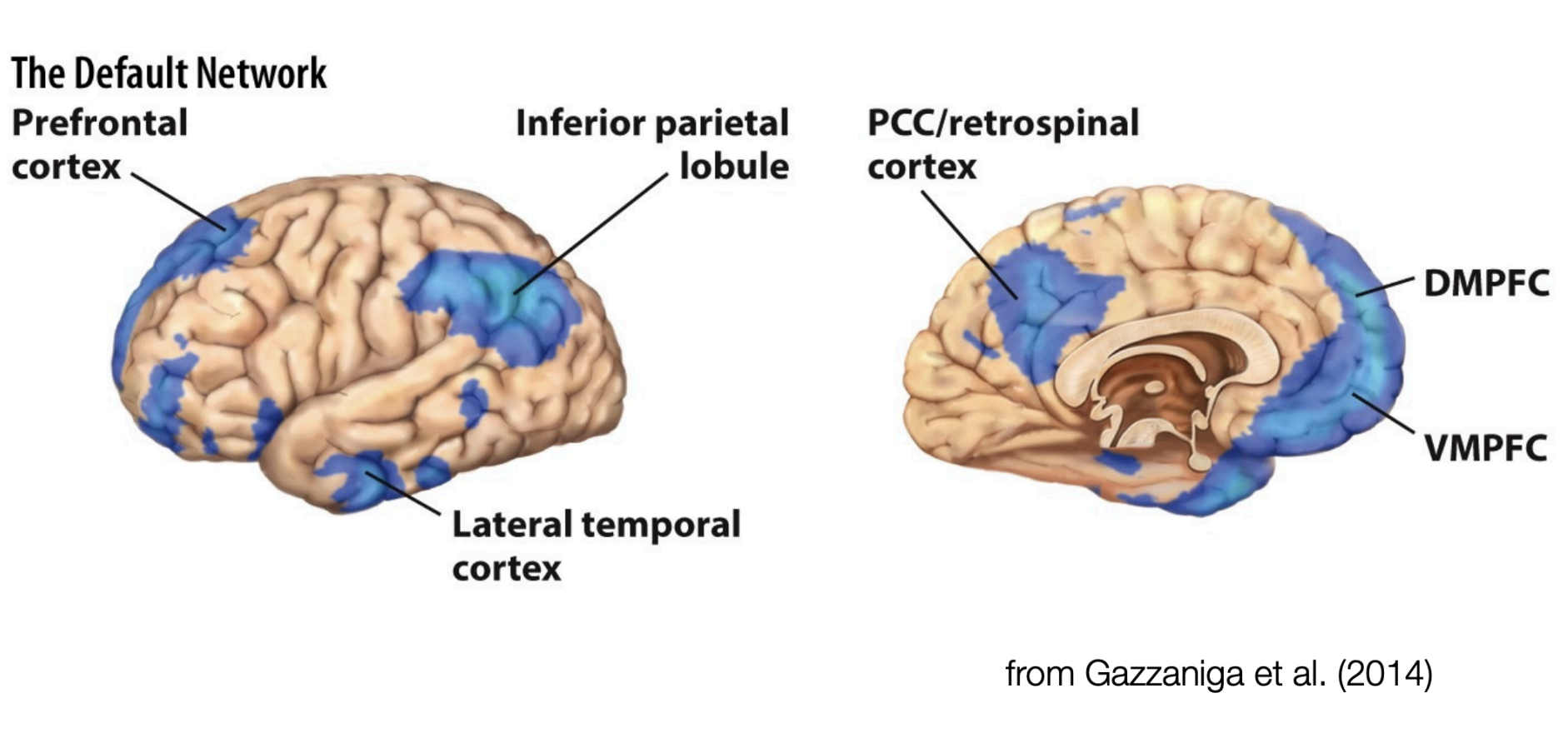
Self-referential processing may be the brain's default state when at rest.
Definition of the DMN: Network of brain regions more active during rest than during task performance.
Hypothesis: DMN performs self-referential processing in the absence of explicit tasks.
Theory of Mind (ToM)
Definition: The ability to attribute mental states, beliefs, intents, and knowledge to others, often referred to as "mind reading."
theory of mind develops at age four to five and continues to mature as children grow older, impacting their social interactions and empathy.
Brain Studies in Theory of Mind
Two methods to study ToM:
False belief stories, like the Sally-Anne task. (marble task) where children must determine where a character would look for a hidden object, revealing their understanding of others' beliefs.
False photograph task (apple falling from a tree): Similar narrative without mental state inference, serves as a control task.
Brain study results: Right TPJ activated during processing of false belief stories, indicating its role in ToM.
Expanded Network for Theory of Mind
Beyond TPJ, other brain regions are involved in processing mental states:
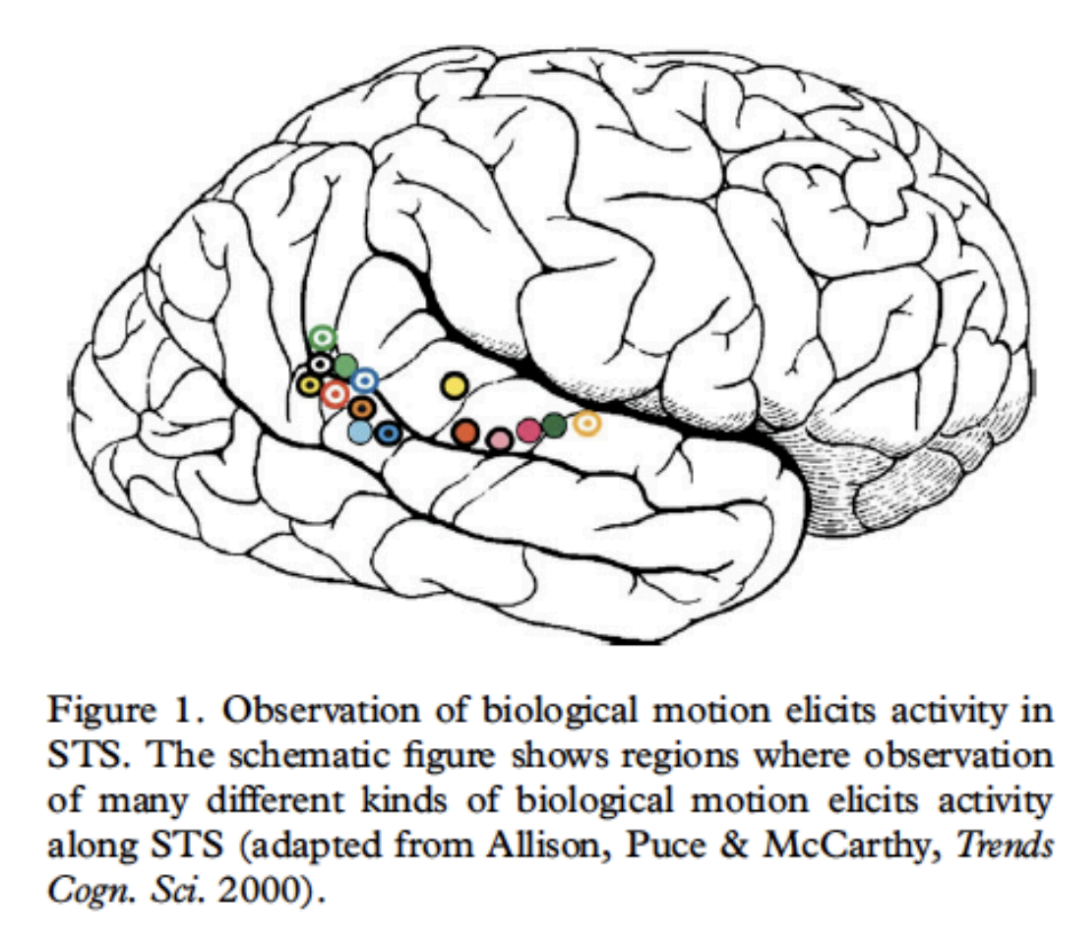
Posterior superior temporal sulcus (PSTS): Involved in action perception and biological motion.
Medial prefrontal cortex: Involved in understanding stable preferences and personality traits.
Temporoparietal junction: thinking about beliefs
Biological Motion Recognition
Definition of biological motion: Motion patterns that human brains easily recognise (e.g., walking, dancing).
Point light walker demonstration: Recognising an agent through patterns of movement despite lacking physical form.
Activation of the superior temporal sulcus during observation of biological motion.
Eye Gaze as a Social Signal
Importance of eye gaze in social interactions:
Expected (congruent) vs. unexpected (incongruent) eye gaze influences interpretation of social cues.
Activation differences in PSTS in response to gaze congruence.
Implication for autism spectrum disorder (ASD): ASD is often characterised by abnormal gaze behaviour and difficulties in understanding mental states.
Altered fixation patterns in ASD compared to neurotypical individuals, particularly in eye-gaze regions.
Framework for Understanding the Social Brain
Conceptual framework proposed by Rith and Frith (2010) based on social survival scenarios (e.g., stranded on an alien planet).
Questions about the intention and nature of encountered entities.
Biological motion as a key signal for distinguishing agents in social perceptions
Inference of Intentions and Agency
Once entities are identified as agents, questions arise regarding their intentions and actions.
Prediction of movements based on agency can be helpful; the brain uses an internal model to anticipate actions.
The role of prediction errors: Updating predictions based on observed actions and refining understanding of other agency.
detecting and differentiating different types of biological motion: relevant for identifying predators and conspecifics, helps in adapting social behaviour and enhancing communication strategies.
moving agents are interpreted as having goals and achieving these in a rational way to cause events
contingent actions of two agents are perceived as one causing the other (even for inanimate objects)
Layering Understandings of Intent and Knowledge
The role of ToM in inferring beliefs and knowledge about other agents.
Enhanced abilities for predicting behaviour when combining observations of biological motion with mental state inferences.
Brain regions involved in these processes: TPJ and medial prefrontal cortex in particular.
Summary of Key Points
The social brain distinguishes between self and others through action, space (bodily reference frame), and evaluative judgements
Important regions: Medial prefrontal cortex, medial parietal cortex, right inferior parietal cortex, and posterior superior temporal sulcus.
Biological motion and eye gaze recognition are critical components in social interactions.
Understanding and inferring intentions from movements and mental states are essential aspects of social cognition.
Mentalising network includes the temporal parietal junction and medial prefrontal cortex
Reflection Quiz notes:
The cingulate cortex shows increased activation for one’s own as well as another’s pain
False photograph stories reflect mental state inferences component of Theory of Mind
The term mentalising refers to drawing inferences with respect to the mental states of others
A mirror neuron fires during self-referential processing (observing ones self in the mirror)
The social brain and mirror system are linked to empathy via covert imitation of actions and emotions of others
Self-referential processing is associated with the medial prefrontal cortex, a region that overlaps anatomically with the default mode network
Activation in the temporo-parietal junction is mostly associated with theory of mind