MedSurg Ebook Ch 22-24 & Pharmocology Ebook Respiratory Drugs
Chapter 22: Pulmonary Embolism
A pulmonary embolism (PE) occurs when a substance (solid, gaseous, or liquid) enters venous circulation and forms a blockage in the pulmonary vasculature.
Emboli originating from venous thromboembolism (VTE) are the most common cause. Other types of emboli include fat, air, septic (due to bacterial invasion of a thrombus), and amniotic fluid.
Increased hypoxia to pulmonary tissue and impaired blood flow can result from a large embolus. A PE is a medical emergency.
Mortality from PE is greater in older adults while young females assigned at birth are more prone to die from PE than males assigned at birth within the same age group. A recent study indicated PE occurred more frequently in clients with COVID-19 versus those with influenza, and mortality was significantly higher in those clients as compared to the general client population. Prevention, rapid recognition, and treatment of a PE are essential for a positive outcome.
Health Promotion and Disease Prevention
Promote smoking cessation.
Encourage maintenance of appropriate weight for height and body frame.
Encourage a healthy diet and physical activity.
Prevent DVT by encouraging clients to do leg exercises, wear compression stockings, and avoid sitting for long periods of time.
Data collection
Risk Factors
Long-term immobility
Oral contraceptive use and estrogen therapy
Pregnancy
Tobacco use
Hypercoagulability (elevated platelet count)
Obesity
Surgery (especially orthopedic surgery of the lower extremities or pelvis)
Central venous catheters
Heart failure or chronic atrial fibrillation
Autoimmune hemolytic anemia (sickle cell)
Long bone fractures
Cancer
Trauma
Septicemia
Advanced age G
Older adult clients have decreased pulmonary reserves due to normal lung changes, including decreased lung elasticity and thickening alveoli. Older adult clients can decompensate more quickly.
Certain pathological conditions and procedures that predispose clients to DVT formation (peripheral vascular disease, hypertension, hip and knee arthroplasty) are more prevalent in older adults.
Many older adult clients experience decreased physical activity levels, thus predisposing them to DVT formation and pulmonary emboli.
A nurse is caring for a group of clients. Which of the following clients are at risk for a pulmonary embolism?
Select all that apply.
A
A client who has a BMI of 30
B
A client who is postmenopausal
C
A client who has a fractured femur
D
A client who is a marathon runner
E
A client who has chronic atrial fibrillation
Expected Findings
Anxiety
Feelings of impending doom
Sudden onset of chest pressure
Pain upon inspiration and chest wall tenderness
Dyspnea and air hunger
Cough
Hemoptysis (less common)
Physical Findings
Pleurisy
Pleural friction rub
Tachycardia
Hypotension
Tachypnea
Adventitious breath sounds (crackles) and cough
Heart murmur in S3 and S4
Diaphoresis
Low-grade fever
Decreased oxygen saturation levels (expected reference range is 95% to 100%), low SaO2, cyanosis
Petechiae (red dots under the skin) over chest and axillae
Distended neck veins
Syncope
Cyanosis
A nurse is collecting data on a client who has a pulmonary embolism. Which of the following manifestations should the nurse expect?
Select all that apply.
A
Bradypnea
B
Cough
C
Hypertension
D
Chest pain
E
Tachycardia
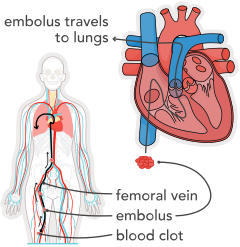
Pulmonary embolism
Laboratory Tests
ABG analysis
PaCO2 levels are low (expected reference range is 35 to 45 mm Hg) due to initial hyperventilation (respiratory alkalosis).
As hypoxemia progresses, respiratory acidosis occurs.
Further progression leads to metabolic acidosis due to buildup of lactic acid from tissue hypoxia.
D-dimer
Elevated above expected reference range in response to clot formation and release of fibrin degradation products (expected reference range is less than 0.4 mcg/mL).
Diagnostic Procedures
Computed tomography scan
The multidetector-row computed tomography angiography (MDCTA) is the criterion standard for detecting PE when available, as it provides high-quality visualization of the lung parenchyma.
Ventilation-perfusion scan
Ventilation-perfusion (V/Q) scan images show circulation of air and blood in the lungs and can detect a PE. Useful when client allergy to contrast media is a contraindication to other types of imaging.
Chest x-ray
The chest x-ray can provide data to support the occurrence of pulmonary embolism (elevation of the diaphragm on the affected side or pleural effusion).
Patient-Centered Care
Nursing Care
Administer oxygen therapy to relieve hypoxemia and dyspnea. Position the client to maximize ventilation (high-Fowler’s = 90°).
Initiate and maintain IV access.
Administer medications as prescribed.
Check respiratory status at least every 30 min. QPCC
Auscultate lung sounds.
Measure rate, rhythm, and ease of respirations.
Inspect skin color and capillary refill.
Examine for position of trachea.
Monitor cardiac status. QPCC
Check for dysrhythmias on cardiac monitor.
Provide emotional support and comfort to control client anxiety.
Monitor changes in level of consciousness and mental status.
A nurse is reviewing prescriptions for a client who has acute dyspnea and diaphoresis. The client states, “I am anxious and unable to get enough air.” Vital signs are heart rate 117/min, respirations 38/min, temperature 38.4° C (101.2° F), and blood pressure 100/54 mm Hg. Which of the following nursing actions is the priority?
A
Notify the provider.
B
Assist with administering heparin via IV infusion.
C
Administer oxygen therapy.
D
Obtain a CT scan.
Medications
Anticoagulants
Unfractionated and low molecular weight heparin, enoxaparin, and warfarin are used to prevent clots from getting larger or additional clots from forming.
Nursing Actions
Check for contraindications (active bleeding, peptic ulcer disease, history of stroke, recent trauma).
Monitor bleeding times: Prothrombin time (PT) and international normalized ratio (INR) for warfarin, partial thromboplastin time (aPTT) for heparin, and complete blood count (CBC). QEBP
Monitor for adverse effects of anticoagulants (thrombocytopenia, anemia, hemorrhage).
Direct factor Xa inhibitor
Rivaroxaban, apixaban, and fondaparinux bind directly with the active center of factor Xa, which inhibits the production of thrombin.
Nursing Actions
Check for bleeding from any site. (Clients have experienced epidural hematomas, as well as intracranial, retinal, adrenal, and GI bleeds.)
Hold medication for 18 hr prior to and 6 hr after removal of an epidural catheter.
Direct thrombin inhibitor
Dabigatran acts as a direct inhibitor of thrombin.
Nursing Actions: Check for bleeding and manifestations of blood loss.
Thrombolytic therapy
Alteplase, reteplase, and tenecteplase are used to dissolve blood clots and restore pulmonary blood flow.
Similar adverse effects and contraindications as anticoagulants.
Nursing Actions
Check for contraindications (known bleeding disorders, uncontrolled hypertension, active bleeding, peptic ulcer disease, history of stroke, recent trauma or surgery, pregnancy).
Monitor for evidence of bleeding, thrombocytopenia, and anemia.
Monitor blood pressure, heart rate, respirations, and oxygen saturation per facility protocol before, during, and after administration of medication. QS
A nurse is caring for a client who has a new prescription for heparin therapy. Which of the following statements by the client should indicate an immediate concern for the nurse?
A
“I am allergic to morphine.”
B
“I take antacids several times a day for my ulcer.”
C
“I had a blood clot in my leg several years ago.”
D
“It hurts to take a deep breath.”
Interprofessional care
Cardiology and pulmonary services should be consulted to manage a PE and treatment.
Respiratory services should be consulted for oxygen therapy, breathing treatments, and ABGs.
Radiology should be consulted for diagnostic studies to determine PE.
Therapeutic Procedures
Embolectomy
Surgical removal of embolus
Nursing Actions
Prepare the client for the procedure (NPO status, informed consent).
Monitor postoperatively (vital signs, SaO2, incision drainage, pain management).
Inferior vena cava filter (ICVF)
Typically used for clients in which anticoagulation therapy is contraindicated, a filter is inserted in the vena cava to prevent emboli from reaching the pulmonary vasculature
Nursing Actions
Prepare the client for the procedure (NPO status, informed consent).
Monitor postoperatively (vital signs, SaO2, incision drainage, pain management).
Client Education
If homebound, set up home care services to perform weekly blood draws.
For severe dyspnea, set up referral services to supply portable oxygen.
Follow recommendations for prevention of a PE. QPCC
If smoking, consider smoking cessation.
Avoid long periods of immobility.
Perform physical activity, such as walking.
Wear compression stockings to promote circulation.
Avoid crossing the legs.
If taking warfarin, do not increase or decrease the amount of vitamin K foods consumed (green, leafy vegetables). Vitamin K can reduce the anticoagulant effects of warfarin.
Adhere to a schedule for monitoring PT and INR, and follow instructions regarding medication dosage adjustments (if on warfarin) and regular blood draws.
There is an increased risk for bruising and bleeding.
Avoid taking aspirin products, unless specified by the provider.
Check the mouth and skin daily for bleeding and bruising.
Use electric shavers and soft-bristled toothbrushes.
Avoid blowing the nose hard, and gently apply pressure if nose bleeds occur.
If traveling, take measures to prevent PE.
Arise from a sitting position for 5 min out of every hour.
Wear support stockings.
Remain hydrated by drinking plenty of water.
Perform active ROM exercises when sitting (ankle pump exercises).
A nurse is caring for a client who is to receive thrombolytic therapy. Which of the following factors should the nurse recognize as a contraindication to the therapy?
A
Hip arthroplasty 2 weeks ago
B
Elevated sedimentation rate
C
Incident of exercise-induced asthma 1 week ago
D
Elevated platelet count
Complications
Decreased cardiac output
Blood volume is decreased.
Nursing Actions
Monitor for hypotension, tachycardia, cyanosis, jugular venous distention, and syncope.
Check for the presence of S3 or S4 heart sounds.
Initiate and maintain IV access.
Monitor urinary output (should be 30 mL/hr or more).
Administer IV fluids (crystalloids) to replace vascular volume.
Continuously monitor the ECG.
Monitor pulmonary pressures. IV fluids can contribute to pulmonary hypertension for clients who have right-sided heart failure (cor pulmonale).
Administer inotropic agents (milrinone, dobutamine) to increase myocardial contractility.
Vasodilators can be needed if pulmonary artery pressure is high enough to interfere with cardiac contractility.
Hemorrhage
Risk for bleeding increases due to anticoagulant therapy.
Nursing Actions
Check for bleeding from or bruising around injection and surgical sites at least every 2 hr.
Monitor cardiovascular status (blood pressure, heart rate and rhythm).
Monitor CBC (hemoglobin, hematocrit, platelets) and bleeding times (PT, aPTT, INR).
Administer IV fluids and blood products as required.
Test stool, urine, and emesis for occult blood.
Monitor for internal bleeding (measure abdominal girth and check for abdominal or flank pain) at least every 8 hr.
Have antidote available for use if necessary.
Active Learning Scenario
A nurse is caring for a client who has a pulmonary embolism. Use the ATI Active Learning Template: System Disorder to complete this item.
Pathophysiology related to client problem
Nursing Care: Describe three nursing interventions.
Medications: Identify two.
Click to download this file.
Active Learning Scenario Key
Click to reveal sample responses.
Chapter 23: Pneumothorax, Hemothorax, and Flail Chest
A pneumothorax is the presence of air or gas in the pleural space that causes lung collapse.
A tension pneumothorax occurs when air enters the pleural space during inspiration through a one-way valve and is not able to exit upon expiration. The trapped air causes pressure on the heart and the lung. As a result, the increase in pressure compresses blood vessels and limits venous return, leading to a decrease in cardiac output. Death can result if not treated immediately. As a result of a tension pneumothorax, air and pressure continue to rise in the pleural cavity, which causes a mediastinal shift.
A hemothorax is an accumulation of blood in the pleural space.
A spontaneous pneumothorax can occur when there has been no trauma. A small bleb on the lung ruptures and air enters the pleural space.
A flail chest occurs when at least two neighboring ribs, usually on one side of the chest, sustain multiple fractures, causing instability of the chest wall and paradoxical chest wall movement. This results in significant limitation in chest wall expansion.
Pneumothorax and hemothorax
Data collection
Risk Factors
Blunt chest trauma
Penetrating chest wounds
Closed/occluded chest tube
Chronic obstructive pulmonary disease (COPD)
Expected Findings
Anxiety
Pleuritic pain
Physical Findings
Manifestations of respiratory distress (tachypnea, tachycardia, hypoxia, cyanosis, dyspnea, and use of accessory muscles)
Tracheal deviation to the unaffected side (tension pneumothorax)
Reduced or absent breath sounds on the affected side
Asymmetrical chest wall movement
Hyperresonance on percussion due to trapped air (pneumothorax)
Subcutaneous emphysema (air accumulating in subcutaneous tissue)
Diagnostic Procedures
Chest x-ray
Used to confirm pneumothorax or hemothorax
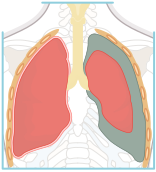
Pneumothorax
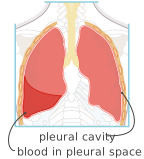
Hemothorax
A nurse is collecting data from a client following a gunshot wound to the chest. For which of the following findings should the nurse monitor to detect a pneumothorax?
Select all that apply.
A
Tachypnea
B
Deviation of the trachea
C
Bradycardia
D
Decreased use of accessory muscles
E
Pleuritic pain
Thoracentesis
Thoracentesis is the surgical perforation of the chest wall and pleural space with a large-bore needle.
Nursing Actions
Ensure that informed consent has been obtained.
Assist with client positioning and specimen transport.
Monitor status (vital signs, SaO2, injection site).
Assist the client to the edge of the bed and to lean over a bedside table.
Client Education
Remain still during the procedure (no moving, coughing, or deep breathing).
Discomfort will be felt when the local anesthetic solution is injected. When the needle is inserted into the pleural space, some pressure can be felt, but no pain.
Patient-Centered Care
Nursing Care
Administer oxygen therapy.
Auscultate heart and lung sounds and monitor vital signs every 4 hr.
Document ventilator settings hourly if the client is receiving mechanical ventilation.
Check ABGs, SaO2, CBC, and chest x-ray results.
Position the client to maximize ventilation (semi-Fowler’s = 35° to 45°).
Provide emotional support to the client and family.
Monitor chest tube drainage. QEBP
Administer medications as prescribed.
Encourage prompt medical attention when evidence of infection occurs.
Set up referral services (home health, respiratory services) to provide portable oxygen if needed. QTC
A nurse is assisting the provider to care for a client who has developed a spontaneous pneumothorax. Which of the following actions should the nurse perform first?
A
Collect data regarding the client’s pain.
B
Obtain a large-bore IV needle for decompression.
C
Administer lorazepam.
D
Prepare for chest tube insertion.
Medications
Benzodiazepines (sedatives)
Lorazepam or diazepam can be used to decrease anxiety.
Nursing Actions
Monitor vital signs. (Benzodiazepines can cause hypotension and respiratory distress.)
Remember that the medications have amnesiac effects.
Monitor for paradoxical effects (euphoria, rage).
Client Education: Medications have amnesic effects and cause drowsiness.
Opioid agonists (pain medications)
Morphine sulfate and fentanyl are opioid agents used to treat moderate to severe pain. These medications act on the mu and kappa receptors that help alleviate pain.
Activation of these receptors produces analgesia (pain relief), respiratory depression, euphoria, sedation, and decrease in gastrointestinal motility.
Nursing Actions
Use cautiously for clients who have asthma or emphysema, due to the risk of respiratory depression.
Check pain every 4 hr.
Monitor clients, especially older adults, for manifestations of respiratory depression. If respirations are 12/min or less, stop the medication and notify provider immediately.
Monitor vital signs for hypotension and bradypnea.
Monitor for nausea and vomiting.
Monitor level of sedation (drowsiness, level of consciousness).
Monitor for constipation.
Encourage fluid intake and activity related to a decrease in gastric motility.
Monitor intake and output. Report fluid retention as an adverse effect of opioid medications.
Client Education
If receiving a fentanyl patch, the initial patch takes several hours to take effect. A short-acting pain medication is administered for breakthrough pain.
If there are no fluid restrictions due to other conditions, drink plenty of fluids to prevent constipation.
Follow instructions on how to use a patient-controlled analgesia (PCA) pump if applicable. The client is the only person who should push the medication administration button. The safety lockout mechanism on the PCA prevents the client from using too much medication.
Interprofessional Care
Respiratory services should be consulted for ABGs, breathing treatments, and suctioning for airway management.
Pain management services can be consulted if pain persists or is uncontrolled.
Rehabilitation care can be consulted if the client has prolonged weakness and needs assistance with an increasing level of activity.
Therapeutic Procedures
Chest tube insertion
Chest tubes are inserted in the pleural space to drain fluid, blood, or air; re-establish a negative pressure; facilitate lung expansion; and restore normal intrapleural pressure.
Nursing Actions
Assist with obtaining informed consent, gather supplies, monitor the client’s status (vital signs, SaO2, chest tube drainage), report abnormalities to the provider, and administer pain medications.
Continually monitor vital signs and the client’s response to the procedure.
Monitor chest tube placement, function of chest drainage system, and dressing.
Client Education
Breathe deeply to promote lung expansion.
Take rest periods as needed.
Use proper hand hygiene to prevent infection.
Participate in coughing, deep breathing, and use of incentive spirometry.
Obtain immunizations for influenza and pneumonia.
Recovery from a pneumothorax/hemothorax can be lengthy.
Talk with family or other support people to express feelings about the condition and recovery.
If applicable, consider smoking cessation.
Follow up with the provider as instructed, and report the following to the provider.
Upper respiratory infection
Fever
Cough
Difficulty breathing
Sharp chest pain
A nurse is reinforcing discharge instructions with a client who has COPD and experienced a pneumothorax. Which of the following statements should the nurse include?
A
“Notify your provider if you experience weakness.”
B
“You should be able to return to work in 1 week.”
C
“You need to wear a mask when in crowded areas.”
D
“Notify your provider if you experience a productive cough.”
Complications
Decreased cardiac output
The amount of blood pumped by the heart decreases as intrathoracic pressure rises.
Hypotension develops.
Nursing Actions
Administer IV fluids and blood products as prescribed.
Monitor heart rate and rhythm.
Monitor intake and output (chest tube drainage).
Respiratory failure
Inadequate gas exchange due to lung collapse
Nursing Actions
Prepare for mechanical ventilation.
Continue respiratory data collection.
Flail chest
As a result of the free-floating rib segments, the lung below the flail segment caves in on inhalation and balloons out on exhalation. The portion of the lung below the flail segment cannot participate in gas exchange, so oxygenation is compromised.
A nurse in the emergency department is collecting data from a client who has sustained multiple rib fractures and has a flail chest. Which of the following findings should the nurse expect?
Select all that apply.
A
Bradycardia
B
Cyanosis
C
Hypotension
D
Dyspnea
E
Paradoxical chest movement
Data collection
Risk Factors
Multiple rib fractures from blunt chest trauma
Expected Findings
Unequal chest expansion (the unaffected side of the chest will expand, while the affected side can appear to diminish in size or remain stationary)
Paradoxical chest wall movement (inward movement of segment during inspiration, outward movement of segment during expiration)
Tachycardia
Hypotension
Dyspnea
Cyanosis
Anxiety
Chest pain
Patient-Centered Care
Nursing Care
Administer humidified oxygen.
Monitor vital signs and SaO2.
Review findings of pulmonary function tests, periodic chest x-rays, and ABGs.
Monitor lung sounds, color, and capillary refill.
Promote lung expansion by encouraging deep breathing and proper positioning.
Maintain mechanical ventilation in the event of severe injury to establish adequate gas exchange and stabilize the injury. (Flail chest is usually stabilized by positive-pressure ventilation.)
Suction trachea and endotracheal tube as needed.
Administer pain medication. Patient-controlled analgesia or an epidural block commonly is used.
Administer IV fluids as prescribed.
Monitor intake and output.
Offer support and reassurance by explaining all procedures.
Active Learning Scenario
A nurse is teaching a newly licensed nurse regarding care for a client who has a hemothorax. What should be included in this review? Use the ATI Active Learning Template: System Disorder to complete this item.
Description of Disorder/Disease Process
Nursing care: Describe three nursing interventions.
Medications: Describe two medications used for hemothorax.
Click to download this file.
Active Learning Scenario Key
Click to reveal sample responses.
Chapter 24: Respiratory Failure
Respiratory failure includes acute respiratory failure (ARF), acute respiratory distress syndrome (ARDS), and severe acute respiratory syndrome (SARS). Because older adult clients have decreased pulmonary reserves due to expected lung changes associated with aging, including decreased lung elasticity and thickening alveoli, they can decompensate more quickly. G
Acute respiratory failure
ARF is caused by failure to adequately ventilate and/or oxygenate that causes a ventilation-perfusion mismatch.
Ventilatory failure is due to a mechanical abnormality of the lungs or chest wall, impaired function of the respiratory muscles (especially the diaphragm), or a malfunction in the respiratory control center of the brain.
Oxygenation failure can result from a lack of perfusion to the pulmonary capillary bed (pulmonary embolism) or a condition that alters the gas exchange medium (pulmonary edema, pneumonia).
Both inadequate ventilation and oxygenation can occur in clients who have diseased lungs (asthma, emphysema, or cystic fibrosis). Diseased lung tissue can cause oxygenation failure and increased work of breathing, eventually resulting in respiratory muscle fatigue and ventilatory failure. Combined failure leads to more profound hypoxemia than either ventilatory failure or oxygenation failure alone.
Criteria for acute respiratory failure are based on ABG values.
Acute respiratory distress syndrome
ARDS is caused by trauma to the lungs (caused by burns, sepsis, physical trauma, aspiration, and transfusions) resulting in fluid accumulation in the alveoli preventing adequate gas exchange.
A systemic inflammatory response injures the alveolar-capillary membrane and pulmonary vasculature. It becomes permeable to large molecules, and the lung space is filled with fluid and proteins inhibiting gas exchange.
A reduction in surfactant weakens the alveoli, which causes collapse or filling of fluid, leading to worsening edema. Edema compresses terminal airways, closing and eventually destroying them.
Severe acute respiratory syndrome
SARS is the result of a viral infection from a mutated strain of the coronaviruses (eg. SARS-CoV-2), a group of viruses that also cause the common cold.
The virus invades the pulmonary tissue, which leads to an inflammatory response.
The virus is spread easily through airborne droplets from sneezing, coughing, or talking.
Data Collection
Acute respiratory failure | Acute respiratory distress syndrome | Severe acute respiratory syndrome |
|---|---|---|
Risk Factors | ||
Ventilatory failure
Oxygenation failure
Combined ventilatory and oxygenation failure Decreased gas exchange results in poor diffusion of oxygen into arterial blood with carbon dioxide retention
|
|
|
A nurse is reviewing the health records of five clients. Which of the following clients should the nurse identify as being at risk for developing acute respiratory distress syndrome?
Select all that apply.
A
A client who experienced a near-drowning incident
B
A client following coronary artery bypass graft surgery
C
A client who has a hemoglobin of 15.1 g/dL (14 to 18 g/dL)
D
A client who has sepsis
E
A client who experienced acute drug toxicity
Expected Findings
Acute respiratory failure
Dyspnea
Orthopnea
Cyanosis
Hypoxemia
Tachycardia
Confusion
Irritability or agitation
Restlessness
Hypercarbia (high levels of carbon dioxide in the blood)
Acute respiratory distress syndrome
Dyspnea
Bilateral noncardiogenic pulmonary edema R
Reduced lung compliance
Dense patchy bilateral pulmonary infiltrates on x-ray
Severe hypoxemia despite administration of 100% oxygen
Cyanosis
Pallor
Intercostal and substernal retractions
Severe Acute Respiratory Syndrome (SARS-CoV-2)
Mild to moderate
Dyspnea
Sore throat
Loss of ability to taste and smell
Cough
Fatigue
Myalgia
Headache
Severe
Unrelenting pressure and pain in the chest
Cyanosis
Altered level of consciousness
ARDS
Sepsis (may progress to septic shock)
Kidney damage
Cardiomyopathy
Pneumonia
Irregular heartbeat
Laboratory Tests
ABGs to confirm and monitor ARF, ARDS, and SARS
PaO2 less 60 mm Hg and oxygen saturation less than 90% on room air (hypoxemia)
PaCO2 greater than 50 mm Hg and pH less than 7.35 (hypoxemia, hypercarbia)
SaO2 less than 90%
Acute respiratory failure
ABGs to confirm and monitor combined ventilatory and oxygenation failure
Room air, PaO2 less than 60 mm Hg (hypoxemic/oxygenation failure), OR PaCO2 greater than 50 mm Hg in conjunction with a pH less than 7.35 (hypercapnic/ventilatory failure)
AND SaO2 less than 90% in both cases
Diagnostic Procedures
Chest X-ray QEBP
Results can include
Pulmonary edema (ARF, ARDS)
Cardiomegaly (ARF)
Diffuse infiltrates and white-out or ground-glass appearance (ARDS, SARS)
Infiltrates (SARS)
CT Scan
Results can include
Scattered ground glass opacities (SARS)
Nursing Actions
Assist with client positioning before and after the x-ray.
Communicate the results to the appropriate personnel in a timely manner.
Electrocardiogram (ECG)
To rule out cardiac involvement.
Patient-Centered Care
Nursing Care
Maintain a patent airway and monitor respiratory status every hour and more often as needed.
Mechanical ventilation is often required with positive-end expiratory pressure (PEEP) or continuous positive airway pressure (CPAP) to prevent alveolar collapse during expiration. Follow facility protocol for monitoring and documenting ventilator settings.
Oxygenate before suctioning secretions to prevent further hypoxemia.
Suction the client as needed (most common indicator for need to suction is coarse crackles over the trachea).
Assess and document sputum color, amount, and consistency.
Assess vital signs, breathing patterns, and lung sounds per facility protocol.
Monitor for pneumothorax (a high PEEP can cause the lungs to collapse).
Obtain ABGs as prescribed and following each ventilator setting adjustment.
Maintain continuous ECG monitoring for changes that can indicate increased hypoxemia, especially when repositioning and applying suction.
Continually monitor vital signs, including SaO2. Assess pain level.
Position the client to facilitate ventilation and perfusion.
Prone position as prescribed (ARDS/SARS)
Prevent infection.
Perform frequent hand hygiene.
Use appropriate suctioning technique.
Provide oral care every 2 hr and as needed.
Wear protective clothing (gown, gloves, mask) when appropriate.
Maintain droplet and contact precautions for the client who has SARS-CoV-2 infection
Airborne precautions apply if the client is receiving a procedure that generates aerosols
Promote nutrition.
Assess bowel sounds.
Monitor elimination patterns.
Obtain daily weights. QS
Monitor intake and output.
Administer enteral and/or parenteral feedings as prescribed.
Prevent aspiration with enteral feedings (elevate the head of the bed 30° to 45°).
Confirm nasogastric (NG) tube placement prior to feeding.
Provide emotional support to the client and family.
Encourage verbalization of feelings.
Provide alternative communication means (dry erase board, pen and paper).
A nurse is contributing the to the plan of care for a client who is receiving mechanical ventilation with positive end expiratory pressure (PEEP) for acute respiratory distress syndrome. Which of the following interventions should the nurse recommend be included in the plan?
A
Use clean technique when performing endotracheal suctioning
B
Maintain the client in a supine position
C
Monitor for pneumothorax
D
Place the client in protective isolation
Medications
Benzodiazepines
Examples
Lorazepam
Midazolam
Actions: Reduces anxiety and resistance to ventilation and decreases oxygen consumption
Corticosteroids
Examples
Cortisone acetate
Methylprednisolone sodium succinate
Dexamethasone sodium phosphate
Recommended for hospitalized clients who have the SARS-CoC-2 virus and require supplemental oxygenation
Actions: Reduces WBC migration and decreases inflammation
Nursing Actions
Discontinue medication gradually.
Administer with an antiulcer medication to prevent peptic ulcer formation.
Monitor weight and blood pressure.
Monitor glucose and electrolytes. QEBP
Client Education: Take oral doses with food and avoid stopping the medication suddenly.
Opioid analgesics
Examples
Morphine sulfate
Fentanyl
Actions: Provides pain management
Nursing Actions
Monitor respirations for clients who are not receiving mechanical ventilation.
Monitor blood pressure, heart rate, and SaO2.
Monitor ABGs. (Hypercapnia can result from depressed respirations.)
Use cautiously in conjunction with hypnotic sedatives.
Assess pain level and response to medication.
Have naloxone and resuscitation equipment available for severe respiratory depression in clients who are not receiving mechanical ventilation.
Antibiotics sensitive to cultured organism(s)
Examples: Vancomycin
Actions: Treats identified organisms
Nursing Actions
Culture sputum prior to administration of first dose.
Monitor for a hypersensitivity reaction.
Give IV doses slowly (over at least 60 min) to avoid red man syndrome.
Monitor the IV site for infiltration.
Do not give with other medications.
Monitor coagulopathy and renal function.
Client Education: Take oral doses with food and finish the prescribed dose.
Antivirals: (SARS-CoV-2)
Examples: Remdesivir
Remdesivir is the only antiviral medication currently approved by the FDA for treatment of the SARS-CoV-19 infection
Actions: Slows replication of the virus
Nursing Actions
Obtain glomerular filtration rate (GFR), liver enzymes, prothrombin time (PT), and INR before initiating and throughout therapy.
Monitor for a hypersensitivity reaction.
Monitor the IV site for infiltration.
Monitor coagulopathy and renal function.
Monitor for adverse gastrointestinal effects.
Antirheumatics (SARS-CoV-2)
Examples: Baricitinib and tocilizumab
Actions: Inhibit inflammatory processes associated with SARS-CoV-2 infection
Nursing Actions
Monitor for a hypersensitivity reaction.
Monitor for manifestations of arterial and deep vein thrombosis.
Monitor liver and kidney function.
Obtain CBC with differential and absolute neutrophil count before initiating and throughout therapy.
Anticoagulants (SARS-CoV-2)
Examples: Dalteparin and enoxaparin
Actions: Inhibit blood coagulation
Nursing Actions
Monitor for a hypersensitivity reaction.
Assess injection site for bruising and inflammation.
Monitor for manifestations of bleeding.
Obtain CBC with differential and absolute neutrophil count before initiating and throughout therapy.
Immunizations: (SARS-CoV-2)
Refer to CDC guidelines for various age groups.
A nurse is orienting a newly licensed nurse on the purpose of administering lorazepam to a client who has acute respiratory distress syndrome (ARDS). Which of the following statements by the newly licensed nurse indicates understanding of the teaching?
A
“This medication is given to treat infection.”
B
“This medication is given to relieve pain.”
C
“This medication is given to decrease inflammation.”
D
“This medication is given to reduce anxiety.”
Interprofessional Care
Respiratory therapy
The respiratory therapist typically manages the ventilator, adjusts the settings, and provides chest physiotherapy to improve ventilation and chest expansion.
The respiratory therapist also can suction the endotracheal tube and administer inhalation medications, such as bronchodilators.
Nutritional therapy
Enteral or parenteral feeding
Nutritional support following extubation
Therapeutic Procedures
Intubation and mechanical ventilation
Artificial airway insertion with mechanical ventilation
Nursing Actions
Monitor ECG, SaO2, lung sounds, and color.
Sedate as needed.
Explain the procedure and Provide reassurance to calm the client.
Have suction equipment, manual resuscitation bag, and face mask available at all times.
Suction secretions as needed.
Preintubation
Oxygenate with 100% oxygen.
Assist ventilation with manual resuscitation bag and face mask.
Have emergency resuscitation equipment readily available.
Postintubation
Assess end-tidal carbon dioxide levels, bilateral lung sounds, symmetrical chest movement, and chest x-ray findings to confirm placement of the endotracheal tube. QPCC
Secure the endotracheal tube per facility guidelines.
Assess the balloon cuff for air leaks periodically Monitor cuff pressure to maintain between 20 to 30 cm. H2O to stabilize the tube without causing tracheal injury.
PEEP
Positive pressure is applied during expiration to keep the alveoli expanded.
PEEP is added to the ventilator setting to enhance gas exchange and improve lung expansion, thus preventing atelectasis.
Client Education: Alternate methods of communication will be provided because speaking is not possible while the endotracheal tube is in place.
Kinetic therapy
A kinetic bed that rotates laterally alters client positioning to reduce atelectasis and improve ventilation.
Nursing Actions
Begin slowly and gradually to increase the degree of rotation as tolerated.
Monitor ECG, SaO2, breath sounds, and blood pressure.
Stop rotation if the client becomes distressed.
Provide routine skin care to prevent breakdown.
Sedate as needed.
Complications
Endotracheal tube
Trauma
Trauma during intubation or long-term intubation can cause damage to trachea and vocal cords.
A tracheostomy might be required for long-term ventilation.
Altered position of endotracheal tube
Nursing Actions
Check tube positioning every 1 to 2 hr and as needed Monitor cuff pressure to maintain between 20 to 30 cm H2O.
Assess lung sounds, SaO2, and chest movement each time the client is moved, transferred, or turned.
Secure endotracheal tube per facility guidelines to maintain tube placement and document level of tube.
Aspiration pneumonia
Nursing Actions
Check the cuff on the endotracheal tube for leaks.
Assess suction contents for gastric secretions.
Verify NG tube placement.
Infection
Nursing Actions
Prevent infection by using proper hand hygiene, suctioning technique, and meticulous oral care.
Assess color, amount, and consistency of secretions.
Blocked endotracheal tube
Indicated by high-pressure alarm on ventilator
Nursing Actions: Suction secretions to relieve a mucous plug or insert an oral airway to prevent biting on the tube.
A nurse is discussing intubation with a newly licensed nurse. Which of the following complications associated with intubation should the nurse identify?
A
Changes in the client's voice
B
Mucositis
C
Inflammation of the Eustachian tube
D
Development of rhinorrhea
Mechanical Ventilation
Increased intrathoracic pressure
PEEP increases intrathoracic pressure, which can cause a decreased blood return to the heart, decreased cardiac output, and/or hypotension.
Decreased cardiac output can activate the renin-angiotensin-aldosterone system, leading to fluid retention and/or decreased urine output.
Nursing Actions: Monitor input and output, weight, and hydration status.
Client Education: Avoid using the Valsalva maneuver (straining with bowel movement), because it can further increase intrathoracic pressure.
Barotrauma
Ventilation with positive pressure causes damage to the lungs (pneumothorax, subcutaneous emphysema).
Nursing Actions
Monitor oxygenation status, blood gases, electrolytes, and chest x-ray.
Assess for subcutaneous emphysema (crackles and/or air movement felt under skin).
Monitor for a high-pressure ventilator alarm, which can indicate pneumothorax.
Immobilization
Can result in muscle atrophy, pneumonia, and pressure injury
Nursing Actions
Reposition and suction every 2 hr and as needed.
Provide routine skin care.
Implement range-of-motion exercises to prevent muscle atrophy.
SARS-COV-2 Infection
Post-Acute Coronavirus Syndrome
Continued manifestations of SARS-CoV-2 infection occurring 4-weeks or more after onset of initial manifestations
Nursing Actions
Educate client about manifestations of Post-Acute Coronavirus Syndrome
Dizziness, myalgia, continues loss of taste or smell, brain fog, depression, shortness of breath, headache, fatigue
Assess clients for manifestations of Post-Acute Coronavirus Syndrome with each follow-up visit and make referrals as necessary
Patient education (SARS-COV-2)
Instruct caregivers about prevention of SARS-CoV-2 (infection).
Frequent hand hygiene
Maintain distance of at least 6 ft from others when indicated
Wear facemask when indicated
Avoid touching face, mouth, and eyes
Obtain COVID-19 vaccination according to current CDC guidelines
Active Learning Scenario
A nurse is reviewing the plan of care for a client who has acute respiratory distress syndrome (ARDS). What should be included in the plan of care? Use the ATI Active Learning Template: System Disorder to complete this item.
Risk Factors: Describe three conditions related to ARDS.
Nursing Care: Describe three nursing actions to maintain oxygenation.
Complications: Identify two complications of ARDS.
Click to download this file.
Active Learning Scenario Key
Click to reveal sample responses.
When reviewing the following chapters, keep in mind the relevant topics and tasks of the NCLEX outline.
Pharmacological Therapies
ADVERSE EFFECTS/CONTRAINDICATIONS/SIDE EFFECTS/INTERACTIONS
Reinforce client teaching on possible effects of medications (common side effects or adverse effects, when to notify the primary health care provider).
EXPECTED ACTIONS/OUTCOMES
Apply knowledge of pathophysiology when addressing client pharmacological agents.
Evaluate client response to medication.
MEDICATION ADMINISTRATION
Reinforce client teaching on client self-administration of medications.
Chapter 16: Airflow Disorders
Asthma is a chronic inflammatory disorder of the airways. It is an intermittent and reversible airflow obstruction that affects the bronchioles. The obstruction occurs either by inflammation or airway hyper-responsiveness leading to bronchoconstriction.
Medication management usually addresses both inflammation and bronchoconstriction. These same medications can also be used to treat the manifestations of chronic obstructive pulmonary disease (COPD).
Medications include bronchodilator agents (beta2 adrenergic agonists), methylxanthines, inhaled anticholinergics, and anti-inflammatory agents (glucocorticoids, mast cell stabilizers, and leukotriene modifiers).
Bronchodilators can further be broken down into Short-Acting Beta2 Agonists (SABAs) which are adrenergics or sympathomimetics used for acute symptom relief and Long-Acting Beta2 Agonists (LABAs) which are adrenergics or sympathomimetics used for long term management.
SABAs:
Albuterol
Ephedrine
Epinephrine
Levalbuterol
Metaproterenol
Terbutaline
LABAs:
Aformoterol
Formoterol
indacaterol
Beta2 adrenergic agonists
Select Prototype Medication: Albuterol (inhaled short-acting); Salmeterol (inhaled long-acting)
Other Medications
Formoterol
Levalbuterol
Salmeterol
Terbutaline
Purpose
Expected Pharmacological Action
Beta2 adrenergic agonists act by selectively activating the beta2 receptors in the bronchial smooth muscle, resulting in bronchodilation. As a result of this:
Bronchospasm is relieved.
Histamine release is inhibited.
Ciliary motility is increased.
Bronchoconstriction
Therapeutic Uses
Albuterol, levalbuterol
Route
Inhaled, short-acting
Oral, long-acting (albuterol)
Therapeutic uses
Inhaled, short-acting prevention of asthma episode (exercise-induced).
Inhaled, short-acting treatment for bronchospasm and asthma.
Oral, long-acting, long-term control of asthma.
Formoterol, salmeterol
Route: Inhaled, long-acting
Therapeutic uses: Prevention of exercise induced bronchospasm, long-term control of asthma.
Terbutaline
Route: Oral, long-acting
Therapeutic uses: Long-term control of asthma.
Complications
Tachycardia, angina
Oral agents can cause tachycardia and angina due to activation of alpha1 receptors in the heart.
Nursing Actions: Dosage might need to be reduced.
Client Education
Observe for chest, jaw, or arm pain or palpitations, and notify the provider if they occur.
Check pulse and report an increase of greater than 20 to 30/min.
Avoid caffeine.
Tremors
Caused by activation of beta2 receptors in skeletal muscle
Nursing Actions
Tremors usually resolve with continued medication use.
Dosage might need to be reduced.
Contraindications/Precautions
Warnings
Pregnancy: Safety not established
Lactation: Safety not established.
Contraindicated in clients who have tachydysrhythmia.
Use cautiously in clients who have diabetes mellitus, hyperthyroidism, heart disease, hypertension, and angina.
Interactions
Use of beta adrenergic blockers can negate effects of both medications.
Nursing Actions: Beta adrenergic blockers should not be used concurrently.
MAOIs and tricyclic antidepressants can increase the risk of tachycardia and angina.
Client Education: Report changes in heart rate and chest pain.
Nursing Administration
When a client has prescriptions for an inhaled beta2 agonist and an inhaled glucocorticoid, advise the client to inhale the beta2 agonist before inhaling the glucocorticoid. The beta2 agonist promotes bronchodilation and enhances absorption of the glucocorticoid.
Formoterol and salmeterol are long-acting beta2 agonist inhalers. These inhalers are used every 12 hr for long-term control and are not used to abort an asthma attack, or exacerbation. These long-acting agents are not used alone but are prescribed in combination with an inhaled glucocorticoid.
A short-acting beta2 agonist is used to treat an acute episode.
Monitor for toxicity from short-acting beta2 agonist, such as tachydysrhythmias, seizures, and chest pain.
Asthmatic Breathing Metered-Dose Inhaler
Client Education
Follow manufacturer’s instructions for use of metered-dose inhaler (MDI), dry-powder inhaler (DPI), and nebulizer.
Do not exceed prescribed dosages.
Know the dosage schedule (if the medication is to be taken on a fixed or as-needed schedule).
Observe for indications of an impending asthma episode, and keep a log of the frequency and intensity of exacerbations.
Notify the provider if there is an increase in the frequency and intensity of asthma exacerbations.

Metered-dose inhaler
Nursing Evaluation of Medication Effectiveness
Depending on therapeutic intent, effectiveness is evidenced by:
Long-term control of asthma.
Prevention of exercise-induced asthma.
Resolution of asthma exacerbations as evidenced by absence of shortness of breath, clear breath sounds, absence of wheezing, and return of respiratory rate to baseline.
A nurse is reinforcing instructions to a client who has a new prescription for oral albuterol. Which of the following instructions should the nurse include?
A
“You can take this medication to abort an acute asthma attack.”
B
“Tremors are an adverse effect of this medication.”
C
“Prolonged use of this medication can cause hyperglycemia.”
D
“This medication can slow skeletal growth rate.”
Methylxanthines
Select Prototype Medication: Theophylline
Purpose
Expected Pharmacological Action
Relaxation of bronchial smooth muscle, resulting in bronchodilation
Once the first-line medication for asthma, now used infrequently because newer medications are safer and more effective
Therapeutic Uses: Oral theophylline is used for long-term control of chronic asthma.
Route of administration: Oral or IV (emergency use only)
Complications
Mild toxicity reaction can include GI distress and restlessness.
More severe reactions can occur with higher therapeutic levels and can include dysrhythmias and seizures.
Nursing Actions
Monitor theophylline blood levels to keep within therapeutic range (10 to 20 mcg/mL). Adverse effects are unlikely to occur at levels less than 20 mcg/mL.
If manifestations occur, stop the medication. Activated charcoal is used to decrease absorption, lidocaine is used to treat dysrhythmias, and diazepam is used to control seizures.
Client Education: Periodic monitoring of blood levels is needed. Report nausea, diarrhea, restlessness, which are indicative of toxicity.
Contraindications/Precautions
Warnings
Pregnancy: Safety not established.
Lactation: Safe for use.
Use cautiously in clients who have heart disease, hypertension, liver and kidney dysfunction, and diabetes mellitus.
Use cautiously in children and older adults. G
Interactions
Caffeine
Caffeine increases CNS and cardiac adverse effects of theophylline.
Caffeine can increase theophylline levels.
Client Education: Avoid consuming caffeinated beverages (coffee, caffeinated sodas, energy drinks).
Tobacco and marijuana smoke
Smoking tobacco or marijuana increases theophylline metabolism.
Smoking tobacco or marijuana can decrease theophylline levels.
Client Education: Avoid smoking tobacco or marijuana. If tobacco or marijuana use is stopped, notify the provider.
Phenobarbital, phenytoin, and rifampin decrease theophylline levels.
Nursing Actions: When theophylline is used concurrently with these medications, increase the dosage of theophylline.
Cimetidine, ciprofloxacin, and other fluoroquinolone antibiotics increase theophylline levels.
Nursing Actions: When theophylline is used concurrently with these medications, decrease the dosage of theophylline.
Nursing Administration
Client Education
Take the medication as prescribed. If a dose is missed, the following dose should not be doubled.
Do not chew or crush sustained-release preparations. These medications should be swallowed whole.
Nursing Evaluation of Medication Effectiveness
Depending on therapeutic intent, effectiveness is evidenced by long-term control of asthma.
Inhaled anticholinergics
Select Prototype Medication: Ipratropium (inhaled short-acting); Tiotropium (inhaled long-acting)
Purpose
Expected Pharmacological Action: Block muscarinic receptors of the bronchi, resulting in bronchodilation.
Therapeutic Uses
Relieve bronchospasm associated with COPD.
Allergen-induced and exercise-induced bronchospasm.
Ipratropium is FDA approved only for bronchospasm associated with COPD, though is often used off-label for asthma and is part of the evidence-based guidelines for asthma management.
Route of administration: Inhalation
Complications
Local anticholinergic effects
Dry mouth, hoarseness
Client Education: Sip fluids and suck on sugar-free hard candies to control dry mouth.
Contraindications/Precautions
Warnings
Pregnancy: Safety has not been established.
Lactation: Safety has not been established.
Combination of ipratropium/albuterol is contraindicated in clients who have an allergy to soy or peanuts because the medication preparations can contain soy lecithin.
Use cautiously in clients who have narrow-angle glaucoma and benign prostatic hyperplasia (due to anticholinergic effects).
Nursing Administration
Usual adult dosage is 2 puffs 4 times a day. Instruct clients to wait the length of time directed between puffs.
Client Education
Rinse the mouth after inhalation to decrease dry mouth.
If two inhaled medications are prescribed, wait at least 5 min between medications.
Do not swallow tiotropium capsules. An inhalation device is used for administration of the capsule.
Nursing Evaluation of Medication Effectiveness
Depending on therapeutic intent, effectiveness is evidenced by the following.
Control of bronchospasm in clients who have COPD.
Prevention of allergen-induced and exercise-induced bronchospasm.
Glucocorticoids
Select Prototype Medications
Inhalation: beclomethasone
Oral: prednisone
Other Medications
Inhalation
Budesonide
Budesonide and formoterol
Fluticasone and salmeterol
Fluticasone
Mometasone and formoterol
Oral: prednisolone
IV
Hydrocortisone
Methylprednisolone
Purpose
Expected Pharmacological Action
Prevent inflammation, suppress airway mucus production, and promote responsiveness of beta2 receptors in the bronchial tree
Reduction in airway mucosa edema
The use of glucocorticoids does not provide immediate effects, but rather promotes decreased frequency and severity of exacerbations and acute attacks.
Therapeutic Uses
Short-term IV agents are used for status asthmaticus.
Inhaled agents are used for long-term prophylaxis of asthma.
Short-term oral therapy is used to treat manifestations following an acute asthma episode.
Long-term oral therapy is used to treat chronic, severe asthma.
Promote lung maturity and decrease respiratory distress in fetuses at risk for preterm birth.
Complications
Beclomethasone
Difficulty speaking, hoarseness, and candidiasis
Client Education
Rinse mouth or gargle with water after use.
Monitor for redness, sores, or white patches and report to provider if they occur. Treat candidiasis with nystatin oral suspension.
Use a spacer with inhaler.
A nurse is reinforcing teaching with a client who has a new prescription for beclomethasone by inhaler. Which of the following instructions should the nurse include?
A
“Rinse your mouth after each use of this medication.”
B
“Limit fluid intake while taking this medication.”
C
“Increase your intake of vitamin B12 while taking this medication.”
D
“You can take the medication as needed.”
A nurse is reinforcing instructions to a client who has a new prescription for albuterol and beclomethasone inhalers to control asthma. Which of the following instructions should the nurse include in the teaching?
A
Take the albuterol at the same time each day.
B
Administer the albuterol inhaler prior to using the beclomethasone inhaler.
C
Use beclomethasone if experiencing an acute episode.
D
Avoid shaking the beclomethasone before use.
Prednisone
Prednisone when used for 10 days or more can result in:
Suppression of adrenal gland function
A decrease in the ability of the adrenal cortex to produce glucocorticoids (can occur with inhaled agents and oral agents)
Nursing Actions
Administer oral glucocorticoid on an alternate-day dosing schedule.
Monitor blood glucose levels.
Taper the dose. Do not stop abruptly.
Bone loss
Can occur with inhaled agents and oral agents
Nursing Actions
Use the lowest dose possible to control manifestations.
Oral medications should be given on an alternate-day dosing schedule.
Client Education
Perform weight-bearing exercises.
Consume a diet with sufficient calcium and vitamin D intake.
Hyperglycemia and glycosuria
Nursing Actions
Clients who have diabetes should have their blood glucose monitored.
Clients might need an increase in insulin dosage.
Myopathy
As evidenced by muscle weakness
Nursing Actions: Medication dosage should be decreased.
Client Education: Report indications of muscle weakness.
Peptic ulcer disease
Nursing Actions: Administer with food or meals.
Client Education
Avoid NSAIDs.
Report black, tarry stools. Check stool for occult blood periodically.
Infection
Client Education
Notify the provider if early manifestations of infection occur (sore throat, weakness, malaise).
Avoid large crowds if possible.
Practice proper hand hygiene.
Disturbances of fluid and electrolytes
Fluid retention as evidenced by weight gain, and edema and hypokalemia as evidenced by muscle weakness
Client Education: Observe for manifestations and report to the provider.
Additional adverse effects
Increased appetite and weight gain
Trouble sleeping/insomnia
Contraindications/Precautions
Warnings
Pregnancy: Budesonide and prednisone use during pregnancy has not been established.
Lactation: Avoid chronic use.
Contraindicated in clients who have received a live virus vaccine and those who have systemic fungal infections.
Use cautiously in children and in clients who have diabetes mellitus, hypertension, heart failure, peptic ulcer disease, osteoporosis, immunosuppression, and/or kidney dysfunction.
Interactions
Prednisone
Concurrent use of potassium-depleting diuretics increases the risk of hypokalemia.
Nursing Actions: Monitor potassium level and administer supplements as needed.
Concurrent use of NSAIDs increases the risk of GI ulceration.
Client Education: Avoid use of NSAIDs. If GI distress occurs, notify the provider.
Concurrent use of glucocorticoids and hypoglycemic agents (oral and insulin) counteract the effects.
Client Education: Notify the provider if hyperglycemia occurs. Increased dosage might be needed of insulin or oral hypoglycemics.
Nursing Administration
Administer using an MDI device, DPI, or nebulizer.
Glucocorticoid MDIs using chlorofluorocarbons (CFCs) as a propellant are being withdrawn from the market. The new devices using hydrofluoroalkane (HFA) no longer require a spacer to increase drug delivery.
Oral glucocorticoids are used short-term, 3 to 10 days following an acute asthma exacerbation.
If the client is on long-term oral therapy, additional dosages of oral glucocorticoids are required in times of stress (infection, trauma).
Clients who discontinue oral glucocorticoid medications or switch from oral to inhaled agents require additional doses of oral or IV glucocorticoids during periods of stress.
Client Education
Use glucocorticoid inhalers on a regular, fixed schedule for long-term therapy of asthma. Glucocorticoids are not to be used to treat an acute episode.
When a client is prescribed an inhaled beta2 agonist and an inhaled glucocorticoid, inhale the beta2 agonist before inhaling the glucocorticoid. The beta2 agonist promotes bronchodilation and enhances absorption of the glucocorticoid.
Nursing Evaluation of Medication Effectiveness
Depending on therapeutic intent, effectiveness is evidenced by the following.
Long-term control of asthma.
Resolution of acute exacerbation as demonstrated by absence of shortness of breath, clear breath sounds, absence of wheezing, and return of respiratory rate to baseline.
A nurse is reinforcing teaching with a client who has a prescription for long-term use of oral prednisone for treatment of chronic asthma. The nurse should instruct the client to monitor for which of the following manifestations as an adverse effect of this medication?
A
Weight gain
B
Nervousness
C
Bradycardia
D
Constipation
Leukotriene modifiers
Select Prototype Medication: Zafirlukast
Other Medications
Montelukast
Zileuton
Purpose
Expected Pharmacological Action: Leukotriene modifiers suppress the effects of leukotrienes, thereby reducing inflammation, bronchoconstriction, airway edema, and mucus production.
Therapeutic Uses: Long-term therapy of asthma in adults and children, and to prevent exercise-induced bronchospasm
Montelukast is used in children as young as 12 months of age.
Zafirlukast is used in children age 5 years and up.
Zileuton is used in adolescents and adults.
Route of administration: Oral
Complications
Depression, suicidal ideation
Nursing Actions: Monitor for behavior changes and report to provider.
Liver injury with use of zileuton and zafirlukast
Nursing Actions: Obtain baseline liver function tests and monitor periodically.
Client Education
Monitor for indications of liver damage (nausea, anorexia, abdominal pain).
Notify the provider if manifestations occur.
Contraindications/Precautions
Warnings
Pregnancy: Safety not established.
Lactation: Safety not established.
Use cautiously in clients who have liver dysfunction.
Interactions
Zileuton and zafirlukast inhibit metabolism of warfarin leading to increased warfarin levels.
Nursing Actions: Monitor prothrombin time (PT) and INR levels.
Client Education: Observe for indications of bleeding and notify the provider.
Zileuton and zafirlukast inhibit metabolism of theophylline, leading to increased theophylline levels.
Nursing Actions: Monitor theophylline levels.
Client Education: Observe for manifestations of theophylline toxicity (nausea, vomiting, seizures), and notify the provider.
Montelukast used concurrently with phenytoin can inhibit effects of montelukast.
Client Education: Observe for therapeutic effects of montelukast.
Nursing Administration
Zileuton is given orally and undergoes rapid absorption, both with and without food.
Zafirlukast is advised to be taken 1 hr before or 2 hr after meals.
Client Education
Take zileuton as prescribed, 1 hr before or after a meal.
Avoid taking zafirlukast with food.
Take montelukast once daily at bedtime. For exercise-induced bronchospasm, take at least 2 hr before exercise. If taking daily montelukast, do not take an additional dose for exercise-induced bronchospasm.
Nursing Evaluation of Medication Effectiveness
Depending on therapeutic intent, effectiveness is evidenced by long-term control of asthma.
Active Learning Scenario
A nurse is reinforcing instructions with a client who has a new prescription for albuterol PO. What should the nurse include in the teaching? Use the ATI Active Learning Template: Medication to complete this item.
Therapeutic Uses: Describe the therapeutic use of albuterol.
Complications: List two adverse effects.
Click to download this file.
Active Learning Scenario Key
Click to reveal sample responses.
Chapter 17: Upper Respiratory Disorders
The medications in this section work on the CNS, nasal passages, or other parts of the respiratory system to treat the effects of allergic or nonallergic rhinitis or coughs from the common cold, influenza, and other disorders.
Antihistamines, often prescribed for allergic rhinitis, are also used to treat nausea, motion sickness, allergic reactions, and insomnia.
Medications in this section are frequently combined for increased effectiveness. For example, an antitussive is combined with an expectorant to reduce a cough.
Antitussives: Opioids
Select Prototype Medication: Hydrocodone
Other Medication: Codeine
Purpose
Expected Pharmacological Action: Suppresses cough through its action on the central nervous system to increase cough threshold.
Therapeutic Uses: Used for chronic nonproductive cough to decrease the frequency and intensity.
Complications
CNS effects
Dizziness, lightheadedness, drowsiness, respiratory depression
Nursing Actions
Obtain baseline vital signs.
Monitor clients when ambulating.
Observe for manifestations of respiratory depression (respirations less than 12/min). Stimulate the client to breathe if respiratory depression occurs. It can be necessary to stop the medication and administer naloxone. QS
Client Education
Change position slowly and lie down if feeling lightheaded.
Avoid activities that require alertness (driving, operating heavy machinery) while taking codeine.
GI distress (nausea, vomiting, constipation)
Client education
Take oral codeine with food.
Increase fluids and dietary fiber.
Opioid use disorder
Nursing Actions: Use for a short duration.
Client Education: Opioids have a potential for abuse.
Contraindications/Precautions
Warning
Pregnancy
Codeine: Use with caution, can cause respiratory depression to newborn.
Hydrocodone: Safety not established.
Lactation
Codeine: Contraindicated.
Hydrocodone: Use only if maternal benefit justifies potential risk to infant.
Codeine used alone is in the Schedule II class of the Controlled Substances Act. Codeine that is mixed with other antitussives is classified as Schedule V.
Contraindicated in clients who have respiratory depression, acute asthma, head trauma, liver and renal dysfunction, and acute alcohol use disorder.
Use cautiously in children, older adults, and clients who have a history of substance use disorder. G
Nursing Administration
Client Education
Avoid activities that require alertness, (driving, operating heavy machinery) while taking codeine.
Change positions slowly and lie down if feeling dizzy.
Avoid alcohol and other CNS depressants while taking codeine.
Antitussives: Non-opioids
Select Prototype Medication: Dextromethorphan (found in many different products for cough)
Other Medications
Benzonatate
Diphenhydramine
Purpose
Expected Pharmacological Action: Dextromethorphan suppresses cough through its action on the CNS. Although not an opioid, it is derived from opioids.
Therapeutic Uses
Cough suppression.
Can reduce pain when combined with an opioid.
Complications
This medication has few adverse effects.
Some mild nausea, dizziness, and sedation can occur.
There is some potential for abuse as the medication can instill euphoria in high doses.
Contraindications/Precautions
Warning
Pregnancy
Dextromethorphan: Safe to use.
Diphenhydramine: Safety not established.
Lactation
Dextromethorphan: Use with caution.
Diphenhydramine: Contraindicated.
Nursing Administration
Some formulations contain alcohol and/or sucrose.
Available forms include capsules, lozenges (for clients older than 12 years), liquids, and syrups.
Nursing Evaluation of Medication Effectiveness
Depending on therapeutic intent, effectiveness is evidenced by absence or decreased episodes of coughing.
A nurse is reinforcing teaching with a client who has a new prescription for dextromethorphan to suppress a cough. The nurse should instruct the client to monitor for which of the following manifestations as an adverse effect of this medication?
A
Diarrhea
B
Anxiety
C
Sedation
D
Palpitations
Expectorants
Select Prototype Medication: Guaifenesin
Guaifenesin is an expectorant and has mucolytic properties, so clients should take this medication with a full glass of water.
Purpose
Expected Pharmacological Action: Guaifenesin promotes increased cough production by increasing and thinning mucous secretions. These actions allow clients to decrease chest congestion by coughing out secretions.
Therapeutic Uses: Although guaifenesin is available as an expectorant alone, it is often combined with antitussives (either opioid or non-opioid) or a decongestant for treating manifestations of colds, allergic or nonallergic rhinitis, or for cough caused by lower respiratory disorders.
Complications
GI upset
Client education: Take with food if GI upset occurs.
Drowsiness, dizziness
Client education: Do not take prior to driving or activities that require alertness, if these reactions occur.
Allergic reaction (rash)
Client education: Stop taking guaifenesin and obtain medical care if rash or other manifestations of allergy occur.
Contraindications/Precautions
Warning: Guaifenesin
Pregnancy: Safety not established.
Lactation: Safety not established
Caution should be taken regarding clients who have asthma because guaifenesin can cause bronchospasm.
Advise clients who are breastfeeding to talk to the provider before taking medications containing guaifenesin.
Depending on the formulation and medication combinations, preparations containing guaifenesin might be contraindicated for children.
When used in conjunction with MAOIs serotonin syndrome can occur.
Nursing Administration
This medication is available in tablets (which should not be crushed) and capsules, which can be opened to sprinkle on foods.
Report a cough lasting longer than 1 week to the provider.
Client Education
Take doses of guaifenesin with a full glass of water and continue optimal fluid intake throughout therapy.
Read over-the-counter labels carefully to discover what medications have been combined in the preparation used. Guaifenesin is frequently combined with other medications (antitussives, decongestants) as a liquid or syrup (for example, guaifenesin is combined with the sympathomimetic decongestant, pseudoephedrine).
Nursing Evaluation of Medication Effectiveness
Depending on therapeutic intent, effectiveness is evidenced by the following.
Cough is more productive and mucous is easier to expectorate.
Chest congestion is decreased.
Mucolytics
Select Prototype Medication: Acetylcysteine
Other Medication: Hypertonic saline
Purpose
Expected Pharmacological Action: Mucolytics thin and enhance the flow of secretions in the respiratory passages.
Therapeutic uses
Mucolytics are used in clients who have acute and chronic pulmonary disorders exacerbated by large amounts of secretions.
Mucolytics are used in clients who have cystic fibrosis.
Acetylcysteine is the antidote for acetaminophen poisoning.
Complications
Aspiration and bronchospasm when administered orally
Nursing Actions: Monitor clients for manifestations of aspiration and bronchospasm. Stop medication immediately and notify the provider.
Dizziness, drowsiness, hypotension, tachycardia
Nursing Actions: Monitor vital signs. Advise client to change positions slowly and avoid activities that require alertness.
Hepatotoxicity
Nursing Actions: Monitor liver function tests.
Contraindications/Precautions
Warnings
Pregnancy: Safety not established.
Lactation: Safety not established.
This medication should not be used in clients who are hypersensitive to acetylcysteine.
Use cautiously in clients who have hypothyroidism, CNS depression, renal, liver disease, and seizure disorders.
Due to the potential for bronchospasm, acetylcysteine should be used cautiously in clients who have asthma.
Nursing Administration
Acetylcysteine is administered by inhalation to liquefy nasal and bronchial secretions and facilitate coughing.
The medication is administered orally or IV for acetaminophen toxicity.
Be prepared to suction clients if aspiration occurs with oral administration.
Monitor liver function tests, PT, BUN, creatinine, glucose, electrolytes and acetaminophen levels in clients who have acetaminophen toxicity.
Client Education: Acetylcysteine has an odor that smells like rotten eggs.
Nursing Evaluation of Medication Effectiveness
Depending on therapeutic intent, effectiveness is evidenced by improvement of manifestations as demonstrated by regular respiratory rate, clear lung sounds, and increased ease of expectoration.
A nurse is reinforcing teaching with the family of a child who has cystic fibrosis and a new prescription for acetylcysteine. Which of the following information should the nurse include in the instructions?
A
“Expect this medication to suppress your child’s cough.”
B
”Expect this medication to smell like rotten eggs.”
C
“Expect this medication to cause euphoria.”
D
“Expect this medication to turn your child’s urine orange.”
Decongestants
Select Prototype Medication: Phenylephrine
Other Medications
Ephedrine
Naphazoline
Pseudoephedrine
Purpose
Expected Pharmacological Action: Sympathomimetic decongestants stimulate alpha1-adrenergic receptors, causing reduction in the inflammation of the nasal membranes.
Therapeutic Uses
This medication can be used to treat allergic or nonallergic rhinitis by relieving nasal stuffiness.
Acts as a decongestant for clients who have sinusitis and the common cold.
Complications
Rebound congestion
Secondary to prolonged use of topical agents
Nursing Actions: Taper use and discontinue medication using one nostril at a time.
Client Education: Use for short-term therapy, no more than 3 to 5 days.
CNS stimulation
Agitation, nervousness, uneasiness
Nursing Actions
CNS stimulation is rare with the use of topical agents.
Stop medication if manifestations of CNS stimulation occur.
Client Education: Observe and report manifestations of CNS stimulation.
Vasoconstriction
Client education: For clients who have hypertension, cerebrovascular disease, dysrhythmias, and coronary artery disease, avoid using these medications.
Contraindications/Precautions
Warnings
Pregnancy: Phenylephrine, pseudoephedrine: Safety not established.
Lactation: Phenylephrine, pseudoephedrine: Safety not established.
These medications are contraindicated in clients who have closed-angle glaucoma. QS
Use cautiously in clients who have coronary artery disease, hypertension, cerebrovascular disease, and dysrhythmias.
Nursing Administration
When administering nasal drops, instruct clients to be in the lateral, head-low position to increase the desired effect and to prevent swallowing the medication.
Drops are preferred for children because they can be administered precisely, and toxicity can be prevented.
When nasal spray preparations are prescribed, reinforce teaching with clients regarding their proper use.
Pseudoephedrine and ephedrine can produce effects similar to amphetamine and are easily converted into amphetamine. These medications are available without a prescription. However, they must be purchased with identification.
Client Education
Be aware of the differences between topical and oral agents.
Topical agents are usually more effective and work faster.
Topical agents have a shorter duration.
Vasoconstriction and CNS stimulation are uncommon with topical agents, but are a concern with oral agents.
Oral agents do not lead to rebound congestion.
Use topical decongestants for no longer than 3 to 5 days to avoid rebound congestion.
Do not exceed recommended doses.
Nursing Evaluation of Medication Effectiveness
Depending on therapeutic intent, effectiveness is evidenced by improvement of manifestations (relief of congestion, increased ease of breathing).
A nurse is caring for a client who has been taking phenylephrine nasal drops for the past 10 days for sinusitis. The nurse should monitor the client for which of the following manifestations as an adverse effect of this medication?
A
Sedation
B
Nasal congestion
C
Productive cough
D
Constipation
Antihistamines
Select Prototype Medications
1st generation H1 antagonists
Diphenhydramine
Promethazine
Dimenhydrinate
2nd generation H1 antagonists
Loratadine
Cetirizine
Fexofenadine
Desloratadine
Intranasal antihistamines
Azelastine
Olopatadine
Purpose
Expected Pharmacological Action: Antihistamine action is on the H1 receptors, which results in the blocking of histamine release in the small blood vessels, capillaries, and nerves during allergic reactions. These medications relieve itching, sneezing, and rhinorrhea, but do not relieve nasal congestion. First generation antihistamines produce cholinergic effects and drowsiness.
Therapeutic Uses
Mild allergic reactions (seasonal allergic rhinitis, urticaria, mild transfusion reaction).
Anaphylaxis (hypotension, acute laryngeal edema, bronchospasm).
Motion sickness.
Insomnia.
Often used in combination with sympathomimetics to provide a nasal decongestant effect.
Complications
Sedation
Common with 1st generation H1 antagonists
Client Education
Take the medication at night to minimize daytime sedative effect.
Avoid activities that require alertness (driving, operating heavy machinery).
Avoid consumption of alcohol, and other CNS depressant medications (barbiturates, benzodiazepines, opioids).
Anticholinergic effects
Dry mouth, constipation
More common with 1st generation agents
Client Education: Take sips of water, suck on sugarless candies, and maintain 2 to 3 L of water each day from food and beverage sources.
Gastrointestinal discomfort
Nausea, vomiting, constipation
Client Education: Take antihistamine with meals.
Acute toxicity, excitation, hallucinations, incoordination, and seizures in children
Flushed face, high fever, tachycardia, dry mouth, urinary retention, pupil dilation
Nursing Actions
Administer activated charcoal and cathartic to decrease absorption of antihistamine.
Administer acetaminophen for fever.
Apply ice packs or sponge baths.
Client Education: Notify the provider if effects occur.
Respiratory depression and local tissue injury at intravenous site
Promethazine
Nursing Actions
Monitor client for manifestations of respiratory distress, and have resuscitation equipment available.
IM administration is the preferred route. If unavailable, administer through a large-bore IV in concentrations of 25 mg/mL or less.
Monitor for manifestations of extravasation, and advise clients to report any pain or burning sensations.
Contraindications/Precautions
Warnings
Pregnancy
Loratadine: Safety not established.
Fexofenadine: Use only if the benefit to the client outweighs the risks to the fetus.
Promethazine: Avoid chronic use.
Lactation
Loratadine and fexofenadine: Safe.
Promethazine: Safety not established.
Promethazine is contraindicated in clients who have cardiac dysrhythmias, hepatic diseases, and those on MAOI therapy. Promethazine is also contraindicated in clients under 2 years of age.
Use cautiously in children and older adults (impact of adverse effects, especially respiratory depression). G
Use cautiously in clients who have asthma, seizure disorder, cardiac disease, renal disease, urinary retention, open-angle glaucoma, hypertension, and prostate hypertrophy (impact of anticholinergic medications).
Interactions
CNS depressants/alcohol cause additive CNS depression.
Client Education: Avoid alcohol and medications causing CNS depression (opioids, barbiturates, benzodiazepines).
Nursing Administration
Client Education: If taking 1st generation medications, be aware of sedating effects.
Nursing Evaluation of Medication Effectiveness
Depending on therapeutic intent, effectiveness is evidenced by the following.
Improvement of allergic reaction (absence of rhinitis, urticaria).
Relief of motion sickness (decreased nausea and vomiting).
A nurse is reinforcing teaching with a client who has a new prescription for diphenhydramine for allergic rhinitis. The nurse should instruct the client to monitor for which of the following manifestations as an adverse effect of this medication?
Select all that apply.
A
Dry mouth
B
Nonproductive cough
C
Skin rash
D
Drowsiness
E
Urinary retention
Nasal glucocorticoids
Select Prototype Medication: Mometasone
Other Medications
Fluticasone
Triamcinolone
Budesonide
Purpose
Expected Pharmacological Action: Nasal glucocorticoids decrease inflammation associated with allergic rhinitis. They are the first line of treatment for nasal congestion. By decreasing nasal congestion, they also help with sinusitis in addition to allergic rhinitis.
Therapeutic Use: To reduce the effects of allergic rhinitis including sneezing, nasal itching, runny nose.
Complications
Sore throat, nosebleed, headache, burning in the nose
Nursing Actions: Contact provider if adverse effects occur.
Contraindications/Precautions
Warnings
Pregnancy
Safety not established.
Prolonged use or high dosages can lead to complications.
Lactation: Safety not established
Client Education
A metered-dose spray device is used to administer the medication.
Administer dose daily, not just when manifestations occur.
If having seasonal allergic rhinitis, it can take 7 days or more to get the maximum relief.
If having perennial allergic rhinitis, it can take as long as 21 days to get the maximum relief.
Clear blocked nasal passages with a topical decongestant prior to glucocorticoid administration.
A nurse is reinforcing teaching with a client about the use of fluticasone to treat perennial rhinitis. Which of the following statements by the client indicates an understanding of the teaching?
A
“I should use the spray every 4 hours while I am awake.”
B
“It can take as long as 3 weeks before the medication takes a maximum effect.”
C
“This medication can also be used to treat motion sickness.”
D
“I can use this medication when my nasal passages are blocked.”
Active Learning Scenario
A nurse in a provider’s office is reinforcing teaching for a client who has a new prescription for guaifenesin. Use the ATI Active Learning Template: Medication to complete this item.
Complications: Identify two adverse effects of this medication.
Evaluation of Medication Effectiveness: Identify two findings that indicate that the medication is effective.
Click to download this file.
Active Learning Scenario Key
Click to reveal sample responses.