Mutation
Mutation = Errors in the transmission of genetic info from parents to progeny
The ultimate source of all genetic diversity, but comes at a cost bc most mutations are harmful
genetic variation in a pop is a balance between that gained by mutation and that lost by drift
accumulation of deleterious mutations causes inbreeding depression
adaptive response to change depends on genetic variation
another violation of HW assumptions
little data
model organisms with short gen time and large numbers
on a per nucleotide basis they are rare: a few per billion gametes per gen
from a genomic perspective they are common: genomes consist of billions of base pairs
Causes of Mutation
Mutagens
chemicals
Radiation: X-rays, UV light
Errors during DNA replication/repair
Transposable elements
Gene duplication
Process of mutation: 1) molecular mutations
substitutions
deletions
insertions
insertions and deletions are collectively called indels: can cause frameshift
2) chromosomal mutations
chromosomal evolution varies among taxa
~100 cetacean species all with 2n=42 or 44
Equss: 2n varies between 32 and 66
Variation depends on rate of mutation and rate of incorporation into the pop
general mutation rate for chromosomal rearrangements 1/1000 gametes
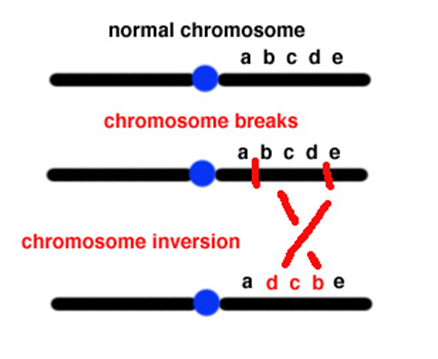
Inversions
Recombinations
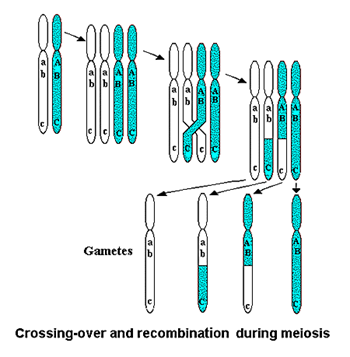
Error during Recombination
usually happens when homologous chromosomes are not aligned precisely by their DNA sequences
if not perfectly aligned, unequal crossing over occurs
affected region can be a single base pair or a large block of dna
often occurs between sequences with tandem repeats or duplicate copies of genes
generates a high number of copies of non-functional sequences that constitute much of the dna in most eukaryotes
Msat mutation rate high bc of unequal crossing-over and slippage
3) transposable elements
much of eukaryote genome consists of sequences associated with transposable elements, which can make multiple copies and inset themselves throughout the genome
half the human genome has sequences associated with transposable elements
analogous to cut and paste
flower color in morning glory: 9/10 mutations were transposons
responsible for a lot of variation in the genome
sometimes activated by stress
increase the mutation rate of host genes
4) Gene duplications
Location of the mutation
germ cells - gametes altered and mutation passed on to progeny
somatic cells - change the phenotype but only passed on in species that can reproduce without gametes
master control genes: regulate the expression of other genes in developmental pathways
cancer: genes involved in cell division and suppression of cell division
Harmful mutations (non-neutra)
most mutations that affect fitness are harmful
in small pops, drift may fix harmful alleles
in large pops, selection acts to keep these mutations from rising in frequency but it takes so long that new mutations occur before old mutations are eliminated
balance between addition of deleterious alleles and removal by selection: mutation-selection balance
low frequencies of deleterious alleles found in all naturally outbreeding pops: mutation load
important implications for inbreeding
Mutation load: Due to the selection-mutation balance, a low frequency of deleterious alleles persists in large pops
Selectively neutral mutations
mutation with no phenotypic effect is neutral to natural selection
most mutations outside of functional loci expected to be neutral
for neutral mutations, heterozygosity is a balance between gain from mutation and loss from drift, which depends on pop size
Can estimate pop size if mutation rate is known
estimated pre-whaling pop size for humpback, fin and minke whales in the N Atlantic ocean
pop size 6-10x higher than current estimates
IWC uses historical estimates of pop size to set harvest rates
Criticism: are estimates of mutation rate reliable?
Advantageous mutations (non-neutral)
drift critical in the survival of advantageous mutations even in large pops bc the allele frequency of the mutation is low
initial frequency is one over the total number of gene copies at a locus is q=1/2N
recessive mutation would have to drift to a frequency of 0.3 before even 10% of the pop will be homozygotes with the selective advantage
dominant mutations have a greater chance of survival bc their fitness advantage is effective in heterozygotes
most still lost in the first few gens due to drift
new mutation that increases fitness by 50%: even if individual with new mutation has 3 offspring, theres still a 0.125 chance none of the offspring carry the mutation bc of segregation
Recovery from a bottleneck
how rapidly do mutations add genetic diversity to pops
depends on mutation rate
equilibrium heterozygosity approached at a time scale equal to whichever is shortest: 2N or 1/2mu gens
Mutations an adaptive response?
commonly said to be random (but there are hotspots)
evidence that rate of mutations may increase under stressful conditions, creating new variation and increasing potential to adapt to changed environmental conditions
but probably not much help for endangered species