Notes on Power and Politics in Organizations
Overview
What is Power?
➢ Formal v. Personal Power
➢ A Closer Look: Referent Power
➢ Power Tactics
➢ Sexual Harassment
➢ Organizational Politics
➢ Impression Management
Power
Definition: Capacity of person A to influence the actions of person B to align with A's wishes.
Key Aspect: Power depends on dependency (A has power over B if A controls something B desires).
Types of Power
Formal Power
Coercive Power: Based on fear of negative consequences (e.g., dismissal).
Reward Power: Ability to provide valued rewards (e.g., promotions).
Legitimate Power: Authority from a formal position within an organization.
Personal Power
Expert Power: Based on skills or knowledge.
Referent Power: Influence due to admiration or identification with someone charismatic.
Effectiveness of Power Types
Personal sources (expert & referent) are more effective than formal power types (coercive, reward, legitimate).
Coercive Power: Generally backfires, leading to negative outcomes.
Power Tactics
Legitimacy: Relying on authority.
Rational Persuasion: Using logical arguments.
Inspirational Appeals: Connecting to values and aspirations.
Consultation: Involving others in planning.
Exchange: Offering rewards for compliance.
Personal Appeals: Asking for compliance due to friendship.
Ingratiation: Flattery before a request.
Pressure: Making demands or threats.
Coalitions: Gaining support from others.
Effectiveness of Tactics
Most Effective: Rational persuasion, inspirational appeals, consultation (especially with interested audiences).
Least Effective: Pressure often leads to backlash.
Sexual Harassment
Definition: Unwanted sexual behaviors affecting employment and creating a hostile environment.
Power Dynamics: More likely in situations with significant power differentials; harassment by superiors is particularly detrimental.
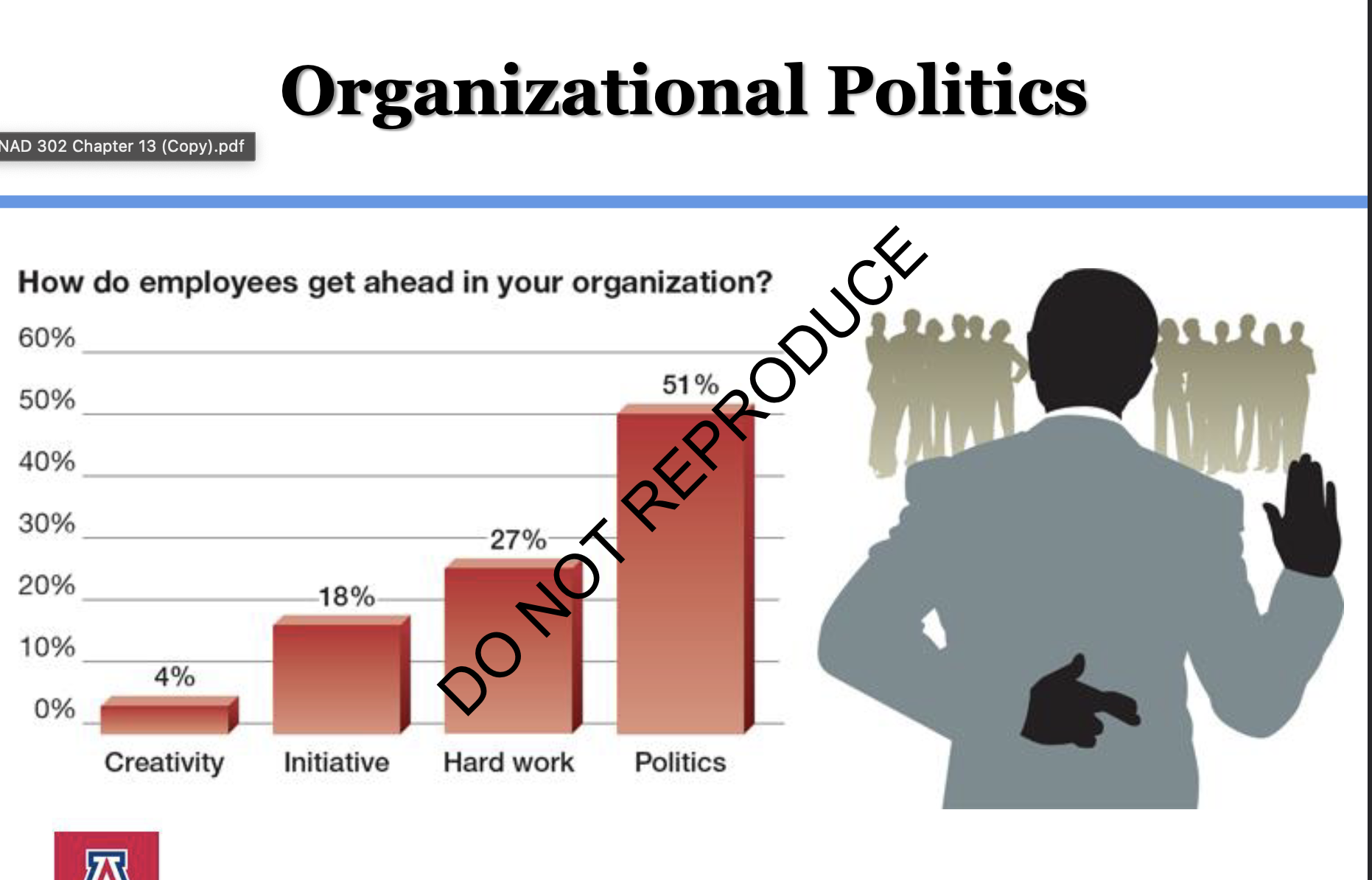
Organizational Politics
Definition: Actions influencing resource distribution, including tactics like withholding information and spreading rumors.
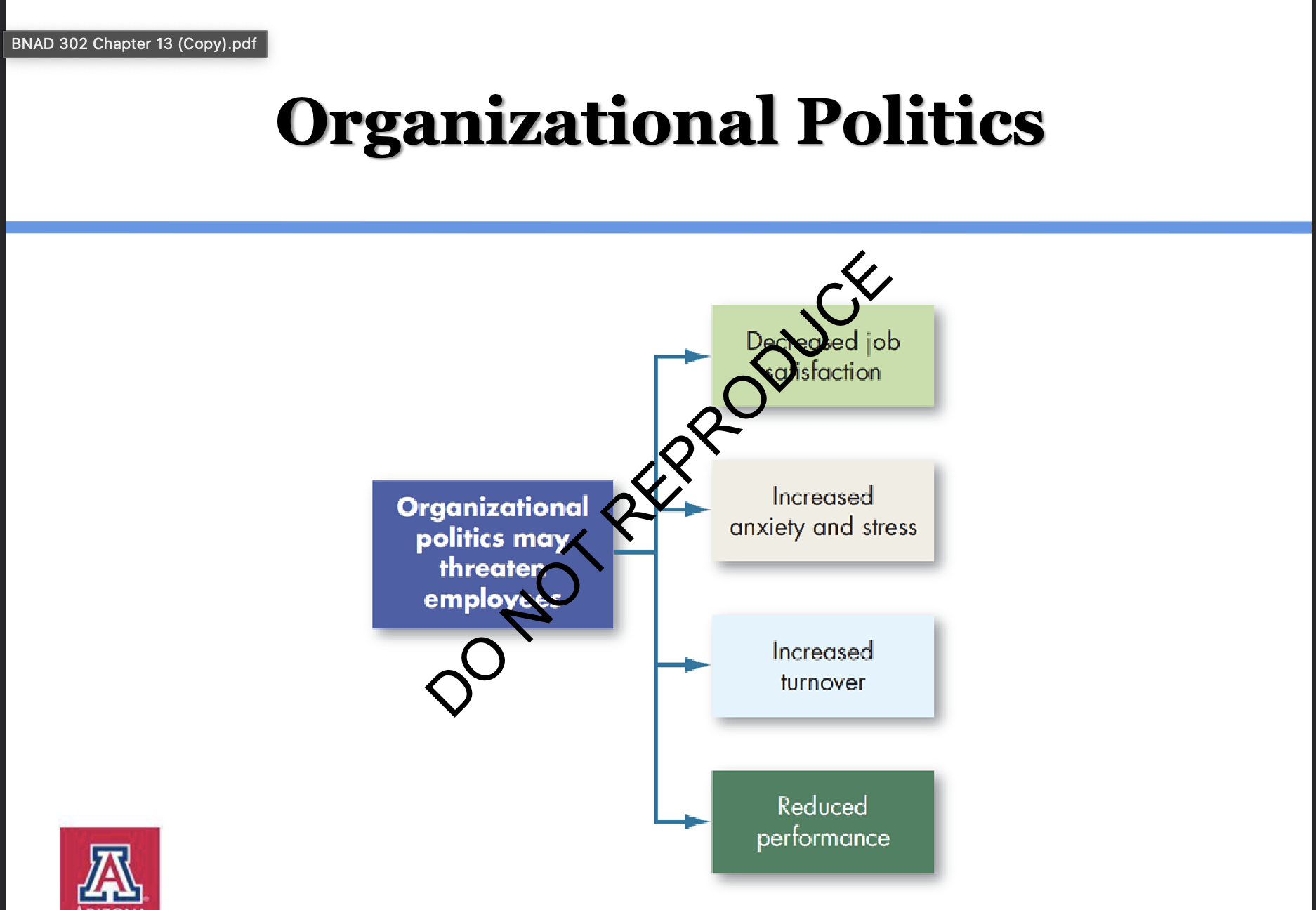
Negative Impact: Leads to increased anxiety, turnover, and decreased performance.
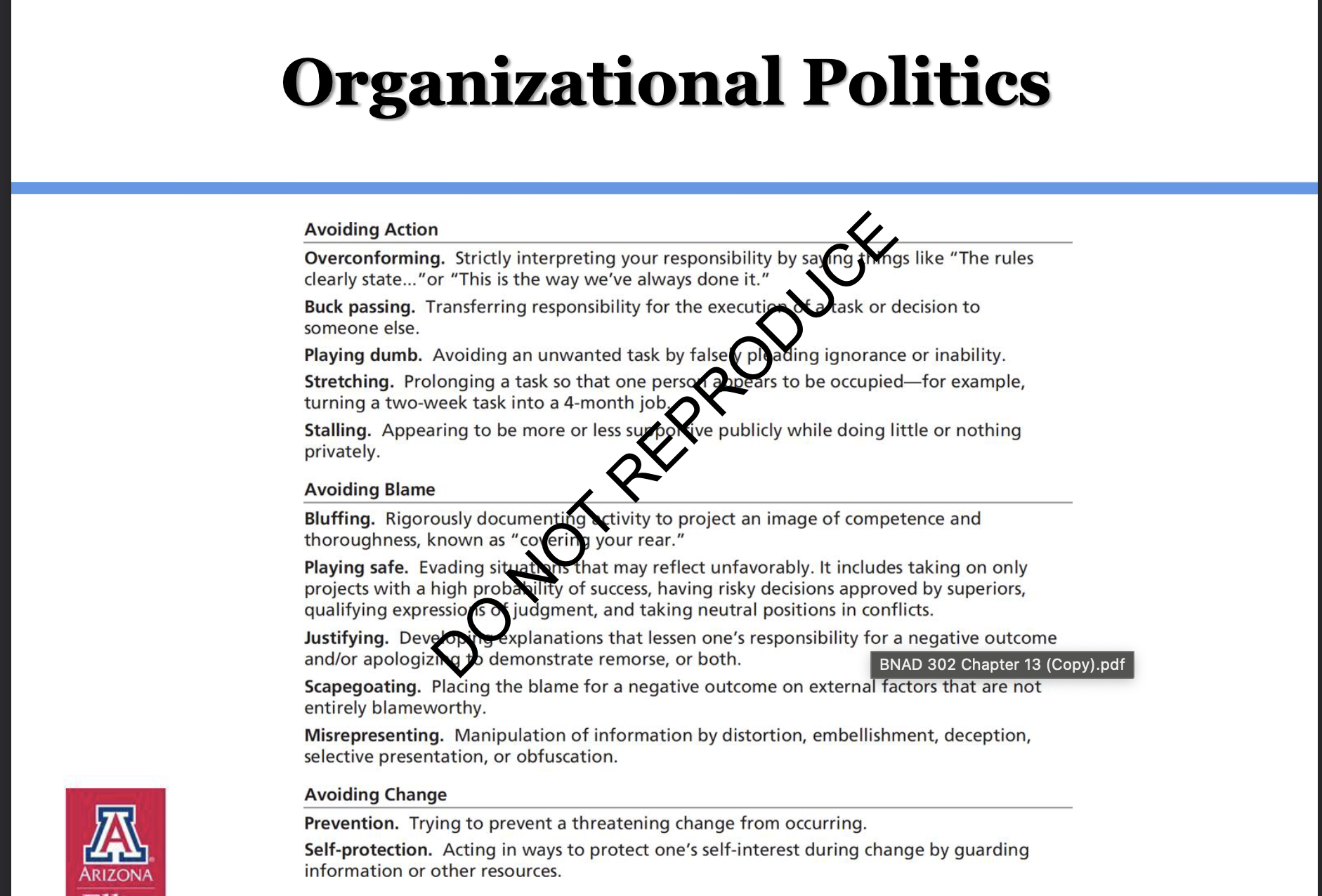
Strategies to Avoid Politics**
Avoiding Action: Techniques like buck passing or playing dumb.
Avoiding Blame: Methods like scapegoating or misrepresenting information.
Avoiding Change: Protecting self-interest during organizational changes.
Impression Management
Definition: Efforts to control how others perceive an individual.
Job Interviews: Success linked to self-promotion.
Performance Evaluations: Positive outcomes associated with ingratiation.