3c. FOD/DOP/Hazardous Chemicals/Tool Control Programs
INTRODUCTION
Many fall injuries occur on level ground when people trip over unexpected objects in their paths, such as tools, cords, hoses, and other items on the ground or floor where people walk. Misplaced rags, hardware, and tools, Foreign Object Damage (FOD), can destroy an aircraft engine in a matter of seconds. Poor housekeeping practices are the direct result of someone’s careless work attitude.
INFORMATION: FOD/DOP/Tool Control Programs.
Housekeeping
As a crew chief, you must develop good housekeeping and maintenance habits. A clean work environment encourages safe maintenance practices. Taking simple steps like putting items away or cleaning up spills helps address hazards to both you and the equipment. Hazards include:
Spilled fluids
Standing water
Accumulating snow or ice (causes surfaces to be slippery)
Rules for Good Housekeeping
The Air Force puts damage into two general categories: Preventable and Non-Preventable. Each time an aircraft sustains damage, or you are injured, your organization will have toexplain why. With that said, clean up spills such as oil and hydraulic fluids immediately (post warning signs to alert others of the hazard until clean-up actions are complete). Straighten, coil, and stow electrical cords and servicing hoses when not in use. Dispose of hazardous materials, dirty, oily rags, and smoking materials in their respective properly labeled self- closing metal container. Dispose of trash in approved containers.
Foreign Object Damage (FOD) Prevention Program
The program is designed and implemented to limit the damage to aircraft and support equipment caused by Foreign Objects (FO). FO is also a major safety hazard to you should it exist on the flightline. FOD prevention (fig.1-22) is the responsibility of all maintenance personnel. The following must be adhered to for FOD prevention:
Females will only use rubber bands, cloth ponytail holders, and cloth headbands as hair retainers on the Flightline
Hats or caps are NOT allowed around operating jet engines
Account for all tools, equipment, and hardware before and after each task (job)
When working in or around crew stations, cockpits, operating engines, and intake ducts remove all loose items (pens, pencils, coins, keys, etc.) from pockets
Inspect engine intakes, cockpits, and other critical areas of aircraft for foreign objects
AT NO TIME will items be placed in or on the areas of the engine intake duct
Install protective covers when aircraft is to remain in an exposed area for an extended length of time to keep out dust, rain, and foreign matter.
Ensure all protective covers, plugs, safety locks, and pins have red “REMOVE BEFORE FLIGHT” streamers attached to them
Dropped Object Prevention (DOP) Program
A dropped object is any aircraft part, component, surface, or other item lost (dropped) from the aircraft during aircrew operations unless intentionally jettisoned (discarded) from engine start to engine shutdown. All maintenance units which fly, service, or maintain aircraft, develop a DOP program and will provide their personnel DOP training. As a routine preventative measure, maintenance personnel are responsible for ensuring the serviceability of the fasteners and hardware on aircraft doors, panels, or cowlings opened for maintenance.
Reporting procedures:
Each MAJCOM develops procedures for reporting dropped objects for their assigned aircraft
If you discover an item missing from your aircraft and it meets the criteria of a dropped object, notify your Flightline Expediter or Production Superintendent
In the event an item drops off an aircraft, the DOP Monitor will investigate each dropped object incident
Hazardous Chemicals
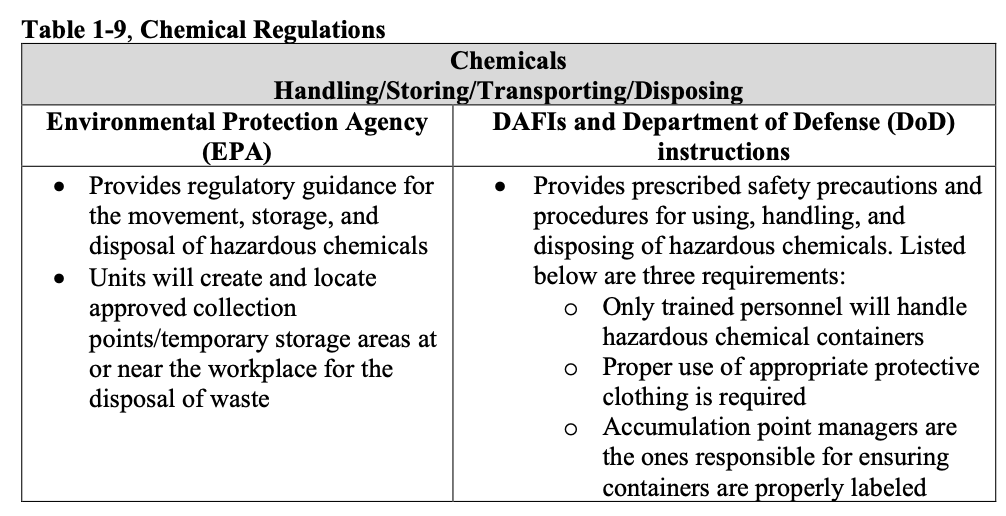
Cleaning and lubrication of aircraft is a part of the routine upkeep that maintenance will perform when needed. It is essential to understand that both cleaning agents and lubricants are known to be hazardous chemicals and caution should be taken to protect yourself. They can present a hazard to you (because of toxicity), property, and/or harm the environment. The following must be observed:
Hazardous chemicals MUST have a hazardous chemical or material identification
label, placed where they are visible, easily read and understood
Follow SDS and technical data to ensure that hazardous chemicals are properly used
Adhere to the Warnings, Cautions, and Notes before the affected text in the technical data
Wear the proper PPE
Avoid skin and eye contact
Avoid breathing of vapors
Use in a well-ventilated area
Use/apply only specified quantities and amounts of chemical, based on the specific aircraft TO
Return unused or contaminated quantities to the appropriate collection point for storage or disposal (where you originally got it from)
Clean up excess amounts of lubricants after applying to avoid accumulation of contaminants
Tool Control
The Tool Control Program provides a means to account for all tools in order to reduce potential FOD-related mishaps. This also helps to reduce tool costs through effective control and accountability of assets. The support section is responsible for procuring and issuing tool on a controlled basis. This section is the focal point for tool issue, turn-in, and storage for common and special tools.
Composite Tool Kits
Inventoried at sign-out/in from Support Section and before starting and after completing each maintenance task
Designed for quick inventory by using inlayed foam cutouts
Contain tools and equipment necessary to accomplish maintenance tasks
Individual work centers such as Crew chiefs, Weapons, Specialists, and Engines design their assigned CTKs to meet their needs
When a tool is discovered missing, immediately conduct a search of the area and notify the Flightline Expediter or Production Superintendent
.